The Architecture of Inertness: Why Nitrogen is the Silent Guardian of CVD Synthesis
May 19, 2026
The Invisible Margin of Failure
In material science, we often obsess over temperature. We track every degree of the ramp-up, the soak, and the cooling curve. But heat is only half the story.
Heat is energy, and energy is indiscriminate. It empowers the reaction we want, but it also accelerates the destruction we fear.
When growing selenium paper via Chemical Vapor Deposition (CVD), the difference between a high-performance p-type semiconductor and a useless pile of ash is often found in what isn't there: Oxygen. Nitrogen is the silent architect that builds a void where only the desired chemistry can survive.
The Oxygen Tax: Preventing Chemical Decay
At high temperatures, selenium is not a passive participant. It is hungry for reaction. If oxygen is present in the tube furnace, the selenium doesn't form a delicate paper; it oxidizes.
Guarding the Semiconductor "Soul"
The value of selenium paper lies in its p-type semiconductor properties and its photoconductive efficiency.
- Oxide Impurities: Even trace amounts of oxygen create defects in the lattice.
- Performance Degradation: These defects act as traps for charge carriers, effectively "killing" the material's ability to sense light.
- The Inert Shield: High-purity nitrogen displaces every cubic centimeter of air, ensuring the chemical integrity of the precursor remains uncompromised.
Preventing "The Ashing"
Think of it as a controlled burn where the goal is to never actually start the fire. Without nitrogen, the selenium precursors can undergo combustion or "ashing." Nitrogen ensures that the energy of the furnace is used for phase transformation and deposition, not for secondary oxidative destruction.
Logistics of the Microscopic: Nitrogen as a Carrier
In a CVD system, nitrogen is more than a shield; it is a logistics network. It manages the movement of molecules with the precision of a high-speed rail system.
Achieving Uniform Morphology
Growth is not just about deposition; it is about uniform deposition.
- Vapor Distribution: Nitrogen acts as the carrier gas, sweeping sublimated selenium vapors across the substrate.
- Thickness Control: A steady, laminar flow ensures that the "paper" grows with consistent thickness from edge to edge.
The Great Purge
Every reaction creates waste. In the confined space of a tube furnace, volatile by-products are the enemy of equilibrium.
- Removal: Nitrogen continuously flushes these by-products out of the chamber.
- Equilibrium: By removing products, it keeps the reaction moving forward according to Le Chatelier's principle.
- Longevity: It protects the quartz tube and heating elements from the corrosive nature of these volatile species, extending the life of the furnace.
The Psychology of Purity: Why 99.99% Matters
In engineering, we often think "good enough" is a safe harbor. In CVD synthesis, "good enough" is a trap.
| Nitrogen Purity | Impact on Selenium Paper | Risk Level |
|---|---|---|
| < 99.0% | Severe oxidation; material becomes non-functional. | Critical |
| 99.9% | Trace oxides; inconsistent semiconductor behavior. | High |
| 99.99%+ | Homogeneous p-type phase; optimal photoconductivity. | Low |
Purity is a binary outcome masquerading as a spectrum. Using 99.99% nitrogen isn't an "upgrade"—it is a foundational requirement. Anything less introduces moisture and oxygen that leads to non-selective oxidation, ruining the pore quality and yield of the final selenium paper.
The Balancing Act of Flow
Managing a CVD process is a study in trade-offs.
If the nitrogen flow is too aggressive, it acts as a coolant, disrupting the thermal equilibrium of the furnace. If it is too sluggish, it fails to clear the "fog" of by-products or leaves pockets of stagnant air.
The Strategy for Success:
- For Purity: Use a sealed, automated gas manifold system to ensure zero atmospheric leakage.
- For Homogeneity: Calibrate flow meters to maintain a stable, laminar velocity that matches the sublimation rate of the selenium.
- For Maintenance: Maintain the nitrogen purge well into the cooling phase to prevent "back-streaming" of air as the internal pressure drops.
Engineering the Perfect Environment
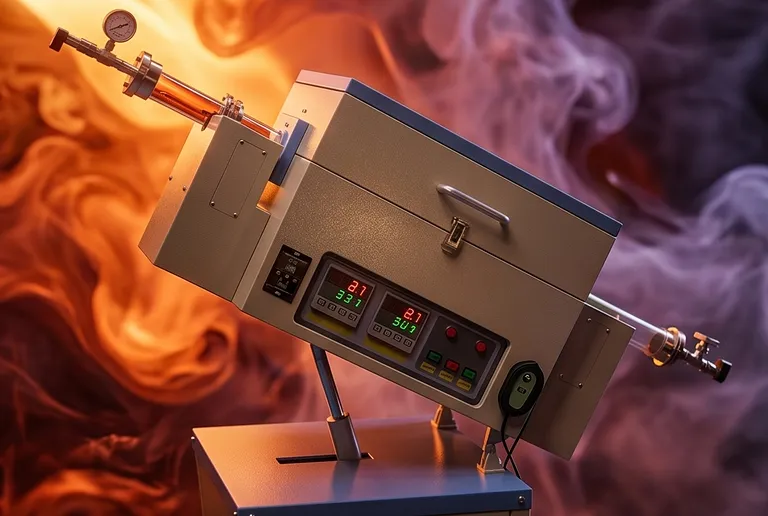
At THERMUNITS, we understand that a furnace is not just a box that gets hot. It is a controlled environment designed to facilitate the impossible.
Our high-performance Tube Furnaces and CVD systems are engineered specifically for the rigors of material science R&D. From precision mass flow controllers to ultra-tight vacuum seals, we provide the hardware that allows your nitrogen atmosphere to do its job perfectly. Whether you are developing selenium-based sensors or advanced thin films, your research deserves a system that respects the chemistry.
Ready to achieve the next level of material purity? Contact Our Experts
Quick Links
Suggested Products
Radio Frequency Plasma Enhanced Chemical Vapor Deposition RF PECVD System for Laboratory and Industrial Thin Film Growth Versatile Chemical Vapor Deposition Tube Furnace System for Advanced Material Research and Industrial Coating Processes Chemical Vapor Deposition CVD System Slide PECVD Tube Furnace with Liquid Gasifier PECVD Machine Cylindrical Resonator MPCVD Machine System for Microwave Plasma Chemical Vapor Deposition and Lab Diamond Growth 915MHz MPCVD Diamond Machine Microwave Plasma Chemical Vapor Deposition System ReactorFurther Reading
The Geometry of Silence: Why Depth Demands a Chemical Solution The Low-Temperature Alchemy: Navigating the Thermal Budget with PECVD The Alchemy of Cold Fire: Decoupling Energy from Temperature in Thin Film Deposition The Choreography of Carbon: Why CVD Precision Defines the Next Era of Material Science The Architecture of Ions: Decoding the Geometry of Plasma Coupling
ThermUnits
Last updated on Apr 14, 2026
Related Products
Radio Frequency Plasma Enhanced Chemical Vapor Deposition RF PECVD System for Laboratory and Industrial Thin Film Growth
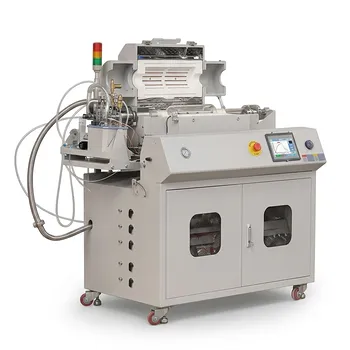
Versatile Chemical Vapor Deposition Tube Furnace System for Advanced Material Research and Industrial Coating Processes
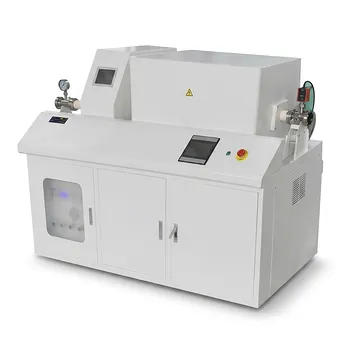
Chemical Vapor Deposition CVD System Slide PECVD Tube Furnace with Liquid Gasifier PECVD Machine
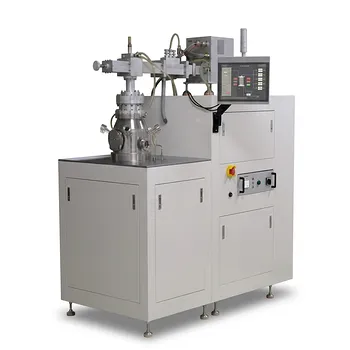
Cylindrical Resonator MPCVD Machine System for Microwave Plasma Chemical Vapor Deposition and Lab Diamond Growth
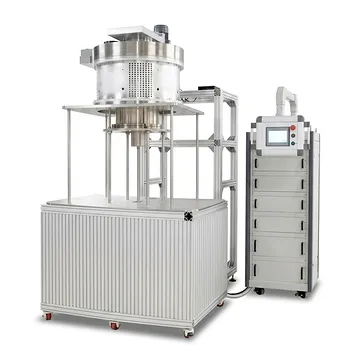
915MHz MPCVD Diamond Machine Microwave Plasma Chemical Vapor Deposition System Reactor
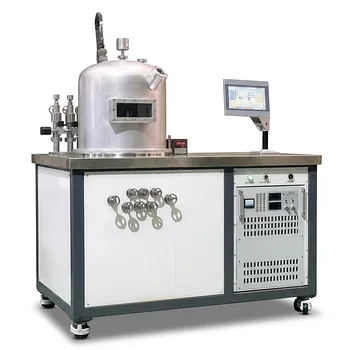
HFCVD Machine System for Nano Diamond Coating on Drawing Dies and Industrial Tools
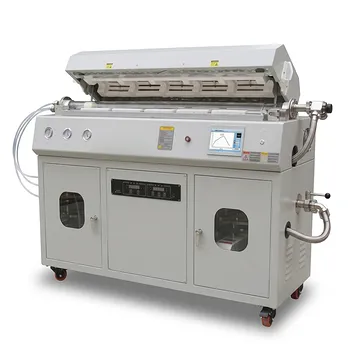
Multi Heating Zones CVD Tube Furnace System for Precision Chemical Vapor Deposition and Advanced Material Synthesis
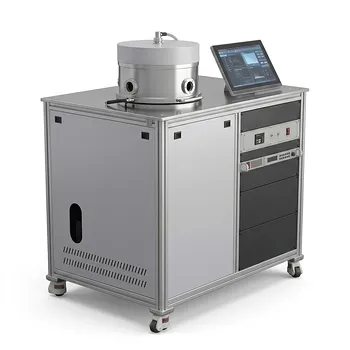
Inclined Rotary Plasma Enhanced Chemical Vapor Deposition PECVD System for Thin Film Deposition and Nanomaterial Synthesis
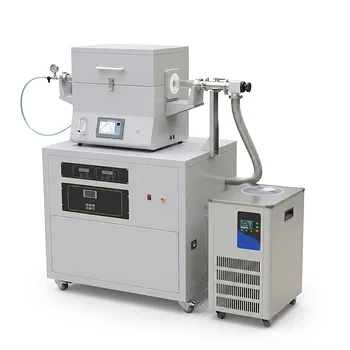
Split Chamber CVD Tube Furnace with Vacuum Station Chemical Vapor Deposition System Machine
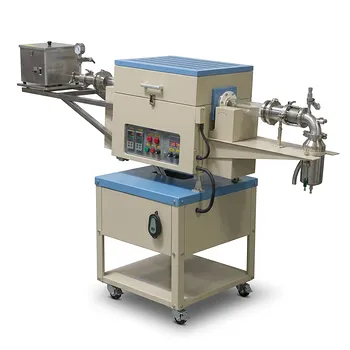
Two Zone Rotary CVD Furnace with Automatic Feeding and Receiving System for Powder Processing
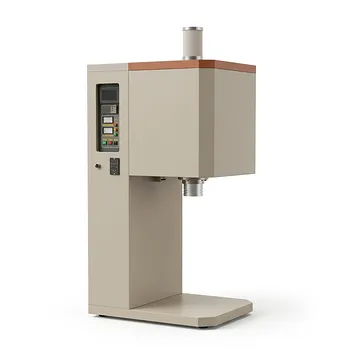
Vertical Openable Tube Furnace 0-1700c High Temperature Laboratory System for CVD and Vacuum Heat Treatment
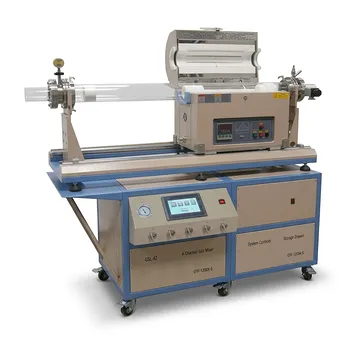
Dual Tube 100mm 80mm CVD Sliding Furnace with 4 Channel Gas Mixing and Vacuum System

High Temperature 1700C Tube Furnace with High Vacuum Turbomolecular Pump System and Multi Channel Mass Flow Controller Gas Mixer
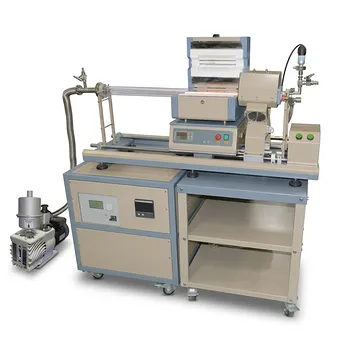
1200C Max Compact Auto-Sliding PECVD Furnace with 2 Inch Tube and Vacuum Pump
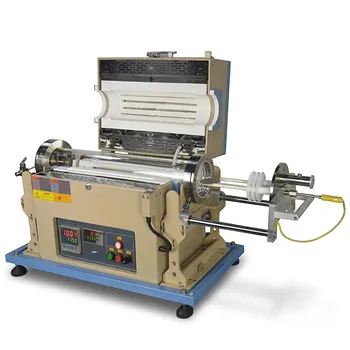
1200°C High Temperature 4 Inch Tube Furnace with Sliding Flange for CVD Systems
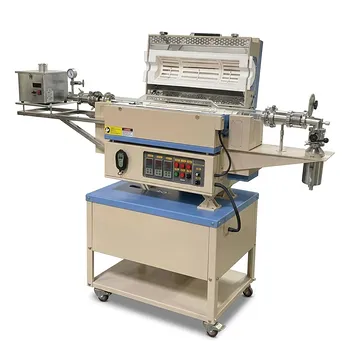
5 Inch Rotary Tube Furnace with Automatic Feeding and Receiving System 1200C Three Zone CVD Powder Processing
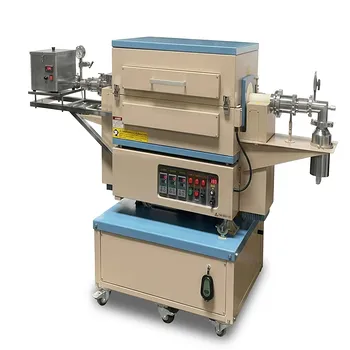
1500C 3-Zone Rotary Tube Furnace 60mm with Automatic Powder Feeding and Receiving System for Continuous Material Synthesis
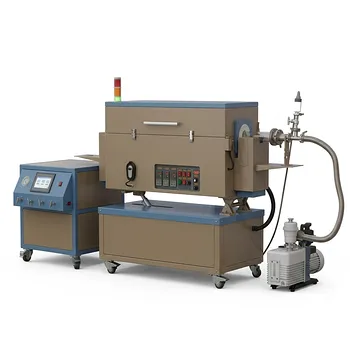
5 Inch Three Zone Rotary Tube Furnace with Integrated Gas Delivery System and 1200C Capability for Advanced Material CVD Processing
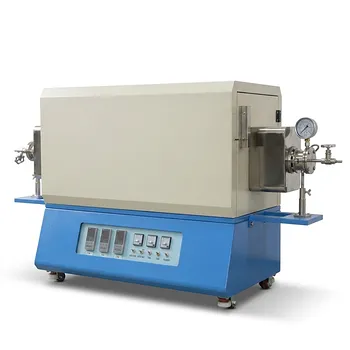
Three Temperature Zone High Temperature Vacuum Tube Furnace for CVD and Material Sintering