The Architecture of Ash: Thermal Precision and the Ghost of Biomass
May 15, 2026
The Search for the Irreducible
In material science, we often look for what is added. But in biomass analysis, we look for what remains.
Biomass charcoal is a complex ledger of solar energy stored in carbon. When we determine its "ash content," we are conducting a forensic audit. We are stripping away the organic history of the plant to find the inorganic sediment—the minerals, the salts, and the silica.
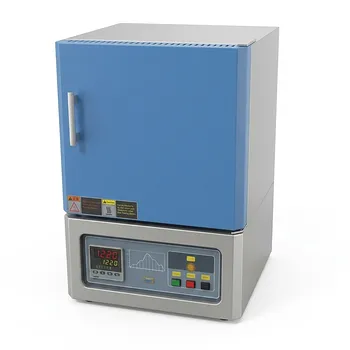
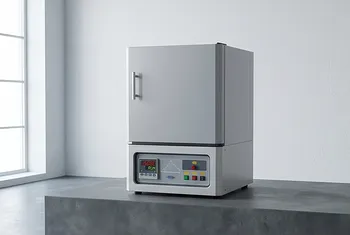
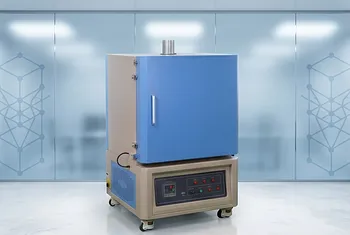
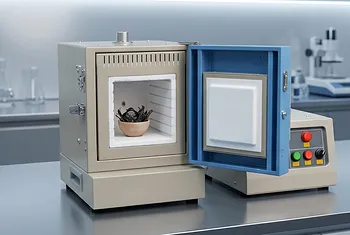
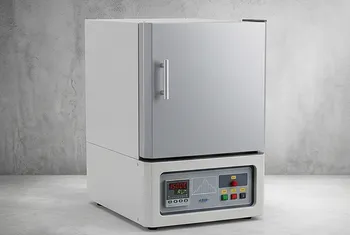
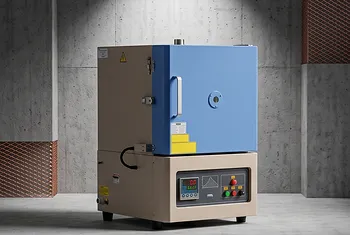
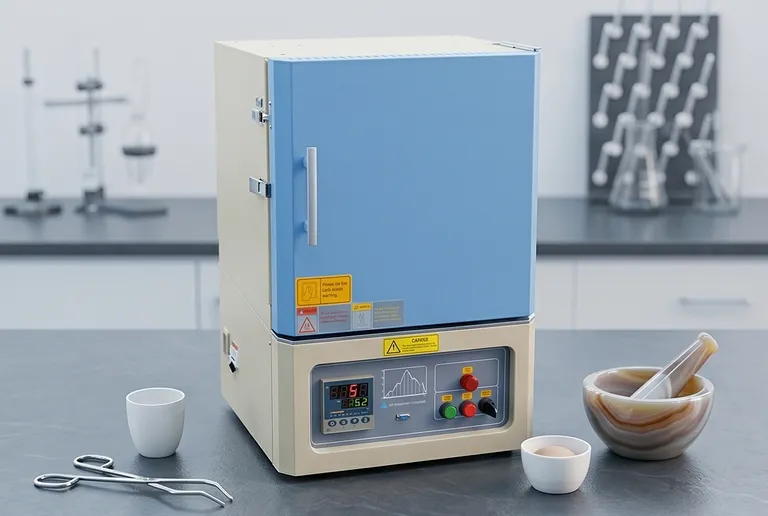
The high-temperature muffle furnace is the primary tool for this subtraction. It is not merely a heater; it is a system designed to isolate truth from bulk.
The Mechanism of Thermal Cleansing
At its core, ash determination is a process of oxidative decomposition. It is the systematic destruction of the carbon matrix to reveal the mineral "ghost" left behind.
In a controlled environment, the furnace facilitates a total conversion:
- Volatilization: Organic matter and fixed carbon are turned into gaseous CO2 and water vapor.
- Isolation: Only the non-combustible inorganic residue remains.
- Quantification: The final weight provides a definitive metric for fuel quality and industrial utility.
Without absolute thermal stability, this "cleansing" is incomplete. Residual carbon behaves like a ghost in the data, adding weight that shouldn't be there and skewing the economic value of the fuel.
The 800°C Equilibrium
In the world of R&D, 800°C is often the point of no return. For biomass charcoal destined for metallurgical use, this specific temperature is the industry’s "Goldilocks zone."
At 800°C held for four hours, the furnace ensures that carbonates are fully decomposed. This prepares the sample for an honest evaluation of slagging risks—the tendency of ash to melt and fuse into glass-like deposits that can choke an industrial boiler or a blast furnace.
However, precision requires more than just heat; it requires airflow. Without a steady supply of oxygen, the sample doesn't combust—it pyrolyzes. It turns into an even harder char rather than ash. A high-quality furnace must breathe.
The Psychology of the Trade-off
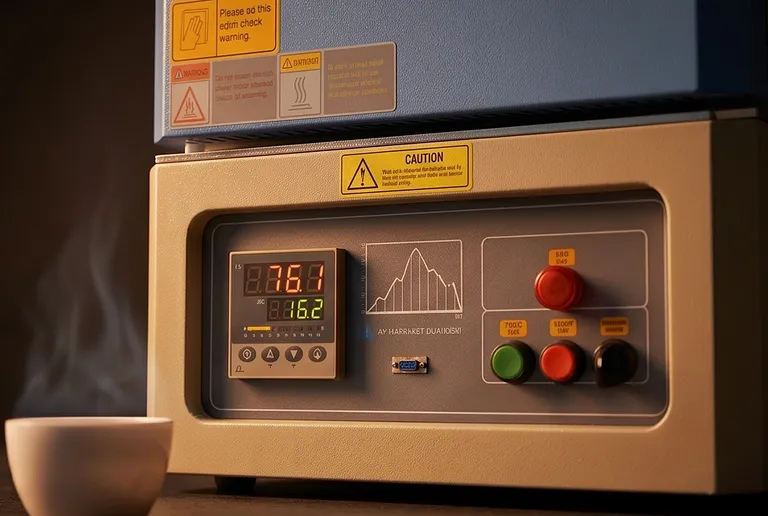
As Morgan Housel might observe, every technical choice is a trade-off between competing risks. In ash determination, we trade completion for composition.
- The High Road (800°C): Ensures no carbon remains. It is the standard for metallurgical efficiency.
- The Gentle Road (550°C - 600°C): Preserves volatile alkali metals like potassium and phosphorus.
If you are an agricultural researcher looking at nutrient recycling, 800°C is your enemy—it vaporizes the very minerals you intend to study. If you are a power plant engineer, 550°C is your enemy—it leaves unburnt carbon that masks the true volume of waste you’ll have to haul away.
Operational Benchmarks for Ash Determination
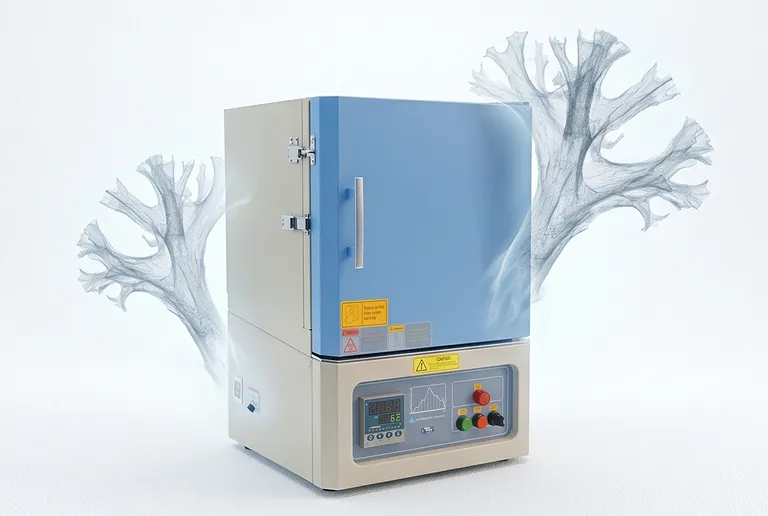
| Parameter | Standard Requirement | Strategic Rationale |
|---|---|---|
| Operating Temp | 800°C (Metallurgical) | Forces decomposition of stubborn carbonates. |
| Operating Temp | 550°C (Agricultural) | Prevents volatilization of potassium/phosphorus. |
| Duration | ~4 Hours | Ensures mass stability (no further weight loss). |
| Atmosphere | Oxidative (Airflow) | Essential for converting carbon to gas. |
| Critical Risk | Slagging/Fusion | Avoid exceeding the ash melting point to save crucibles. |
The Engineer’s Infrastructure
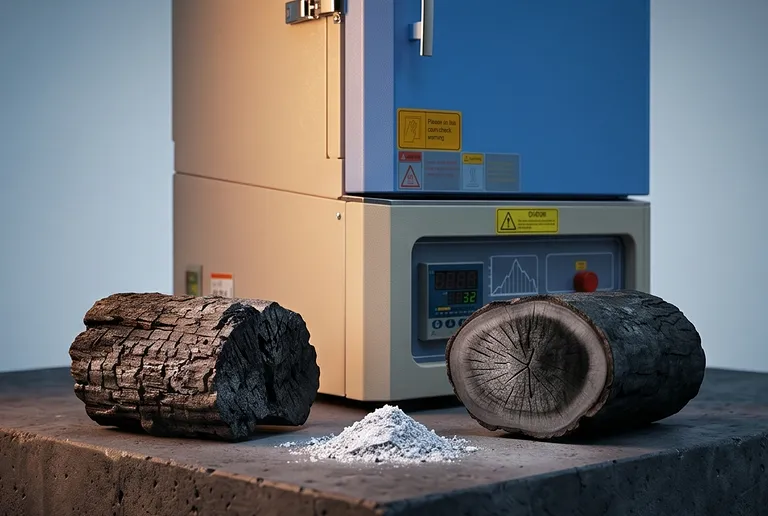
Precision in the lab is a secondary effect of the equipment’s integrity. To achieve mass stability in biomass charcoal, the furnace must offer a uniform thermal field—there can be no "cold spots" where carbon might hide.
At THERMUNITS, we build the infrastructure for these specialized forensic audits. Our range of high-temperature solutions is designed for the rigor of material science:
- Diverse Furnace Architectures: From Muffle and Tube furnaces to Vacuum and Atmosphere-controlled systems.
- Advanced Processing: CVD/PECVD systems and Vacuum Induction Melting (VIM) for high-purity R&D.
- Industrial Scale: Electric rotary kilns and Hot Press furnaces designed for repeatable accuracy.
Whether you are isolating the mineral value of bio-char or engineering the next generation of composites, the stability of your thermal environment determines the validity of your data.
Quick Links
Suggested Products
1200C Muffle Furnace 12x8x5 7.2L Heating Chamber with Quartz Observation Window and Vent Port High Temperature 1200C Muffle Furnace 27L Volume 12x12x12 Chamber with Programmable PID Controller for Laboratory Material Science 1750C Compact Muffle Furnace 1.7L Ultra High Temperature Laboratory Sintering System for Advanced Ceramics and Material Science Research 1200C High Temperature 125L Muffle Furnace 5 Side Heating for Large Batch Sintering with Optional Alloy Debinding Chamber Ultra High Temperature Bench Top Muffle Furnace 1750C Sintering System with Kanthal Super Heating Elements and Precision Digital ControlFurther Reading
The 600-Degree Threshold: The Delicate Physics of Retaining Chemical Truth The Pre-Sintering Threshold: Why Muffle Furnaces Are the Architects of Phosphor Purity The Alchemy of Ash: How Thermal Precision Defines the Soul of Seaweed Carbon The Architecture of Molecular Patience: Why Precision Thermal Reduction Defines Catalyst Success The Physics of Perseverance: Navigating the 1,800°C Thermal Frontier
ThermUnits
Last updated on Apr 14, 2026
Related Products
1200C Muffle Furnace 12x8x5 7.2L Heating Chamber with Quartz Observation Window and Vent Port
High Temperature 1200C Muffle Furnace 27L Volume 12x12x12 Chamber with Programmable PID Controller for Laboratory Material Science
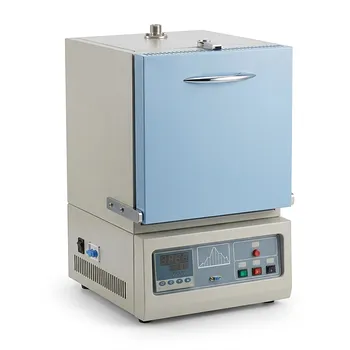
1750C Compact Muffle Furnace 1.7L Ultra High Temperature Laboratory Sintering System for Advanced Ceramics and Material Science Research
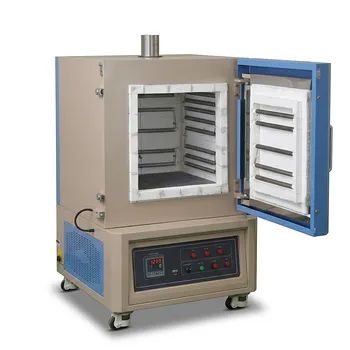
1200C High Temperature 125L Muffle Furnace 5 Side Heating for Large Batch Sintering with Optional Alloy Debinding Chamber
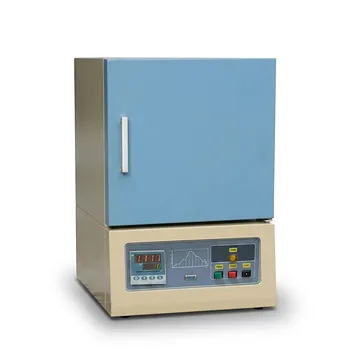
Ultra High Temperature Bench Top Muffle Furnace 1750C Sintering System with Kanthal Super Heating Elements and Precision Digital Control
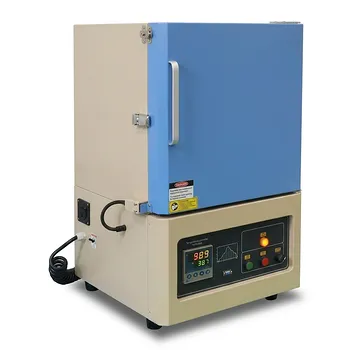
1200°C High Temperature Muffle Furnace 19L Chamber with 50 Segment Programmable Controller
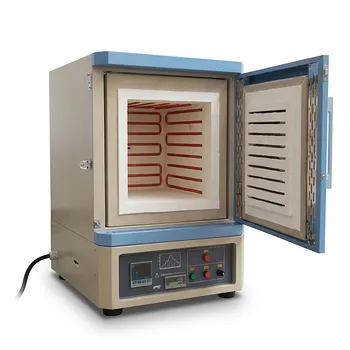
Five Side Heating Muffle Furnace 1200C High Uniformity 64L Chamber 16x16x16 Inch Industrial Heat Treatment
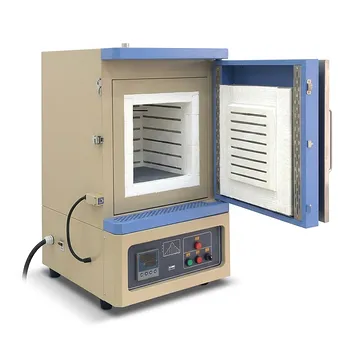
Five Side Heating Muffle Furnace High Purity Alumina Fiber 27L Chamber 1200C High Temperature Thermal Processing System for Sintering Annealing and Materials Research
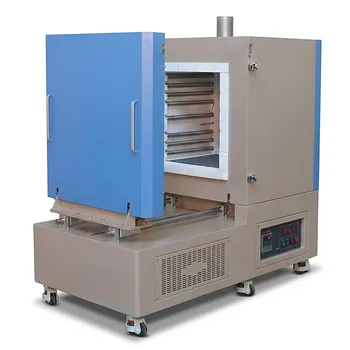
1200C Five Side Heating Muffle Furnace with Sliding Door 125L Volume High Temperature Heat Treatment System for Large Scale Sintering and Annealing
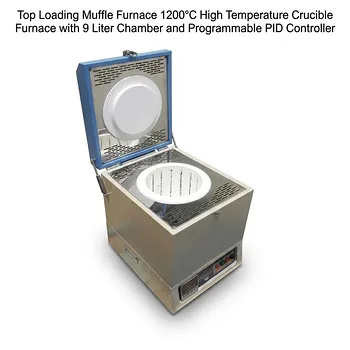
Top Loading Muffle Furnace 1200°C High Temperature Crucible Furnace with 9 Liter Chamber and Programmable PID Controller
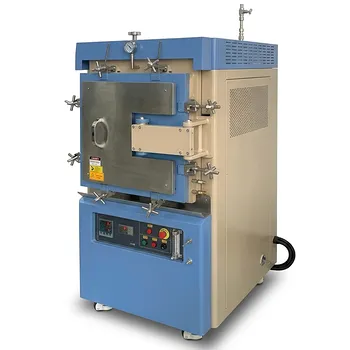
Atmosphere Controlled Muffle Furnace 1700C Maximum Temperature 80L High Capacity Vacuum Inert Gas Box Furnace
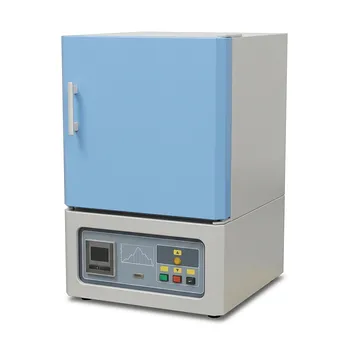
1800C Bench Top Muffle Furnace with Kanthal Super 1900 Heating Elements and 3.6L Alumina Fiber Chamber
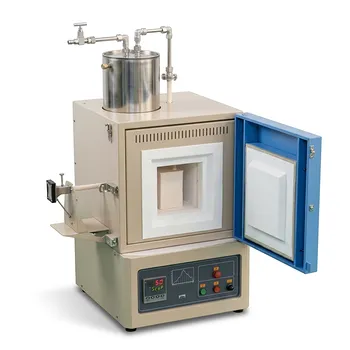
High Temperature Bench Top Muffle Furnace 1700C with Integrated Evaporating Particle Collection and 8x8x8 Alumina Fiber Chamber
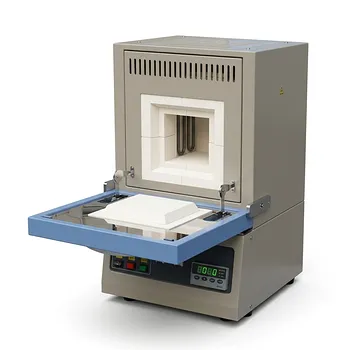
Five Sided Heating Muffle Furnace High Uniformity 1200C Lab Box Furnace 27L Alumina Fiber Chamber
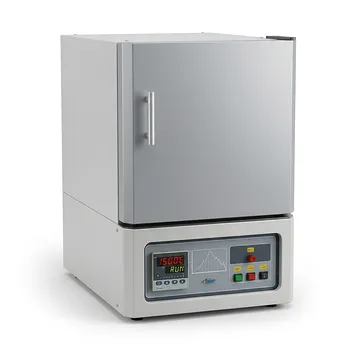
High Temperature 1500C Benchtop Muffle Furnace 3.6L Alumina Fiber Chamber Programmable Controller Sintering Annealing Carbonization Thermal Processing System
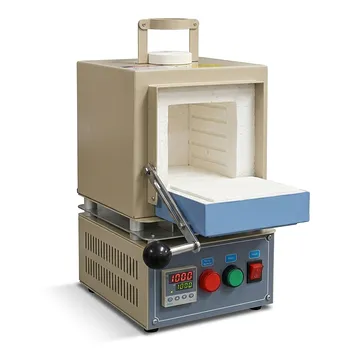
Compact 1000C Muffle Furnace with Programmable Controller and 2 Inch Top Port for Vacuum and Atmosphere Material Research
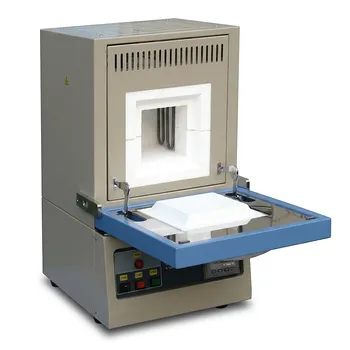
High Temperature 1800C Compact Muffle Furnace with Kanthal Super 1900 Heating Elements and 1.7L Alumina Chamber
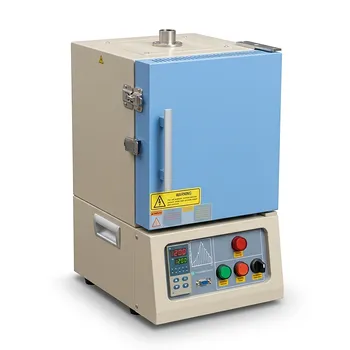
1200°C Small Box Furnace 4.2 Liter Programmable Muffle Furnace with High Purity Alumina Insulation and PID Control
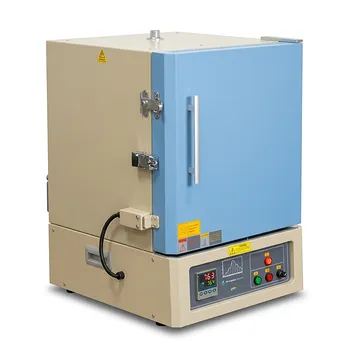
Large Capacity 1200C Muffle Furnace 64 Liter Chamber with Digital PID Controller and Built In Venting Port