The Architecture of Chaos: Why Flash Joule Heating Redefines Nanomaterial Synthesis
Aug 04, 2026
In the world of material science, we often treat heat as a slow, patient friend. We ramp up temperatures over hours, soak the material in a steady glow, and let it cool in a controlled descent.
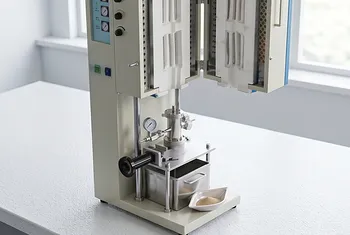
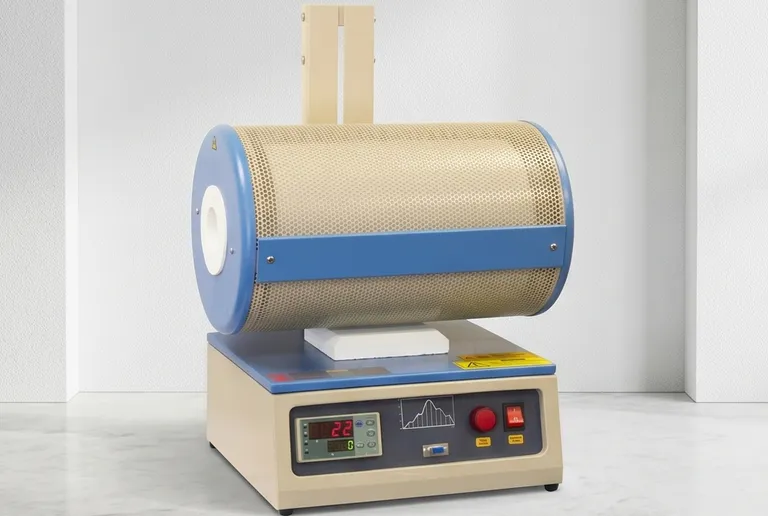
For many applications, this patience—found in the heart of a high-quality Tube Furnace—is exactly what is needed for structural uniformity.
But in the realm of bimetallic modified titanium dioxide ($TiO_2$), time is often the enemy. When we heat things slowly, we allow atoms too much time to find their "boring" equilibrium. We lose the edge that makes nanomaterials extraordinary.
The Kinetic Tyranny of Slow Heating
Traditional thermal treatment relies on the slow kinetics of radiation and convection. While reliable, this process introduces a systemic problem: The Thermal Lag.
- Particle Agglomeration: When particles sit at high temperatures for long durations, they fuse. This "ripening" destroys the surface area critical for catalysis.
- Thermal Inertia: In a standard furnace, you are heating the insulation, the atmosphere, and the vessel just to reach the sample.
- Loss of Potential: By the time a traditional furnace reaches peak temperature, the most interesting kinetic pathways—those that create beneficial defects—have already closed.
Flash Joule Heating: The Strike of a Lightning Bolt
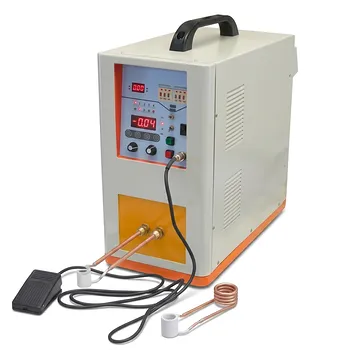
Flash Joule Heating (FJH) represents a psychological shift in engineering. Instead of waiting for heat to travel from the outside in, FJH forces the material to generate its own heat instantaneously via an electrical pulse.
It is the difference between slow-cooking a steak and a flash-sear. In the world of $TiO_2$, that flash-sear is everything.
Preventing the Fusion
By reaching reaction temperatures in seconds rather than hours, FJH bypasses the "agglomeration window." It effectively freezes the particles in a dispersed, high-surface-area state.
Lattice Engineering by Force
In traditional calcination, the crystal lattice has time to perfect itself. For photocatalysis, perfection is a failure. We want defects.
FJH induces a high density of lattice defects and local charge deficiencies. These "imperfections" act as the active sites that trap electrons and boost nitrogen fixation rates to levels that are physically impossible to achieve in a slow-ramp environment.
The Economics of Energy
We often mistake duration for thoroughness. However, in thermal processing, duration is simply an energy tax.
- Direct Conversion: FJH converts electrical energy directly into heat within the sample. The theoretical efficiency is near 100%.
- Zero Ramp Overhead: A traditional furnace may consume kilowatts for two hours just to prepare for a ten-minute reaction. FJH completes the entire cycle in under 30 seconds.
A Comparative Framework
Choosing between these methods is a matter of matching your "Thermal Tool" to your "Material Goal."
| Feature | Flash Joule Heating (FJH) | Traditional Tube Furnace |
|---|---|---|
| Heating Rate | Ultra-fast (Seconds) | Slow (Minutes to Hours) |
| Particle Size | Small (Prevents Agglomeration) | Larger (Grain Growth) |
| Lattice Defects | High Density (Enhanced Activity) | Low Density (Steady-state) |
| Energy Efficiency | High (Direct Conversion) | Low (Heat Loss to Surroundings) |
| Primary Advantage | Superior Charge Transport | Uniform Bulk Processing |
The Engineer’s Choice: Precision vs. Speed
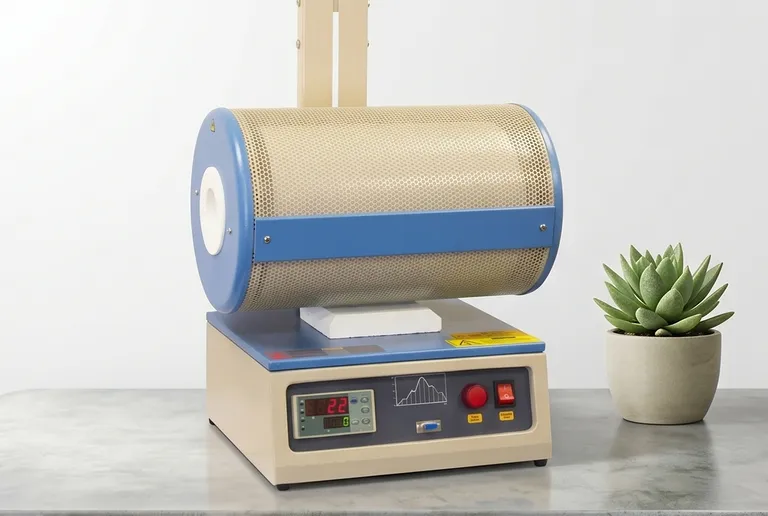
While FJH offers a "kinetic advantage," it requires conductive precursors and sophisticated power electronics. The Tube Furnace, conversely, remains the gold standard for bulk uniformity and materials that lack electrical conductivity.
At THERMUNITS, we believe that the breakthrough is rarely in the material alone, but in the system that shapes it. Whether you are seeking the "frozen chaos" of ultra-fast heating or the reliable stability of an Atmosphere Tube Furnace, the tool must be as precise as the theory.
Elevate Your Thermal Research
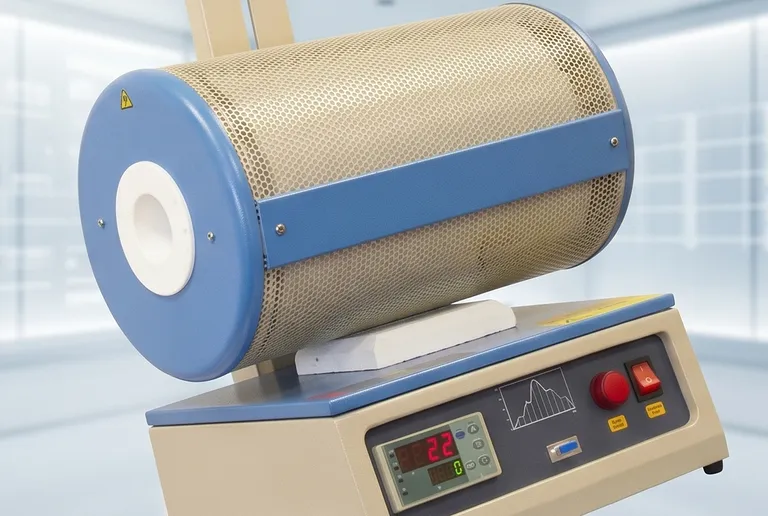
Progress in material science happens when we decouple ourselves from traditional kinetic limits. From Vacuum Induction Melting (VIM) to CVD systems and high-precision Muffle Furnaces, THERMUNITS provides the hardware that turns high-temperature theory into laboratory reality.
Ready to optimize your thermal processing architecture? Contact Our Experts
Quick Links
Suggested Products
High Temperature Ultrafast Heating Pressing Furnace 2900C Max 100kgf Rapid Thermal Processing System Five Side Heating Muffle Furnace 1200C High Uniformity 64L Chamber 16x16x16 Inch Industrial Heat Treatment Five Side Heating Muffle Furnace High Purity Alumina Fiber 27L Chamber 1200C High Temperature Thermal Processing System for Sintering Annealing and Materials Research High Temperature Horizontal Electrical Assisted Sintering Furnace with 3KW Programmable Power Source for Advanced Ceramic Materials 1200C Five Side Heating Muffle Furnace with Sliding Door 125L Volume High Temperature Heat Treatment System for Large Scale Sintering and AnnealingFurther Reading
The Calculus of Heat: Why Precision Control is the Soul of Material Science The Architecture of Density: Mastering the Mechanics of Vacuum Hot Pressing The Choreography of Density: Mastering the Vacuum Hot Press Sequence The Geometry of Force: Why Vacuum Hot Pressing Redefines Ceramic Integrity The Geometry of Heat: Why Precision Hot Pressing Defines Modern Composites
ThermUnits
Last updated on Apr 14, 2026
Related Products
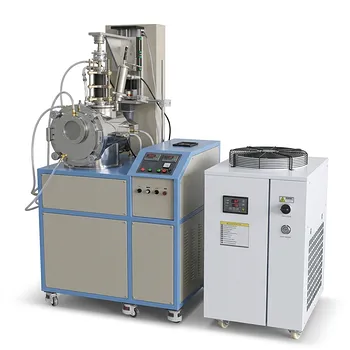
High Temperature Ultrafast Heating Pressing Furnace 2900C Max 100kgf Rapid Thermal Processing System
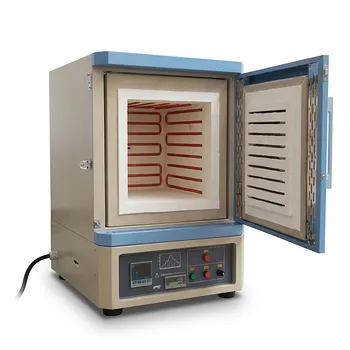
Five Side Heating Muffle Furnace 1200C High Uniformity 64L Chamber 16x16x16 Inch Industrial Heat Treatment
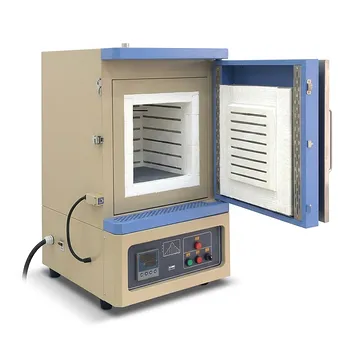
Five Side Heating Muffle Furnace High Purity Alumina Fiber 27L Chamber 1200C High Temperature Thermal Processing System for Sintering Annealing and Materials Research
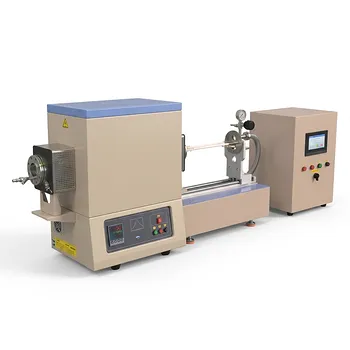
High Temperature Horizontal Electrical Assisted Sintering Furnace with 3KW Programmable Power Source for Advanced Ceramic Materials
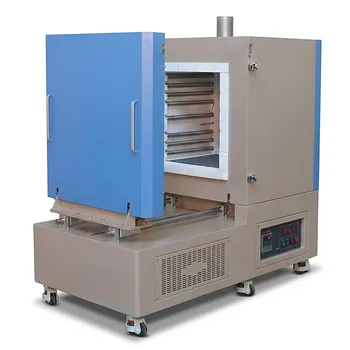
1200C Five Side Heating Muffle Furnace with Sliding Door 125L Volume High Temperature Heat Treatment System for Large Scale Sintering and Annealing