The Choreography of Density: Mastering the Vacuum Hot Press Sequence
Jul 26, 2026
The Quest for the Perfect Solid
In materials science, the gap between a "good" material and a "revolutionary" one is often measured in microns. To achieve near-theoretical density, it is not enough to simply apply heat. You must manage a violent environment of extreme pressure and absolute void with the precision of a watchmaker.
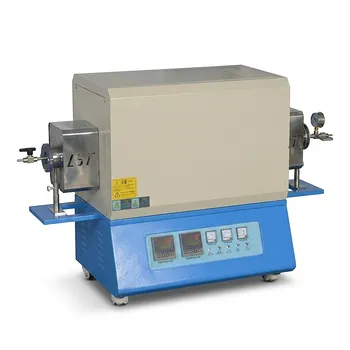
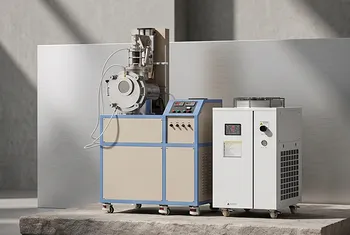
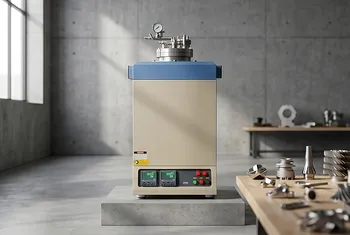
The Vacuum Hot Press Furnace is the instrument used to perform this delicate dance. It combines three distinct forces—thermal energy, mechanical pressure, and a vacuum environment—to force atoms into a configuration they would never assume naturally.
Success in this field is not accidental; it is a systematic four-step sequence designed to mitigate the inherent flaws of physics.
Phase 1: The Silence of the Void
The process begins long before the first heating element glows. It starts with the pursuit of nothingness.
Once the raw material is loaded into a high-strength graphite die, the chamber is sealed and evacuated. We aim for a vacuum level between $10^{-3}$ and $10^{-5}$ Pa.
At this level, the environment is silent and sterile. By removing volatile impurities and oxygen, we eliminate the risk of oxidation. In the world of high-performance ceramics and alloys, a single stray oxygen molecule can become a site for a crack. The vacuum ensures that the chemistry you intended is the chemistry you keep.
Phase 2: The Ascent to Equilibrium
Heating is not a race; it is a ladder. As the furnace climbs toward temperatures between 1000°C and 2400°C, the primary enemy is the thermal gradient.
If the surface of the material heats significantly faster than the core, internal stresses develop. These invisible forces can lead to micro-cracking or warping.
A controlled heating ramp allows the material to expand uniformly. This stage is about preparation—softening the particles and activating the initial diffusion mechanisms that will allow the material to bond in the next phase.
Phase 3: The Moment of Consolidation
This is where the transformation happens. Once the target temperature is reached, a uniaxial mechanical pressure—ranging from 10 to 100 MPa—is applied.
Under this intense load, the material undergoes a series of physical shifts:
- Particle Rearrangement: The grains shift to fill the voids.
- Plastic Flow: The material begins to behave like a highly viscous fluid.
- Creep: Atoms migrate across grain boundaries, effectively "healing" the gaps between them.
The goal is maximum density. However, there is a psychological trap here: the temptation to stay at peak temperature for too long. While more time increases density, it also encourages grain growth. Large grains often lead to brittle materials. The engineer must find the "Goldilocks" zone where density is high, but the microstructure remains fine.
Phase 4: The Controlled Descent
The final stage is thermal recovery. Turning off the power and walking away is a recipe for failure.
Sudden temperature drops cause thermal shock, which can shatter a component that took hours to create. The cooling rate must be managed—often under a vacuum or an inert gas blanket—to minimize residual stresses. Only once the furnace reaches a safe "ejection" temperature is the chamber vented and the densified part removed.
The Strategy of Trade-offs
Optimization is rarely about choosing "more" of everything; it is about choosing what you are willing to sacrifice.
| Phase | Key Action | Primary Objective |
|---|---|---|
| 1. Preparation | Evacuation to $10^{-5}$ Pa | Eliminating oxidation/impurities |
| 2. Heating | Controlled Ramp-up | Achieving thermal equilibrium |
| 3. Sintering | Heat + 10-100 MPa Pressure | Driving plastic flow & densification |
| 4. Recovery | Managed Cooling | Stress relief & structural integrity |
If your priority is purity, you invest more time in Phase 1. If your goal is fracture toughness, you must be disciplined in Phase 3 to prevent grain coarsening.
Engineering the Future with THERMUNITS
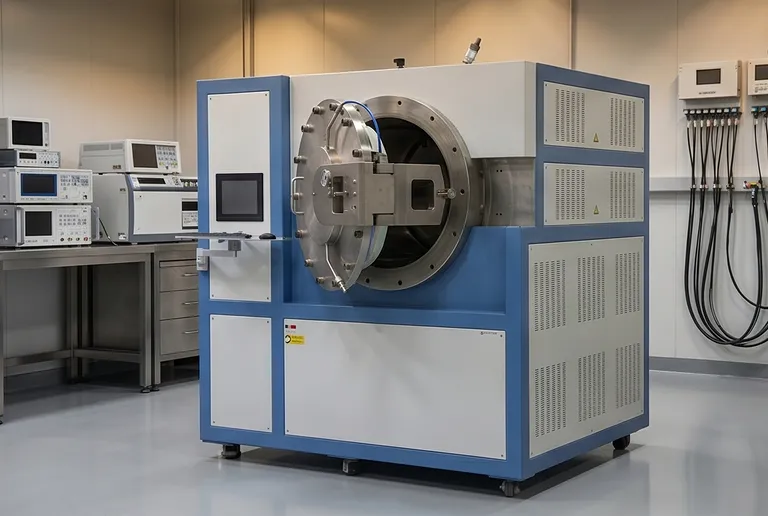
Achieving these precise benchmarks requires hardware that refuses to compromise. At THERMUNITS, we design high-temperature laboratory equipment that gives researchers and engineers absolute control over the sintering environment.
Our Vacuum Hot Press systems are built to handle the rigorous demands of industrial R&D, ensuring that your path from raw powder to high-performance component is predictable and repeatable. Beyond hot pressing, our portfolio includes:
- Atmosphere & Vacuum Furnaces: For specialized heat treatments.
- CVD/PECVD Systems: For advanced chemical vapor deposition.
- Vacuum Induction Melting (VIM): For high-purity alloy development.
- Thermal Elements: High-grade components for custom thermal solutions.
The difference between a failed experiment and a breakthrough often lies in the equipment's ability to maintain the sequence. Contact Our Experts
Quick Links
Suggested Products
High Temperature Vacuum Lamination Hot Press Furnace Machine for Semiconductor Wafer Bonding and Advanced Composite Thermal Processing Industrial Vacuum Hot Press Furnace Machine and High Temperature Heated Vacuum Press for Advanced Material Sintering Industrial High Temperature Vacuum Hot Press Furnace and Heated Vacuum Press Machine for Material Science Sintering High Pressure 600T Vacuum Induction Hot Press Furnace for Advanced Material Heat Treatment and Sintering 2500C High Vacuum Ultrafast Heating Pellet Press with Automated 8 Sample Loading SystemFurther Reading
The Architecture of Density: Mastering the Mechanics of Vacuum Hot Pressing The Geometry of Force: Why Vacuum Hot Pressing Redefines Ceramic Integrity The Architecture of Absence: Why Vacuum Technology Defines the Future of Flight The Invisible Chemistry of High Heat: Designing Certainty into Vacuum Hot-Zones The Purity of Absence: Why the Human Body Demands Vacuum-Processed Metallurgy
ThermUnits
Last updated on Apr 14, 2026
Related Products
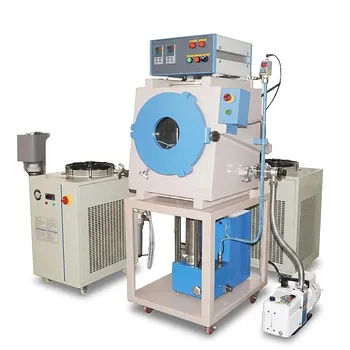
High Temperature Vacuum Lamination Hot Press Furnace Machine for Semiconductor Wafer Bonding and Advanced Composite Thermal Processing
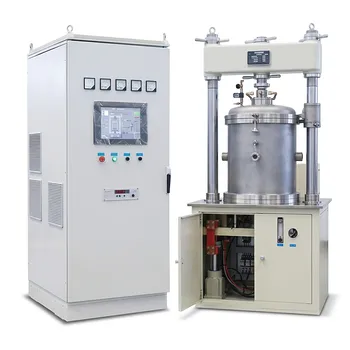
Industrial Vacuum Hot Press Furnace Machine and High Temperature Heated Vacuum Press for Advanced Material Sintering
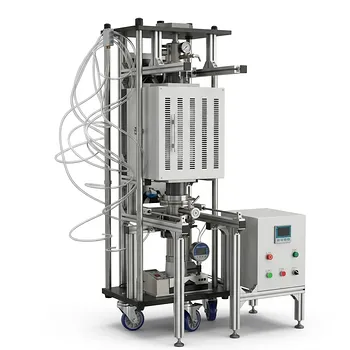
Industrial High Temperature Vacuum Hot Press Furnace and Heated Vacuum Press Machine for Material Science Sintering
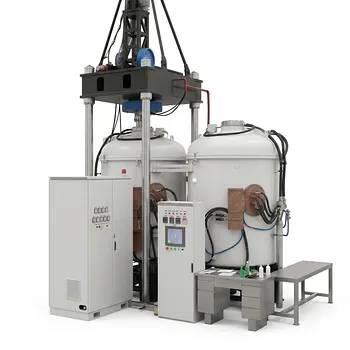
High Pressure 600T Vacuum Induction Hot Press Furnace for Advanced Material Heat Treatment and Sintering
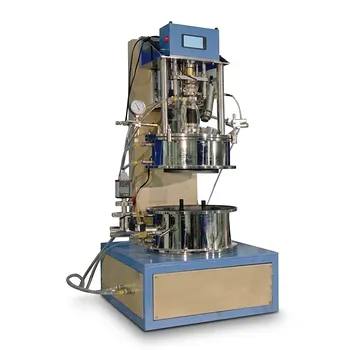
2500C High Vacuum Ultrafast Heating Pellet Press with Automated 8 Sample Loading System
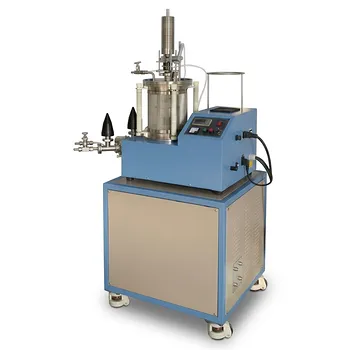
Ultrafast Thermal Pressing Furnace 2900C Max Temperature 200K per Second Heating Rate Vacuum Atmosphere Rapid Processing System
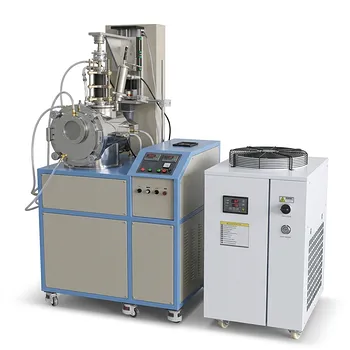
High Temperature Ultrafast Heating Pressing Furnace 2900C Max 100kgf Rapid Thermal Processing System
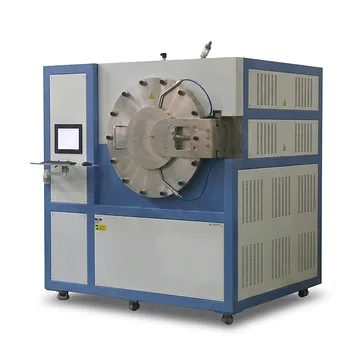
High Vacuum Pressure Chamber Furnace 800C 3.5 Bar Sintering System for Superconducting Materials
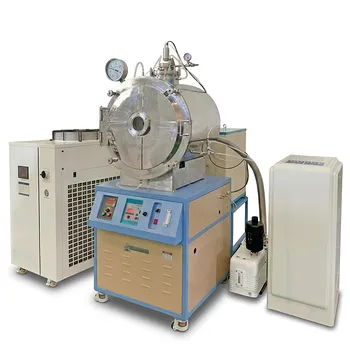
Ultra High Temperature Induction Heated Vacuum Furnace with Molten Salt Electrolysis Capability and 3000 Degree Precision Control
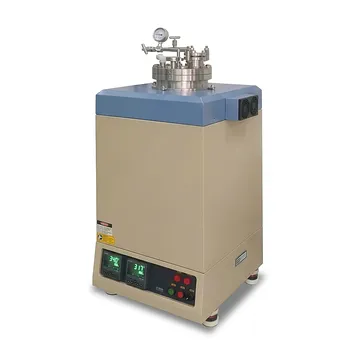
High Temperature 1000C Vacuum Furnace with 8 Inch ID Chamber for Material Sintering and Research Annealing
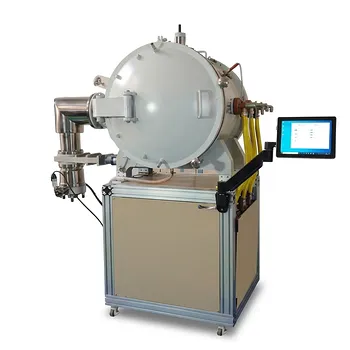
High Temperature Cold Wall Vacuum Furnace for Advanced Material Sintering and Annealing 1600C Heating Area 200x200x300mm

1800C High Temperature Compact Vacuum Tube Furnace with 60mm OD Alumina Tube and Kanthal MoSi2 Heating Elements
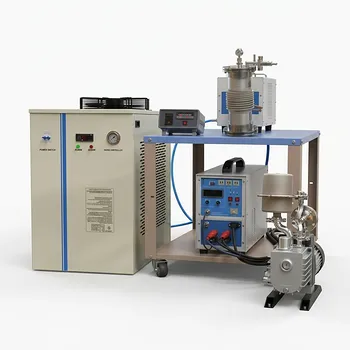
Induction Heating System with Temperature Control for High Temperature Vacuum Sintering and Melting
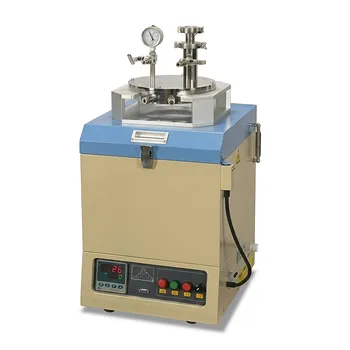
Vertical Vacuum Furnace 1100C High Temperature 8 Inch Quartz Chamber Water Cold Flange System
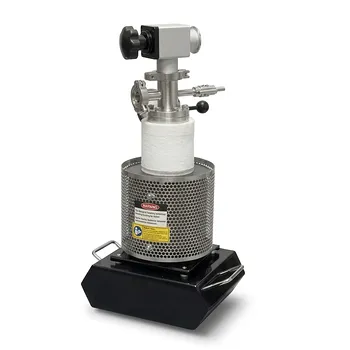
High Temperature 1100C Compact Top Loading Vertical Vacuum Tube Furnace for High Vacuum Noble Metal Melting and Material Research
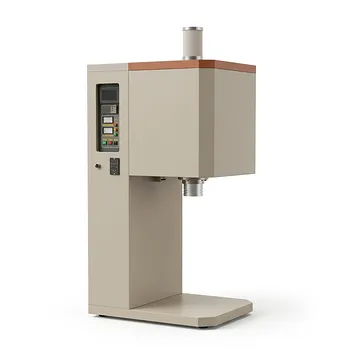
Vertical Openable Tube Furnace 0-1700c High Temperature Laboratory System for CVD and Vacuum Heat Treatment
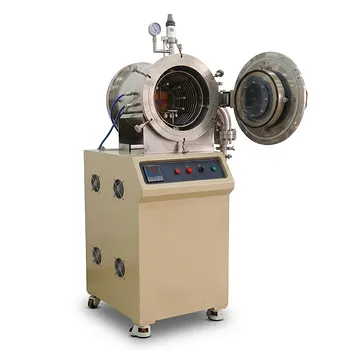
High Temperature Cold Wall High Vacuum Chamber Furnace 1400C for Advanced Material Processing
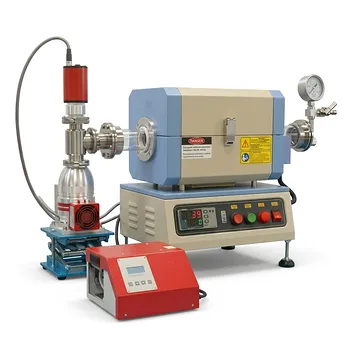
High Vacuum Compact Tube Furnace 1200C with Integrated Turbo Pump System and 8 Inch Heating Zone
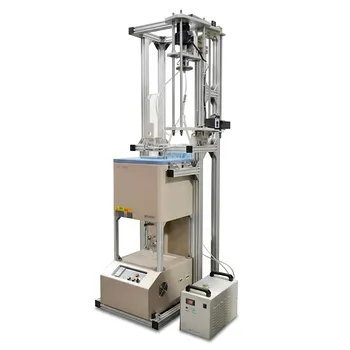
500C Vacuum Vertical Tube Furnace 84mm OD Sample Rotation Lifting System