The Geometry of Heat: Why Precision Hot Pressing Defines Modern Composites
Aug 06, 2026
In material science, the distance between a brilliant concept and a functional product is measured in micrometers.
Consider the challenge of creating a flexible, thermal-regulating film. You have Vanadium Dioxide (VO2) antennas—microscopic structures designed to switch emissivity—and a High-Density Polyethylene (HDPE) matrix. On their own, they are just ingredients.
To turn them into a system, you need more than heat. You need a precisely orchestrated "squeeze." This is where the high-precision hot press transitions from a tool to an architect.
The Molecular Handshake: Facilitating Matrix Fusion
At its core, hot pressing is about forcing a relationship between heterogeneous materials that do not naturally coexist.
Melting and the Fluidity of Integration
The process begins at a targeted 180°C. This isn't an arbitrary number; it is the threshold where the HDPE powder transitions into a molten state. In this semi-fluid phase, the polymer acts as a medium, flowing around the VO2 antennas to "wet" them completely.
Building the Network
Simultaneous pressure (350 bar) ensures these antennas aren't just floating; they are forced into a dense, interconnected physical network. Without this density, the macroscopic emissivity switching—the film’s "magic"—simply won't happen. The antennas must be close enough to talk to each other, yet protected by the polymer.
The War Against the Void
In the world of high-performance composites, air is the enemy. Internal porosity is a silent killer of mechanical integrity.
- Elimination of Micropores: High axial pressure drives out interlaminar air. This creates a dense, monolithic structure.
- Interfacial Bonding: The coupling of heat and pressure induces thermal fusion at the boundaries. This prevents delamination, ensuring the film can be bent thousands of times without falling apart.
- Structural Refinement: Controlled cooling under pressure optimizes the crystalline regions of the polymer, directly impacting how fast the material responds to temperature changes.
The Discipline of 80 Micrometers
Engineering is often the art of maintaining strict tolerances under extreme conditions. For thermal-regulating films, the target is often a precise 80-micrometer thickness.
Uniformity isn't just an aesthetic requirement. If the film is 90 micrometers in one spot and 70 in another, the thermal regulation becomes unpredictable. High-precision hot presses utilize calibrated stops and sensors to ensure that the "squeeze" is perfectly even across the entire surface area.
| Feature | Mechanism | Objective |
|---|---|---|
| Thermal Energy | 180°C Constant Heat | HDPE Melting & VO2 Encapsulation |
| Axial Pressure | 350 Bar Force | Porosity Elimination & Connectivity |
| Geometric Control | Precision Spacers | 80-micrometer Uniformity |
| Cooling Phase | Regulated Ramp-down | Crystalline Structure Optimization |
The Engineer’s Dilemma: Balancing Forces
Precision is not about applying the most force; it is about applying the right force. Every material system has a "breaking point" in the processing phase.
- Thermal Degradation: Too much heat for too long, and the polymer chains break down. You lose molecular weight and mechanical strength.
- Structural Crushing: Excessive pressure can crush the very VO2 antennas you are trying to protect, ruining the film's functional "intelligence."
- The Dwell Time: Precision requires patience. Heat must permeate the material fully, a "dwell time" that balances throughput with molecular perfection.
Elevate Your R&D with THERMUNITS
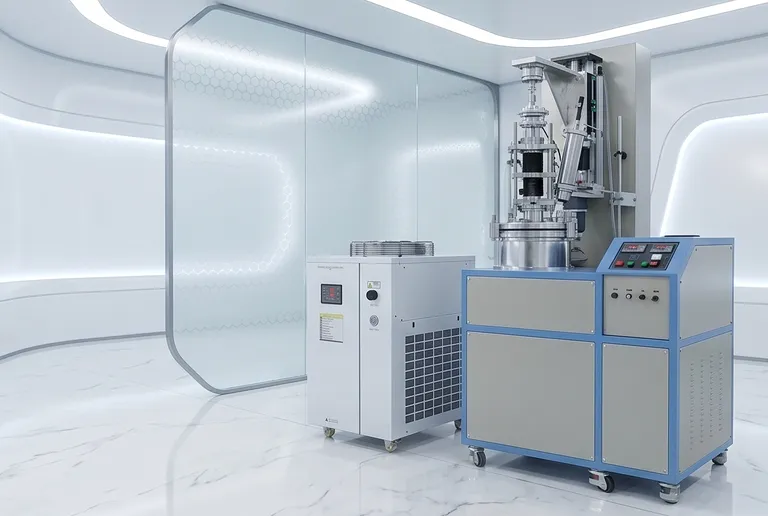
At THERMUNITS, we build the machines that manage these delicate trade-offs. We understand that in the pursuit of the next breakthrough in material science, your equipment shouldn't just be a furnace—it should be a precision instrument.
Our range of High-Pressure Hot Press Furnaces is designed for researchers who demand absolute control over thermal-mechanical coupling. Whether you are working with CVD/PECVD systems, Vacuum Induction Melting (VIM), or advanced Atmosphere furnaces, our solutions provide the stability required to transform raw materials into high-performance systems.
The future of thermal management is flexible, thin, and incredibly precise. We provide the heat and the pressure to get you there.
To find the right configuration for your specific material challenges, Contact Our Experts.
Quick Links
Suggested Products
High Temperature Vacuum Lamination Hot Press Furnace Machine for Semiconductor Wafer Bonding and Advanced Composite Thermal Processing Industrial Vacuum Hot Press Furnace Machine and High Temperature Heated Vacuum Press for Advanced Material Sintering High Pressure 600T Vacuum Induction Hot Press Furnace for Advanced Material Heat Treatment and Sintering Industrial High Temperature Vacuum Hot Press Furnace and Heated Vacuum Press Machine for Material Science Sintering 2500C High Vacuum Ultrafast Heating Pellet Press with Automated 8 Sample Loading SystemFurther Reading
The Architecture of Density: Mastering the Mechanics of Vacuum Hot Pressing The Geometry of Force: Why Vacuum Hot Pressing Redefines Ceramic Integrity The Choreography of Density: Mastering the Vacuum Hot Press Sequence The Architecture of Absence: Why Vacuum Technology Defines the Future of Flight The Invisible Chemistry of High Heat: Designing Certainty into Vacuum Hot-Zones
ThermUnits
Last updated on Apr 14, 2026
Related Products
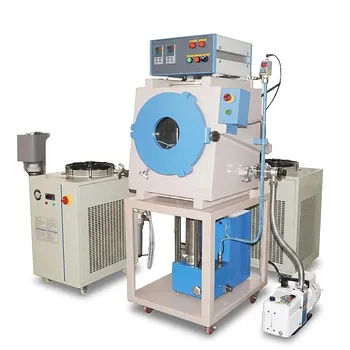
High Temperature Vacuum Lamination Hot Press Furnace Machine for Semiconductor Wafer Bonding and Advanced Composite Thermal Processing
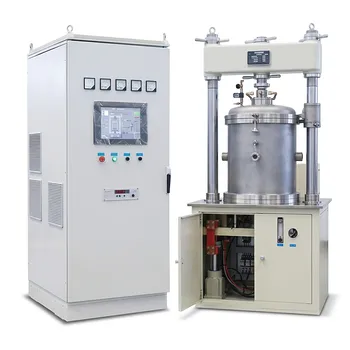
Industrial Vacuum Hot Press Furnace Machine and High Temperature Heated Vacuum Press for Advanced Material Sintering
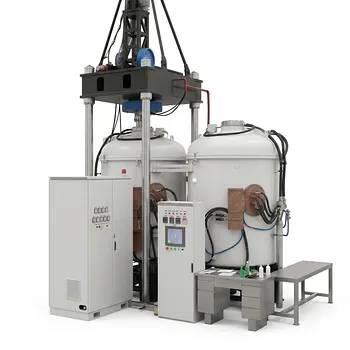
High Pressure 600T Vacuum Induction Hot Press Furnace for Advanced Material Heat Treatment and Sintering
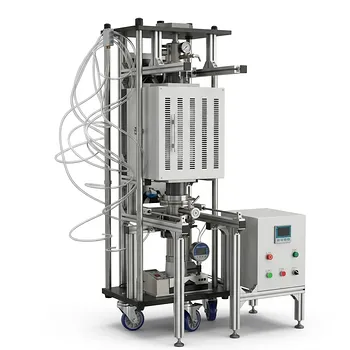
Industrial High Temperature Vacuum Hot Press Furnace and Heated Vacuum Press Machine for Material Science Sintering
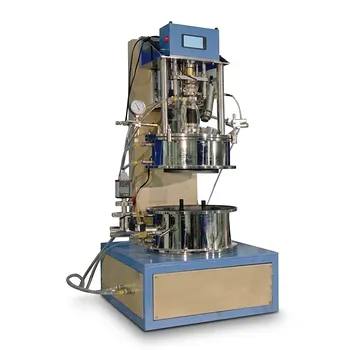
2500C High Vacuum Ultrafast Heating Pellet Press with Automated 8 Sample Loading System
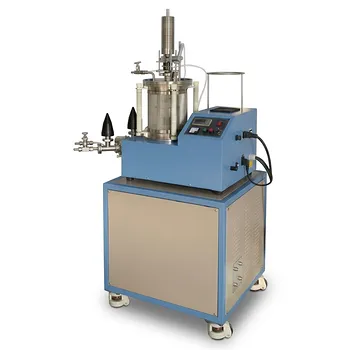
Ultrafast Thermal Pressing Furnace 2900C Max Temperature 200K per Second Heating Rate Vacuum Atmosphere Rapid Processing System
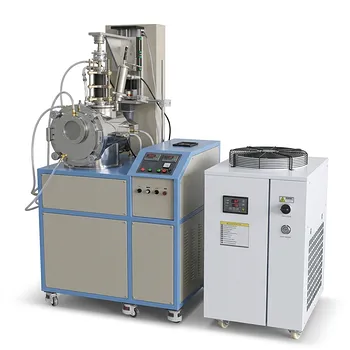
High Temperature Ultrafast Heating Pressing Furnace 2900C Max 100kgf Rapid Thermal Processing System
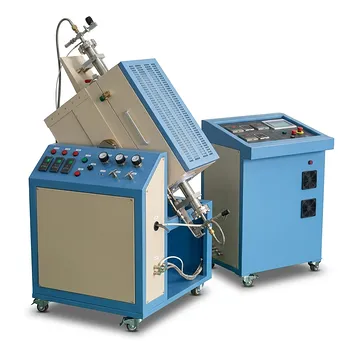
1100C High Pressure Rocking Tube Furnace with 2 Inch Super Alloy Processing Tube for Material Synthesis
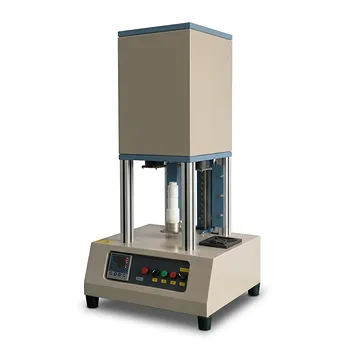
Compact High Temperature Bottom Loading Furnace 1700C Rapid Heating Cooling System Small Sample Thermal Cycling Equipment
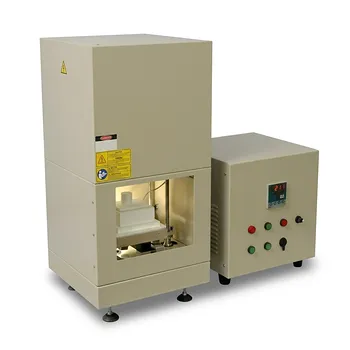
High Temperature Compact Automatic Bottom Loading Furnace with Rapid Cooling for Autonomous Material Research
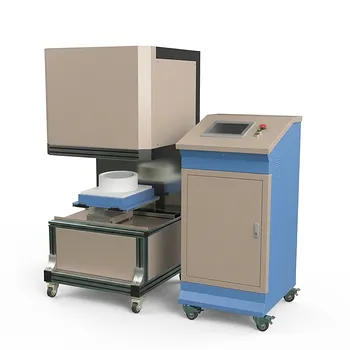
High Temperature Bottom Loading Box Furnace for Rapid Thermal Processing 1700C 40L Capacity