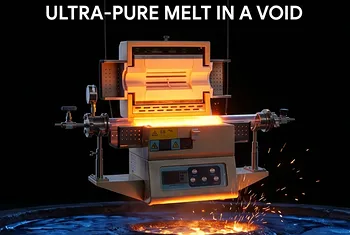
The Architecture of Density: Mastering the Mechanics of Vacuum Hot Pressing
Jul 06, 2026
The Impossible Material
In material science, we often chase a ghost: theoretical density.
Nature rarely gives us perfection. Raw powders are full of air, gaps, and impurities. To create a ceramic or a refractory metal that can withstand the core of a jet engine or a semiconductor chamber, we cannot rely on simple heat.
We need a system that forces atoms to migrate. We need the Vacuum Hot Press.
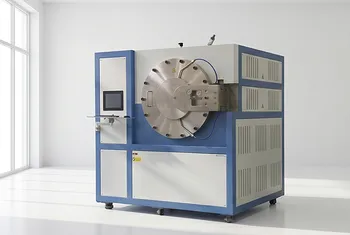
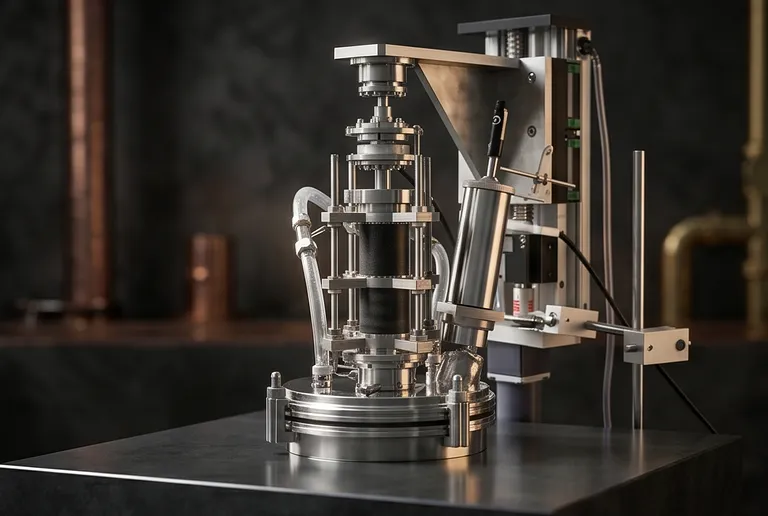
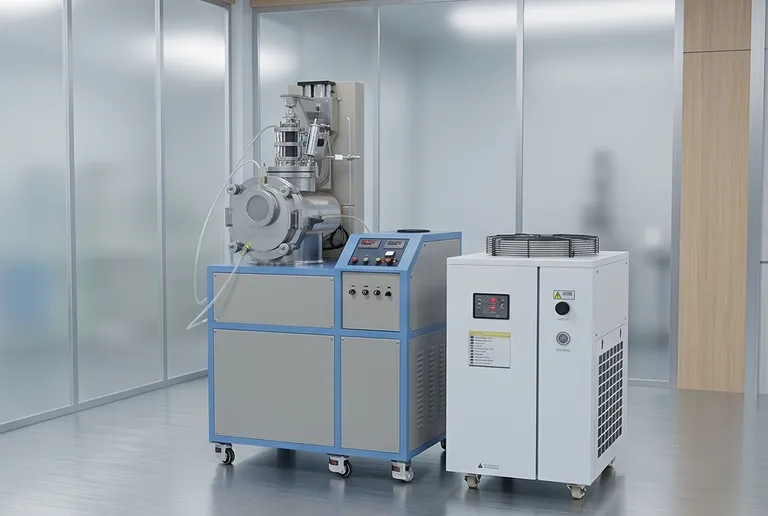
A vacuum hot press furnace is not just a heater. It is a high-precision instrument that balances three violent forces—extreme thermal energy (up to 2400°C), massive mechanical pressure (up to 100 MPa), and an absolute void.
The Triad of Consolidation
To understand the furnace, you must understand the interplay of its three primary systems. If one fails, the material fails.
1. The Controlled Void (The Vacuum)
The vacuum is more than an empty space; it is a purification engine. By reaching levels of $10^{-5}$ Pa, the system removes volatile impurities and prevents oxidation.
- The Shell: A double-walled stainless-steel vessel.
- The Cooling: Water jackets keep the outer skin at room temperature while the core screams at 2400°C.
- The Purpose: It ensures that when atoms bond, they bond to each other, not to trapped oxygen or surface contaminants.
2. The Uniaxial Force (The Press)
Unlike traditional sintering, which waits for heat to do the work, a hot press uses a hydraulic ram to drive density.
- Directional Strength: The force is uniaxial (one-way).
- The Crucible: Materials are held within high-strength graphite dies.
- The Result: Mechanical pressure lowers the required sintering temperature by 200°C to 400°C, preserving the material's integrity.
3. The Thermal Hot Zone
This is the heart of the system. Using graphite or refractory metal heating elements, the hot zone provides the energy needed for atoms to become mobile. Precision here is the difference between a perfect part and a cracked relic.
The Atomic Struggle: How Densification Happens
Inside the die, a microscopic drama unfolds. It happens in three distinct stages:
- Particle Rearrangement: Under initial pressure, particles slide and rotate, filling the largest gaps.
- Plastic Flow: As the temperature rises, the material "softens." The contact points between particles deform, closing the macroscopic pores.
- Diffusion and Creep: This is the "Engineer’s Romance." Atoms move across grain boundaries (Coble creep) and through the crystal lattice (Nabarro-Herring creep). This atomic migration turns a pile of powder into a single, solid mass.
The Psychology of Trade-offs
In engineering, as in life, you rarely get something for nothing. The vacuum hot press demands a choice between two competing virtues: Density and Grain Size.
| Focus Area | The Strategy | The Trade-off |
|---|---|---|
| Max Density | High pressure + Long hold times at peak temp. | Risk of "Grain Growth," which can make the material brittle. |
| Microstructure | Max pressure + Lower sintering temperature. | Limits thermal energy, keeping grains small and tough. |
| Purity | Deep vacuum ($10^{-5}$ Pa) + Controlled ramp rates. | Higher operational cost and longer cycle times. |
The best engineers don't just aim for the highest temperature; they aim for the "minimum viable energy" required to reach the target density.
Systemic Limitations
Mastery also means knowing what the machine cannot do.
Because the pressure is uniaxial, you are limited to simple geometries: discs, cylinders, and plates. If you try to press a complex gear, the density will be uneven. The "shadows" of the pressure will leave weak spots.
Furthermore, graphite dies—while incredibly strong—can sometimes introduce carbon into reactive metals. Precision requires a deep understanding of material compatibility.
Precision by Design
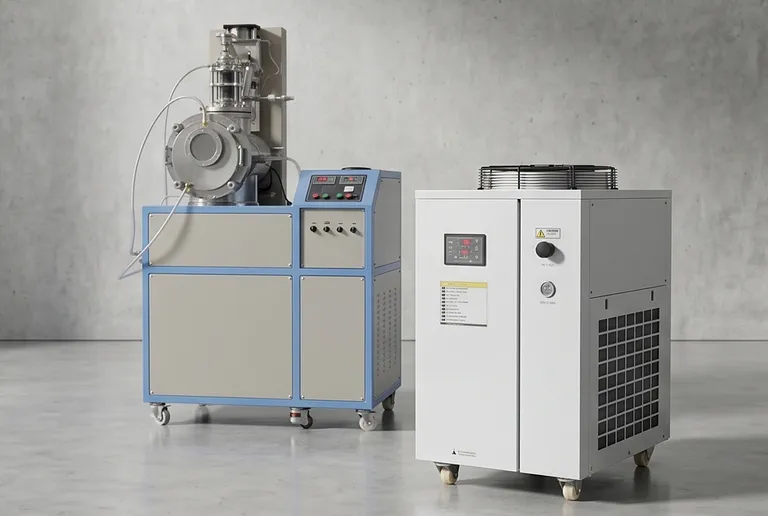
At THERMUNITS, we build systems for those who refuse to compromise on material integrity. Our Vacuum Hot Press furnaces are engineered to handle the delicate balance of force and vacuum, ensuring your R&D transitions from theoretical models to tangible, high-density reality.
Whether you are developing advanced ceramics or specialized dental materials, the logic remains the same: control the environment, control the pressure, and you control the result.
Beyond hot pressing, we provide a full spectrum of thermal solutions:
- Muffle & Atmosphere Furnaces for standard heat treatment.
- CVD/PECVD Systems for thin-film innovation.
- Vacuum Induction Melting (VIM) for high-purity alloys.
- Rotary Kilns for continuous processing.
The path to near-theoretical density is a journey of precision and systemic control. Let us provide the vehicle.
Quick Links
Suggested Products
High Temperature Vacuum Lamination Hot Press Furnace Machine for Semiconductor Wafer Bonding and Advanced Composite Thermal Processing Industrial Vacuum Hot Press Furnace Machine and High Temperature Heated Vacuum Press for Advanced Material Sintering Industrial High Temperature Vacuum Hot Press Furnace and Heated Vacuum Press Machine for Material Science Sintering High Pressure 600T Vacuum Induction Hot Press Furnace for Advanced Material Heat Treatment and Sintering 2500C High Vacuum Ultrafast Heating Pellet Press with Automated 8 Sample Loading SystemFurther Reading
The Geometry of Force: Why Vacuum Hot Pressing Redefines Ceramic Integrity The Choreography of Density: Mastering the Vacuum Hot Press Sequence The Architecture of Absence: Why Vacuum Technology Defines the Future of Flight The Invisible Chemistry of High Heat: Designing Certainty into Vacuum Hot-Zones The Purity of Absence: Why the Human Body Demands Vacuum-Processed Metallurgy
ThermUnits
Last updated on Apr 14, 2026
Related Products
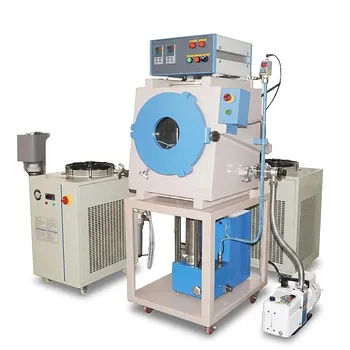
High Temperature Vacuum Lamination Hot Press Furnace Machine for Semiconductor Wafer Bonding and Advanced Composite Thermal Processing
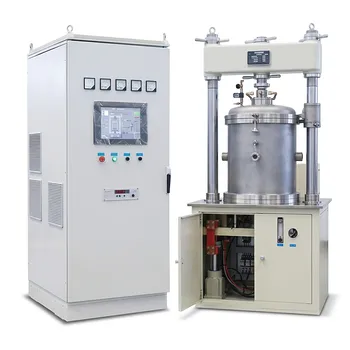
Industrial Vacuum Hot Press Furnace Machine and High Temperature Heated Vacuum Press for Advanced Material Sintering
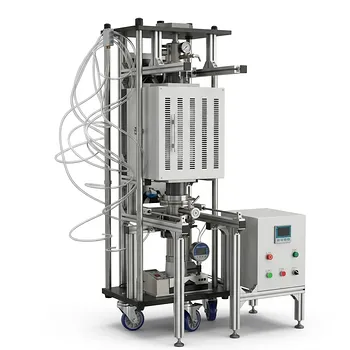
Industrial High Temperature Vacuum Hot Press Furnace and Heated Vacuum Press Machine for Material Science Sintering
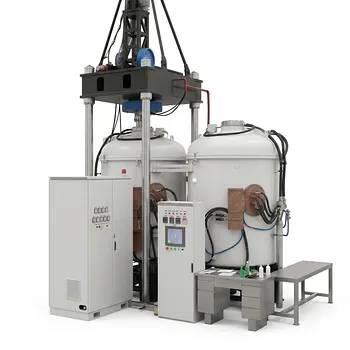
High Pressure 600T Vacuum Induction Hot Press Furnace for Advanced Material Heat Treatment and Sintering
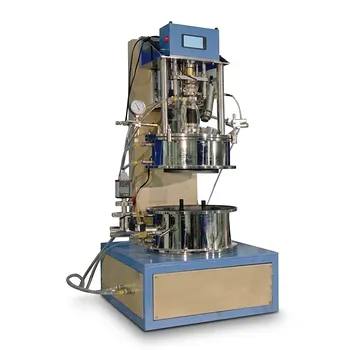
2500C High Vacuum Ultrafast Heating Pellet Press with Automated 8 Sample Loading System
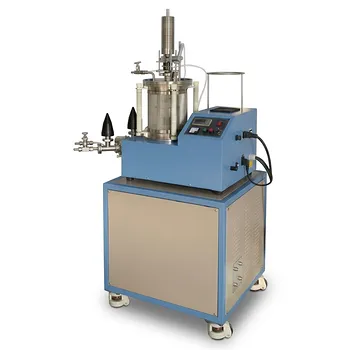
Ultrafast Thermal Pressing Furnace 2900C Max Temperature 200K per Second Heating Rate Vacuum Atmosphere Rapid Processing System
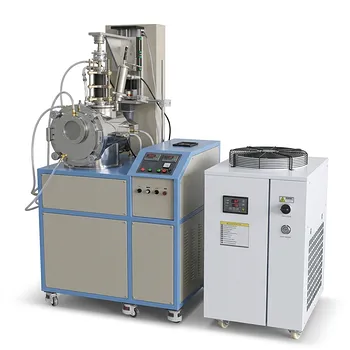
High Temperature Ultrafast Heating Pressing Furnace 2900C Max 100kgf Rapid Thermal Processing System
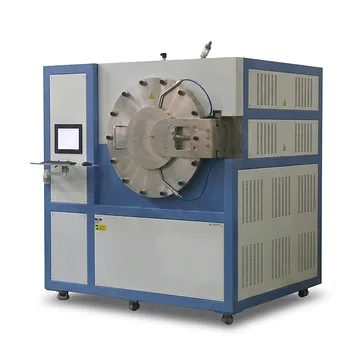
High Vacuum Pressure Chamber Furnace 800C 3.5 Bar Sintering System for Superconducting Materials
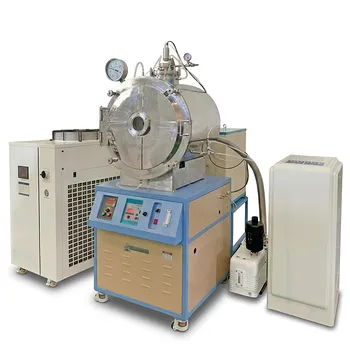
Ultra High Temperature Induction Heated Vacuum Furnace with Molten Salt Electrolysis Capability and 3000 Degree Precision Control
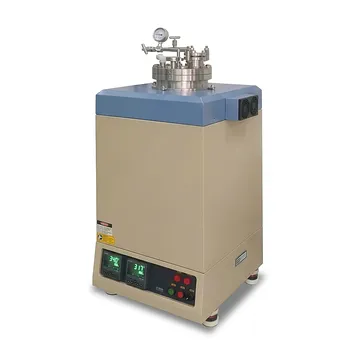
High Temperature 1000C Vacuum Furnace with 8 Inch ID Chamber for Material Sintering and Research Annealing
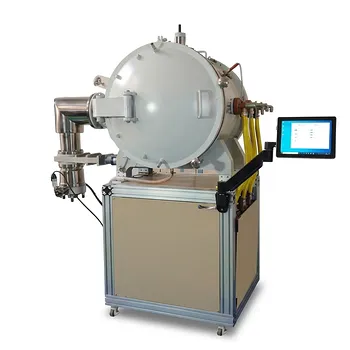
High Temperature Cold Wall Vacuum Furnace for Advanced Material Sintering and Annealing 1600C Heating Area 200x200x300mm

1800C High Temperature Compact Vacuum Tube Furnace with 60mm OD Alumina Tube and Kanthal MoSi2 Heating Elements
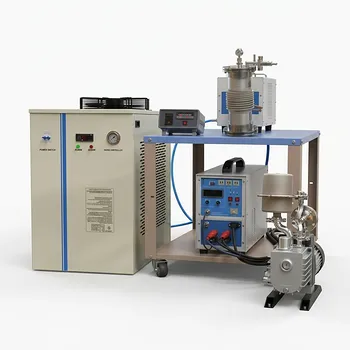
Induction Heating System with Temperature Control for High Temperature Vacuum Sintering and Melting
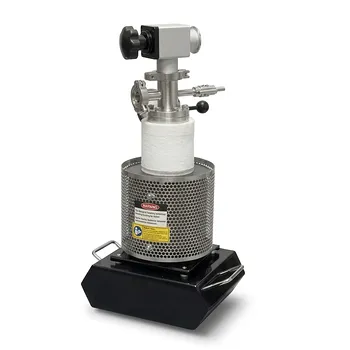
High Temperature 1100C Compact Top Loading Vertical Vacuum Tube Furnace for High Vacuum Noble Metal Melting and Material Research
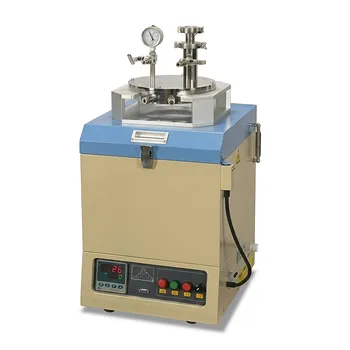
Vertical Vacuum Furnace 1100C High Temperature 8 Inch Quartz Chamber Water Cold Flange System
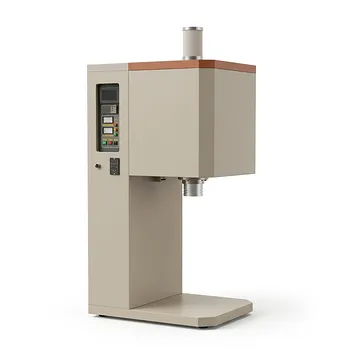
Vertical Openable Tube Furnace 0-1700c High Temperature Laboratory System for CVD and Vacuum Heat Treatment
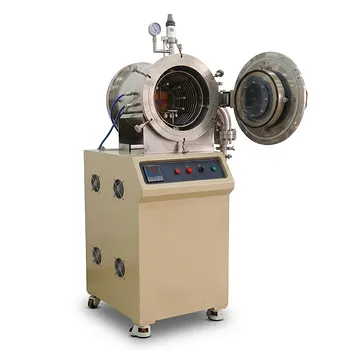
High Temperature Cold Wall High Vacuum Chamber Furnace 1400C for Advanced Material Processing
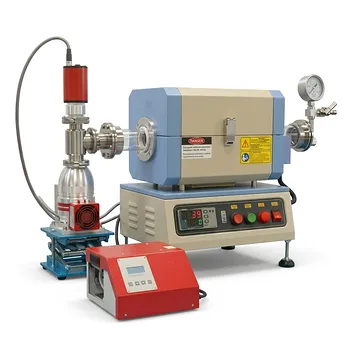
High Vacuum Compact Tube Furnace 1200C with Integrated Turbo Pump System and 8 Inch Heating Zone
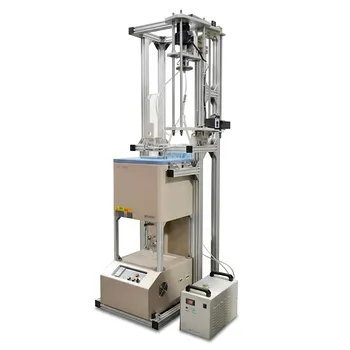
500C Vacuum Vertical Tube Furnace 84mm OD Sample Rotation Lifting System