The Architecture of Containment: Why Alumina and Lids Define Carbon Nitride Synthesis
Aug 08, 2026
The Invisible Variables of Synthesis
In material science, we often obsess over the "what"—the precursor, the target temperature, the dwell time. We rarely talk about the "where."
The vessel is not a neutral stage. In the synthesis of graphitic carbon nitride ($g-C_3N_4$), the crucible is an active participant in a delicate chemical theater.
At $550^\circ\text{C}$, melamine does not simply change state. It attempts to escape. Without the right "architecture of containment," your high-performance catalyst becomes a low-yield disappointment.
The Chemistry of Silence: High-Purity Alumina
Most impurities in R&D don't come from the air; they leach from the walls. At high temperatures, the boundary between the container and the reactant blurs.
High-purity alumina (99%+) provides what we might call chemical silence. It is a refractory material that refuses to participate in the conversation.
Why Alumina Wins
- Zero Migration: At $550^\circ\text{C}$, many lower-grade ceramics or glass vessels shed ions. Alumina remains locked, ensuring no metal contaminants alter the electronic properties of your photocatalyst.
- Resistance to the Corrosive: The decomposition of nitrogen-rich precursors creates a harsh environment. Alumina’s crystalline structure is indifferent to the corrosive intermediate gases produced during polymerization.
- Thermal Stability: It handles the long, slow soak times required for crystalline growth without structural degradation.
The Lid: Engineering a Semi-Closed World
A lid is more than a dust cover. In carbon nitride synthesis, it is a pressure regulator and a trap for the "ghosts" of the process.
Melamine is prone to sublimation. Before it can polymerize into a solid, it wants to become a gas and vanish.
Developing the Micro-Environment
The lid transforms the crucible into a semi-closed micro-environment. This serves three critical psychological and physical roles in the lab:
- Retention: It keeps volatile melamine vapor inside the heated zone long enough to react.
- Pressure Management: It creates a slight positive pressure of ammonia and other intermediate gases. This pressure "pushes" the reaction toward the full polymerization of heptazine units.
- Consistency: It shields the reaction from the turbulent air currents inside a muffle furnace, ensuring the polycondensation is uniform.
The Fragility of Precision
There is a characteristic irony in high-purity ceramics: their strength is also their weakness.
Alumina is exceptionally stable but brittle. It does not forgive a fast cooling ramp. If the furnace temperature drops too rapidly after the $550^\circ\text{C}$ dwell, the crucible can suffer from thermal shock.
The system requires patience. A controlled cooling rate is the only way to preserve the integrity of both the alumina vessel and the delicate crystalline lattice of the $g-C_3N_4$ you have just synthesized.
Synthesis Strategic Overview
| Component | Strategic Function | Outcome for Researcher |
|---|---|---|
| Alumina Wall | Chemical Inertness | High-fidelity data; no metal leaching |
| Crucible Lid | Volatile Retention | Maximized product yield; less precursor waste |
| Internal Atmosphere | Positive Pressure | Complete polymerization of $g-C_3N_4$ structure |
| Thermal Control | Regulated Ramp rates | Reusable labware; structural integrity |
Designing for Success
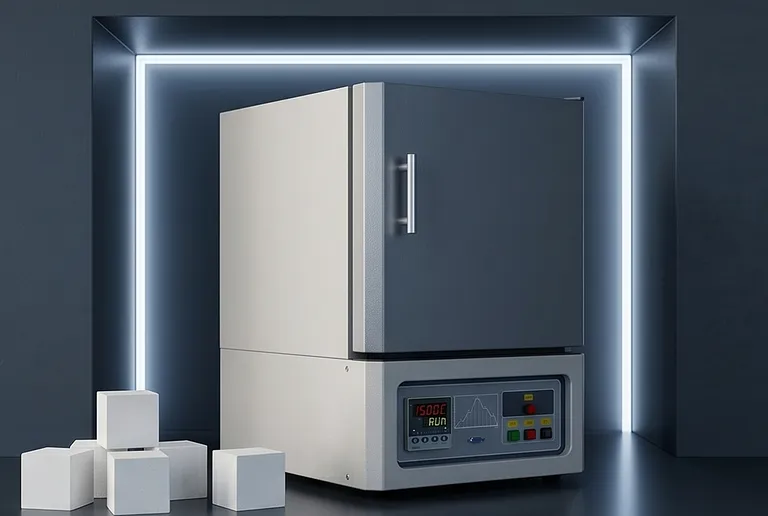
Success in carbon nitride synthesis is the result of minimizing the delta between your theoretical model and your physical reality.
If your yield is low, your lid fit is likely the culprit. If your photocatalytic activity is inconsistent, your crucible material is leaching.
At THERMUNITS, we engineer the high-precision thermal systems that make these micro-environments possible. From Muffle and Tube furnaces to CVD systems, our equipment provides the uniform temperature control necessary to turn "recipes" into repeatable science.
Quick Links
Suggested Products
Compact 1100C Muffle Furnace with Programmable Temperature Control and High Purity Alumina Insulation for Material Research 600°C Vertical Crucible Furnace with SS316 Alloy Reactor and 6 Port Vacuum Flange 1100C High Temperature Vacuum Crucible Furnace with Quartz Chamber for Thermal Processing and Sintering Vertical Crucible Furnace 1000C High Temperature Laboratory Equipment 4.7 Inch Diameter Chamber SS316 Anti Corrosive Enclosure High Temperature Vertical Crucible Furnace with 22L Heating Chamber and 1200C Maximum Temperature
ThermUnits
Last updated on Apr 14, 2026
Related Products
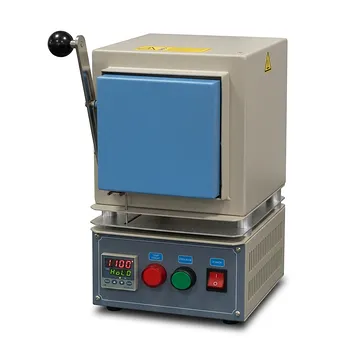
Compact 1100C Muffle Furnace with Programmable Temperature Control and High Purity Alumina Insulation for Material Research
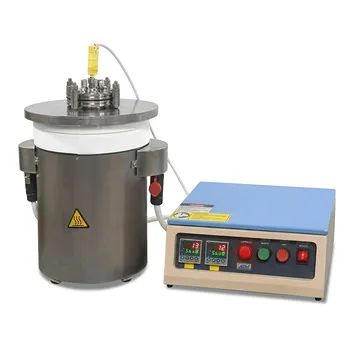
600°C Vertical Crucible Furnace with SS316 Alloy Reactor and 6 Port Vacuum Flange
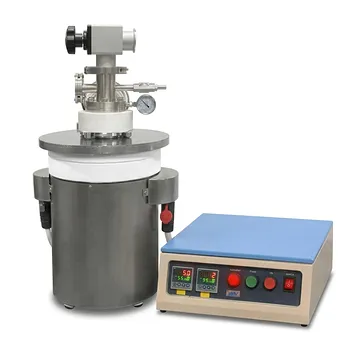
1100C High Temperature Vacuum Crucible Furnace with Quartz Chamber for Thermal Processing and Sintering
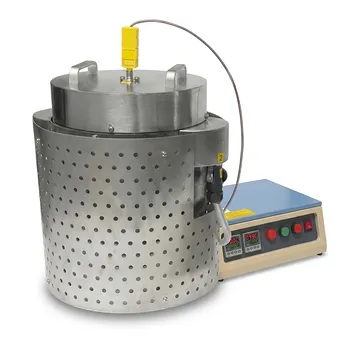
Vertical Crucible Furnace 1000C High Temperature Laboratory Equipment 4.7 Inch Diameter Chamber SS316 Anti Corrosive Enclosure
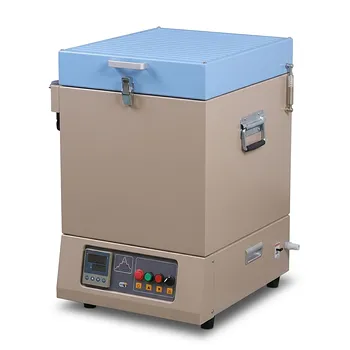
High Temperature Vertical Crucible Furnace with 22L Heating Chamber and 1200C Maximum Temperature
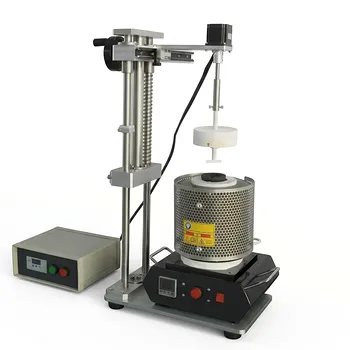
1100C Crucible Melting Furnace with Stirring Function for Glovebox and Air Sensitive Alloy Research
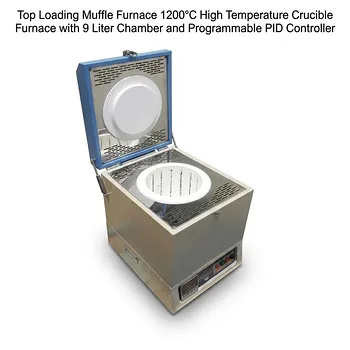
Top Loading Muffle Furnace 1200°C High Temperature Crucible Furnace with 9 Liter Chamber and Programmable PID Controller
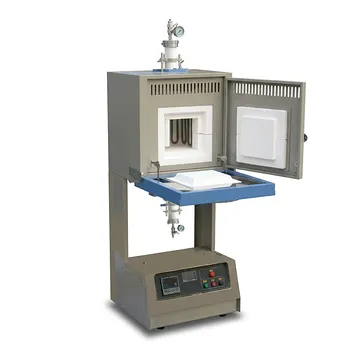
Vertical Hybrid High Temperature Furnace 1500C Alumina Tube SOFC Fuel Cell Testing Laboratory Heat Treatment Research Equipment
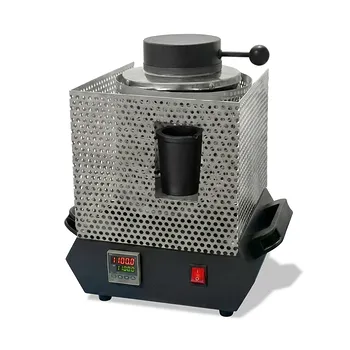
Compact Crucible Melting Furnace 1100C Programmable Temperature Controller Metal Sintering Equipment
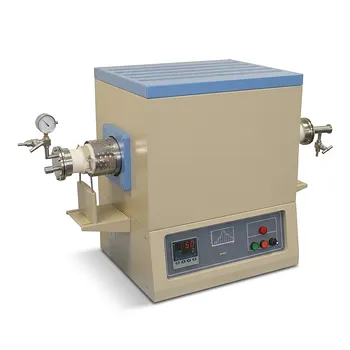
1700C High Temperature Alumina Tube Furnace with 18 Inch Heated Zone and Vacuum Sealing Flanges
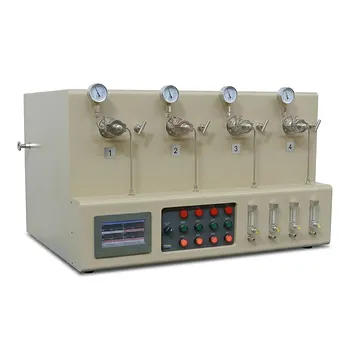
High Temperature 1700C 4 Channel Tube Furnace 1 Inch Alumina Tube for Hi-Throughput Annealing
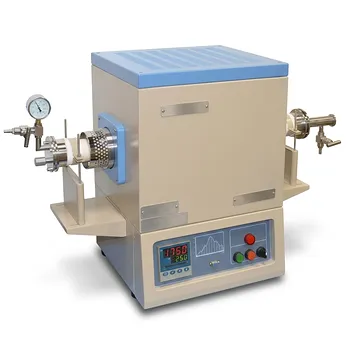
High Temperature Compact Vacuum Tube Furnace 1750C Max 60mm OD Alumina Tube
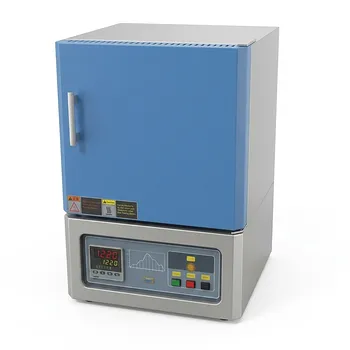
High Temperature Benchtop Muffle Furnace 1700C 10L Chamber Alumina Fiber Insulation MoSi2 Heating Elements
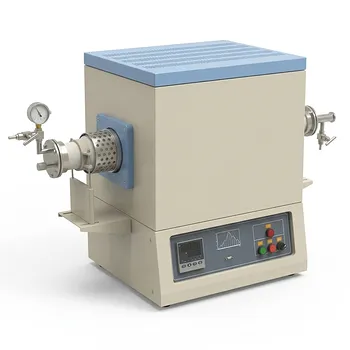
1750°C High Temperature Benchtop Vacuum Atmosphere Tube Furnace with Kanthal Super 1800 Heating Elements and 60mm Alumina Processing Tube

1800C High Temperature Compact Vacuum Tube Furnace with 60mm OD Alumina Tube and Kanthal MoSi2 Heating Elements
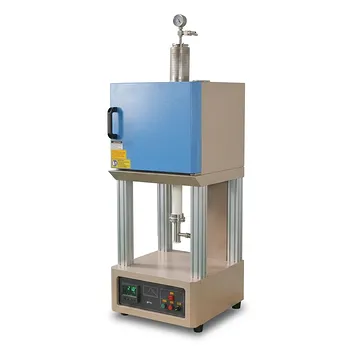
Hybrid High Temperature Tube and Box Furnace 1700C with 2 Inch Alumina Tube for Material Research
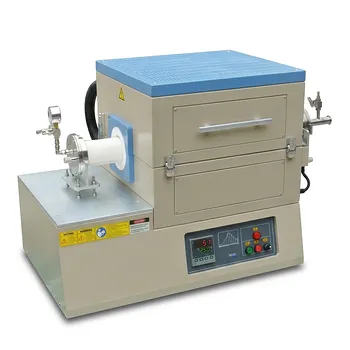
High Temperature 1700C Split Tube Furnace with Vacuum Flanges Valves and 60mm Alumina Tube
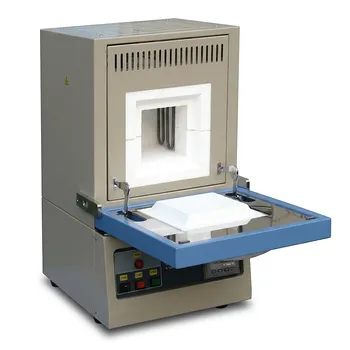
High Temperature 1800C Compact Muffle Furnace with Kanthal Super 1900 Heating Elements and 1.7L Alumina Chamber
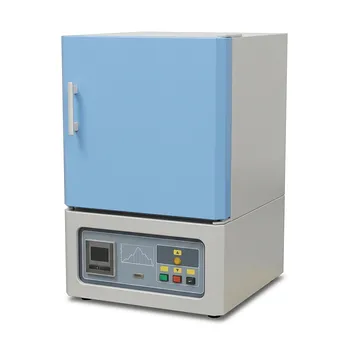
1800C Bench Top Muffle Furnace with Kanthal Super 1900 Heating Elements and 3.6L Alumina Fiber Chamber