The Invisible Interface: Why High-Purity Alumina is the Silent Guardian of Thermal Truth
Aug 12, 2026
The Hidden Variable in the Furnace
In material science, we often obsess over the variables we can control: the ramp rate, the atmosphere, and the soak time. But the most dangerous variable is the one we assume is inert.
When a sample enters a furnace at 1400°C, it undergoes a transformation. If the container holding that sample participates in the reaction, the resulting data isn't a measurement of the sample—it’s a measurement of a contamination event.
This is why high-purity alumina ($Al_2O_3$) has become the industry standard. It is designed to be "chemically invisible."
The Chemistry of Total Inertness
At extreme temperatures, materials that appear stable at room temperature begin to behave like solvents. Biomass ash and industrial fuels develop complex oxides that aggressively seek out chemical partners.
Eliminating the Reaction
High-purity alumina is chosen because it refuses to participate. While lower-grade ceramics might leach silica or iron into a specimen, alumina remains stoic. It prevents the formation of new chemical phases that would otherwise skew mineralogical results in XRD (X-ray Diffraction) analysis.
The Barrier Against Infiltration
In sintering and diffusion studies, the interface is where the truth lives. Alumina’s dense, non-porous structure resists the "sponge effect," where molten oxides or alloys might otherwise penetrate the crucible wall. This ensures that the data representing your diffusion interface is pure, not a compromise between the sample and the ceramic.
The Physics of Constant Mass
In thermogravimetric analysis (TGA) or ash yield testing, the crucible is part of the scale. If the crucible gains or loses even a microgram through oxidation or volatilization, the entire experiment is compromised.
Alumina offers a "Gravimetric Contract":
- Zero Volatilization: It does not off-gas or lose weight at high temperatures.
- Oxidation Resistance: Unlike metallic carriers, it cannot be further oxidized.
- Thermal Stability: It maintains structural integrity up to 1700 K (approx. 1427°C).
By maintaining a constant mass, alumina ensures that every signal detected by the sensors reflects the sample's behavior alone.
Navigating the Trade-offs: Purity vs. Fragility
In engineering, there is no such thing as a free lunch. The properties that make alumina an elite carrier also dictate its handling.
| Feature | The Benefit | The Engineering Trade-off |
|---|---|---|
| High Purity (>99%) | Absolute chemical integrity; no leaching. | Higher material cost compared to standard ceramics. |
| Crystalline Hardness | Resists erosion from molten salts and oxides. | Low fracture toughness; highly brittle if dropped. |
| Dense Structure | Prevents sample infiltration and cross-contamination. | Susceptible to "thermal shock" if heated unevenly or too rapidly. |
The Psychology of Precision
Choosing a 99.7% purity crucible over a 95% alternative is a psychological choice as much as a technical one. It is an investment in the "certainty" of the result.
In the long run, the cost of a failed R&D cycle—driven by a trace impurity from a cheap crucible—far outweighs the price of high-purity alumina. To get the truth out of the furnace, the container must stay silent.
Engineering the Ideal Thermal Environment
The crucible is the heart of the experiment, but the furnace is the body that sustains it. Achieving the level of precision required in modern R&D demands a system where every component—from the heating elements to the atmosphere control—works in harmony.
THERMUNITS specializes in this harmony. As a leading manufacturer of high-temperature laboratory equipment, we provide the infrastructure for your most critical material science breakthroughs.
Our specialized solutions include:
- Precision Furnaces: Muffle, Vacuum, Atmosphere, and Tube furnaces designed for stability.
- Advanced Processing: CVD/PECVD systems and Vacuum Induction Melting (VIM) for high-purity alloy R&D.
- Industrial Scaling: Electric rotary kilns and Hot Press furnaces for moving from lab to production.
Whether you are analyzing complex ash components or developing next-generation ceramics, our equipment provides the controlled environment your research deserves.
Quick Links
Suggested Products
Compact 1100C Muffle Furnace with Programmable Temperature Control and High Purity Alumina Insulation for Material Research 600°C Vertical Crucible Furnace with SS316 Alloy Reactor and 6 Port Vacuum Flange High Temperature Vertical Crucible Furnace with 22L Heating Chamber and 1200C Maximum Temperature 1100C High Temperature Vacuum Crucible Furnace with Quartz Chamber for Thermal Processing and Sintering Vertical Crucible Furnace 1000C High Temperature Laboratory Equipment 4.7 Inch Diameter Chamber SS316 Anti Corrosive Enclosure
ThermUnits
Last updated on Apr 14, 2026
Related Products
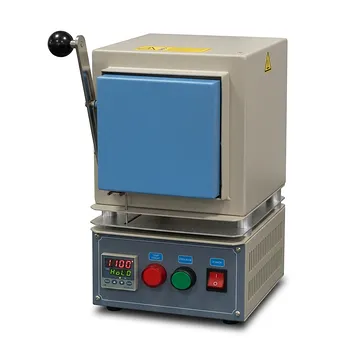
Compact 1100C Muffle Furnace with Programmable Temperature Control and High Purity Alumina Insulation for Material Research
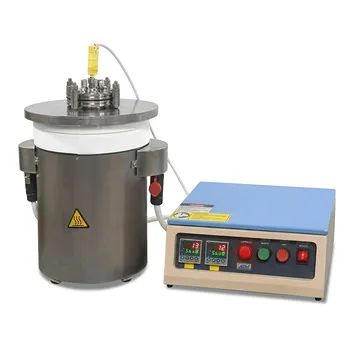
600°C Vertical Crucible Furnace with SS316 Alloy Reactor and 6 Port Vacuum Flange
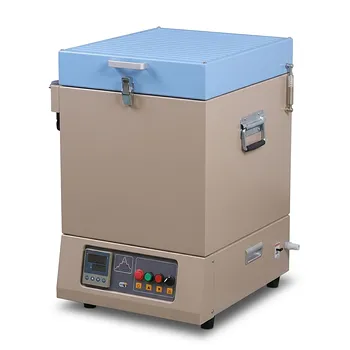
High Temperature Vertical Crucible Furnace with 22L Heating Chamber and 1200C Maximum Temperature
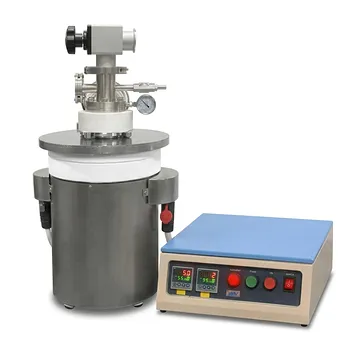
1100C High Temperature Vacuum Crucible Furnace with Quartz Chamber for Thermal Processing and Sintering
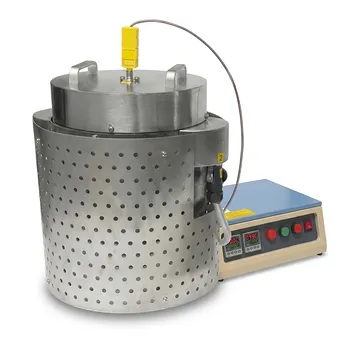
Vertical Crucible Furnace 1000C High Temperature Laboratory Equipment 4.7 Inch Diameter Chamber SS316 Anti Corrosive Enclosure
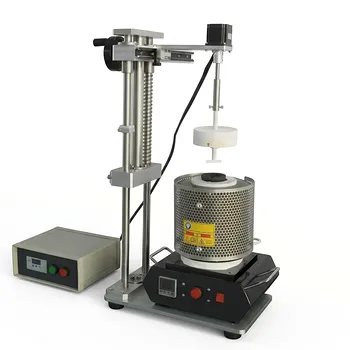
1100C Crucible Melting Furnace with Stirring Function for Glovebox and Air Sensitive Alloy Research
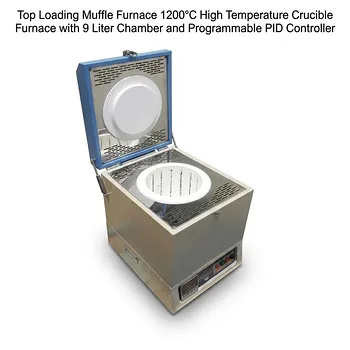
Top Loading Muffle Furnace 1200°C High Temperature Crucible Furnace with 9 Liter Chamber and Programmable PID Controller
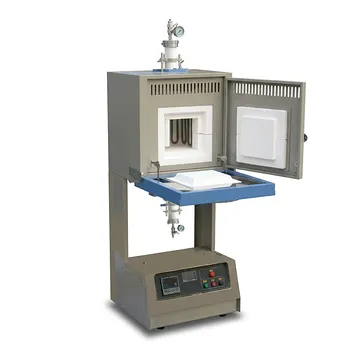
Vertical Hybrid High Temperature Furnace 1500C Alumina Tube SOFC Fuel Cell Testing Laboratory Heat Treatment Research Equipment
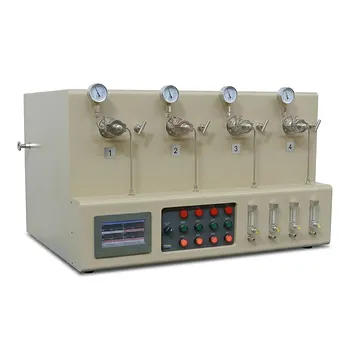
High Temperature 1700C 4 Channel Tube Furnace 1 Inch Alumina Tube for Hi-Throughput Annealing

1700C High Temperature Alumina Tube Furnace with 18 Inch Heated Zone and Vacuum Sealing Flanges
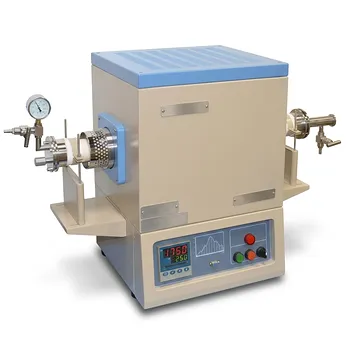
High Temperature Compact Vacuum Tube Furnace 1750C Max 60mm OD Alumina Tube
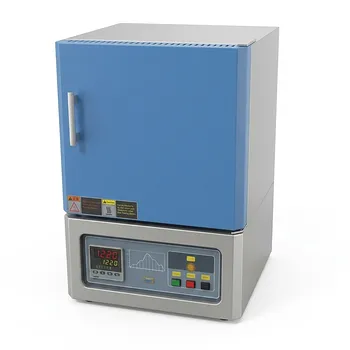
High Temperature Benchtop Muffle Furnace 1700C 10L Chamber Alumina Fiber Insulation MoSi2 Heating Elements
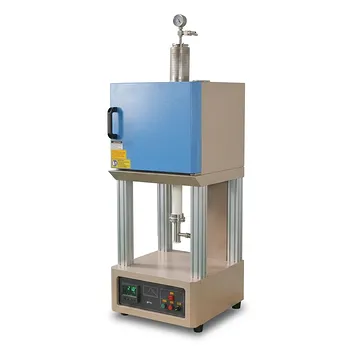
Hybrid High Temperature Tube and Box Furnace 1700C with 2 Inch Alumina Tube for Material Research
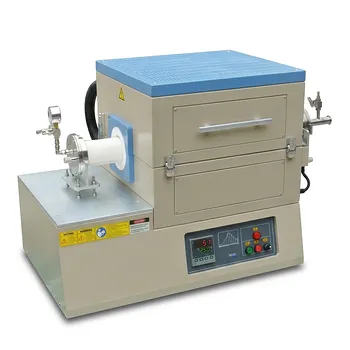
High Temperature 1700C Split Tube Furnace with Vacuum Flanges Valves and 60mm Alumina Tube
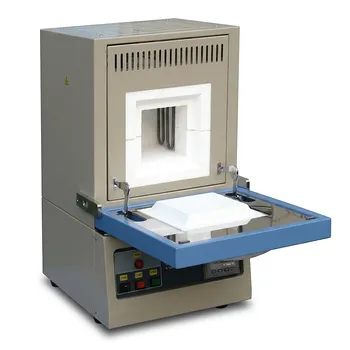
High Temperature 1800C Compact Muffle Furnace with Kanthal Super 1900 Heating Elements and 1.7L Alumina Chamber

1750°C High Temperature Benchtop Vacuum Atmosphere Tube Furnace with Kanthal Super 1800 Heating Elements and 60mm Alumina Processing Tube

1800C High Temperature Compact Vacuum Tube Furnace with 60mm OD Alumina Tube and Kanthal MoSi2 Heating Elements

Compact High Temperature 1600C Tube Furnace with 50mm Alumina Tube and Vacuum Flanges for Material Sintering
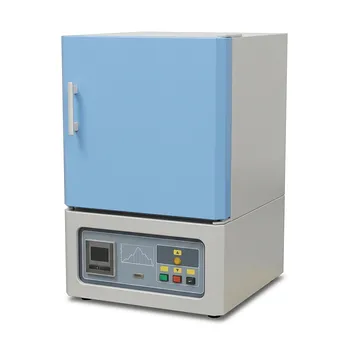
1800C Bench Top Muffle Furnace with Kanthal Super 1900 Heating Elements and 3.6L Alumina Fiber Chamber