The Architecture of Equilibrium: Simulating the Extreme Geometry of Silicomanganese Reactions
May 28, 2026
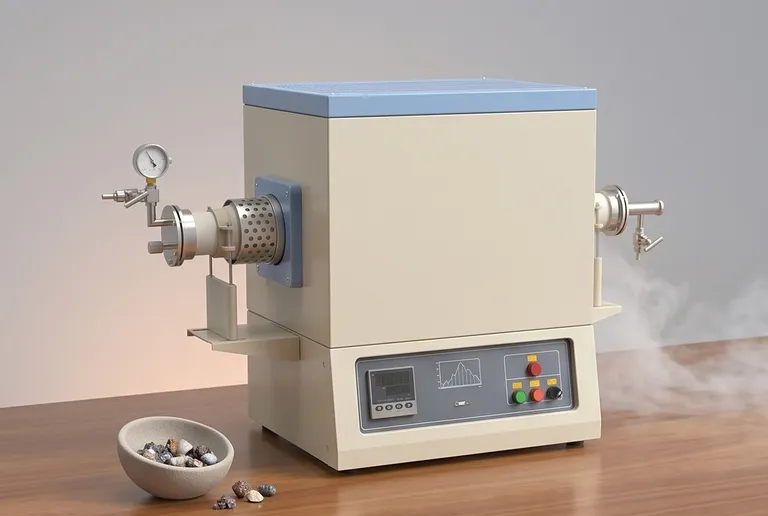
The Invisible Laboratory
In industrial metallurgy, the submerged arc furnace is a black box. Inside, chaotic currents and extreme gradients turn ore into alloy.
For the researcher, the goal is to shrink this chaos. To understand how silicomanganese slag behaves, one must create a miniature, high-fidelity replica of hell.
This requires more than just heat. It requires a precise "architecture of equilibrium" where temperature, chemistry, and time are perfectly bounded.
The Gravity of 1600°C
In material science, 1600°C is a threshold. At this range, most materials lose their ego; they soften, react, or fail.
The Thermal Landscape
- Melting Points: Silicomanganese slag and ore reduction require sustained heat to achieve a state of true fluidity.
- Stability: A fluctuation of even five degrees can shift the equilibrium constant, rendering hours of data meaningless.
- Gradients: Success depends on simulating the descent of materials through different thermal zones.
Graphite resistance heating is the chosen tool for this intensity. It provides the muscle to reach these temperatures and the finesse to maintain a uniform thermal field across the reaction zone.
The Invisible Barrier: Atmosphere as a Shield
Oxygen is the enemy of the high-temperature researcher. In a graphite tube furnace, the chemistry of the air is as critical as the temperature of the walls.
Graphite elements are remarkably efficient but physically vulnerable. If a seal fails, oxygen doesn't just contaminate the sample—it consumes the furnace hardware itself.
Essential Atmospheric Conditions
- Inert Protection: High-purity Argon or Nitrogen creates a vacuum-like purity, ensuring slag-metal interfaces remain uncorrupted.
- Chemical Replication: By introducing Carbon Monoxide (CO), researchers can mimic the specific reducing environment of the furnace’s "active zone."
- Kinetics Control: Precise gas flow allows for the study of how manganese and silicon oxides reduce in real-time.
The Vertical Quest: Freezing Time
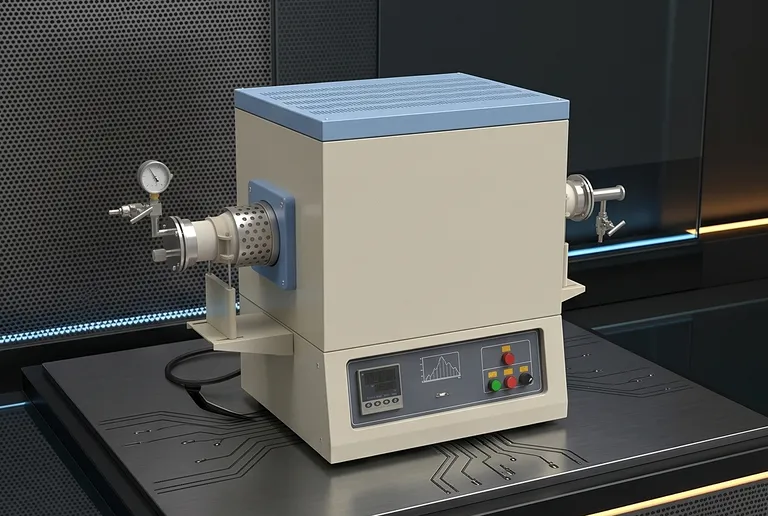
There is a specific "Engineer’s Romance" in the act of quenching. It is the attempt to stop time.
In a vertical tube furnace, gravity is leveraged for precision. The crucible sits in the heart of the heat. When the reaction reaches its climax, the sample can be dropped or moved instantly into a cooling medium.
This "freezes" the chemical state of the slag. It allows the researcher to look at a microscopic "photograph" of what was happening at 1873 K.
The Graphite Paradox
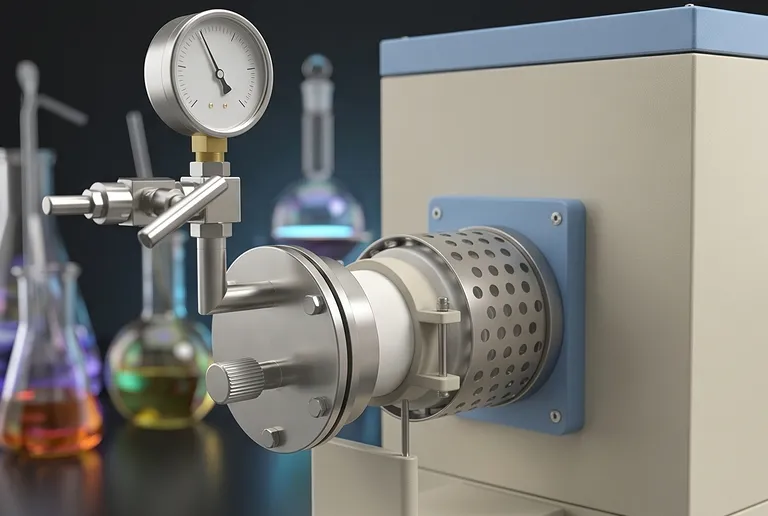
While graphite enables the extremes of industrial R&D, it introduces a systemic fragility. Every experiment is a balance of trade-offs.
| Variable | The Advantage | The Risk |
|---|---|---|
| Graphite Elements | Reaches 1600°C+ with ease. | Rapid oxidation if inert gas flows fail. |
| Alumina Tubes | High structural integrity. | Risk of reaction/failure near 1700°C. |
| Static Testing | Excellent for thermodynamics. | Lacks the physical agitation of industrial scales. |
Understanding these limits is what separates a successful simulation from a failed hardware cycle.
Engineering the Solution: THERMUNITS
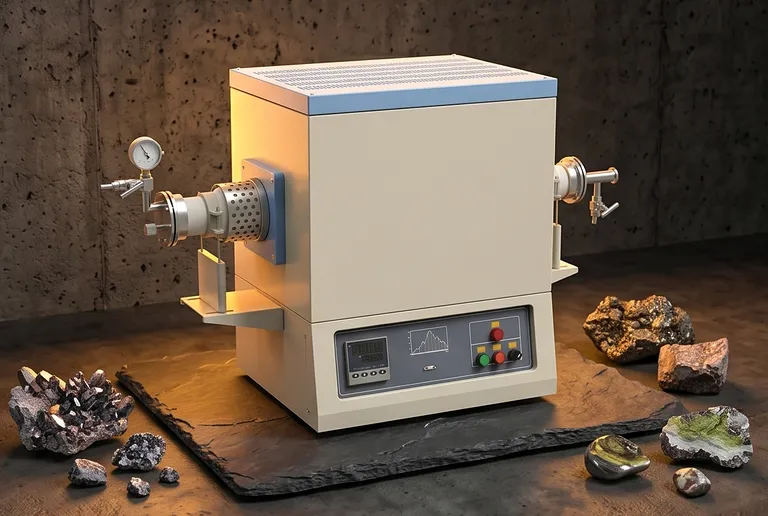
To simulate the active zones of silicomanganese production, your equipment must be more resilient than the materials it tests.
THERMUNITS designs thermal systems for the rigors of material science R&D. We provide the stable thermal fields and strict atmospheric controls necessary to turn high-temperature theory into industrial certainty.
Our portfolio spans the entire spectrum of thermal processing:
- Tube & Atmosphere Furnaces: Optimized for slag simulations and controlled gas reduction.
- Vacuum & VIM Furnaces: For high-purity melting where atmospheric interference is not an option.
- Custom Rotary & Hot Press Systems: For dynamic material behavior and advanced industrial synthesis.
Precision is the only way to navigate the complexity of high-temperature kinetics.
Build your next breakthrough on a foundation of thermal stability. Contact Our Experts
Quick Links
Suggested Products
High Temperature 1600°C Three Zone Heated Bottom Loading Box Furnace with Rapid Thermal Processing Chamber 72L Volume High Temperature Economic Hydrogen Gas Box Furnace 1600C Atmosphere Controlled Thermal Processing System 65L Capacity High Temperature Horizontal Electrical Assisted Sintering Furnace with 3KW Programmable Power Source for Advanced Ceramic Materials 1650C High Temperature Atmosphere Controlled Box Furnace with 65L Chamber for Advanced Material Sintering and Industrial Heat Treatment High Temperature Vertical Hybrid Furnace with Alumina Tube and SiC Heating for SOFC Coin Cell Testing and Atmosphere Processing
ThermUnits
Last updated on Apr 14, 2026
Related Products
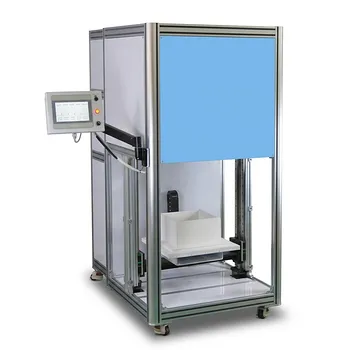
High Temperature 1600°C Three Zone Heated Bottom Loading Box Furnace with Rapid Thermal Processing Chamber 72L Volume
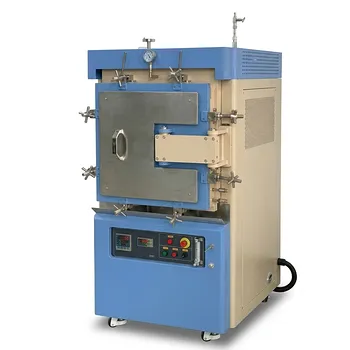
High Temperature Economic Hydrogen Gas Box Furnace 1600C Atmosphere Controlled Thermal Processing System 65L Capacity
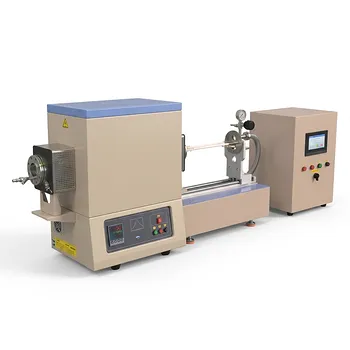
High Temperature Horizontal Electrical Assisted Sintering Furnace with 3KW Programmable Power Source for Advanced Ceramic Materials
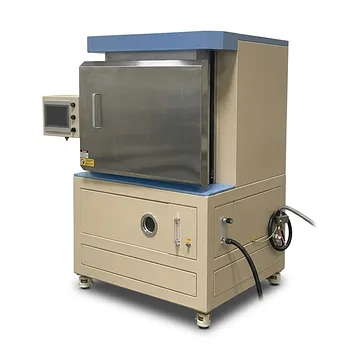
1650C High Temperature Atmosphere Controlled Box Furnace with 65L Chamber for Advanced Material Sintering and Industrial Heat Treatment
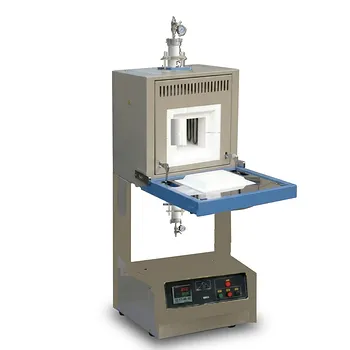
High Temperature Vertical Hybrid Furnace with Alumina Tube and SiC Heating for SOFC Coin Cell Testing and Atmosphere Processing
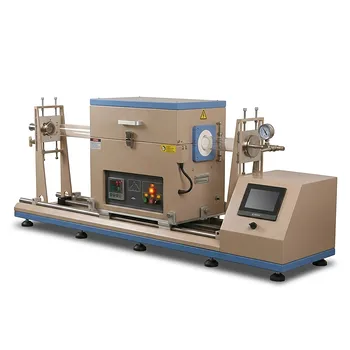
1200C Sliding Tube Furnace for Rapid Thermal Processing and CVD Graphene Growth with 100mm OD Capacity
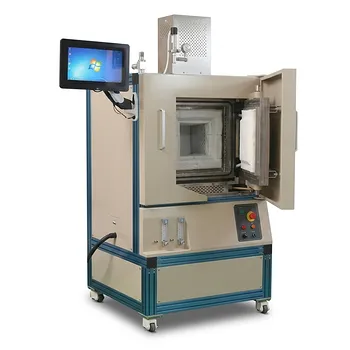
High Temperature Oxygen and Inert Atmosphere Controlled Furnace 8 Liter 1700C Sintering System for Advanced Materials RD
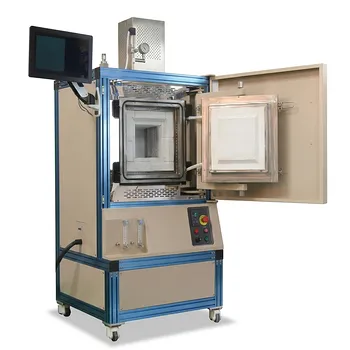
High Temperature Hydrogen Atmosphere Box Furnace 1650C Max Reducing Environment Material Synthesis System 8x8x8 Chamber
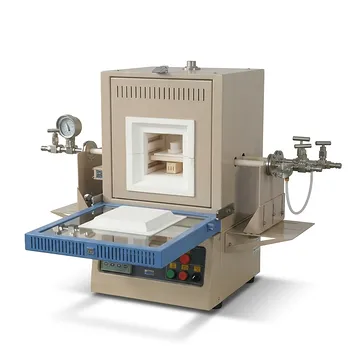
1700C Compact Hybrid Furnace with Dual Layer Box Sintering and Controlled Atmosphere Alumina Tubes
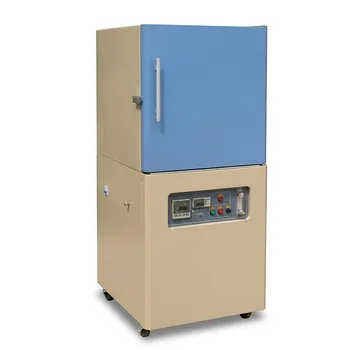
High Temperature Muffle Furnace with Dual Controllers and 36L Large Chamber 1700C Max
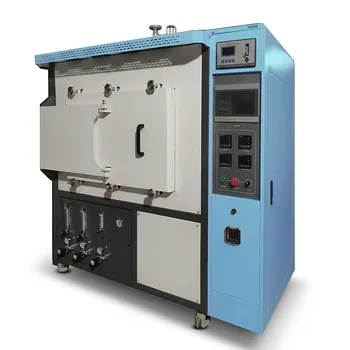
Roller Table Atmosphere Furnace 1500C High Temperature Battery Material Sintering System 112L Capacity
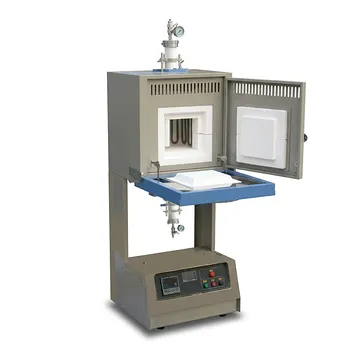
Vertical Hybrid High Temperature Furnace 1500C Alumina Tube SOFC Fuel Cell Testing Laboratory Heat Treatment Research Equipment
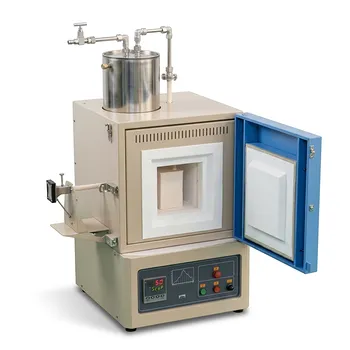
High Temperature Bench Top Muffle Furnace 1700C with Integrated Evaporating Particle Collection and 8x8x8 Alumina Fiber Chamber
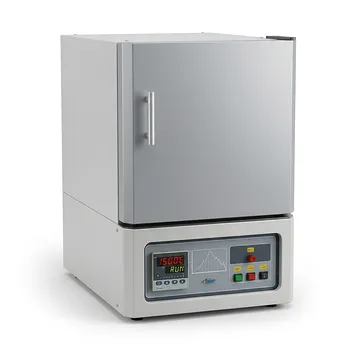
High Temperature 1500C Benchtop Muffle Furnace 3.6L Alumina Fiber Chamber Programmable Controller Sintering Annealing Carbonization Thermal Processing System
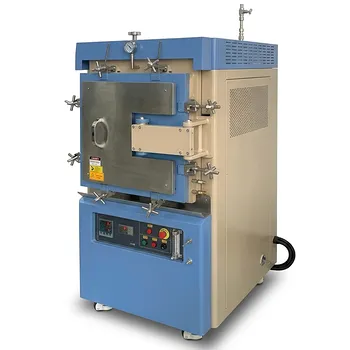
Atmosphere Controlled Muffle Furnace 1700C Maximum Temperature 80L High Capacity Vacuum Inert Gas Box Furnace
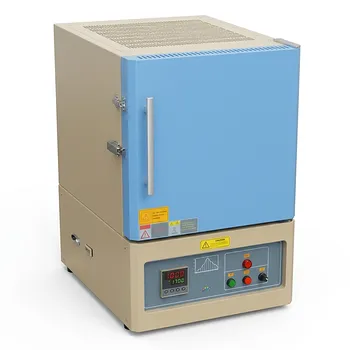
Large Bench Top 1700C High Temperature Muffle Furnace with 19L Chamber for Advanced Material Sintering and Annealing
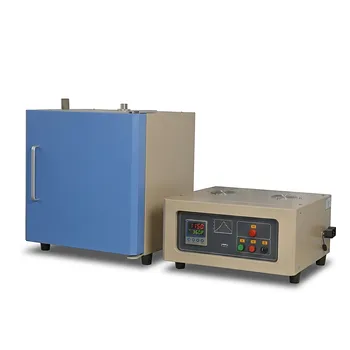
High Temperature Muffle Furnace with Alloy Chamber for Debinding and Sintering Applications
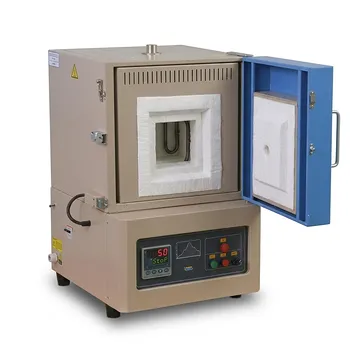
1800°C Bench Top Ultra High Temperature Muffle Furnace with Sapphire Observation Window and Top Feeding Port for Materials Research and Thermal Processing
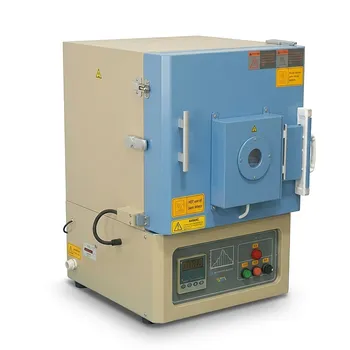
High Temperature Benchtop Muffle Furnace 1500C with 3.6L Chamber and Quartz Observation Window