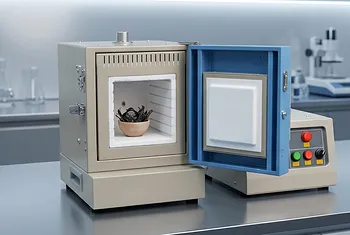
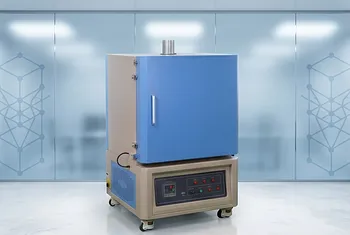
The Geometry of Heat: Forging the Structural DNA of Dicalcium Ferrite
Aug 18, 2026
The Invisible Migration
In material science, heat is rarely just about temperature. It is about mobility.
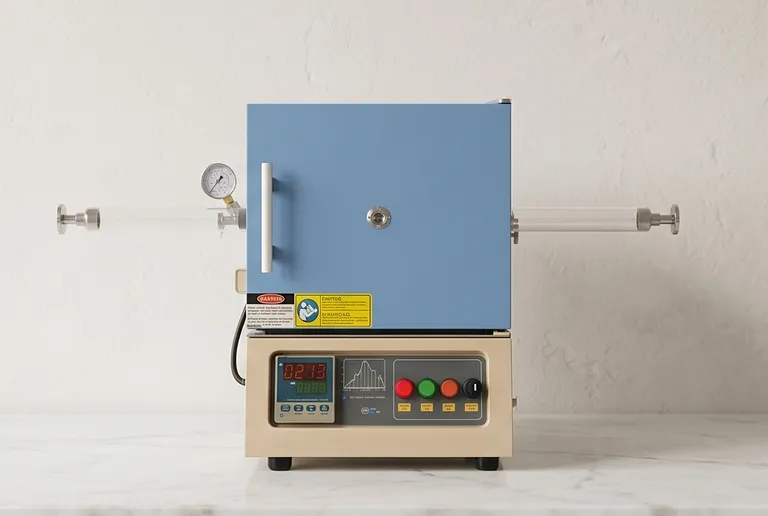
When synthesizing dicalcium ferrite ($Ca_2Fe_2O_5$), an industrial furnace acts as a choreographer for an atomic dance. At 1000 °C, the lattice structures of iron oxide and calcium oxide do not simply melt; they migrate.
This is solid-phase sintering—a process where the furnace provides the "activation energy" necessary for atoms to leap across grain boundaries, restructuring raw oxides into a sophisticated, pure-phase crystal.
The Architecture of Phase Purity
In the lab, time is the silent ingredient. A furnace that cannot hold a steady 1000 °C for six hours is not just inefficient; it is a source of structural "noise."
Preventing the Intermediate
Without precise thermal dwell times, the material remains trapped in incomplete phases. These "ghost phases" weaken the oxygen carrier’s cyclic stability, leading to premature failure in industrial R&D applications.
Pre-Sintering Discipline
Before the final structure is forged, the furnace must often perform the "calcination of intent"—converting calcium carbonate into high-activity free calcium oxide at 900 °C. This stabilization of the precursor is what allows the subsequent sintering to reach its full potential.
Atmosphere as a Chemical Shield
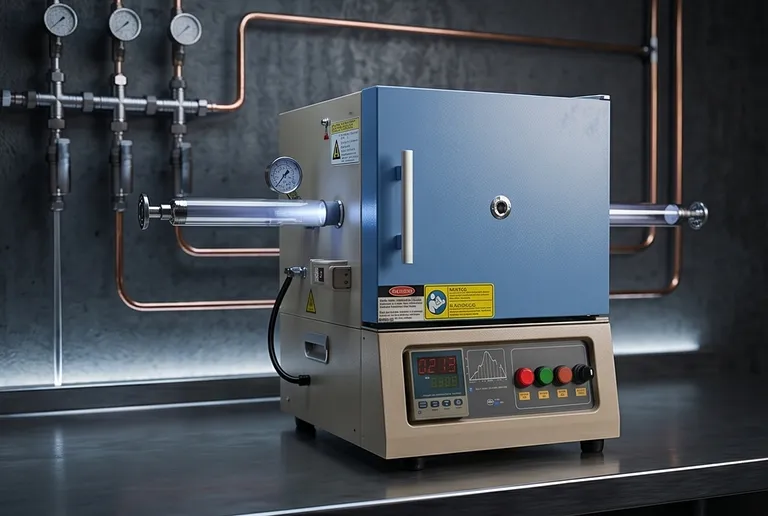
The air inside a furnace is not inert unless you command it to be. In the synthesis of ferrites, the atmosphere is a critical variable in the equilibrium equation.
- Redox Control: An atmosphere furnace prevents unintended reduction or oxidation. It preserves the iron’s valence state, ensuring the final crystal performs exactly as the stoichiometry intended.
- Microstructural Navigation: By regulating oxygen partial pressure, the furnace influences how pores are eliminated. This determines whether the final ceramic is a dense, robust monolith or a fragile, porous sponge.
The Sintering Paradox: Strength vs. Reactivity
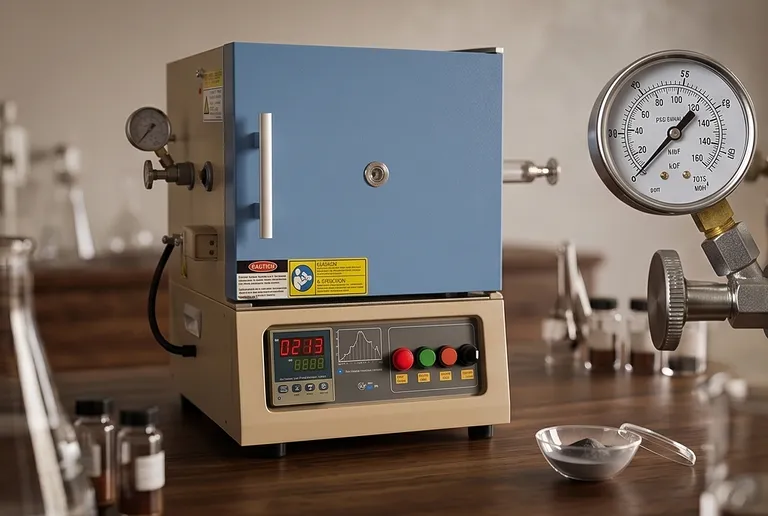
In engineering, every gain often carries a hidden cost. Sintering is a masterclass in managing these trade-offs.
| Variable | The "Push" | The "Penalty" |
|---|---|---|
| Higher Temperature | Faster densification and higher mechanical strength. | Abnormal grain growth; loss of specific surface area. |
| Extended Dwell Time | Ensures absolute phase purity. | Increased energy cost; potential "pore closure." |
| Cooling Rate | Manages microstructural evolution. | Rapid cooling causes thermal shock and micro-cracking. |
Mechanical strength is essential for durability, but reactivity requires surface area. If the furnace "over-bakes" the material, the grains coarsen, and the oxygen carrier loses its ability to react with gases effectively. Mastery lies in the equilibrium.
Engineering the Infrastructure of Discovery
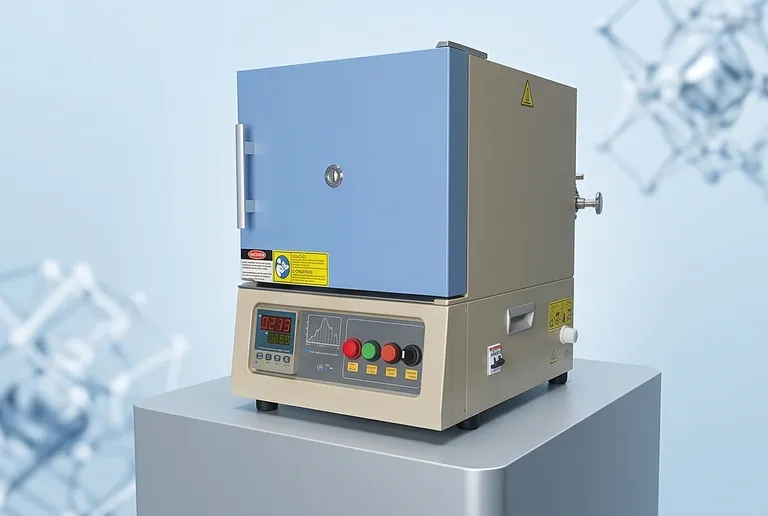
At THERMUNITS, we understand that a furnace is more than a heating element; it is a precision reactor. Whether you are developing dicalcium ferrite for chemical looping or exploring advanced ceramics, the integrity of your results depends on the stability of your thermal environment.
Our systems are engineered to eliminate variables, allowing you to focus on the science:
- Muffle & Atmosphere Furnaces: Designed for the rigorous 1000 °C+ cycles required for pure-phase sintering.
- Vacuum Induction & Rotary Kilns: Providing the specialized environments needed for scaling material synthesis without sacrificing purity.
- CVD/PECVD Systems: For surface modifications and advanced material engineering.
The complexity of solid-phase transformation demands equipment that treats thermodynamics with the respect it deserves. We provide the tools to build the materials of the future, one grain boundary at a time.
To find the optimal thermal solution for your R&D workflow, Contact Our Experts
Quick Links
Suggested Products
High Temperature 1500C Benchtop Muffle Furnace 3.6L Alumina Fiber Chamber Programmable Controller Sintering Annealing Carbonization Thermal Processing System High Temperature 1700C Tube Furnace with High Vacuum Turbomolecular Pump System and Multi Channel Mass Flow Controller Gas Mixer High Temperature Tube Furnace 1500C with Sliding Flanges and 50mm OD for Rapid Thermal Processing Fast Heating and Cooling 1750°C High Temperature Benchtop Vacuum Atmosphere Tube Furnace with Kanthal Super 1800 Heating Elements and 60mm Alumina Processing Tube High Temperature Benchtop Muffle Furnace 1500C with 3.6L Chamber and Quartz Observation WindowFurther Reading
The 600-Degree Threshold: The Delicate Physics of Retaining Chemical Truth The Physics of Perseverance: Navigating the 1,800°C Thermal Frontier The Architecture of Molecular Patience: Why Precision Thermal Reduction Defines Catalyst Success The Alchemy of Ash: How Thermal Precision Defines the Soul of Seaweed Carbon The Pre-Sintering Threshold: Why Muffle Furnaces Are the Architects of Phosphor Purity
ThermUnits
Last updated on Apr 14, 2026
Related Products
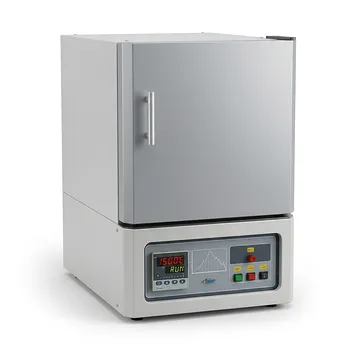
High Temperature 1500C Benchtop Muffle Furnace 3.6L Alumina Fiber Chamber Programmable Controller Sintering Annealing Carbonization Thermal Processing System

High Temperature 1700C Tube Furnace with High Vacuum Turbomolecular Pump System and Multi Channel Mass Flow Controller Gas Mixer
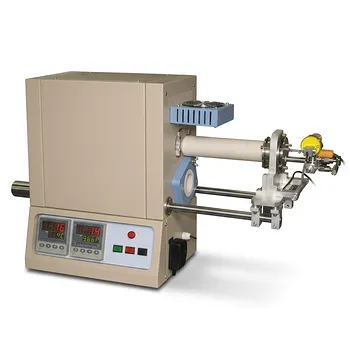
High Temperature Tube Furnace 1500C with Sliding Flanges and 50mm OD for Rapid Thermal Processing Fast Heating and Cooling

1750°C High Temperature Benchtop Vacuum Atmosphere Tube Furnace with Kanthal Super 1800 Heating Elements and 60mm Alumina Processing Tube
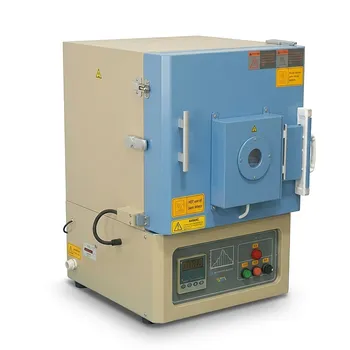
High Temperature Benchtop Muffle Furnace 1500C with 3.6L Chamber and Quartz Observation Window
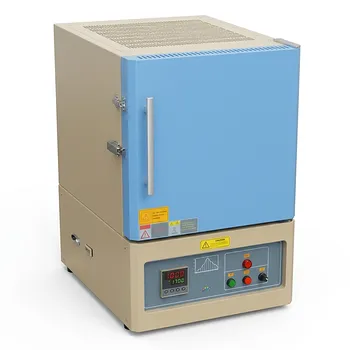
Large Bench Top 1700C High Temperature Muffle Furnace with 19L Chamber for Advanced Material Sintering and Annealing
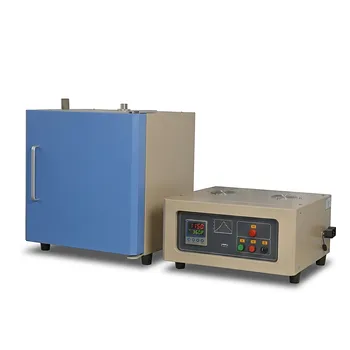
High Temperature Muffle Furnace with Alloy Chamber for Debinding and Sintering Applications
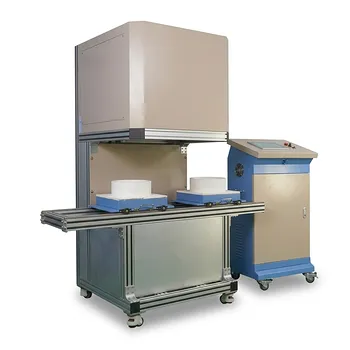
High Temperature Bottom Loading Vertical Furnace 1700C Dual Stage Sample Processing System 18L Large Capacity Thermal Treatment Equipment
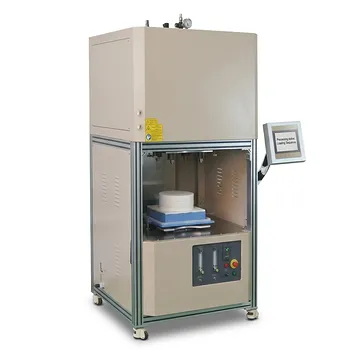
High Temperature Vertical Atmosphere Controlled Furnace with Automatic Bottom Loading and 1700°C Capacity for Advanced Material Research
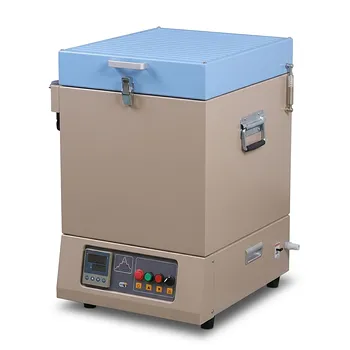
High Temperature Vertical Crucible Furnace with 22L Heating Chamber and 1200C Maximum Temperature
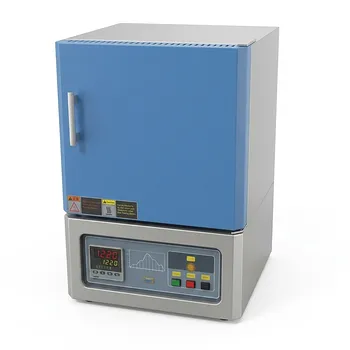
High Temperature Benchtop Muffle Furnace 1700C 10L Chamber Alumina Fiber Insulation MoSi2 Heating Elements
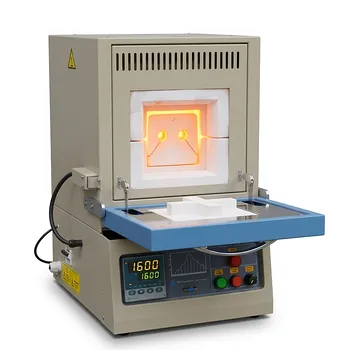
High Temperature Compact Muffle Furnace 1700 C with 30 Segment Programmable Controller and 1.7L Cubic Chamber
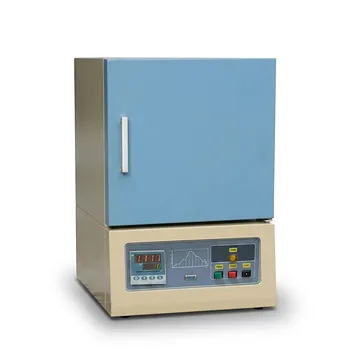
Ultra High Temperature Bench Top Muffle Furnace 1750C Sintering System with Kanthal Super Heating Elements and Precision Digital Control
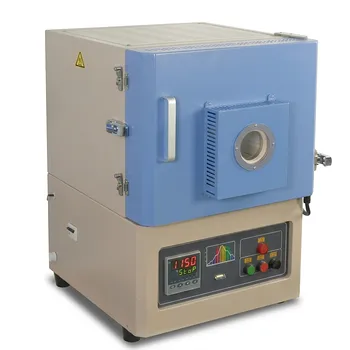
High Temperature Benchtop Muffle Furnace with Quartz Observation Window for Thermal Imaging and Material Analysis
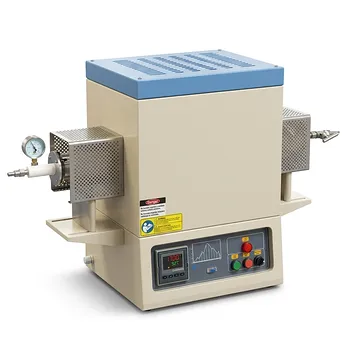
High Temperature Three Zone Tube Furnace 1700C with Alumina Tube and Water Cooled Flanges
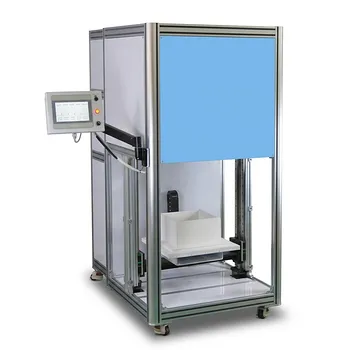
High Temperature 1600°C Three Zone Heated Bottom Loading Box Furnace with Rapid Thermal Processing Chamber 72L Volume
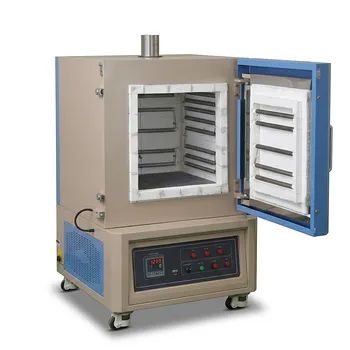
1200C High Temperature 125L Muffle Furnace 5 Side Heating for Large Batch Sintering with Optional Alloy Debinding Chamber
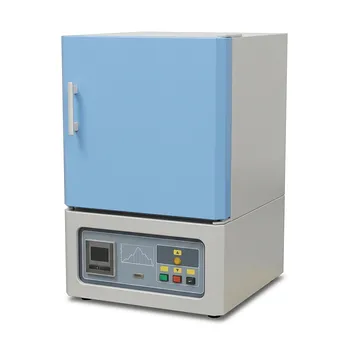
1800C Bench Top Muffle Furnace with Kanthal Super 1900 Heating Elements and 3.6L Alumina Fiber Chamber
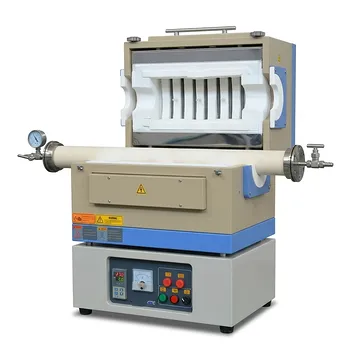
High Temperature 1600C Split Tube Furnace Vacuum Flanges Valves Optional 60mm 80mm Alumina Tube