The Thermal Architect: Engineering the Nano-Geometry of Hard Carbon
Jun 01, 2026
The Invisible Scaffold of Energy
Energy storage is not merely a chemical problem; it is a structural one. To create high-performance sodium-ion batteries, we do not simply "burn" precursors. We architect them.
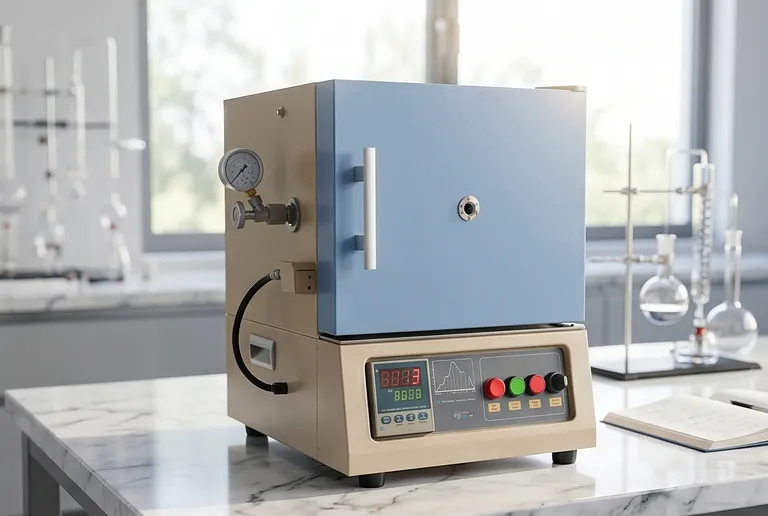
In the realm of hard carbon synthesis, a tube furnace is not just a heating box. It is a thermochemical reactor where precision determines whether ions can move freely or remain trapped in a structural bottleneck.
The window between 1000°C and 1400°C is where this architecture is born. Within this 400-degree span, the material's future is decided.
The Physics of Interlayer Spacing ($d_{002}$)
Hard carbon lacks the perfectly ordered stacks of graphite. This "disorder" is its greatest strength. The spacing between layers—the $d_{002}$ value—must be large enough to host large ions like sodium, yet tight enough to maintain density.
- At 1000°C: The structure is highly disordered. The spacing is wide (often > 0.39 nm), but the architecture is fragile and prone to side reactions.
- At 1400°C: The layers begin to align too closely (dropping toward 0.36 nm), physically "locking out" the ions and killing capacity.
- The Sweet Spot: Precision control allows researchers to stabilize this spacing, ensuring the "gates" are the perfect width for electrochemical intercalation.
The 1200°C Equilibrium
In material science, there is often a "Goldilocks" point—a temperature where competing forces find balance. For hard carbon, that point is frequently 1200°C.
At this specific setpoint, the material achieves a reversible capacity of approximately 350 mAh/g. This is not a random occurrence. It is the result of maximizing the pore volume while maintaining enough structural integrity to survive thousands of battery cycles.
Failure to hold this exact temperature within a narrow margin results in a material that is either too "soft" (unstable) or too "graphitic" (incapable of storage).
The Fold and the Pore: Transitioning Structure
One of the most fascinating "romantic" behaviors of carbon occurs near 1300°C. At this heat, carbon layers undergo a self-repairing process. They bend and fold, much like a master origami artist.
From Open to Closed
This folding transforms open surface pores into closed internal pores.
- Open Pores: Increase surface area but lead to low initial efficiency.
- Closed Pores: Act as hidden reservoirs for sodium ions, providing the critical "plateau capacity" needed for high-voltage stability.
Atmospheric Integrity
This transformation cannot happen in the presence of oxygen. The furnace must provide a pristine inert environment (Argon or Nitrogen). Any leakage of oxygen during this phase results in combustion rather than carbonization—the difference between a high-tech anode and common ash.
The Systemic Danger of "Rushing"
Systemic failure in carbonization often stems from a lack of patience. If the heating rate is too aggressive, volatile gases escape too violently.
| Heating Rate | Structural Consequence | Functional Impact |
|---|---|---|
| Fast (>20°C/min) | Gas pressure bursts pore walls | Chaotic, unstable structure |
| Controlled (5-10°C/min) | Gradual volatile release | Uniform, hierarchical porosity |
| Isothermal Holding | Complete pyrolysis | High purity, no residual functional groups |
Engineering the Trade-offs
A researcher must act as a risk manager. Every thousand degrees introduces a new trade-off.
- Lower End (1000°C): High spacing but high impurity. Residual non-carbon elements cause side reactions that degrade the battery life.
- Higher End (1400°C): High conductivity but low capacity. The increased "graphitization" makes the material a better conductor but a worse storage vessel.
Precision as a Core Requirement
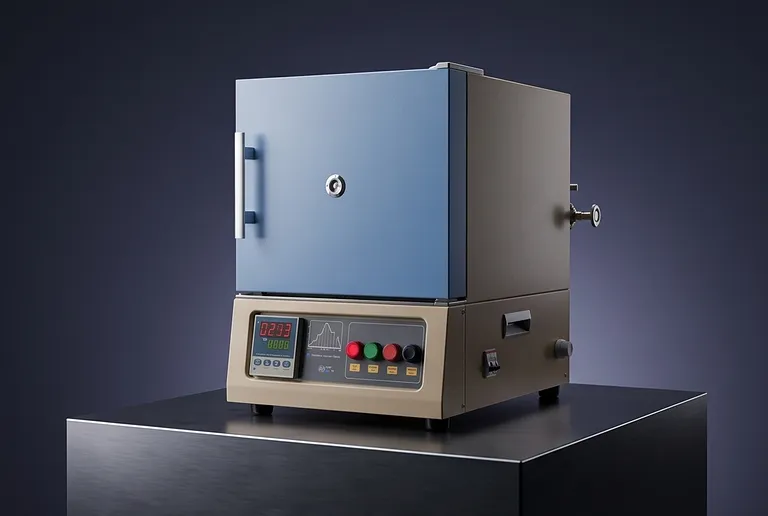
Mastering the 1000°C to 1400°C range requires more than a heating element; it requires a tool that understands the structural mechanics of carbon.
THERMUNITS designs thermal processing solutions that treat material science with the gravity it deserves. From our high-precision Tube Furnaces and CVD systems to our Atmosphere and Vacuum Furnaces, we provide the thermal accuracy required to bridge the gap between a precursor and a high-performance anode.
Whether you are optimizing for maximum reversible capacity or engineering specific pore closures for sodium-ion applications, the integrity of your thermal field is the foundation of your success.
Quick Links
Suggested Products
High Temperature 1500C Benchtop Muffle Furnace 3.6L Alumina Fiber Chamber Programmable Controller Sintering Annealing Carbonization Thermal Processing System High Temperature Vertical Crucible Furnace with 22L Heating Chamber and 1200C Maximum Temperature High Temperature 1700C Vertical Tube Furnace for Powder Spherification and Material Sintering Vertical Hybrid High Temperature Furnace 1500C Alumina Tube SOFC Fuel Cell Testing Laboratory Heat Treatment Research Equipment 1200C High Temperature 125L Muffle Furnace 5 Side Heating for Large Batch Sintering with Optional Alloy Debinding ChamberFurther Reading
The Geometry of Heat: Forging the Structural DNA of Dicalcium Ferrite The 600-Degree Threshold: The Delicate Physics of Retaining Chemical Truth The Physics of Perseverance: Navigating the 1,800°C Thermal Frontier The Architecture of Molecular Patience: Why Precision Thermal Reduction Defines Catalyst Success The Alchemy of Ash: How Thermal Precision Defines the Soul of Seaweed Carbon
ThermUnits
Last updated on Apr 14, 2026
Related Products
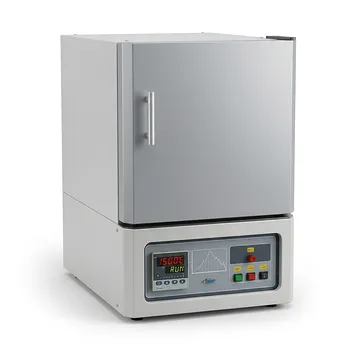
High Temperature 1500C Benchtop Muffle Furnace 3.6L Alumina Fiber Chamber Programmable Controller Sintering Annealing Carbonization Thermal Processing System
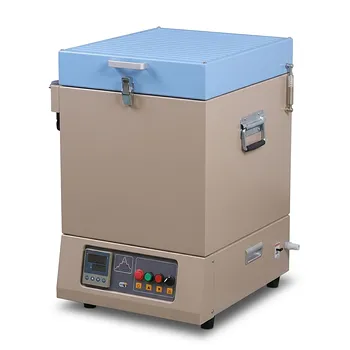
High Temperature Vertical Crucible Furnace with 22L Heating Chamber and 1200C Maximum Temperature

High Temperature 1700C Vertical Tube Furnace for Powder Spherification and Material Sintering
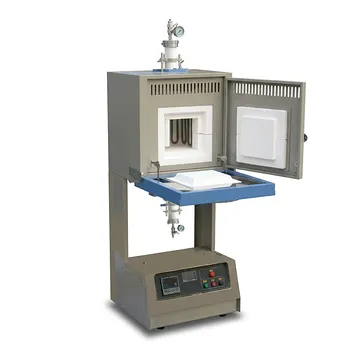
Vertical Hybrid High Temperature Furnace 1500C Alumina Tube SOFC Fuel Cell Testing Laboratory Heat Treatment Research Equipment
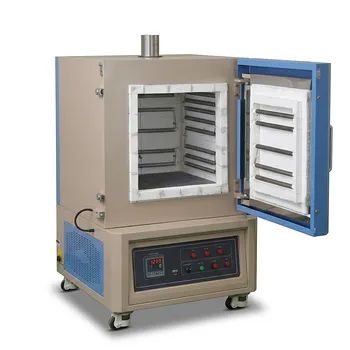
1200C High Temperature 125L Muffle Furnace 5 Side Heating for Large Batch Sintering with Optional Alloy Debinding Chamber
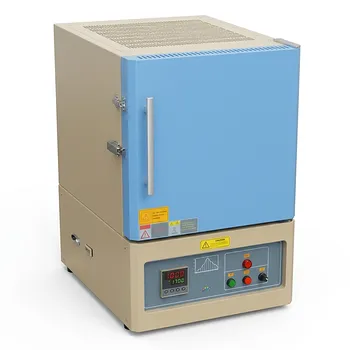
Large Bench Top 1700C High Temperature Muffle Furnace with 19L Chamber for Advanced Material Sintering and Annealing
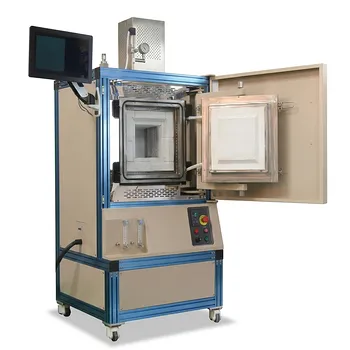
High Temperature Hydrogen Atmosphere Box Furnace 1650C Max Reducing Environment Material Synthesis System 8x8x8 Chamber
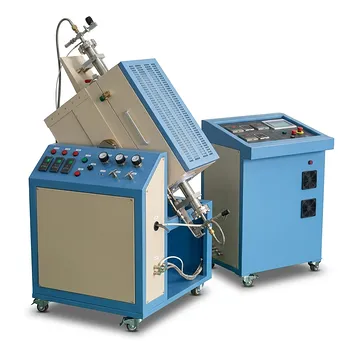
1100C High Pressure Rocking Tube Furnace with 2 Inch Super Alloy Processing Tube for Material Synthesis
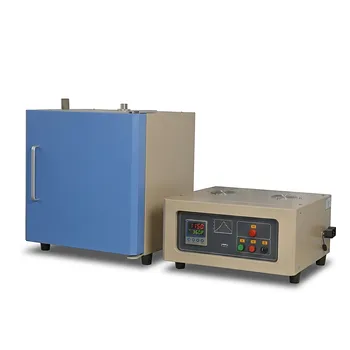
High Temperature Muffle Furnace with Alloy Chamber for Debinding and Sintering Applications
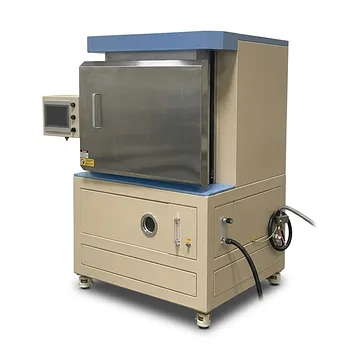
1650C High Temperature Atmosphere Controlled Box Furnace with 65L Chamber for Advanced Material Sintering and Industrial Heat Treatment

High Temperature Tube Furnace 1500C with Sliding Flanges and 50mm OD for Rapid Thermal Processing Fast Heating and Cooling
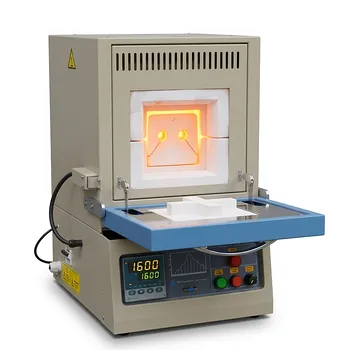
High Temperature Compact Muffle Furnace 1700 C with 30 Segment Programmable Controller and 1.7L Cubic Chamber
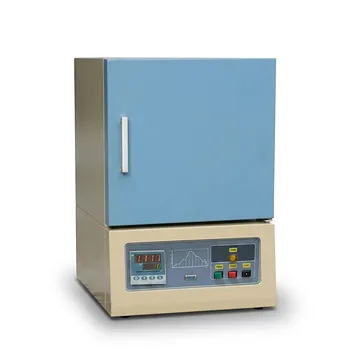
Ultra High Temperature Bench Top Muffle Furnace 1750C Sintering System with Kanthal Super Heating Elements and Precision Digital Control
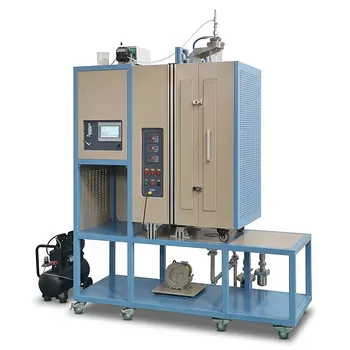
1500C Three Zone Vertical Pyrolysis Furnace for Nanoparticle Synthesis and Advanced Oxide Coating
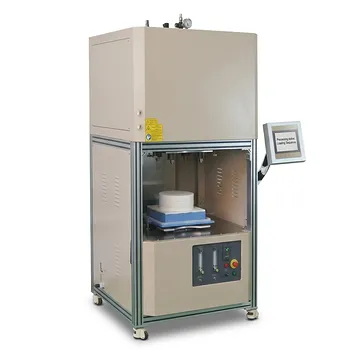
High Temperature Vertical Atmosphere Controlled Furnace with Automatic Bottom Loading and 1700°C Capacity for Advanced Material Research
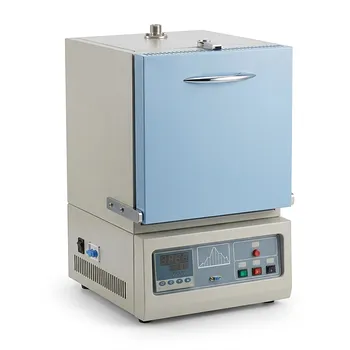
1750C Compact Muffle Furnace 1.7L Ultra High Temperature Laboratory Sintering System for Advanced Ceramics and Material Science Research
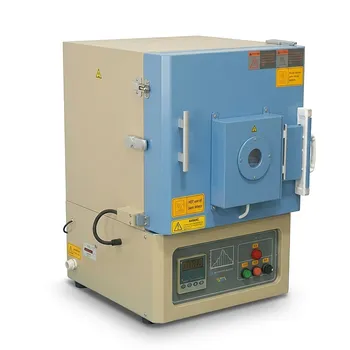
High Temperature Benchtop Muffle Furnace 1500C with 3.6L Chamber and Quartz Observation Window
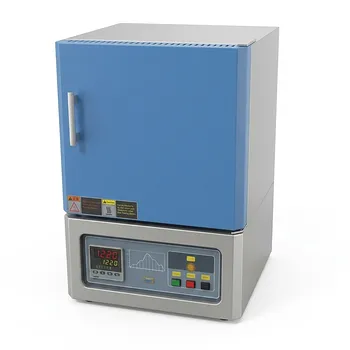
High Temperature Benchtop Muffle Furnace 1700C 10L Chamber Alumina Fiber Insulation MoSi2 Heating Elements

High Temperature 1700C Tube Furnace with High Vacuum Turbomolecular Pump System and Multi Channel Mass Flow Controller Gas Mixer