The Silent Guardian: Why the Vessel Defines the Success of Carbon Synthesis
Jul 09, 2026
The Invisible Variable in Material Science
In the quest to transform organic waste—like date seeds—into high-performance biochar, we often focus on the variables we can measure: temperature, dwell time, and gas flow.
Yet, there is a silent variable that frequently dictates the boundary between a breakthrough and a failed experiment. It is the vessel.
In high-temperature R&D, the container is never just a container. It is a chemical participant. If it is not chosen with precision, it becomes a source of "ghost variables"—trace metal migrations and oxidative artifacts that haunt the final data. For the air carbonization of date seeds, high-purity alumina (Al₂O₃) isn't just a choice; it is a necessity for structural and chemical integrity.
The Chemistry of Silence
The primary virtue of high-purity alumina is its refusal to react. At 400°C—the critical threshold for date seed carbonization—the environment is deceptively aggressive.
Preventing the Metallic Migration
Organic precursors are sensitive. During pyrolysis, the breakdown of lignin and cellulose creates a complex chemical landscape. Standard metallic or low-grade ceramic boats can leach trace elements into the sample. High-purity alumina (99%+) acts as a neutral stage, ensuring the resulting carbon surface remains uncontaminated.
Stability Amidst Corrosive Off-Gassing
As date seeds carbonize, they release volatile organic compounds and acidic vapors. Alumina possesses a unique refractoriness that resists these corrosive byproducts. Unlike lower-grade materials that might pit or scale, alumina maintains a smooth, non-reactive surface that allows for total sample recovery.
The Physics of Thermal Stress
Heat is a destructive force, not just for the sample, but for the equipment. Carbonization cycles involve a specific "thermal rhythm"—heating, soaking, and cooling.
- Thermal Shock Resistance: Alumina is engineered to survive the expansion and contraction of these cycles. It maintains its lattice structure where glass might soften or quartz might devitrify over repeated use.
- Structural Load Bearing: Even at temperatures far exceeding 400°C, alumina does not sag. This prevents the "sagging effect" that can bring a sample into contact with the furnace tube, protecting both the experiment and the expensive heating elements.
The Engineer’s Trade-off: Performance vs. Fragility
Every high-performance material comes with a psychological tax. For alumina, that tax is its inherent brittleness.
It is a paradox common in material science: the more thermally stable and chemically inert a material is, the less it tolerates mechanical impact. Handling a high-purity alumina boat requires a level of "clerical precision." A dropped boat doesn't bend; it shatters. Similarly, while it resists most acids and oxidants, it is vulnerable to strong alkaline agents like KOH at extreme temperatures.
Understanding these boundaries is the difference between a sustainable lab workflow and a cycle of broken equipment.
Selecting the Right Carrier for Your Logic
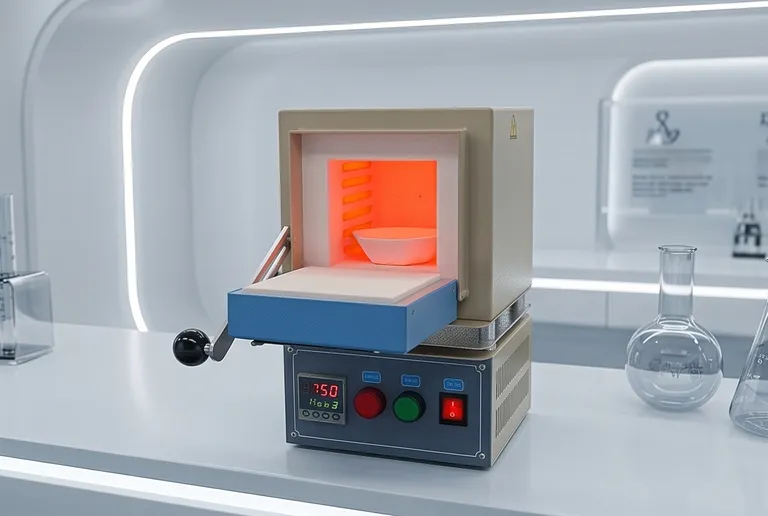
Choosing a carrier is a process of aligning your material constraints with your research goals.
| Research Priority | Recommended Strategy | Technical Rationale |
|---|---|---|
| Absolute Purity | 99.5% Alumina Boat | Minimizes ion migration to negligible levels. |
| High Throughput | Shallow, Wide-Open Boats | Maximizes surface-to-volume ratio for uniform gas exchange. |
| Economic Scaling | High-Purity Quartz | Sufficient for low-temp (400°C) if alumina is cost-prohibitive. |
The Systemic Solution
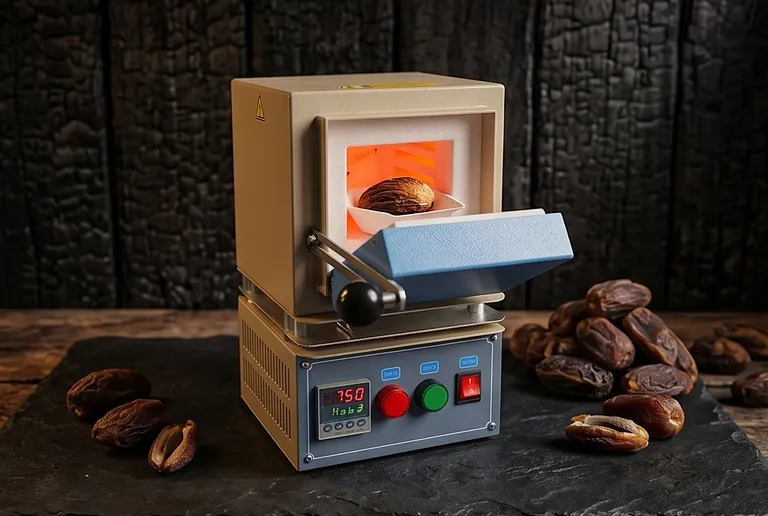
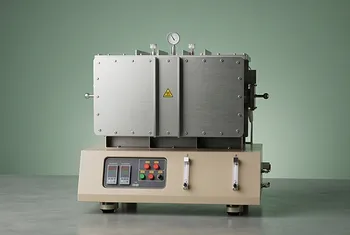
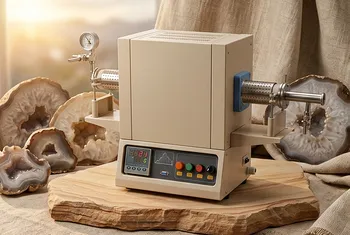
A perfect ceramic boat is only as effective as the environment it sits within. At THERMUNITS, we understand that thermal processing is a system, not a single component. Whether you are performing delicate carbonization in a Tube Furnace or scaling up with an Electric Rotary Kiln, the synergy between the heating element and the ceramic carrier is what produces repeatable science.
Our high-temperature solutions—ranging from Vacuum and Atmosphere Furnaces to specialized CVD/PECVD systems—are designed to provide the thermal precision that high-purity alumina requires. We don't just provide the heat; we provide the control.
Quick Links
Suggested Products
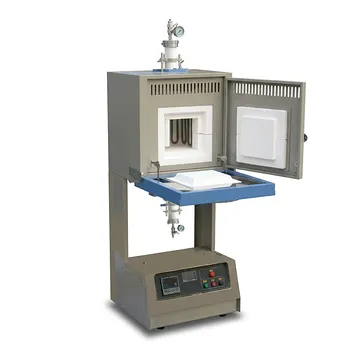
1800C Bench Top Muffle Furnace 18 Liters with Kanthal Super 1900 Heating Elements for High Purity Ceramic Sintering and Material Research High Temperature Compact Vacuum Tube Furnace 1750C Max 60mm OD Alumina Tube High Temperature 1700C 4 Channel Tube Furnace 1 Inch Alumina Tube for Hi-Throughput Annealing Vertical Hybrid High Temperature Furnace 1500C Alumina Tube SOFC Fuel Cell Testing Laboratory Heat Treatment Research EquipmentFurther Reading
The Invisible Boundary: Mastering Chemistry within the Architecture of Sintering The Architecture of Atoms: Decoding the Thermal Divide Between Sintering and Firing The Invisible Architecture of a Smile: Engineering Dental Ceramics at 1700°C The Physics of Permanence: Why Bismuth Sulfide Requires a Thermal Metamorphosis The Invisible Forge: Why Thermal Precision Governs Human Anatomy
ThermUnits
Last updated on Apr 14, 2026
Related Products
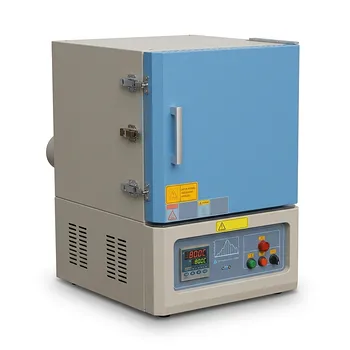
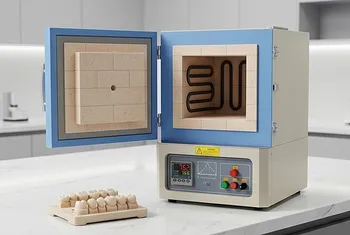
1800C Bench Top Muffle Furnace 18 Liters with Kanthal Super 1900 Heating Elements for High Purity Ceramic Sintering and Material Research
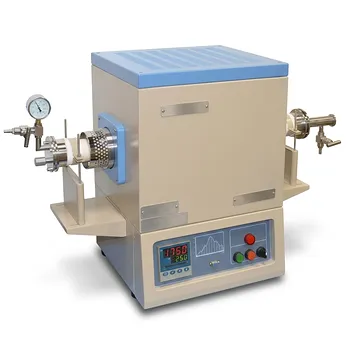
High Temperature Compact Vacuum Tube Furnace 1750C Max 60mm OD Alumina Tube
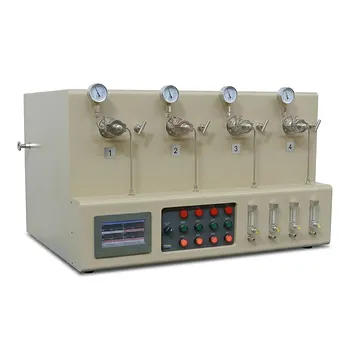
High Temperature 1700C 4 Channel Tube Furnace 1 Inch Alumina Tube for Hi-Throughput Annealing