How do Intelligent Temperature Control Systems and Thermocouples contribute to the slow pyrolysis process? Precision Yields
Updated 3 months ago
Intelligent Temperature Control Systems (ITCS) and Thermocouples serve as the foundational precision mechanisms for slow pyrolysis by regulating the thermal environment in real-time. By utilizing PID control algorithms and high-accuracy sensors, these systems dictate the heating rates and residence temperatures that determine whether biomass decomposes into high-quality bio-char, bio-oil, or non-condensable gases.
Core Takeaway: Intelligent thermal management transforms pyrolysis from an unpredictable burn into a controlled chemical process. By precisely managing heating rates and holding times, these systems ensure the orderly decomposition of biomass while minimizing unwanted secondary reactions.
The Mechanics of Real-Time Thermal Regulation
The Vital Role of Thermocouples
Thermocouples act as the "sensory organs" of the thermal reactor, providing continuous, real-time data on internal temperature fluctuations. This feedback is essential because even minor deviations can shift the chemical pathway of the feedstock, leading to inconsistent product quality.
PID Control and Algorithmic Precision
The ITCS utilizes PID (Proportional-Integral-Derivative) control algorithms to process the data provided by thermocouples. This allows the system to make instantaneous adjustments to the heating elements, preventing "overshooting" the target temperature and maintaining high stability at critical thresholds, such as 395°C.
Impact on Chemical Transformation and Yield
Controlling Heating Rates for Orderly Decomposition
In slow pyrolysis, the heating rate—often set between 10°C/min and 50°C/min—determines the pace of lignocellulosic breakdown. Precise control ensures that the decomposition happens in an orderly fashion, which is critical for optimizing the yield of bio-oil and ensuring the proportions of gas and char remain consistent across experiments.
Managing Isothermal Holding Times
The isothermal holding time, typically ranging from 10 to 50 minutes, is the period where the reactor stays at a constant temperature to allow reactions to complete. Intelligent systems manage this phase to balance primary decomposition and secondary cracking, the latter of which can generate unwanted impurities if not strictly regulated.
Facilitating Catalytic Efficiency
For processes involving catalysts, such as the pyrolysis of low-density polyethylene (LDPE), temperature stability is even more vital. An ITCS helps evaluate the effectiveness of catalysts in reducing activation energy by providing a perfectly stable environment, which is necessary to achieve high yields of specific products like light olefins.
Understanding the Trade-offs
System Complexity and Calibration
While intelligent systems provide unmatched precision, they introduce higher system complexity and a requirement for regular calibration. A miscalibrated thermocouple or a poorly tuned PID loop can lead to thermal oscillation, which ironically causes more damage to product consistency than a simpler manual system might.
Sensitivity to Feedstock Variations
Even the most advanced ITCS cannot fully compensate for drastic changes in feedstock moisture or density. These physical variables affect how heat is absorbed; therefore, the system must be meticulously programmed for each specific material to avoid "cold spots" or uneven cracking within the reactor.
Applying This to Your Pyrolysis Project
How to Select Your Control Parameters
When configuring your intelligent control system, your settings must align with your desired end product. The heating rate and holding time are the primary "dials" you will turn to achieve your research or production goals.
- If your primary focus is Bio-Char production: Set lower heating rates and longer residence times to allow for more complete carbonization of the biomass.
- If your primary focus is Bio-Oil yield: Use precise PID settings to maintain a specific temperature range that maximizes liquid vapors while minimizing secondary cracking into gas.
- If your primary focus is Catalytic Research: Prioritize a system with high stability and low fluctuation (±1°C) to accurately measure how catalysts affect reaction energy.
Mastering the synergy between sensor feedback and algorithmic control is the definitive path to achieving predictable, high-value outcomes in slow pyrolysis.
Summary Table:
| Feature | Function in Pyrolysis | Key Benefit |
|---|---|---|
| Thermocouples | Real-time sensory feedback | Prevents chemical pathway shifts |
| PID Algorithms | Instant heating adjustments | Eliminates overshooting & ensures stability |
| Heating Rate Control | 10°C/min - 50°C/min regulation | Optimizes orderly biomass decomposition |
| Residence Mgmt | Controlled holding times | Balances primary & secondary cracking |
Elevate Your Material Science Research with THERMUNITS Precision
At THERMUNITS, we understand that thermal stability is the difference between an unpredictable burn and a high-value chemical transformation. As a leading manufacturer of high-temperature laboratory equipment, we provide industrial R&D teams with the precision tools needed to master slow pyrolysis and advanced material synthesis.
Our comprehensive range of thermal solutions includes:
- Tube and Atmosphere Furnaces for controlled chemical decomposition.
- Vacuum and Muffle Furnaces for high-purity heat treatments.
- CVD/PECVD & Rotary Kilns for advanced material coatings and processing.
- Vacuum Induction Melting (VIM) & Hot Press Furnaces for specialized industrial R&D.
Ready to optimize your yields and minimize secondary reactions? Contact THERMUNITS today to discuss your specific laboratory heat treatment requirements and discover how our intelligent thermal systems can enhance your research outcomes.
References
- Obie Farobie, Asep Bayu Dani Nandiyanto. Valorization of Rejected Macroalgae <i>Kappaphycopsis cottonii</i> for Bio-Oil and Bio-Char Production via Slow Pyrolysis. DOI: 10.1021/acsomega.4c00678
Mentioned Products
- 1100°C Vertical Laboratory Furnace for DIY Tubular Reactors with PID Temperature Controller
- Induction Heating System with Temperature Control for High Temperature Vacuum Sintering and Melting
- Compact Atmosphere Controlled Rapid Thermal Processing RTP Furnace with 4 Inch ID Quartz Tube 1100C
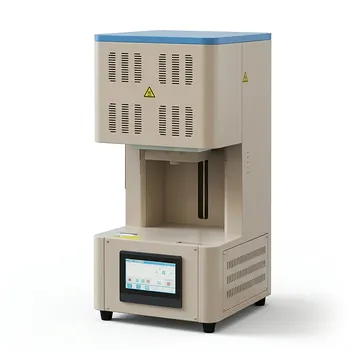
- Automated 1700C High Temperature Bottom Loading Box Furnace with PC Software Control and Robotic Integration Capability
People Also Ask
- What are the advantages of 1100°C tube furnaces for ORR catalysts? Boost Conductivity and Structural Stability.
- What is the objective of performing long-term annealing at 653 K on quenched PbTe-Ag2Te? Drive Ostwald Ripening.
- Why is a laboratory furnace with ultra-high heating rate capabilities necessary for simulating coal injection processes?
- Why is a tube furnace required for pre-oxidation? Enhance Ti(Nb)-Si-C coating adhesion and substrate durability.
- What specific physical conditions does a laboratory tube furnace provide for cg-N synthesis? Master Thermal Precision

Tech Team · ThermUnits
Last updated on Jun 03, 2026
Related Products
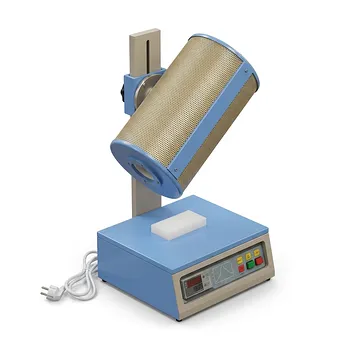
1100°C Vertical Laboratory Furnace for DIY Tubular Reactors with PID Temperature Controller
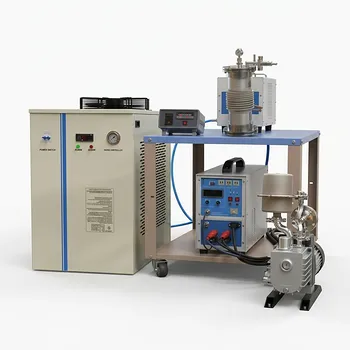
Induction Heating System with Temperature Control for High Temperature Vacuum Sintering and Melting
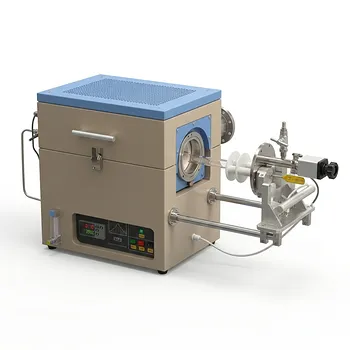
Compact Atmosphere Controlled Rapid Thermal Processing RTP Furnace with 4 Inch ID Quartz Tube 1100C