Why is it necessary to strictly control the flow of argon gas during the preparation of f-SWNTs-T catalysts? | Optimize R&D
Updated 3 months ago
Strict control of argon gas flow is essential for f-SWNTs-T preparation because it creates an oxygen-free environment that prevents the thermal degradation of carbon nanotubes while facilitating the precise chemical conversion of precursors. Without this rigorous regulation, the catalyst's structural integrity is lost to oxidation, and the critical nitrogen-doping process of the carbon framework cannot occur.
The flow of argon gas acts as both a protective shield and a process regulator. It ensures the chemical purity of the nitrogen-doped carbon structure by purging reactive oxygen and continuously removing volatile by-products that would otherwise destabilize the reaction environment.
Preventing Oxidative Degradation of Nanostructures
Safeguarding Single-Walled Carbon Nanotubes
Single-walled carbon nanotubes (SWNTs) are highly sensitive to oxygen when exposed to the elevated temperatures required for catalyst preparation.
The argon flow displaces air within the tube furnace, ensuring that the carbon framework does not undergo oxidative combustion or structural thinning.
Maintaining High Aspect Ratio and Surface Area
Consistent argon flow prevents the "pitting" or weakening of the nanotube walls that occurs during even minor oxidation events.
By maintaining a pristine inert environment, the catalyst retains the high specific surface area necessary for optimal catalytic performance.
Facilitating the Synthesis of N-Doped Carbon
Enabling Oxygen-Free Precursor Conversion
The preparation of f-SWNTs-T involves the conversion of polyformamide into a specific nitrogen-doped carbon structure.
This chemical transformation requires strictly oxygen-free conditions to ensure the nitrogen atoms integrate correctly into the carbon lattice rather than reacting with oxygen.
Managing Volatile Reaction By-products
The carbonization of precursors generates various volatile chemical by-products that can linger near the catalyst surface.
A continuous, controlled flow of argon carries these vapors away, preventing unwanted secondary reactions and maintaining a stable, predictable chemical environment for the reaction to proceed.
Regulating Reaction Kinetics and Stability
Controlling the Local Chemical Atmosphere
The flow rate of the inert gas directly influences the concentration of reactant vapors within the furnace.
Much like in the synthesis of other metallic catalysts, the argon flow rate determines the "residence time" of reactive species, which influences how the nitrogen-doped layer forms on the nanotubes.
Simulating Controlled Metallurgical Environments
Strict flow control allows researchers to manage the partial pressure of different elements within the furnace.
This level of control ensures that the resulting f-SWNTs-T catalyst has a consistent morphology and chemical composition across different production batches.
Understanding the Trade-offs
Risks of Insufficient Flow Rates
If the argon flow is too low, the furnace may not be completely purged of oxygen, leading to the partial destruction of the carbon nanotubes.
Furthermore, stagnant by-products can settle back onto the catalyst, leading to impurities or a non-uniform nitrogen-doped layer.
Drawbacks of Excessive Flow Rates
Conversely, a flow rate that is too high can lead to "over-cooling" of the reaction zone or the premature removal of essential intermediate vapors.
This can disrupt the kinetics of the polyformamide conversion, resulting in a catalyst with insufficient nitrogen doping or poor structural cohesion.
How to Apply This to Your Catalyst Synthesis
To achieve the highest quality f-SWNTs-T catalysts, your gas control strategy must be tailored to your specific furnace volume and precursor load.
- If your primary focus is structural purity: Maintain a steady, moderate flow to ensure a completely oxygen-free environment throughout the entire heating and cooling cycle.
- If your primary focus is optimal nitrogen doping: Calibrate the flow rate to effectively remove by-products without stripping away the reactive vapors needed for the nitrogen integration process.
- If your primary focus is batch-to-batch consistency: Use high-precision mass flow controllers to ensure the argon delivery is identical across every synthesis run.
Precise argon regulation transforms a simple inert gas into a powerful tool for engineering the molecular architecture of f-SWNTs-T catalysts.
Summary Table:
| Key Factor | Role of Argon Flow Control | Impact of Poor Regulation |
|---|---|---|
| Atmosphere Purity | Displaces oxygen to prevent SWNT combustion | Oxidative degradation & structural thinning |
| Chemical Synthesis | Enables oxygen-free nitrogen-doping of carbon | Impure nitrogen integration or catalyst failure |
| By-product Removal | Purges volatile vapors to prevent secondary reactions | Surface impurities & non-uniform doping |
| Reaction Kinetics | Regulates reactant residence time & local cooling | Disrupted morphology & batch inconsistency |
Elevate Your Material Research with THERMUNITS Precision Furnaces
Achieving the perfect chemical architecture in f-SWNTs-T catalysts requires absolute control over your thermal environment. THERMUNITS is a leading manufacturer of high-temperature laboratory equipment specifically engineered for material science and industrial R&D.
Our advanced systems provide the stability and atmosphere precision needed for complex synthesis:
- Controlled Atmosphere & Tube Furnaces: Perfect for precise argon flow and inert processing.
- CVD/PECVD & Vacuum Systems: Ideal for nanostructure growth and nitrogen-doping applications.
- Specialized Solutions: Including Muffle, Rotary, Hot Press, and Vacuum Induction Melting (VIM) furnaces.
Don't let inconsistent gas flow compromise your research. Contact THERMUNITS today to discuss how our laboratory heat treatment solutions can deliver the batch-to-batch consistency your project demands.
References
- Fengwei Zhang, Sheng Zhu. Partial thermal atomization of residual Ni NPs in single-walled carbon nanotubes for efficient CO <sub>2</sub> electroreduction. DOI: 10.1039/d4sc07291j
Mentioned Products
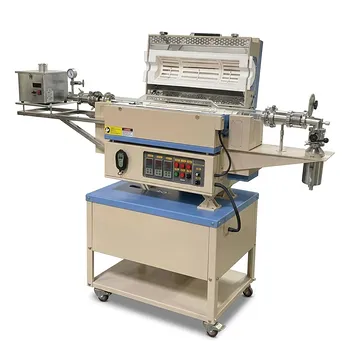
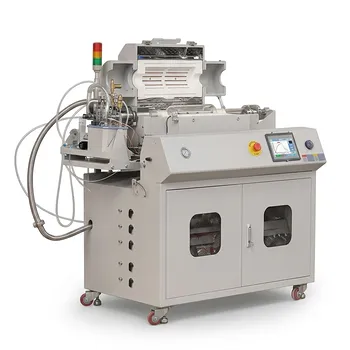
- Versatile Chemical Vapor Deposition Tube Furnace System for Advanced Material Research and Industrial Coating Processes
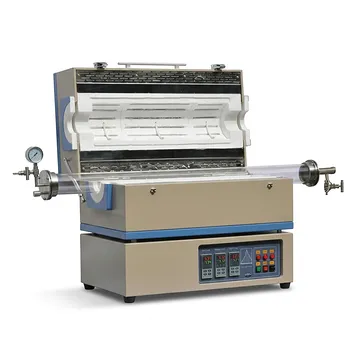
- 24 Inch Three Zone Split Tube Furnace with Optional Quartz Tube and Vacuum Flange System for High Temperature Material Synthesis
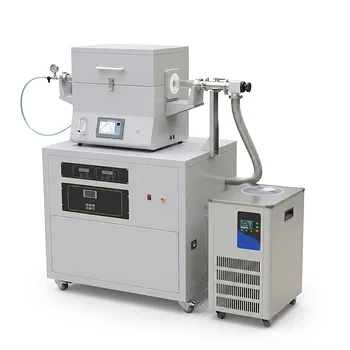
- Split Chamber CVD Tube Furnace with Vacuum Station Chemical Vapor Deposition System Machine
- 5 Inch Three Zone Rotary Tube Furnace with Integrated Gas Delivery System and 1200C Capability for Advanced Material CVD Processing
- Compact Spark Plasma Sintering SPS Furnace 1200 C Max 100 MPa Pressure High Speed Sintering System for Material Research
People Also Ask
- How does a sliding rail design benefit the CVD process within a furnace ventilation hood? Enhance Control & Quenching
- What role do by-product desorption and evacuation play in CVD film quality? Key Factors for High-Purity Films
- How does the deposition process occur within a Chemical Vapor Deposition (CVD) reactor? Explore the 5-Stage Growth Cycle
- Why is CVD preferred over PVD for high-aspect-ratio features? Superior Conformality for Semiconductor Fabrication
- How do temperature regimes influence the growth rate of films in a CVD system? Master CVD Kinetics for Superior Thin Films

Tech Team · ThermUnits
Last updated on Jun 03, 2026
Related Products
Versatile Chemical Vapor Deposition Tube Furnace System for Advanced Material Research and Industrial Coating Processes
24 Inch Three Zone Split Tube Furnace with Optional Quartz Tube and Vacuum Flange System for High Temperature Material Synthesis
Split Chamber CVD Tube Furnace with Vacuum Station Chemical Vapor Deposition System Machine
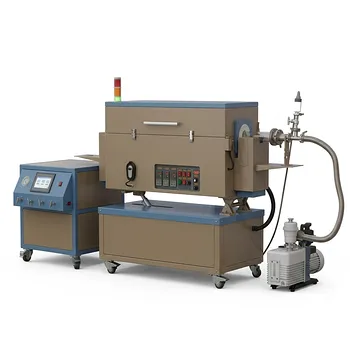
5 Inch Three Zone Rotary Tube Furnace with Integrated Gas Delivery System and 1200C Capability for Advanced Material CVD Processing
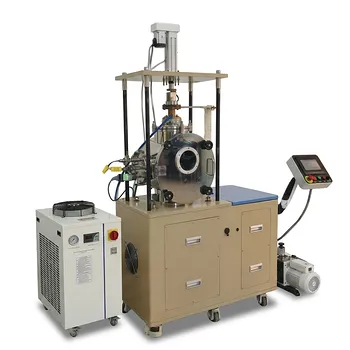
Compact Spark Plasma Sintering SPS Furnace 1200 C Max 100 MPa Pressure High Speed Sintering System for Material Research
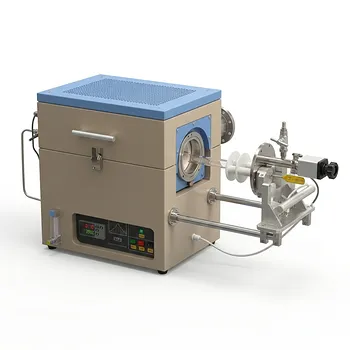
Compact Atmosphere Controlled Rapid Thermal Processing RTP Furnace with 4 Inch ID Quartz Tube 1100C
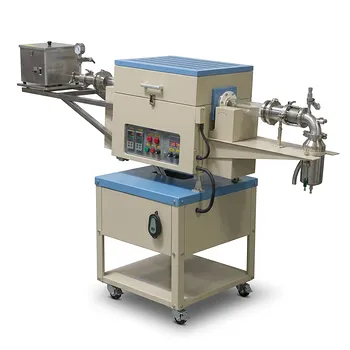
Two Zone Rotary CVD Furnace with Automatic Feeding and Receiving System for Powder Processing
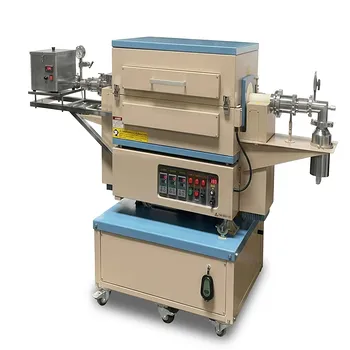
1500C 3-Zone Rotary Tube Furnace 60mm with Automatic Powder Feeding and Receiving System for Continuous Material Synthesis
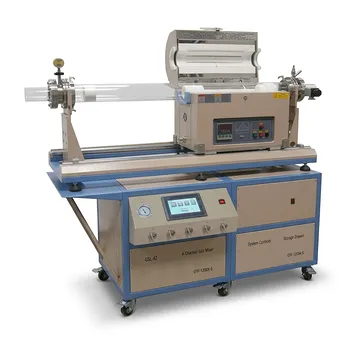
Dual Tube 100mm 80mm CVD Sliding Furnace with 4 Channel Gas Mixing and Vacuum System

High Temperature 1700C Vertical Tube Furnace for Powder Spherification and Material Sintering
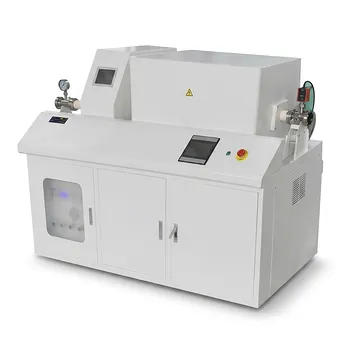
Chemical Vapor Deposition CVD System Slide PECVD Tube Furnace with Liquid Gasifier PECVD Machine
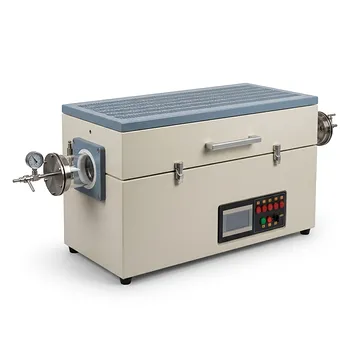
Five Zone 1200C High Temperature Split Tube Furnace with Touch Screen Controller and Multiple Quartz Tube Options
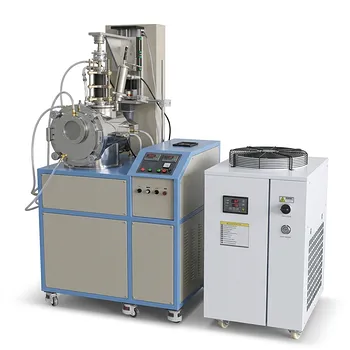
High Temperature Ultrafast Heating Pressing Furnace 2900C Max 100kgf Rapid Thermal Processing System
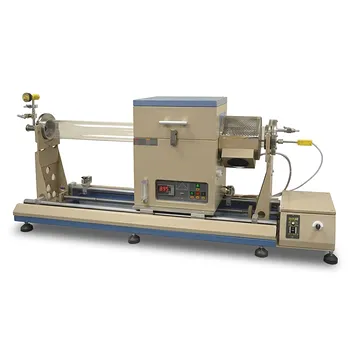
900 ºC Max Sliding RTP Tube Furnace with Rapid IR Heating and 4 Inch OD Quartz Tube
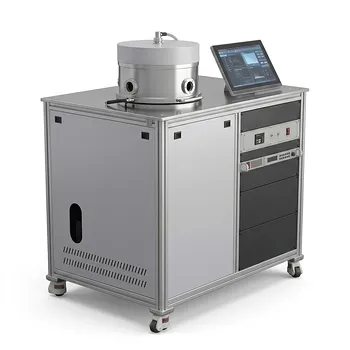
Inclined Rotary Plasma Enhanced Chemical Vapor Deposition PECVD System for Thin Film Deposition and Nanomaterial Synthesis
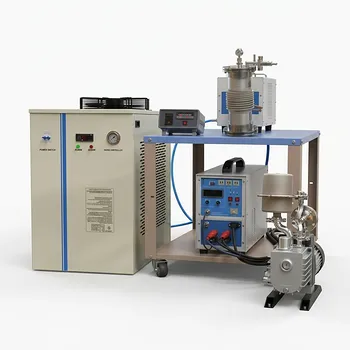
Induction Heating System with Temperature Control for High Temperature Vacuum Sintering and Melting
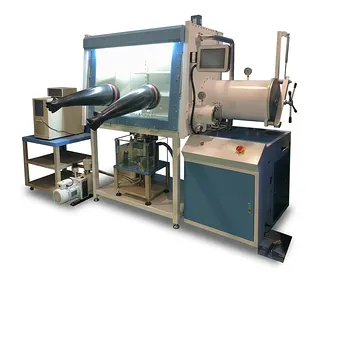
High Temperature Induction Melting System with Integrated Ultra High Purity Glove Box for Metallic Alloy Processing
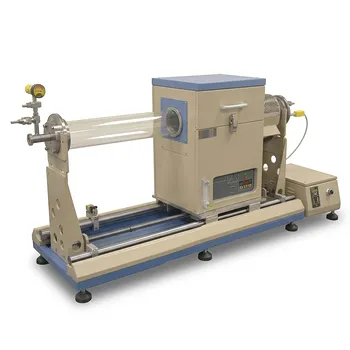
Rapid Thermal Processing Sliding Tube Furnace with 4 Inch OD Quartz Tube and 900C IR Heating
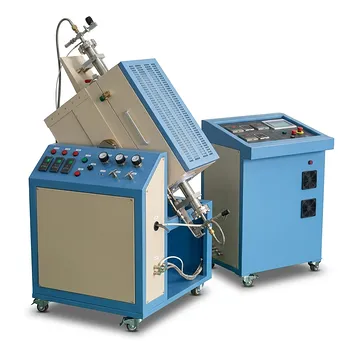
1100C High Pressure Rocking Tube Furnace with 2 Inch Super Alloy Processing Tube for Material Synthesis