What is the significance of substrate capacity and scalability in modern MPCVD reactor designs? Scale Your Production
Updated 5 months ago
Substrate capacity and scalability are the primary drivers of industrial MPCVD viability. In modern designs, these factors enable the transition from laboratory research to high-volume manufacturing by ensuring uniform diamond or thin-film deposition over large surface areas. This evolution allows for reproducible, cost-effective production at scales previously unattainable with legacy reactor configurations.
The move toward large-area substrate capacity and modular scalability transforms MPCVD from a niche tool into a robust industrial platform. By decoupling the plasma size from extreme operational cost increases, modern reactors provide the consistency and throughput required for commercial semiconductor and gemstone applications.
The Engineering of Large-Area Uniformity
The Role of Plasma Ball Configurations
Modern reactors utilize plasma ball configurations to create a stable, high-density discharge that interacts uniformly with the substrate surface. This design ensures that growth rates and material properties remain consistent across the entire diameter of the wafer, which can now range from a few centimeters to several inches.
Distributed Plasma Systems
By implementing distributed plasma configurations, reactors can cover significantly larger surface areas without losing the localized intensity required for high-quality deposition. This approach mitigates the "edge effects" and "hot spots" common in older reactor designs, allowing for a more predictable growth environment.
Enhancing Surface Coverage
The ability to support large-area deposition means that multiple substrates or a single large-format wafer can be processed simultaneously. This shift is critical for sectors like power electronics and thermal management, where surface area directly correlates to device yield and economic feasibility.
Economics of Scalability in MPCVD
Modular Microwave Sources
The integration of modular microwave sources allows for a flexible approach to power delivery, enabling reactors to scale energy input based on specific load requirements. This modularity reduces energy waste and facilitates easier maintenance, as individual components can be serviced without compromising the entire system.
Reproducibility and Operational Costs
A hallmark of modern scalability is the achievement of reproducible production without proportional increases in operational overhead. By optimizing the reactor geometry and microwave delivery, manufacturers can increase output significantly while maintaining a stable cost-per-carat or cost-per-wafer.
Industrial-Scale Viability
Transitioning to industrial-scale production requires a balance between reactor size and gas-phase chemistry control. Modern designs achieve this balance, ensuring that the high-vacuum environment and plasma stability are maintained even as the chamber volume increases to accommodate larger batches.
Understanding the Trade-offs
Thermal Management Complexity
As substrate capacity increases, thermal management becomes exponentially more difficult. Larger surface areas require sophisticated cooling systems to prevent temperature gradients, which can lead to structural defects or non-uniformity in the deposited material.
Gas Flow Dynamics
Scaling the reactor chamber often complicates gas phase chemistry. Maintaining a laminar flow of precursor gases over a large area is a significant engineering challenge; turbulence or stagnation zones can result in inconsistent growth rates across the substrate.
Applying Scalability to Your Project
When evaluating modern MPCVD reactor designs, your choice should align with your specific throughput and quality requirements.
- If your primary focus is high-volume commercial production: Prioritize reactors with modular microwave sources and proven large-inch substrate capacity to ensure a low cost-per-unit.
- If your primary focus is material purity and R&D: Look for plasma ball configurations that offer high stability and precise control over gas chemistry, even if the total substrate area is smaller.
- If your primary focus is minimizing operational overhead: Opt for designs that emphasize reproducible results across large areas to reduce the need for post-growth quality sorting.
The strategic integration of scalability and substrate capacity ensures that modern MPCVD reactors remain the gold standard for high-performance carbon-based materials.
Summary Table:
| Feature | Strategic Benefit | Industrial Impact |
|---|---|---|
| Large-Area Capacity | Processes multiple or large-format wafers | Increases device yield and economic feasibility |
| Modular Microwave Sources | Flexible power delivery and easier maintenance | Reduces energy waste and operational downtime |
| Plasma Ball Configuration | High-density stable discharge | Ensures uniform growth rates across large diameters |
| Distributed Systems | Mitigates "edge effects" and hot spots | Delivers consistent material properties for R&D |
| Scalable Geometry | Decouples plasma size from cost spikes | Facilitates cost-effective high-volume manufacturing |
Scale Your High-Temperature Research with THERMUNITS
Transitioning from lab-scale experimentation to industrial-scale production requires precision, reliability, and advanced thermal expertise. THERMUNITS is a leading manufacturer of high-temperature laboratory equipment, providing state-of-the-art solutions for material science and industrial R&D.
Whether you are focused on diamond deposition, semiconductor growth, or advanced material synthesis, we offer a comprehensive range of thermal processing equipment, including:
- CVD/PECVD Systems & Dental Furnaces
- Muffle, Vacuum, Atmosphere, and Tube Furnaces
- Rotary Kilns & Vacuum Induction Melting (VIM) Furnaces
- Hot Press Furnaces and high-quality Thermal Elements
Maximize your throughput and ensure reproducible results with equipment designed for modern scalability. Contact our experts today to find the perfect thermal solution for your specific requirements!
Mentioned Products
- Cylindrical Resonator MPCVD Machine System for Microwave Plasma Chemical Vapor Deposition and Lab Diamond Growth
- 915MHz MPCVD Diamond Machine Microwave Plasma Chemical Vapor Deposition System Reactor
- Multi Heating Zones CVD Tube Furnace System for Precision Chemical Vapor Deposition and Advanced Material Synthesis
- Versatile Chemical Vapor Deposition Tube Furnace System for Advanced Material Research and Industrial Coating Processes
- Inclined Rotary Plasma Enhanced Chemical Vapor Deposition PECVD System for Thin Film Deposition and Nanomaterial Synthesis
People Also Ask
- How does the high concentration of atomic hydrogen in MPCVD benefit diamond growth? The Key to Gem-Grade Quality.
- What are the typical operating pressure ranges and vacuum requirements for MPCVD systems? Optimize Your Material Growth
- What technical parameters are critical for optimizing the growth of single-crystal diamonds in MPCVD systems? Expert Guide
- What are the technical advantages of the electrodeless plasma design in MPCVD systems? Purity & Precision in Synthesis
- How does the versatility of gas compatibility in MPCVD systems compare to filament-based CVD methods? Purity & Doping.

Tech Team · ThermUnits
Last updated on Apr 14, 2026
Related Products
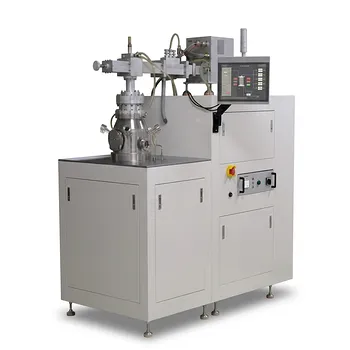
Cylindrical Resonator MPCVD Machine System for Microwave Plasma Chemical Vapor Deposition and Lab Diamond Growth
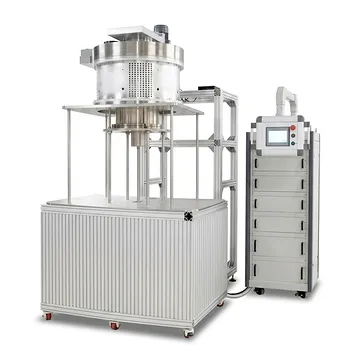
915MHz MPCVD Diamond Machine Microwave Plasma Chemical Vapor Deposition System Reactor
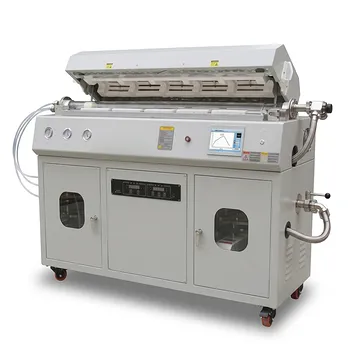
Multi Heating Zones CVD Tube Furnace System for Precision Chemical Vapor Deposition and Advanced Material Synthesis
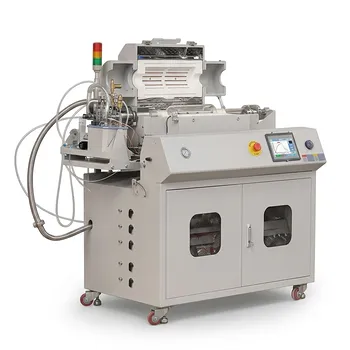
Versatile Chemical Vapor Deposition Tube Furnace System for Advanced Material Research and Industrial Coating Processes
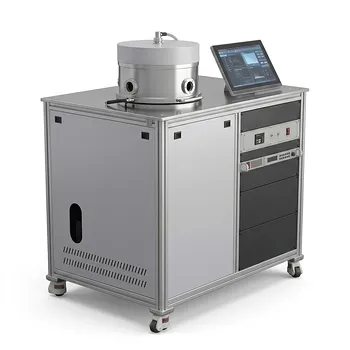
Inclined Rotary Plasma Enhanced Chemical Vapor Deposition PECVD System for Thin Film Deposition and Nanomaterial Synthesis
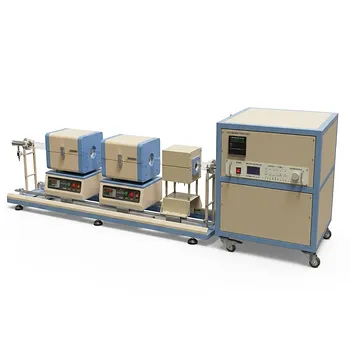
1200C Dual Sliding Tube Furnace with Dual Tubes and Flanges for PECVD Processes
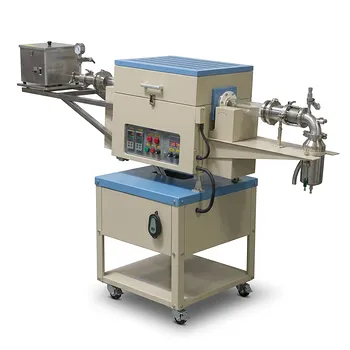
Two Zone Rotary CVD Furnace with Automatic Feeding and Receiving System for Powder Processing
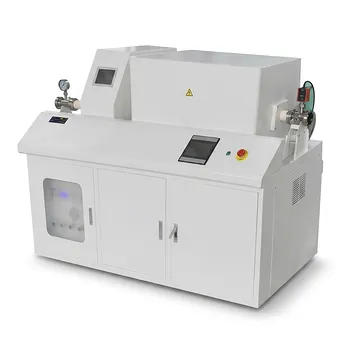
Chemical Vapor Deposition CVD System Slide PECVD Tube Furnace with Liquid Gasifier PECVD Machine
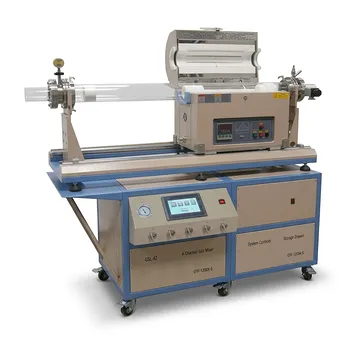
Dual Tube 100mm 80mm CVD Sliding Furnace with 4 Channel Gas Mixing and Vacuum System
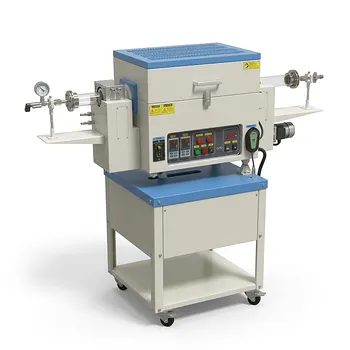
4 Inch Two Zone Rotary CVD Tube Furnace for High Temperature Battery Material Synthesis and Advanced Material Calcination
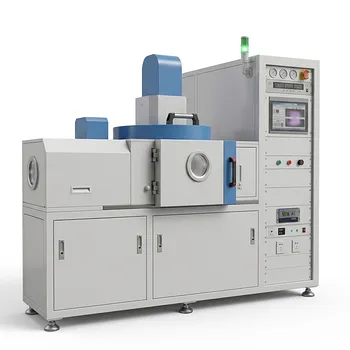
Radio Frequency Plasma Enhanced Chemical Vapor Deposition RF PECVD System for Laboratory and Industrial Thin Film Growth
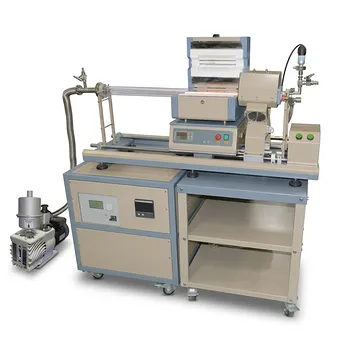
1200C Max Compact Auto-Sliding PECVD Furnace with 2 Inch Tube and Vacuum Pump
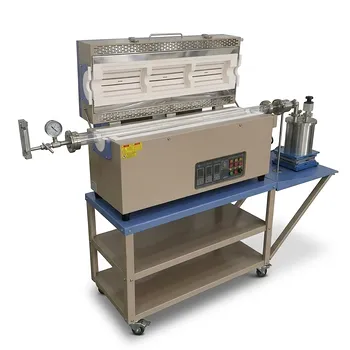
5 Inch Two Zone Rotary Tube Furnace 1100C for Powder CVD and Material Synthesis
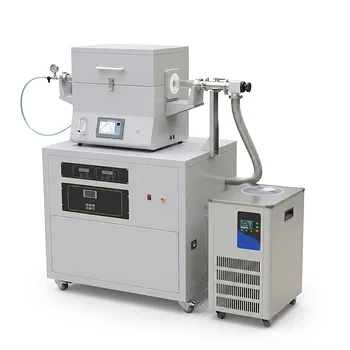
Split Chamber CVD Tube Furnace with Vacuum Station Chemical Vapor Deposition System Machine
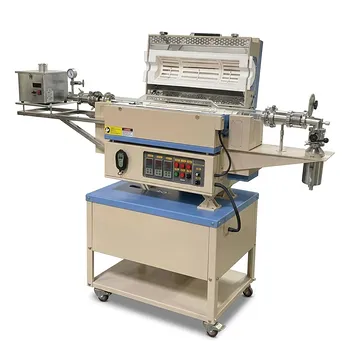
5 Inch Rotary Tube Furnace with Automatic Feeding and Receiving System 1200C Three Zone CVD Powder Processing
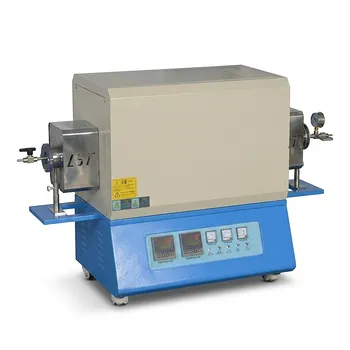
High Temperature Dual Zone Vacuum Tube Furnace for Material Research and CVD Processing
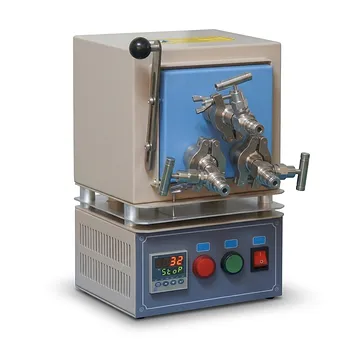
Triple Tube Compact Hybrid Muffle Furnace 1000C High Vacuum Thermal Processing System
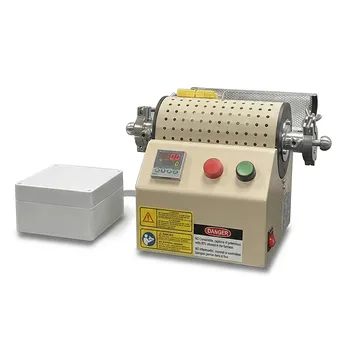
1000C Mini Tube Furnace with 20mm Quartz Tube and Vacuum Flanges for Material Science Research and Controlled Atmosphere Small Sample Processing
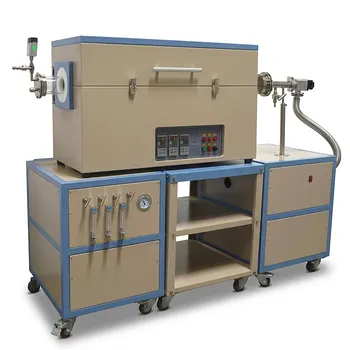
Three Zone Quartz Tube Furnace with 3 Channel Gas Mixer Vacuum Pump and Anti Corrosive Vacuum Gauge