How does a high-precision programmable muffle furnace facilitate the study of coal-biomass combustion? Key R&D Insights
Updated 3 months ago
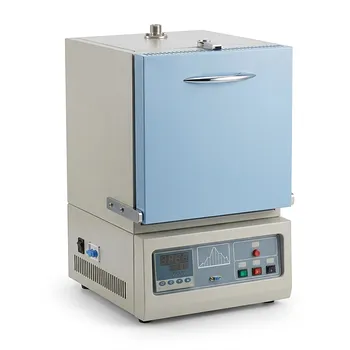
A high-precision programmable muffle furnace facilitates the study of coal and biomass mixtures by providing a strictly controlled thermal environment that replicates industrial boiler conditions. By maintaining stable temperatures, typically between 600°C and 800°C, it enables researchers to induce ignition and sustain combustion in blended fuel samples. This precision is vital for accurately measuring ignition delay times and ensuring the scientific validity of combustion experiments.
The programmable muffle furnace acts as a standardized laboratory surrogate for power boilers, allowing for the precise isolation and measurement of a fuel blend's thermal properties. It bridges the gap between raw material analysis and industrial-scale performance prediction by quantifying mass loss, volatile release, and mineral transformation.
Precise Thermal Simulation of Industrial Boilers
Replicating Operational Environments
The furnace provides the central heating source necessary to simulate the high-temperature conditions found inside power boilers. By operating within a programmable range of 600°C to 800°C, it allows for the controlled study of how blended fuels react under realistic operational stress.
Quantifying Ignition Delay and Stability
Temperature control accuracy is the most critical factor in measuring ignition delay times. Small fluctuations in heat can lead to inconsistent data, making the furnace's high-precision stability essential for determining how biomass additions alter the ignition threshold of coal.
Comprehensive Proximate Analysis and Fuel Characterization
Determining Volatile Matter and Fixed Carbon
To evaluate co-combustion efficiency, the furnace manages specific regulated temperatures, such as 950°C, to release flammable volatile components. This process is essential for calculating fixed carbon content and understanding the energy release profile of the mixture.
Assessing Energy Density and Mass Loss
The furnace simulates high-temperature conversion environments to reflect the mass loss characteristics of raw materials during heat treatment. This data allows researchers to accurately evaluate the energy density of biomass blends compared to pure coal.
Investigating Ash Behavior and Mineral Transformation
Analyzing Ash Content and Inorganic Residues
By maintaining a stable oxidative environment at specific points like 575°C or 700°C, the furnace ensures organic matter burns away completely without prematurely sintering inorganic minerals. This results in carbon-free ash samples that are necessary for chemical and structural analysis.
Predicting Slagging and Fusion Risks
Advanced furnaces can reach temperatures up to 1275°C to conduct ash melting tests according to standards like ASTM D1857. This allows researchers to identify the Initial Deformation Temperature (IDT) and Softening Temperature (ST), which are critical for predicting slagging and corrosion in industrial gasifiers.
Studying Alkali Metal Volatilization
The stable thermal field of a high-precision furnace is used to study the volatilization kinetics of alkali metals like potassium. Understanding how these minerals evolve into silicates or phosphates helps in developing strategies to protect boiler refractory materials from erosion.
Understanding the Trade-offs
Static vs. Dynamic Environments
While a muffle furnace provides exceptional temperature stability, it creates a static heating environment. This may not fully capture the aerodynamic complexities and particle-to-particle interactions found in a turbulent, industrial-scale flame.
Heating Rate Limitations
Standard laboratory muffle furnaces may have lower heating rates compared to the near-instantaneous flash pyrolysis experienced by fuel particles in a real boiler. Researchers must carefully program heating ramps to balance standardized testing with realistic simulation.
How to Apply This to Your Project
Recommendations for Research Goals
- If your primary focus is ignition timing: Prioritize a furnace with the highest possible PID control accuracy to ensure ignition delay measurements are not skewed by thermal overshoot.
- If your primary focus is slagging prevention: Ensure your furnace can reach at least 1300°C and supports atmospheric control to accurately simulate the reducing or oxidizing conditions that trigger ash fusion.
- If your primary focus is regulatory compliance: Select a furnace that allows for programmable soak times and ramp rates in strict accordance with ASTM D7582-12 for proximate analysis.
By leveraging the programmable precision of a muffle furnace, researchers can transform raw biomass and coal into predictable, high-performance fuel blends.
Summary Table:
| Research Application | Temperature Range | Key Scientific Value |
|---|---|---|
| Ignition Stability | 600°C - 800°C | Accurately measures ignition delay times via PID control |
| Proximate Analysis | Up to 950°C | Quantifies volatile matter release and fixed carbon content |
| Ash Characterization | 575°C - 700°C | Ensures carbon-free ash for inorganic mineral analysis |
| Slagging & Fusion | Up to 1275°C+ | Predicts Deformation (IDT) and Softening Temperatures (ST) |
Optimize Your Thermal Research with THERMUNITS
As a leading manufacturer of high-temperature laboratory equipment, THERMUNITS provides the precision required for advanced material science and industrial R&D. Our high-performance solutions—including Muffle, Vacuum, Atmosphere, Tube, Rotary, and Hot Press furnaces, as well as CVD/PECVD systems and Vacuum Induction Melting (VIM) furnaces—are designed to meet the rigorous demands of fuel characterization and heat treatment.
Enhance your lab's efficiency and data accuracy today. Contact our technical experts for a customized solution.
References
- K.S. Еsin, S.A. Yankovskiy. JUSTIFICATION OF THE POSSIBILITY OF ENERGY USE OF LEAVES MIXED WITH COAL. DOI: 10.17513/mjpfi.13657
Mentioned Products
- High Temperature 1200C Muffle Furnace 27L Volume 12x12x12 Chamber with Programmable PID Controller for Laboratory Material Science
- High Temperature 1500C Benchtop Muffle Furnace 3.6L Alumina Fiber Chamber Programmable Controller Sintering Annealing Carbonization Thermal Processing System
- 1200°C Small Box Furnace 4.2 Liter Programmable Muffle Furnace with High Purity Alumina Insulation and PID Control
- 1200°C High Temperature Muffle Furnace 19L Chamber with 50 Segment Programmable Controller
- Ultra High Temperature Bench Top Muffle Furnace 1750C Sintering System with Kanthal Super Heating Elements and Precision Digital Control
People Also Ask
- Why is annealing in a high-temperature muffle furnace necessary for SiO2/Si substrate pretreatment before monolayer WS2 synthesis?
- What is the purpose of using muffle or tube furnaces in glass synthesis? Achieve Precise Melt-Quenching & Homogeneity
- What role does a high-temperature muffle furnace play in evaluating the mineral composition of rock samples? LOI & XRF Guide
- What role does a high-temperature muffle furnace play in the synthesis of Melem precursors? Precision Polymerization.
- What is the function of a muffle furnace in aluminoborosilicate glass prep? Stabilize Raw Materials for Superior Purity

Tech Team · ThermUnits
Last updated on Jun 02, 2026
Related Products
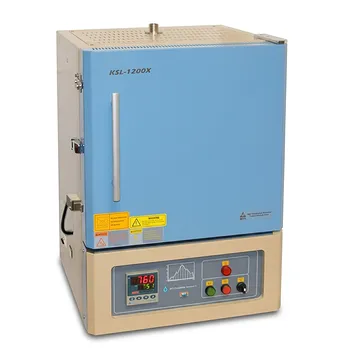
High Temperature 1200C Muffle Furnace 27L Volume 12x12x12 Chamber with Programmable PID Controller for Laboratory Material Science
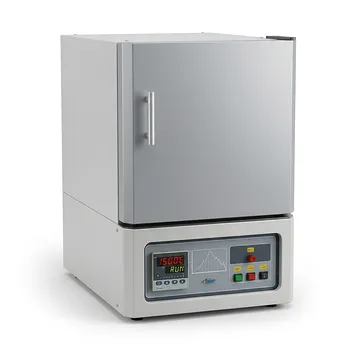
High Temperature 1500C Benchtop Muffle Furnace 3.6L Alumina Fiber Chamber Programmable Controller Sintering Annealing Carbonization Thermal Processing System
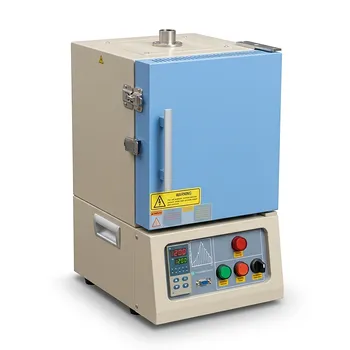
1200°C Small Box Furnace 4.2 Liter Programmable Muffle Furnace with High Purity Alumina Insulation and PID Control
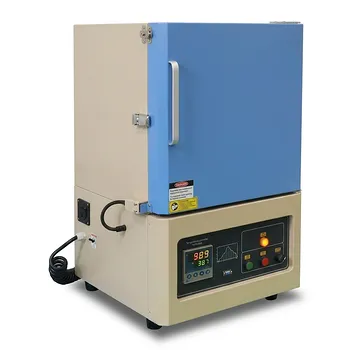
1200°C High Temperature Muffle Furnace 19L Chamber with 50 Segment Programmable Controller
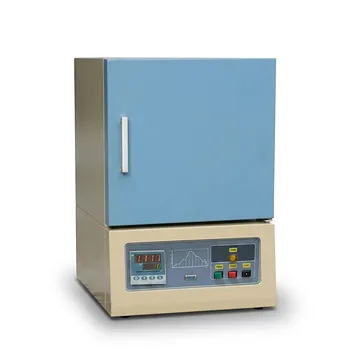
Ultra High Temperature Bench Top Muffle Furnace 1750C Sintering System with Kanthal Super Heating Elements and Precision Digital Control
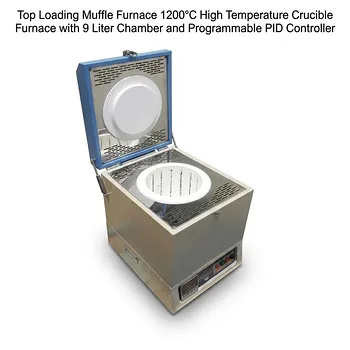
Top Loading Muffle Furnace 1200°C High Temperature Crucible Furnace with 9 Liter Chamber and Programmable PID Controller
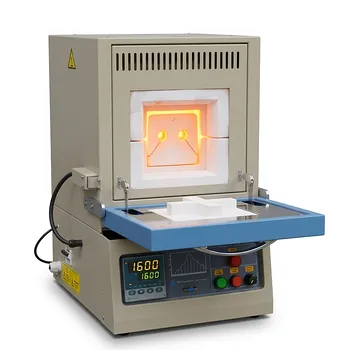
High Temperature Compact Muffle Furnace 1700 C with 30 Segment Programmable Controller and 1.7L Cubic Chamber
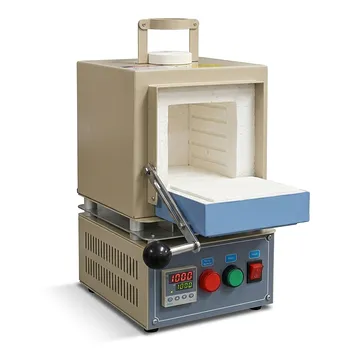
Compact 1000C Muffle Furnace with Programmable Controller and 2 Inch Top Port for Vacuum and Atmosphere Material Research
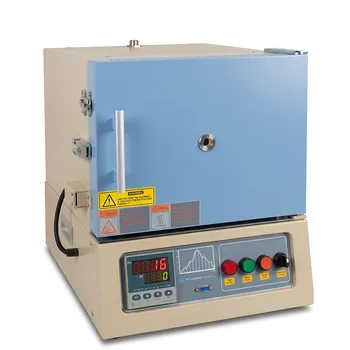
1200C Muffle Furnace 12x8x5 7.2L Heating Chamber with Quartz Observation Window and Vent Port
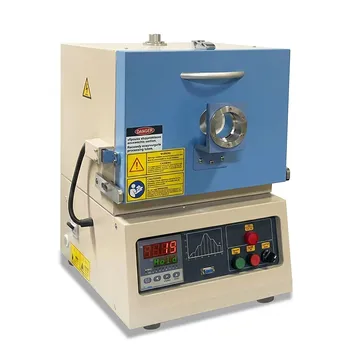
High Temperature Hybrid Muffle and Tube Furnace 1700C Programmable PID Controlled Box System with Vacuum Flange and Alumina Processing Tube
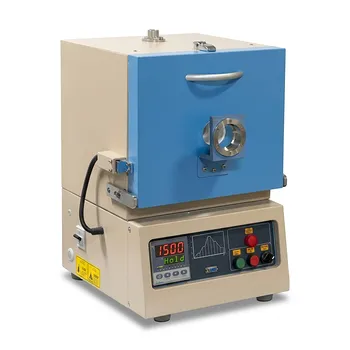
1500C Hybrid Muffle Tube Furnace 1.7L Box with 2 Inch Mullite Tube and Programmable PID Controller
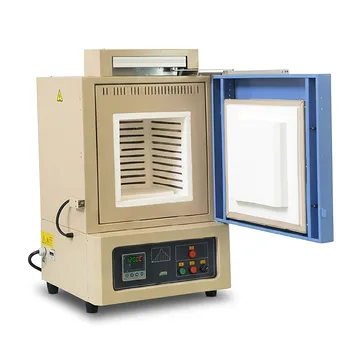
1200C High Temperature Muffle Furnace with Motorized Door and Automated PC Control for Industrial Sintering and Material Processing 27 Liter
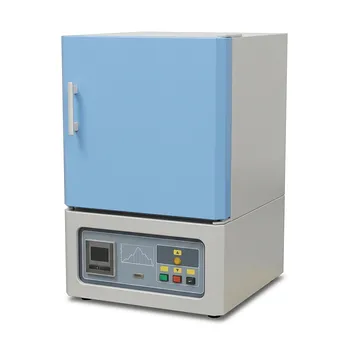
1800C Bench Top Muffle Furnace with Kanthal Super 1900 Heating Elements and 3.6L Alumina Fiber Chamber
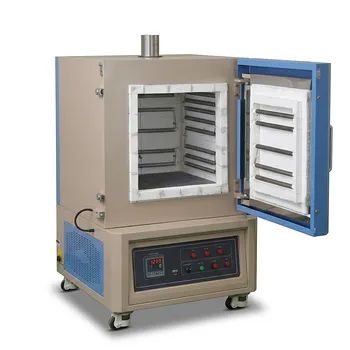
1200C High Temperature 125L Muffle Furnace 5 Side Heating for Large Batch Sintering with Optional Alloy Debinding Chamber
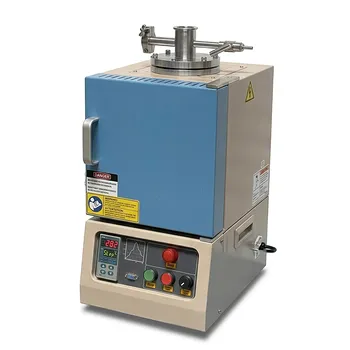
High Temperature Hybrid Muffle and Tube Furnace with Vacuum Capability and PID Control
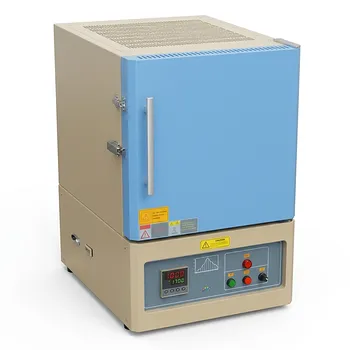
Large Bench Top 1700C High Temperature Muffle Furnace with 19L Chamber for Advanced Material Sintering and Annealing
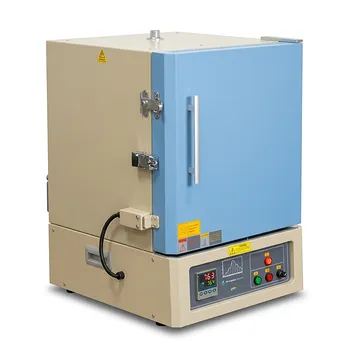
Large Capacity 1200C Muffle Furnace 64 Liter Chamber with Digital PID Controller and Built In Venting Port
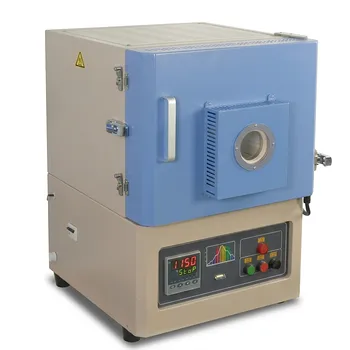
High Temperature Benchtop Muffle Furnace with Quartz Observation Window for Thermal Imaging and Material Analysis
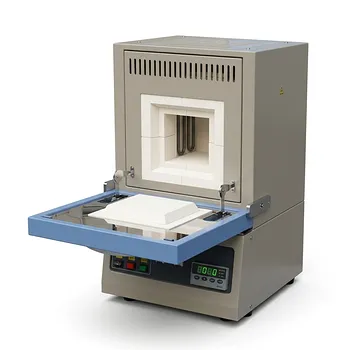
Five Sided Heating Muffle Furnace High Uniformity 1200C Lab Box Furnace 27L Alumina Fiber Chamber