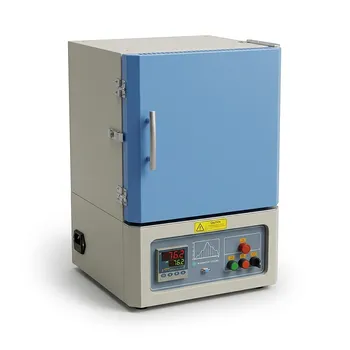
What is the function of a muffle furnace in aluminoborosilicate glass prep? Stabilize Raw Materials for Superior Purity
Updated 5 months ago
The high-temperature muffle furnace is the critical tool for stabilizing raw materials through calcination and chemical transformation. In the pre-treatment of aluminoborosilicate glass, it is primarily used to calcine magnesium oxide at 1000°C for over 12 hours to remove adsorbed water and hydroxides. Additionally, the furnace facilitates decarbonization and the decomposition of calcium carbonate and boric acid into their stable oxide forms, ensuring a chemically consistent foundation for glass synthesis.
Core Takeaway: Pre-treatment in a muffle furnace converts volatile raw materials into stable, high-purity oxides. This process prevents uncontrolled outgassing and chemical inconsistencies during the subsequent high-temperature melting phase.
Thermal Purification and Moisture Removal
Elimination of Adsorbed Water
Raw materials like magnesium oxide (MgO) are highly prone to absorbing environmental moisture and forming hydroxides. By maintaining a sustained temperature of 1000°C for over 12 hours, the muffle furnace drives off this chemically bound water.
Removal of Volatile Impurities
Similar to the preparation of rare-earth ceramics and alumina supports, high-heat pre-treatment ensures that residual moisture and volatile organic residues are eliminated. This creates a high-purity material foundation that is essential for precise weighing and predictable solid-phase reactions.
Surface Stabilization
The furnace provides a consistent physicochemical state for the raw powders. This stabilization prevents the materials from reacting prematurely with atmospheric elements, ensuring that the initial components remain chemically stable until the melting process begins.
Chemical Transformation and Decarbonization
Decomposition of Carbonates
The furnace performs essential decarbonization by providing the thermal energy required to break down calcium carbonate (CaCO3). This process releases carbon dioxide gas and leaves behind calcium oxide (CaO), a necessary component for the glass matrix.
Conversion of Boric Acid
Through precise temperature control, the muffle furnace facilitates the conversion of boric acid into boron oxide (B2O3). Boron oxide acts as a vital flux and glass-former, and its pre-melt stabilization is key to controlling the final glass composition.
Prevention of Gas Defects
By completing these decompositions during pre-treatment, the furnace prevents the release of large volumes of gas (like CO2 or water vapor) during the actual glass melting stage. This significantly reduces the risk of bubbles and seeds in the final glass melt, leading to a more transparent and defect-free product.
Understanding the Trade-offs
Time and Energy Consumption
A primary trade-off in this phase is the extended duration required for complete calcination. While 12 hours at 1000°C ensures chemical stability, it represents a significant energy investment and limits the throughput of material preparation.
Temperature Precision vs. Material Sintering
While high temperatures are necessary for decomposition, exceeding the optimal threshold can cause premature sintering of the powders. If the raw materials begin to fuse or clump during pre-treatment, it can make subsequent mixing and homogenization more difficult.
Atmospheric Influence
In a muffle furnace, the local atmosphere can affect the rate of decarbonization. If the furnace is poorly ventilated, the buildup of released CO2 can shift the chemical equilibrium, leading to incomplete decomposition of carbonates despite reaching the target temperature.
How to Apply This to Your Project
Ensuring Success in Glass Synthesis
Success in glass production depends heavily on the accuracy of the initial material state. Use the following guidelines to optimize your pre-treatment phase:
- If your primary focus is optical clarity and defect reduction: Prioritize the full 12-hour calcination of MgO and ensure the muffle furnace is properly ventilated to allow CO2 to escape during decarbonization.
- If your primary focus is precise chemical composition: Ensure that all boric acid and carbonates are fully converted to oxides before weighing the final batch, as the weight loss from gas release will change the mass of the components.
- If your primary focus is energy efficiency and throughput: Experiment with slightly higher temperatures to see if the 12-hour duration can be reduced without compromising the removal of hydroxides or the stability of the oxides.
By mastering the thermal pre-treatment of raw materials, you ensure a predictable, high-quality synthesis environment for complex glass systems.
Summary Table:
| Pre-treatment Process | Material Target | Key Conditions | Primary Function |
|---|---|---|---|
| Calcination | Magnesium Oxide (MgO) | 1000°C for >12 Hours | Removes adsorbed water and hydroxides |
| Decarbonization | Calcium Carbonate (CaCO3) | High Temperature | Converts carbonates to stable CaO; releases CO2 |
| Chemical Conversion | Boric Acid | Controlled Heating | Transforms boric acid into boron oxide (B2O3) flux |
| Surface Stabilization | Raw Powders | Sustained Thermal Load | Prevents premature reactions and gas defects |
Optimize Your Glass Synthesis with THERMUNITS Precision
Ensure the highest purity and chemical stability in your material research with THERMUNITS, a leading manufacturer of high-temperature laboratory equipment for material science and industrial R&D. Our high-performance muffle furnaces are engineered for the rigorous demands of glass pre-treatment, providing the precise temperature control and uniform heating necessary to eliminate volatile impurities and prevent gas defects.
From Muffle, Vacuum, and Atmosphere furnaces to advanced CVD/PECVD systems and Vacuum Induction Melting (VIM) units, THERMUNITS offers a comprehensive range of thermal processing solutions tailored to your specific application.
Ready to enhance your lab's efficiency and output? Contact us today to discuss your heat treatment requirements and discover how our expertise can drive your innovation forward.
References
- Stamatis Flemetakis, Stephan Klemme. The effect of oxygen fugacity on the evaporation of boron from aluminoborosilicate melt. DOI: 10.5194/ejm-36-173-2024
Mentioned Products
- High Temperature 1700C Bench Top Muffle Furnace with Alumina Fiber Insulation and 3.6L Chamber Capacity for Precision Sintering and Heat Treatment
- 1200°C High Temperature Muffle Furnace 19L Chamber with 50 Segment Programmable Controller
- High Temperature 1500C Benchtop Muffle Furnace 3.6L Alumina Fiber Chamber Programmable Controller Sintering Annealing Carbonization Thermal Processing System
- Large Bench Top 1700C High Temperature Muffle Furnace with 19L Chamber for Advanced Material Sintering and Annealing
- High Temperature Muffle Furnace with Dual Controllers and 36L Large Chamber 1700C Max
People Also Ask
- What role does a high-temperature muffle furnace play in evaluating the mineral composition of rock samples? LOI & XRF Guide
- What is the purpose of using muffle or tube furnaces in glass synthesis? Achieve Precise Melt-Quenching & Homogeneity
- What is the function of a high-temp muffle furnace in Ni-V oxide synthesis? Optimize your material's performance.
- What is the function of a high-temperature muffle furnace in phosphorus-modified zeolite catalyst preparation?
- What role does a high-temperature muffle furnace play in the synthesis of Melem precursors? Precision Polymerization.

Tech Team · ThermUnits
Last updated on Apr 14, 2026
Related Products
High Temperature 1700C Bench Top Muffle Furnace with Alumina Fiber Insulation and 3.6L Chamber Capacity for Precision Sintering and Heat Treatment
1200°C High Temperature Muffle Furnace 19L Chamber with 50 Segment Programmable Controller
High Temperature 1500C Benchtop Muffle Furnace 3.6L Alumina Fiber Chamber Programmable Controller Sintering Annealing Carbonization Thermal Processing System
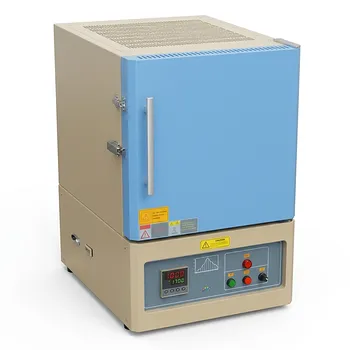
Large Bench Top 1700C High Temperature Muffle Furnace with 19L Chamber for Advanced Material Sintering and Annealing
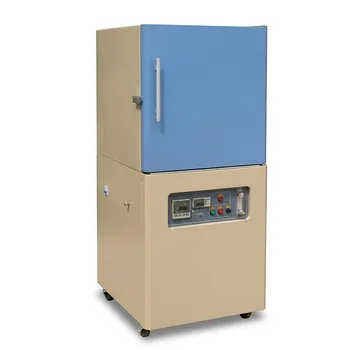
High Temperature Muffle Furnace with Dual Controllers and 36L Large Chamber 1700C Max
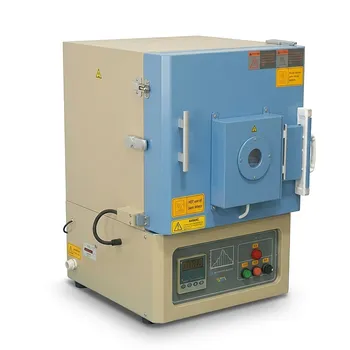
High Temperature Benchtop Muffle Furnace 1500C with 3.6L Chamber and Quartz Observation Window
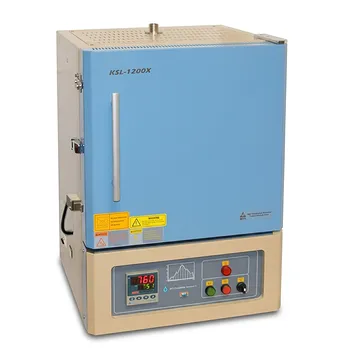
High Temperature 1200C Muffle Furnace 27L Volume 12x12x12 Chamber with Programmable PID Controller for Laboratory Material Science
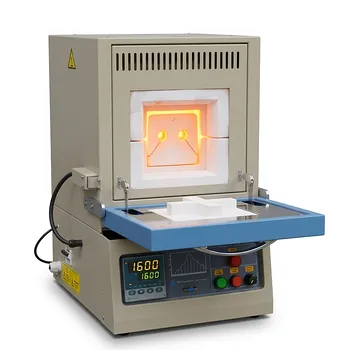
High Temperature Compact Muffle Furnace 1700 C with 30 Segment Programmable Controller and 1.7L Cubic Chamber
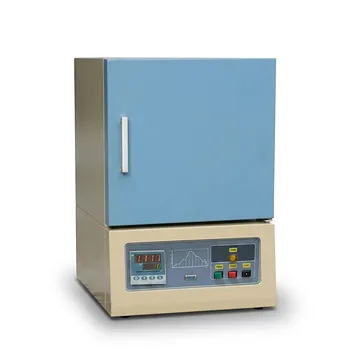
Ultra High Temperature Bench Top Muffle Furnace 1750C Sintering System with Kanthal Super Heating Elements and Precision Digital Control
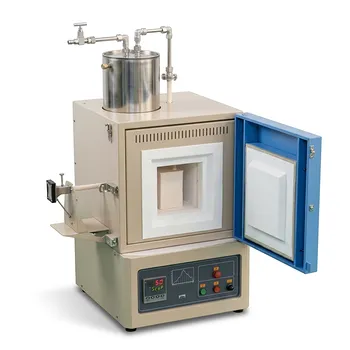
High Temperature Bench Top Muffle Furnace 1700C with Integrated Evaporating Particle Collection and 8x8x8 Alumina Fiber Chamber
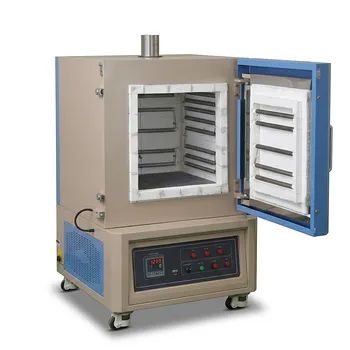
1200C High Temperature 125L Muffle Furnace 5 Side Heating for Large Batch Sintering with Optional Alloy Debinding Chamber
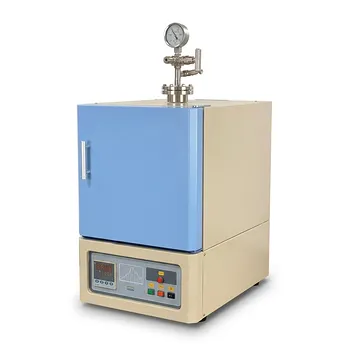
Hybrid High Temperature Muffle and Tube Furnace with 1500C Capability and Vacuum Flange Assembly
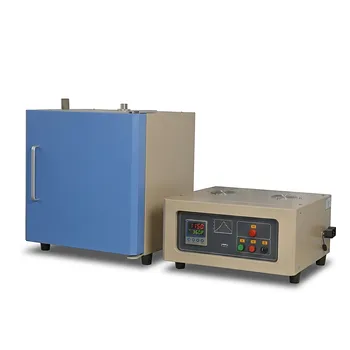
High Temperature Muffle Furnace with Alloy Chamber for Debinding and Sintering Applications
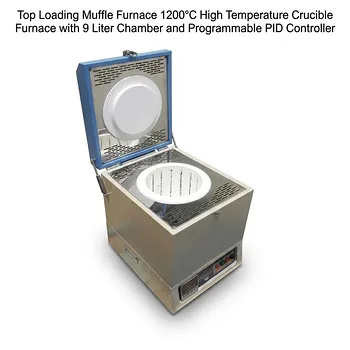
Top Loading Muffle Furnace 1200°C High Temperature Crucible Furnace with 9 Liter Chamber and Programmable PID Controller
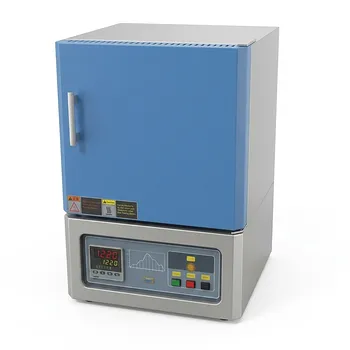
High Temperature Benchtop Muffle Furnace 1700C 10L Chamber Alumina Fiber Insulation MoSi2 Heating Elements
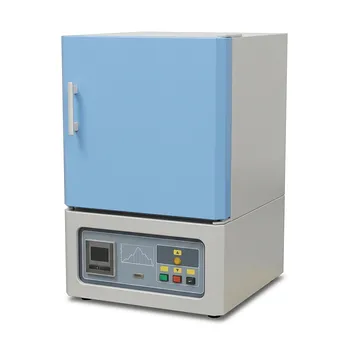
1800C Bench Top Muffle Furnace with Kanthal Super 1900 Heating Elements and 3.6L Alumina Fiber Chamber
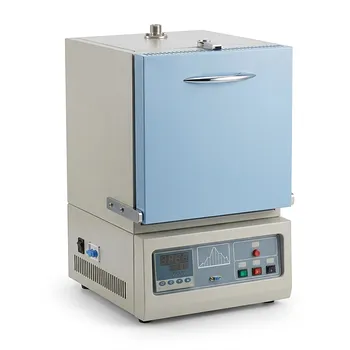
1750C Compact Muffle Furnace 1.7L Ultra High Temperature Laboratory Sintering System for Advanced Ceramics and Material Science Research
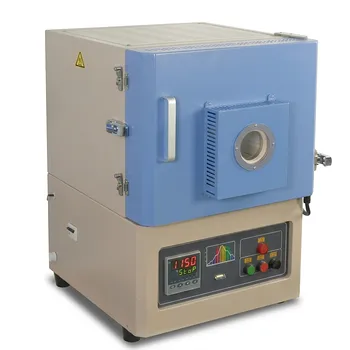
High Temperature Benchtop Muffle Furnace with Quartz Observation Window for Thermal Imaging and Material Analysis
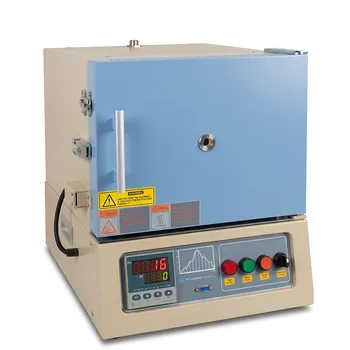
1200C Muffle Furnace 12x8x5 7.2L Heating Chamber with Quartz Observation Window and Vent Port