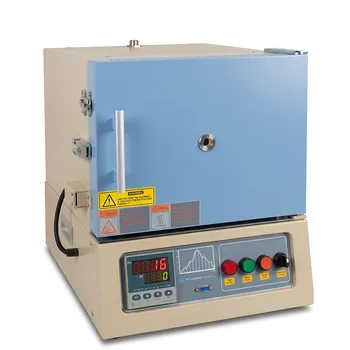
How does a high-temperature muffle furnace contribute to the phase formation of high-entropy spinel oxides? Guide
Updated 3 months ago
The high-temperature muffle furnace acts as the critical thermodynamic engine required to drive cation diffusion and stabilize the complex, multi-element lattice of high-entropy spinel oxides. By providing a controlled thermal environment—typically between 600 °C and 1100 °C—the furnace triggers the decomposition of precursors and provides the kinetic energy necessary for diverse metal ions to overcome grain boundaries and integrate into a single, cohesive spinel structure.
A muffle furnace provides the precise thermal energy needed to shift a system from a mixture of individual oxides into a single-phase solid solution. It achieves this by facilitating long-range atomic diffusion and leveraging the "high-entropy effect" to stabilize the lattice against phase segregation.
Driving Cation Diffusion and Lattice Integration
Overcoming Kinetic Barriers
The synthesis of high-entropy spinels involves incorporating five or more distinct metal cations into a single crystalline framework. A muffle furnace provides the high activation energy required for these diverse ions to migrate through solid-state interfaces and occupy their designated sites within the spinel lattice.
Facilitating Homogeneous Solid Solutions
Without the sustained, uniform heat of a muffle furnace, the different metal oxides would remain as a heterogeneous mixture or form undesirable secondary phases. The furnace ensures that the diffusion kinetics are sufficient to allow for the complete dissolution of all components into a cubic fluorite or spinel structure, depending on the specific chemistry.
Achieving Entropy-Driven Stabilization
High-entropy phases are often stable only at elevated temperatures where the configurational entropy outweighs the enthalpy of phase separation. The muffle furnace maintains the specific temperature window necessary for this "entropy-stabilized" state to form, effectively "locking" the various cations into a randomized but stable arrangement.
Precision Control of Phase Evolution
Thermal Decomposition of Precursors
In methods like the modified Pechini method or gel combustion, the furnace triggers the thermal decomposition of organic chelates and metal salts. At temperatures such as 600 °C, the furnace ensures the uniform oxidative dehydration of precursors, transforming them into pure oxides while preventing the formation of impurity phases like Gd2O3.
Programmable Heating and Ramp Rates
Laboratory muffle furnaces allow for precise heating curve control, such as slow ramp rates of 1 °C per minute. This controlled ascent is vital for managing the transition from hydroxides to oxides, ensuring that the resulting spinel retains a high specific surface area and desirable mesoporous structures.
Eliminating Volatile Impurities
The furnace environment effectively eliminates volatile compounds and organic residues that remain after initial chemical reactions. By providing a stable environment for long-term sintering, it ensures that the final product is a pure material foundation, free from carbon residues that could interfere with the oxide’s performance.
Understanding the Trade-offs
Energy Consumption vs. Phase Purity
Traditional solid-state methods often require extremely high temperatures and long dwell times, leading to significant energy consumption. While the modified Pechini method in a muffle furnace can achieve single-phase spinels at lower temperatures (600 °C), reaching the absolute highest levels of crystallinity may still necessitate more energy-intensive sintering.
Grain Growth and Surface Area
Extended periods at high temperatures promote grain growth, which can reduce the specific surface area of the spinel powder. This is a critical trade-off for applications like catalysis or battery electrodes, where a high surface-area-to-volume ratio is often more important than perfect crystal macro-structures.
Atmospheric Limitations
Standard muffle furnaces operate in an air atmosphere, which is ideal for oxides but limits the synthesis of materials sensitive to oxidation. If a specific cation needs to remain in a lower oxidation state, a specialized furnace with inert gas capabilities would be required to prevent the phase from degrading.
How to Apply This to Your Project
Recommendations for Synthesis
- If your primary focus is energy efficiency: Utilize the modified Pechini method at a constant 600 °C to achieve a single-phase spinel without the need for extreme sintering temperatures.
- If your primary focus is high catalytic activity: Use a programmable muffle furnace with a slow ramp rate (e.g., 1 °C/min) and lower calcination temperatures (300 °C–500 °C) to induce mesoporous structures.
- If your primary focus is maximum phase purity: Opt for higher temperature sintering (950 °C–1100 °C) for longer durations to ensure the complete elimination of secondary phases and impurities.
The muffle furnace is the indispensable tool that transforms chemical precursors into sophisticated high-entropy structures by precisely balancing thermal energy, diffusion kinetics, and thermodynamic stability.
Summary Table:
| Contribution Phase | Furnace Function | Key Outcome |
|---|---|---|
| Precursor Prep | Thermal Decomposition | Uniform oxidative dehydration of organic salts/chelates. |
| Kinetic Activation | High-Energy Heating | Cations overcome grain boundaries for lattice integration. |
| Phase Stability | Entropy Stabilization | Locks diverse ions into a stable, single-phase solution. |
| Morphology Control | Precise Ramp Rates | Preserves mesoporous structures and high surface area. |
| Purity Refinement | Long-term Sintering | Eliminates volatile impurities and carbon residues. |
Elevate Your Material Research with THERMUNITS Precision
Achieving the perfect high-entropy spinel phase requires uncompromising thermal precision. As a global leader in high-temperature laboratory equipment, THERMUNITS provides the advanced technology necessary for cutting-edge material science and industrial R&D.
Whether you are synthesizing complex oxides or developing new alloys, our comprehensive range of equipment is engineered for excellence:
- Laboratory Furnaces: Muffle, Tube, Atmosphere, and Vacuum Furnaces for precise heat treatment.
- Advanced Synthesis Systems: CVD/PECVD systems, Rotary Kilns, and Hot Press Furnaces for specialized applications.
- Industrial R&D Tools: Vacuum Induction Melting (VIM) Furnaces, Dental Furnaces, and high-quality Thermal Elements.
Ready to optimize your synthesis process? Our experts are here to help you select the ideal thermal solution to ensure maximum phase purity and research efficiency.
References
- Haotian Yang, Aleksander Gurlo. Synthesis and Electrochemical Performance of High‐Entropy Spinel‐Type Oxides Derived from Multimetallic Polymeric Precursors. DOI: 10.1002/aesr.202400146
Mentioned Products
- High Temperature 1200C Muffle Furnace 27L Volume 12x12x12 Chamber with Programmable PID Controller for Laboratory Material Science
- Ultra High Temperature Bench Top Muffle Furnace 1750C Sintering System with Kanthal Super Heating Elements and Precision Digital Control
- High Temperature Muffle Furnace with Dual Controllers and 36L Large Chamber 1700C Max
- 1800°C Bench Top Ultra High Temperature Muffle Furnace with Sapphire Observation Window and Top Feeding Port for Materials Research and Thermal Processing
- Large Bench Top 1700C High Temperature Muffle Furnace with 19L Chamber for Advanced Material Sintering and Annealing
People Also Ask
- Why is annealing in a high-temperature muffle furnace necessary for SiO2/Si substrate pretreatment before monolayer WS2 synthesis?
- What is the purpose of using muffle or tube furnaces in glass synthesis? Achieve Precise Melt-Quenching & Homogeneity
- What role does a high-temperature muffle furnace play in evaluating the mineral composition of rock samples? LOI & XRF Guide
- What role does a high-temperature muffle furnace play in the synthesis of Melem precursors? Precision Polymerization.
- What is the function of a muffle furnace in aluminoborosilicate glass prep? Stabilize Raw Materials for Superior Purity

Tech Team · ThermUnits
Last updated on Jun 02, 2026
Related Products
High Temperature 1200C Muffle Furnace 27L Volume 12x12x12 Chamber with Programmable PID Controller for Laboratory Material Science
Ultra High Temperature Bench Top Muffle Furnace 1750C Sintering System with Kanthal Super Heating Elements and Precision Digital Control
High Temperature Muffle Furnace with Dual Controllers and 36L Large Chamber 1700C Max
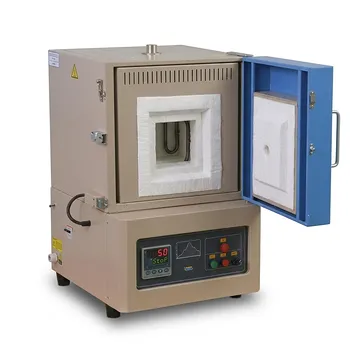
1800°C Bench Top Ultra High Temperature Muffle Furnace with Sapphire Observation Window and Top Feeding Port for Materials Research and Thermal Processing
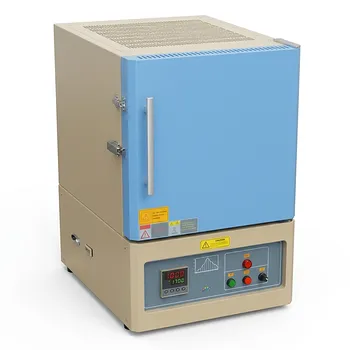
Large Bench Top 1700C High Temperature Muffle Furnace with 19L Chamber for Advanced Material Sintering and Annealing
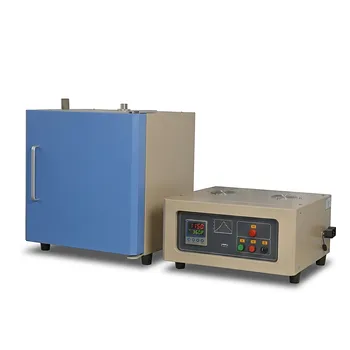
High Temperature Muffle Furnace with Alloy Chamber for Debinding and Sintering Applications
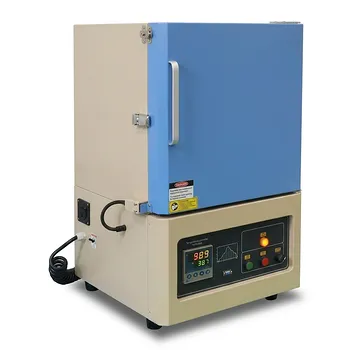
1200°C High Temperature Muffle Furnace 19L Chamber with 50 Segment Programmable Controller
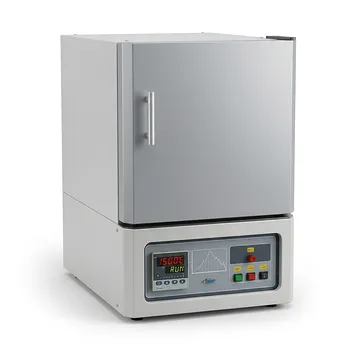
High Temperature 1500C Benchtop Muffle Furnace 3.6L Alumina Fiber Chamber Programmable Controller Sintering Annealing Carbonization Thermal Processing System
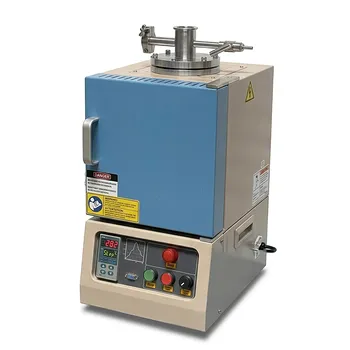
High Temperature Hybrid Muffle and Tube Furnace with Vacuum Capability and PID Control
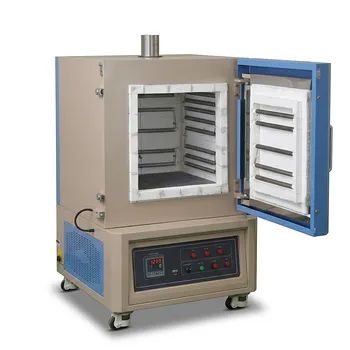
1200C High Temperature 125L Muffle Furnace 5 Side Heating for Large Batch Sintering with Optional Alloy Debinding Chamber
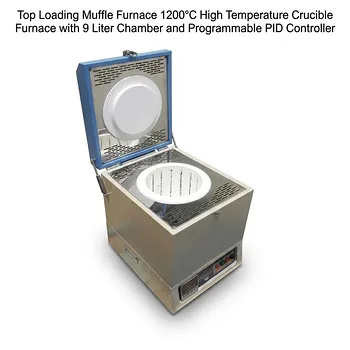
Top Loading Muffle Furnace 1200°C High Temperature Crucible Furnace with 9 Liter Chamber and Programmable PID Controller
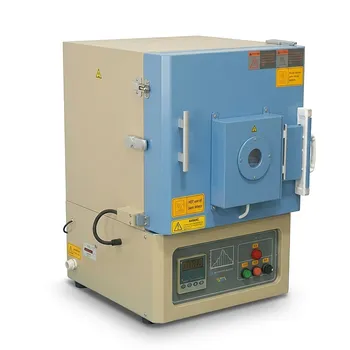
High Temperature Benchtop Muffle Furnace 1500C with 3.6L Chamber and Quartz Observation Window
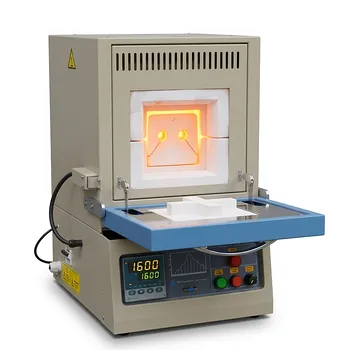
High Temperature Compact Muffle Furnace 1700 C with 30 Segment Programmable Controller and 1.7L Cubic Chamber
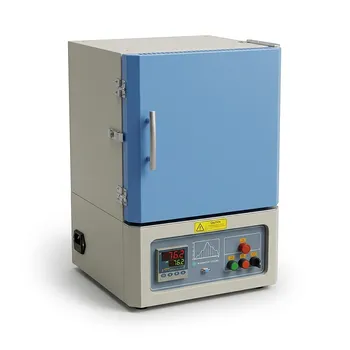
1750C Bench Top Muffle Furnace 3.6L High Grade Molybdenum Disilicide Heating Elements Laboratory Heat Treatment Equipment
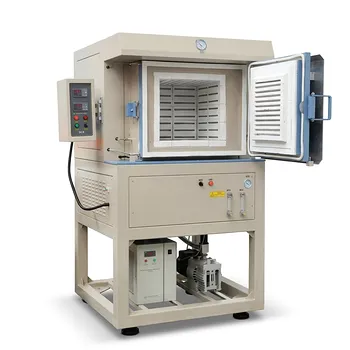
1200°C Five Side Heating Atmosphere Controlled Muffle Furnace 64 Liter High Uniformity Box Furnace for Material Synthesis
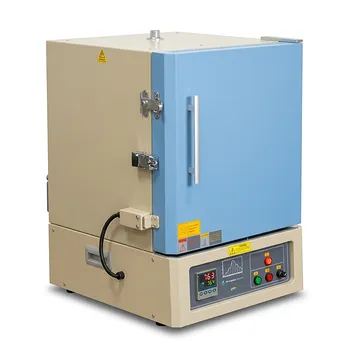
Large Capacity 1200C Muffle Furnace 64 Liter Chamber with Digital PID Controller and Built In Venting Port
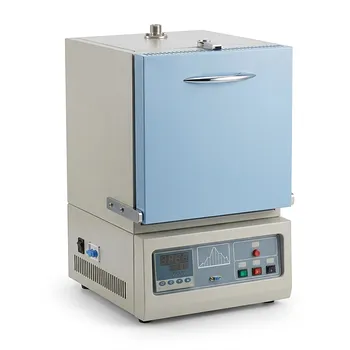
1750C Compact Muffle Furnace 1.7L Ultra High Temperature Laboratory Sintering System for Advanced Ceramics and Material Science Research
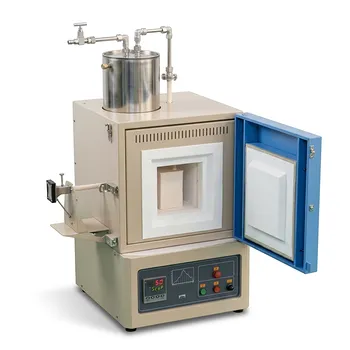
High Temperature Bench Top Muffle Furnace 1700C with Integrated Evaporating Particle Collection and 8x8x8 Alumina Fiber Chamber
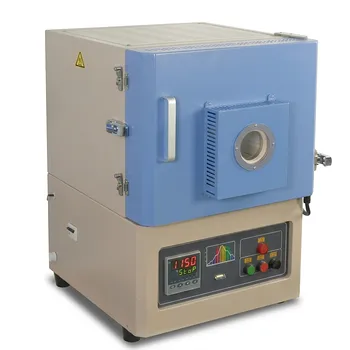
High Temperature Benchtop Muffle Furnace with Quartz Observation Window for Thermal Imaging and Material Analysis