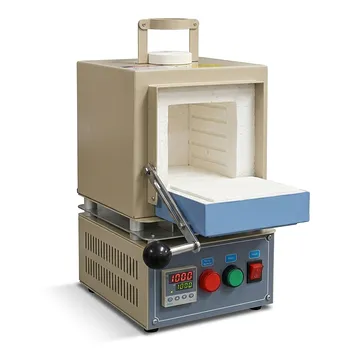
How does a laboratory muffle furnace facilitate the conversion of Co-MOF into Co3O4 nanosheets? Master Thermal Control
Updated 3 months ago
The laboratory muffle furnace acts as a thermal catalyst for topotactic transformation, converting Cobalt-based Metal-Organic Frameworks (Co-MOFs) into $\text{Co}_3\text{O}_4$ nanosheets through controlled oxidation. By maintaining a precise temperature of 350°C in an air atmosphere, the furnace triggers the thermal decomposition of organic ligands while simultaneously oxidizing cobalt ions into a highly reactive cubic-system spinel structure.
Core Takeaway: A muffle furnace facilitates the transition from Co-MOF to $\text{Co}_3\text{O}_4$ by providing the thermal energy required to strip away organic frameworks while preserving the precursor's nanosheet morphology. This process ensures high crystallinity and purity in the resulting metal oxide.
Thermal Decomposition and Organic Removal
Triggering the Breakdown of Ligands
The muffle furnace provides the stable thermal energy necessary to break the coordination bonds within the Co-MOF precursor. At the targeted 350°C threshold, the organic components and residual solvents are completely volatilized and removed from the system.
Maintaining Morphological Integrity
Unlike more aggressive heating methods, the muffle furnace allows for a precise ramp rate that prevents the structural collapse of the precursor. This allows the resulting $\text{Co}_3\text{O}_4$ to inherit and maintain the high-surface-area nanosheet morphology of the original MOF.
Ensuring Chemical Purity
By maintaining a consistent high-temperature environment, the furnace ensures the complete removal of carbon sources and other volatile impurities. This leads to the formation of high-purity, single-crystal black cobalt oxide intermediates.
Phase Transformation and Lattice Reorganization
Facilitating Atmospheric Oxidation
The air atmosphere within the muffle furnace is critical for the oxidation of the cobalt source. As the organic framework decomposes, atmospheric oxygen reacts with the cobalt cations to form the stable spinel-phase $\text{Co}_3\text{O}_4$.
Promoting Recrystallization
The furnace provides a controlled environment for lattice reorganization, where atoms arrange themselves into a cubic-system lattice. This thermal processing is essential for achieving the desired crystallinity and electrochemical activity required for catalyst applications.
Controlled Thermal Polycondensation
Precision in the furnace’s temperature control, often down to specific heating rates like 2 K/min, determines the interlayer stacking of the material. This level of control prevents random aggregation and ensures the nanosheet arrays remain distinct and functional.
Understanding the Trade-offs
Temperature Sensitivity
If the muffle furnace temperature exceeds the optimal 350°C-450°C range, the nanosheets may undergo sintering, where particles fuse together. This significantly reduces the specific surface area and negates the benefits of using a MOF precursor.
Atmosphere Limitations
While an air atmosphere is necessary for oxidation, a lack of uniform airflow within the muffle furnace can lead to incomplete decomposition. This results in residual carbon or "brown intermediate" powders rather than the desired high-purity black $\text{Co}_3\text{O}_4$.
Heating Rate Risks
Rapid heating can cause "thermal shock" to the MOF framework, leading to a loss of morphology. A slow, controlled ramp is required to allow gases to escape without rupturing the delicate nanosheet structure.
How to Apply This to Your Project
When utilizing a muffle furnace for $\text{Co}_3\text{O}_4$ synthesis, your settings should align with your specific material requirements:
- If your primary focus is Surface Area: Use a lower temperature (approx. 350°C) and a very slow ramp rate to ensure the nanosheet morphology is preserved without sintering.
- If your primary focus is Crystallinity: Opt for a higher calcination temperature (450°C - 500°C) and a longer dwell time to ensure complete lattice reorganization and phase purity.
- If your primary focus is Electrode Stability: Utilize the furnace for thermal fixation (at lower specific temperatures) to ensure the catalyst layer achieves robust physical contact with the substrate.
By mastering the balance of temperature, time, and atmosphere, the laboratory muffle furnace transforms delicate MOF precursors into high-performance, structurally optimized metal oxides.
Summary Table:
| Parameter | Recommended Setting | Impact on Co3O4 Synthesis |
|---|---|---|
| Temperature | 350°C - 450°C | Triggers ligand decomposition while preventing particle sintering. |
| Atmosphere | Air (Oxygen-rich) | Facilitates oxidation of cobalt ions into a stable spinel structure. |
| Heating Rate | Slow (e.g., 2 K/min) | Preserves nanosheet morphology and prevents structural collapse. |
| Airflow | Uniform/Stable | Ensures complete removal of carbon and prevents brown intermediates. |
| Dwell Time | Application-specific | Controls the degree of recrystallization and phase purity. |
Accelerate Your Material Research with THERMUNITS
Precision is paramount when converting delicate MOF precursors into high-performance catalysts. As a leading manufacturer of high-temperature laboratory equipment, THERMUNITS provides the advanced thermal processing solutions required for successful topotactic transformations and material synthesis.
From our Precision Muffle Furnaces with programmable ramp control to specialized Atmosphere, Vacuum, Tube, and CVD/PECVD systems, we empower R&D professionals in material science to achieve superior morphology, high surface area, and perfect crystallinity. Our comprehensive range also includes Rotary Kilns, Hot Press Furnaces, Vacuum Induction Melting (VIM) units, and Dental Furnaces, all designed to meet the rigorous demands of industrial and laboratory heat treatment.
Ready to optimize your synthesis process and achieve high-purity results?
Contact our technical experts today to find the perfect thermal solution for your laboratory needs!
References
- Peijia Wang, Junlei Qi. Rational Construction of Pt Incorporated Co3O4 as High-Performance Electrocatalyst for Hydrogen Evolution Reaction. DOI: 10.3390/nano14110898
Mentioned Products
- 1750C Compact Muffle Furnace 1.7L Ultra High Temperature Laboratory Sintering System for Advanced Ceramics and Material Science Research
- 1200C Muffle Furnace 12x8x5 7.2L Heating Chamber with Quartz Observation Window and Vent Port
- High Temperature 1200C Muffle Furnace 27L Volume 12x12x12 Chamber with Programmable PID Controller for Laboratory Material Science
- 1750C Bench Top Muffle Furnace 3.6L High Grade Molybdenum Disilicide Heating Elements Laboratory Heat Treatment Equipment
- 1200°C High Temperature Muffle Furnace 19L Chamber with 50 Segment Programmable Controller
People Also Ask
- What role does a laboratory high-temperature muffle furnace play in the ash analysis phase of biomass co-firing research? [Guide]
- What is the function of a high-temp muffle furnace in Ni-V oxide synthesis? Optimize your material's performance.
- What role does a high-temperature muffle furnace play in the synthesis of Melem precursors? Precision Polymerization.
- What is the function of a high-temperature muffle furnace in phosphorus-modified zeolite catalyst preparation?
- What is the function of a muffle furnace in aluminoborosilicate glass prep? Stabilize Raw Materials for Superior Purity

Tech Team · ThermUnits
Last updated on Jun 02, 2026
Related Products
1750C Compact Muffle Furnace 1.7L Ultra High Temperature Laboratory Sintering System for Advanced Ceramics and Material Science Research
1200C Muffle Furnace 12x8x5 7.2L Heating Chamber with Quartz Observation Window and Vent Port
High Temperature 1200C Muffle Furnace 27L Volume 12x12x12 Chamber with Programmable PID Controller for Laboratory Material Science
1750C Bench Top Muffle Furnace 3.6L High Grade Molybdenum Disilicide Heating Elements Laboratory Heat Treatment Equipment
1200°C High Temperature Muffle Furnace 19L Chamber with 50 Segment Programmable Controller
1200°C Five Side Heating Atmosphere Controlled Muffle Furnace 64 Liter High Uniformity Box Furnace for Material Synthesis
1200C High Temperature Muffle Furnace with Motorized Door and Automated PC Control for Industrial Sintering and Material Processing 27 Liter
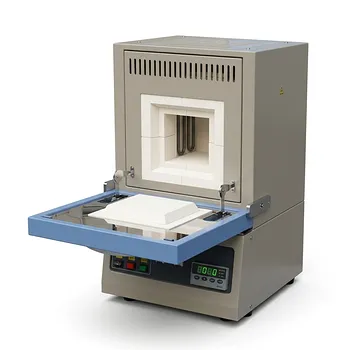
Five Sided Heating Muffle Furnace High Uniformity 1200C Lab Box Furnace 27L Alumina Fiber Chamber
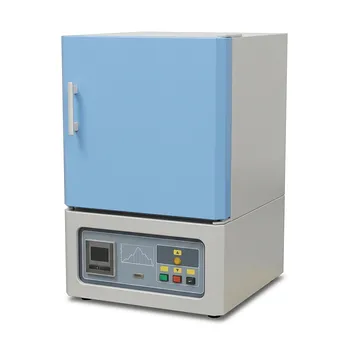
1800C Bench Top Muffle Furnace with Kanthal Super 1900 Heating Elements and 3.6L Alumina Fiber Chamber
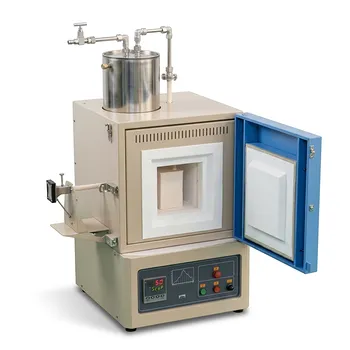
High Temperature Bench Top Muffle Furnace 1700C with Integrated Evaporating Particle Collection and 8x8x8 Alumina Fiber Chamber
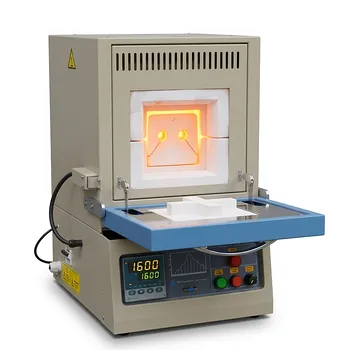
High Temperature Compact Muffle Furnace 1700 C with 30 Segment Programmable Controller and 1.7L Cubic Chamber
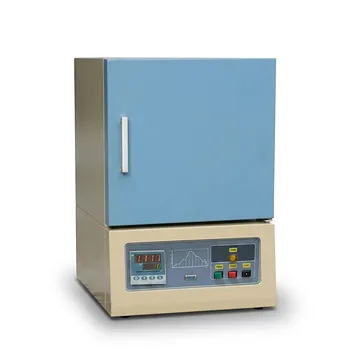
Ultra High Temperature Bench Top Muffle Furnace 1750C Sintering System with Kanthal Super Heating Elements and Precision Digital Control
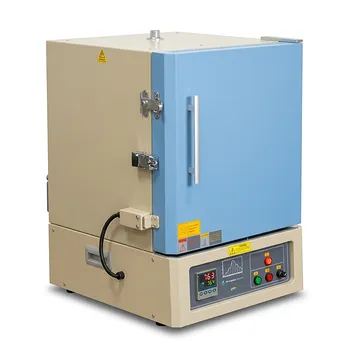
Large Capacity 1200C Muffle Furnace 64 Liter Chamber with Digital PID Controller and Built In Venting Port
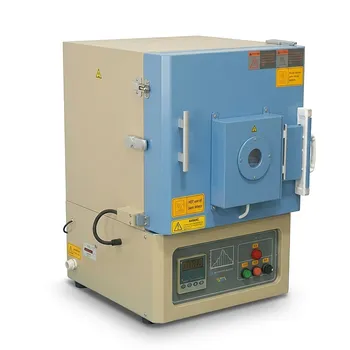
High Temperature Benchtop Muffle Furnace 1500C with 3.6L Chamber and Quartz Observation Window
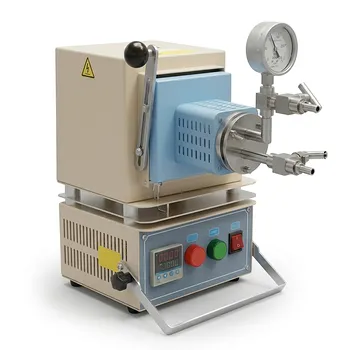
Compact Hybrid Muffle and Tube Furnace for 1000C Controlled Atmosphere Laboratory Material Sintering
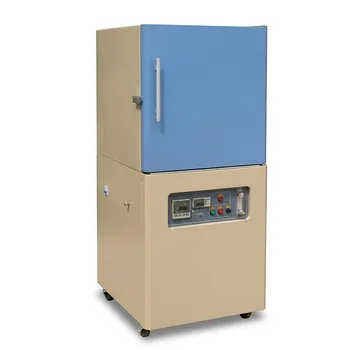
High Temperature Muffle Furnace with Dual Controllers and 36L Large Chamber 1700C Max
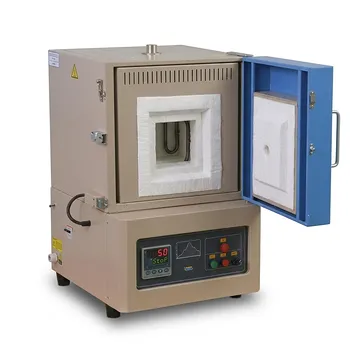
1800°C Bench Top Ultra High Temperature Muffle Furnace with Sapphire Observation Window and Top Feeding Port for Materials Research and Thermal Processing
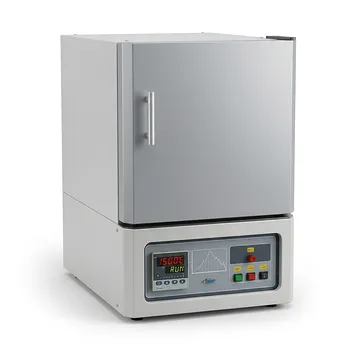
High Temperature 1500C Benchtop Muffle Furnace 3.6L Alumina Fiber Chamber Programmable Controller Sintering Annealing Carbonization Thermal Processing System
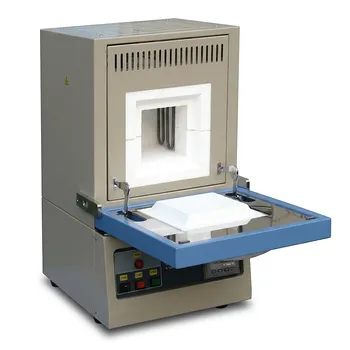
High Temperature 1800C Compact Muffle Furnace with Kanthal Super 1900 Heating Elements and 1.7L Alumina Chamber