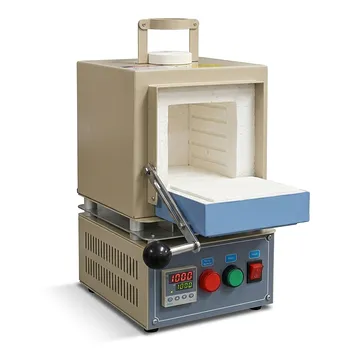
How does a muffle furnace function in thermal reduction for Pt/Nb2O5? Master precision heating for catalysts.
Updated 5 months ago
The laboratory muffle furnace acts as a precision thermal reactor that provides the controlled energy necessary to drive the chemical reduction of platinum precursors into metallic nanoparticles. By maintaining a stable, uniform temperature—typically around 200°C for several hours—the furnace facilitates the decomposition of chloroplatinic acid directly onto the niobium oxide ($Nb_2O_5$) support. This process transforms a liquid-phase precursor into solid-state platinum nanoparticles, ensuring they are securely anchored and highly dispersed across the oxide surface.
Core Takeaway: A muffle furnace provides the stable thermal environment required to reduce metal precursors into active cocatalysts. Precise temperature control is the critical factor that dictates nanoparticle size, dispersion, and the resulting efficiency of photocatalytic hydrogen production.
The Mechanism of Thermal Reduction
The primary function of the furnace is to supply the kinetic energy required to break molecular bonds within the platinum precursor.
Driving Chemical Decomposition
The muffle furnace subjects the precursor, such as chloroplatinic acid, to a sustained temperature (e.g., 200°C). This heat triggers a thermal reduction reaction where the platinum ions are reduced to their metallic state.
Facilitating Surface Loading
As the precursor decomposes, the resulting platinum atoms migrate and cluster on the niobium oxide surface. The furnace environment ensures that this loading occurs uniformly, preventing the platinum from simply precipitating as bulk metal.
Removal of Volatile By-products
High-temperature treatment helps eliminate residual solvents or volatile components from the synthesis process. This ensures that the final catalyst interface between the platinum and the niobium oxide is clean and chemically pure.
Optimizing Catalyst Performance
Beyond simple heating, the muffle furnace is the primary tool for tuning the physical characteristics of the photocatalyst.
Achieving High Nanoparticle Dispersion
The stability of the temperature control is critical for preventing agglomeration. A stable thermal environment allows platinum nanoparticles to form in a highly dispersed state rather than clumping together.
Creating Effective Charge Collection Centers
High dispersion creates numerous "charge collection centers" across the niobium oxide surface. These centers are vital for capturing electrons during photocatalysis, which significantly enhances hydrogen production activity.
Strengthening Metal-Support Interaction
Controlled heat treatment strengthens the bond between the platinum nanoparticles and the functionalized support. This interaction improves the thermal stability and overall service life of the catalyst during repeated reaction cycles.
Understanding the Trade-offs and Pitfalls
While the muffle furnace is essential, improper calibration or settings can lead to catalyst failure.
The Risk of Sintering
If the furnace temperature exceeds the optimal range (e.g., overshooting 200°C significantly), nanoparticles may undergo sintering. This causes small particles to merge into larger ones, drastically reducing the active surface area and catalytic efficiency.
Thermal Gradients and Inhomogeneity
Inexpensive or poorly maintained furnaces may have "cold spots" or temperature fluctuations. Inconsistent heating leads to uneven loading, where some areas of the niobium oxide are over-processed while others contain unreduced precursors.
Ramp Rate Sensitivity
The speed at which the furnace reaches its target temperature—the ramp rate—can influence crystal growth. Heating too quickly can trap impurities or lead to non-uniform crystallization of the support material.
How to Apply This to Your Project
To achieve the best results when loading platinum nanoparticles, tailor your furnace settings to your specific material goals.
- If your primary focus is Maximum Catalytic Activity: Prioritize temperature stability and a longer dwell time (e.g., 4 hours) at a lower reduction temperature to ensure the highest possible dispersion of platinum.
- If your primary focus is Long-term Durability: Utilize a programmable muffle furnace to include a final calcination stage at a slightly higher temperature (e.g., 350°C) to strengthen the metal-support interaction.
- If your primary focus is Phase Purity: Ensure the furnace is properly vented to allow for the complete removal of volatile by-products, such as chlorides or organic residues, during the heating cycle.
By treating the muffle furnace as a precision instrument rather than a simple heater, you can achieve the molecular-level control necessary for high-performance photocatalysis.
Summary Table:
| Process Phase | Muffle Furnace Function | Critical Control Parameter |
|---|---|---|
| Decomposition | Breaks precursor molecular bonds (e.g., chloroplatinic acid) | Target Temperature (e.g., 200°C) |
| Loading | Facilitates uniform platinum migration and surface anchoring | Thermal Stability & Uniformity |
| Purification | Removes volatile by-products and residual solvents | Proper Venting & Airflow |
| Optimization | Prevents nanoparticle sintering and agglomeration | Ramp Rate & Precise Dwell Time |
Elevate Your Material Research with THERMUNITS Precision Furnaces
Achieving the perfect dispersion of platinum nanoparticles on niobium oxide requires more than just heat—it requires precise, uniform, and stable thermal control. At THERMUNITS, we provide the advanced thermal reactors needed to drive high-performance material science and industrial R&D.
As a leading manufacturer of high-temperature laboratory equipment, we offer a comprehensive range of solutions tailored for catalyst synthesis and heat treatment:
- Muffle & Atmosphere Furnaces: For stable thermal reduction and calcination.
- Tube & Rotary Furnaces: Ideal for continuous processing and uniform material exposure.
- Vacuum & CVD/PECVD Systems: For advanced surface engineering and thin-film deposition.
- Specialized Equipment: Including Vacuum Induction Melting (VIM), Hot Press Furnaces, and Dental Furnaces.
Maximize your catalyst efficiency and ensure repeatable results. Contact our technical experts today to find the ideal thermal solution for your laboratory's needs.
References
- Lang Guo, Xuewen Wang. Hierarchically Periodic Macroporous Niobium Oxide Architecture for Enhanced Hydrogen Evolution. DOI: 10.1002/smll.202310753
Mentioned Products
- 1200C Muffle Furnace 12x8x5 7.2L Heating Chamber with Quartz Observation Window and Vent Port
- 1750C Compact Muffle Furnace 1.7L Ultra High Temperature Laboratory Sintering System for Advanced Ceramics and Material Science Research
- High Temperature 1200C Muffle Furnace 27L Volume 12x12x12 Chamber with Programmable PID Controller for Laboratory Material Science
- 1200°C High Temperature Muffle Furnace 19L Chamber with 50 Segment Programmable Controller
- 1750C Bench Top Muffle Furnace 3.6L High Grade Molybdenum Disilicide Heating Elements Laboratory Heat Treatment Equipment
People Also Ask
- What is the function of an experimental muffle furnace in the conversion of FeOOH to α-Fe2O3? Optimize Phase Transition
- Why is a muffle furnace required for MoO2@HCNF pre-oxidation? Crucial Steps for High-Performance Composites
- What is the function of a high-temperature Muffle furnace in removing residual solvents? Essential Bismuth Synthesis
- What is the function of Muffle furnace calcination? Essential steps for Pr-doped SrFeMoO6 Perovskite synthesis.
- What are the primary functions of a Muffle furnace in oxide calcination? Achieve high purity and phase control.

Tech Team · ThermUnits
Last updated on Apr 14, 2026
Related Products
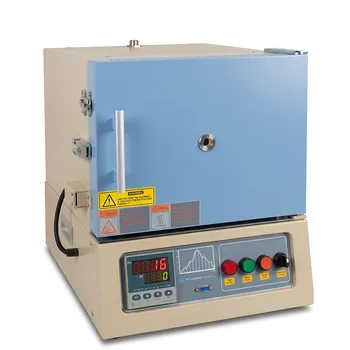
1200C Muffle Furnace 12x8x5 7.2L Heating Chamber with Quartz Observation Window and Vent Port
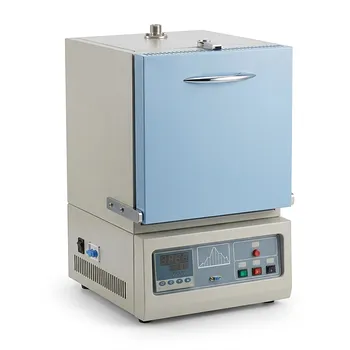
1750C Compact Muffle Furnace 1.7L Ultra High Temperature Laboratory Sintering System for Advanced Ceramics and Material Science Research
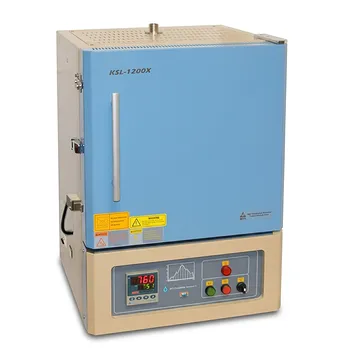
High Temperature 1200C Muffle Furnace 27L Volume 12x12x12 Chamber with Programmable PID Controller for Laboratory Material Science
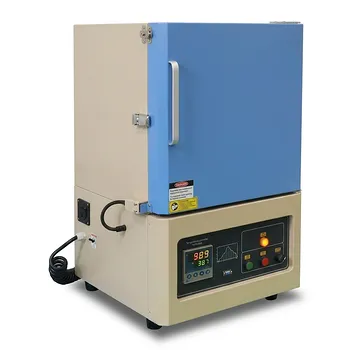
1200°C High Temperature Muffle Furnace 19L Chamber with 50 Segment Programmable Controller
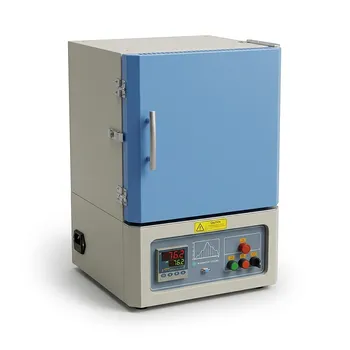
1750C Bench Top Muffle Furnace 3.6L High Grade Molybdenum Disilicide Heating Elements Laboratory Heat Treatment Equipment
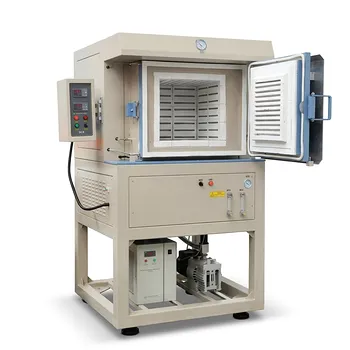
1200°C Five Side Heating Atmosphere Controlled Muffle Furnace 64 Liter High Uniformity Box Furnace for Material Synthesis
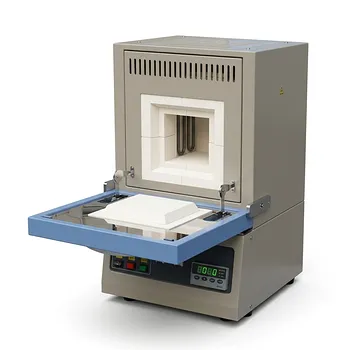
Five Sided Heating Muffle Furnace High Uniformity 1200C Lab Box Furnace 27L Alumina Fiber Chamber
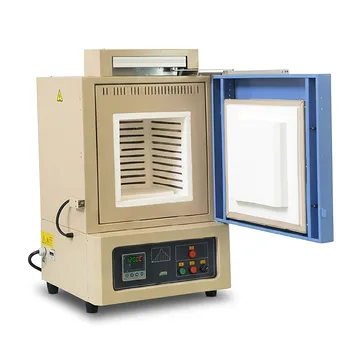
1200C High Temperature Muffle Furnace with Motorized Door and Automated PC Control for Industrial Sintering and Material Processing 27 Liter
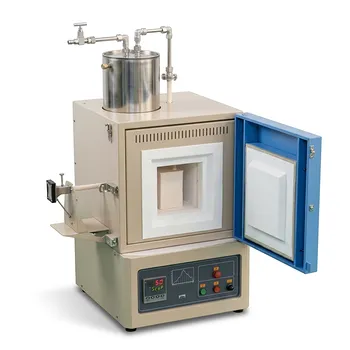
High Temperature Bench Top Muffle Furnace 1700C with Integrated Evaporating Particle Collection and 8x8x8 Alumina Fiber Chamber
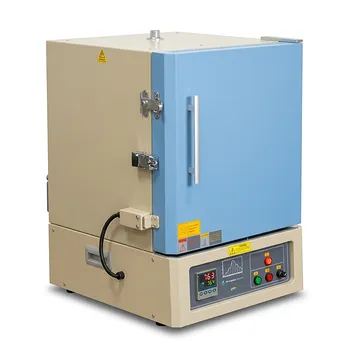
Large Capacity 1200C Muffle Furnace 64 Liter Chamber with Digital PID Controller and Built In Venting Port
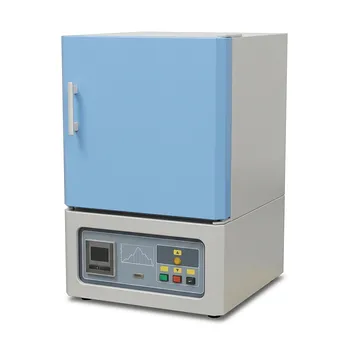
1800C Bench Top Muffle Furnace with Kanthal Super 1900 Heating Elements and 3.6L Alumina Fiber Chamber
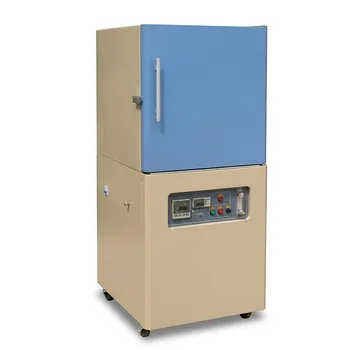
High Temperature Muffle Furnace with Dual Controllers and 36L Large Chamber 1700C Max
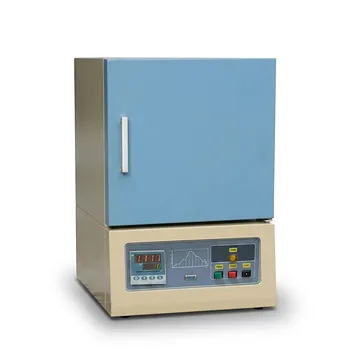
Ultra High Temperature Bench Top Muffle Furnace 1750C Sintering System with Kanthal Super Heating Elements and Precision Digital Control
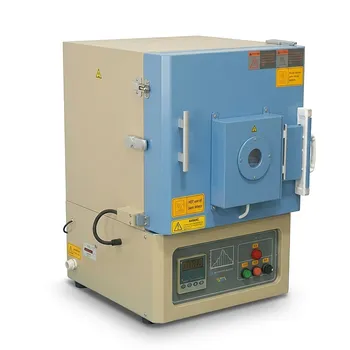
High Temperature Benchtop Muffle Furnace 1500C with 3.6L Chamber and Quartz Observation Window
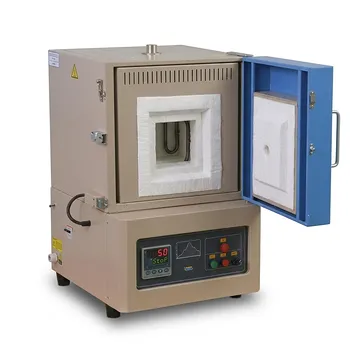
1800°C Bench Top Ultra High Temperature Muffle Furnace with Sapphire Observation Window and Top Feeding Port for Materials Research and Thermal Processing
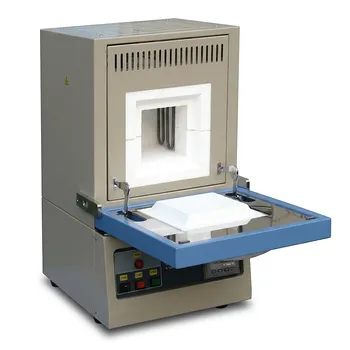
High Temperature 1800C Compact Muffle Furnace with Kanthal Super 1900 Heating Elements and 1.7L Alumina Chamber
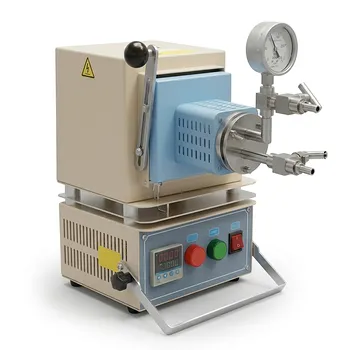
Compact Hybrid Muffle and Tube Furnace for 1000C Controlled Atmosphere Laboratory Material Sintering
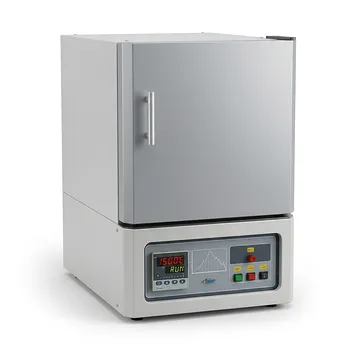
High Temperature 1500C Benchtop Muffle Furnace 3.6L Alumina Fiber Chamber Programmable Controller Sintering Annealing Carbonization Thermal Processing System
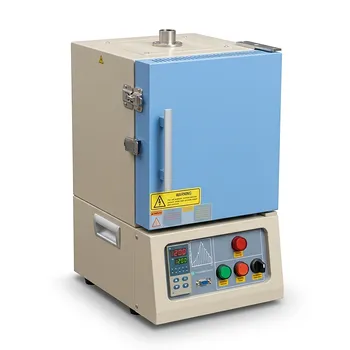
1200°C Small Box Furnace 4.2 Liter Programmable Muffle Furnace with High Purity Alumina Insulation and PID Control