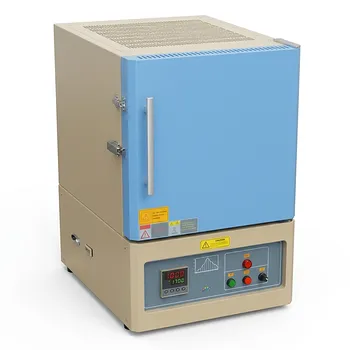
What is the function of Muffle furnace calcination? Essential steps for Pr-doped SrFeMoO6 Perovskite synthesis.
Updated 3 months ago
The high-temperature calcination step in a Muffle furnace is the primary mechanism for phase transformation in Pr-doped $SrFeMoO_6$ (SPxFM) powders. At approximately 1100°C, this process drives the thermal decomposition of the porous organic precursor mass formed during the nitrate-citrate synthesis. By removing organic residues and initiating solid-state reactions, the furnace establishes the initial perovskite-phase crystalline structure essential for the material’s electrochemical performance.
Core Takeaway: Calcination serves as the critical bridge between an amorphous organic-metallic precursor and a structured crystalline powder. It simultaneously purifies the material through thermal decomposition and provides the energy required for ions to diffuse into a stable perovskite lattice.
Driving Thermal Decomposition and Purification
Removal of Organic Residues
The nitrate-citrate synthesis method produces a bulky, porous organic precursor mass that contains carbon-based residues. The Muffle furnace provides the high-temperature environment necessary to oxidize and eliminate these residues, preventing carbon contamination in the final powder.
Decomposition of Intermediate Precursors
As the temperature rises, the thermal energy breaks down nitrates and citrates within the precursor mass. This step ensures that all raw materials are fully converted into their reactive oxide forms, clearing the path for subsequent chemical bonding.
Release of Volatile Byproducts
High-temperature treatment facilitates the escape of gases like carbon dioxide and water vapor trapped within the precursor. This degassing process is vital for creating a dense, high-purity powder that is free from structural voids or trapped impurities.
Facilitating Solid-State Reactions and Crystallization
Promotion of Atomic Diffusion
The stable thermal field of the Muffle furnace allows different metal ions—Pr, Sr, Fe, and Mo—to migrate across grain boundaries. This mutual diffusion is the fundamental driver of the solid-state reactions required to form a complex mixed-metal oxide.
Establishing the Perovskite Structure
Without sufficient thermal energy, the material remains in a disordered, amorphous state. The 1100°C calcination environment provides the activation energy needed for the atoms to arrange themselves into the specific crystalline lattice of a perovskite.
Achieving Phase Purity
A consistent and high temperature ensures that the reaction reaches completion, minimizing the presence of secondary, unwanted phases. This uniform thermal environment is critical for ensuring that the resulting SPxFM powder exhibits the intended electrochemical and magnetic properties.
Understanding the Trade-offs
Temperature Precision vs. Phase Formation
While 1100°C is necessary to initiate the perovskite phase, excessive heat can lead to unwanted grain growth or the volatilization of specific elements. If the temperature is too low, the solid-state reaction will be incomplete, leaving the material with poor crystallinity and residual impurities.
Thermal Uniformity and Consistency
The quality of the powder is highly dependent on the stability of the Muffle furnace's thermal field. Inconsistent heating can lead to "hot spots" where the powder over-sinters, or "cool spots" where the organic precursors fail to decompose, resulting in a non-uniform final product.
How to Apply This to Your Project
Optimizing the Calcination Process
To achieve the best results with Pr-doped $SrFeMoO_6$, your approach to the Muffle furnace step should be tailored to your specific performance requirements.
- If your primary focus is Phase Purity: Maintain the temperature at the recommended 1100°C for an extended soaking period to ensure complete ion diffusion and the elimination of secondary phases.
- If your primary focus is High Surface Area: Use the lowest possible temperature that still achieves full organic decomposition to prevent excessive sintering and keep the particle size small.
- If your primary focus is Electrochemical Activity: Ensure a stable oxidizing atmosphere within the Muffle furnace to achieve the correct atomic arrangement and oxygen stoichiometry required for ionic conductivity.
Careful control of the calcination environment is the most critical factor in transforming raw chemical precursors into high-performance crystalline ceramics.
Summary Table:
| Function | Process Detail | Impact on Material |
|---|---|---|
| Decomposition | Oxidation of citrates/nitrates | Removes organic residues and carbon |
| Degassing | Release of CO2 and water vapor | Creates high-purity, dense powders |
| Ion Diffusion | Pr, Sr, Fe, and Mo migration | Drives necessary solid-state reactions |
| Crystallization | Thermal energy at 1100°C | Establishes stable perovskite lattice |
Optimize Your Material Synthesis with THERMUNITS
Achieving the perfect crystalline structure for Pr-doped SrFeMoO6 requires precision that only high-quality thermal equipment can provide. THERMUNITS is a leading manufacturer of high-temperature laboratory equipment for material science and industrial R&D. We provide the stable thermal environments necessary for phase-pure synthesis and advanced material development.
Our comprehensive solutions include:
- Muffle, Vacuum, and Atmosphere Furnaces for precise calcination and sintering.
- Tube, Rotary, and Hot Press Furnaces for versatile processing.
- CVD/PECVD Systems for thin-film and nanoparticle research.
- Vacuum Induction Melting (VIM) and Electric Rotary Kilns.
- High-performance Thermal Elements and Dental Furnaces.
Ensure uniform heating and repeatable results for your electrochemical research. Contact THERMUNITS today to discover how our thermal processing solutions can empower your lab's innovation!
References
- Д.А. Осинкин. Electrochemical Performances of New Pr‐Doped Robust Cobalt‐Free Perovskite Sr<sub>2</sub>Fe<sub>1.5</sub>Mo<sub>0.5</sub>O<sub>6-<i>δ</i></sub> as Electrode for Symmetrical Solid Oxide Fuel Cells. DOI: 10.1155/er/9791000
Mentioned Products
- 1200C Muffle Furnace 12x8x5 7.2L Heating Chamber with Quartz Observation Window and Vent Port
- High Temperature 1200C Muffle Furnace 27L Volume 12x12x12 Chamber with Programmable PID Controller for Laboratory Material Science
- 1750C Compact Muffle Furnace 1.7L Ultra High Temperature Laboratory Sintering System for Advanced Ceramics and Material Science Research
- 1200C High Temperature 125L Muffle Furnace 5 Side Heating for Large Batch Sintering with Optional Alloy Debinding Chamber
- 1200°C High Temperature Muffle Furnace 19L Chamber with 50 Segment Programmable Controller
People Also Ask
- What is the function of an experimental muffle furnace in the conversion of FeOOH to α-Fe2O3? Optimize Phase Transition
- Why is a muffle furnace required for MoO2@HCNF pre-oxidation? Crucial Steps for High-Performance Composites
- What is the function of a high-temperature Muffle furnace in removing residual solvents? Essential Bismuth Synthesis
- What are the primary functions of a Muffle furnace in oxide calcination? Achieve high purity and phase control.
- Why is the muffle design advantageous for the production of ceramics and glass? Ensure Purity and Structural Integrity

Tech Team · ThermUnits
Last updated on Jun 03, 2026
Related Products
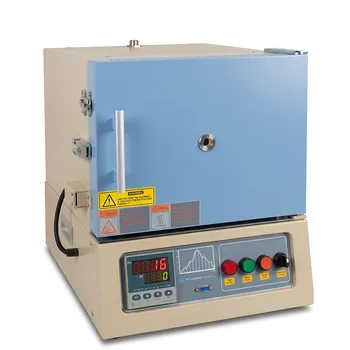
1200C Muffle Furnace 12x8x5 7.2L Heating Chamber with Quartz Observation Window and Vent Port
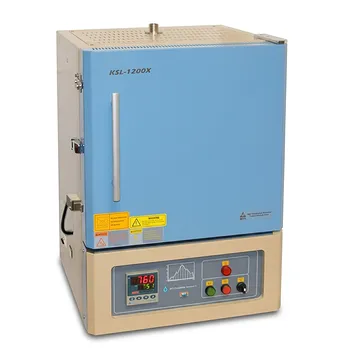
High Temperature 1200C Muffle Furnace 27L Volume 12x12x12 Chamber with Programmable PID Controller for Laboratory Material Science
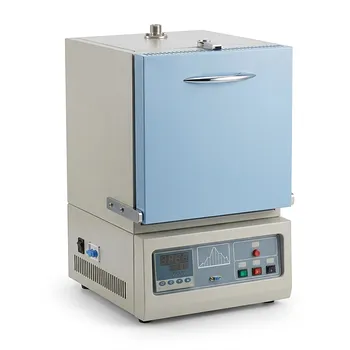
1750C Compact Muffle Furnace 1.7L Ultra High Temperature Laboratory Sintering System for Advanced Ceramics and Material Science Research
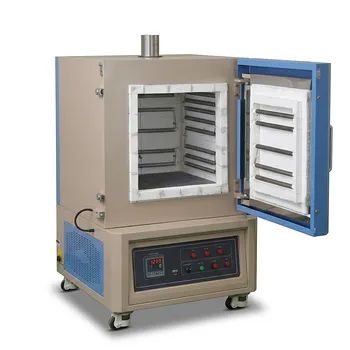
1200C High Temperature 125L Muffle Furnace 5 Side Heating for Large Batch Sintering with Optional Alloy Debinding Chamber
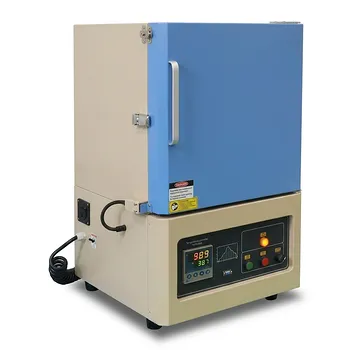
1200°C High Temperature Muffle Furnace 19L Chamber with 50 Segment Programmable Controller
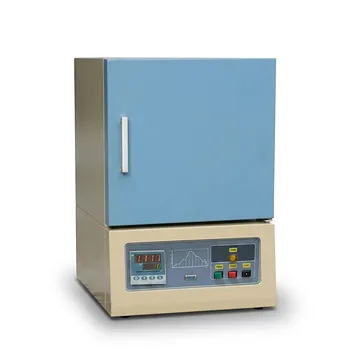
Ultra High Temperature Bench Top Muffle Furnace 1750C Sintering System with Kanthal Super Heating Elements and Precision Digital Control
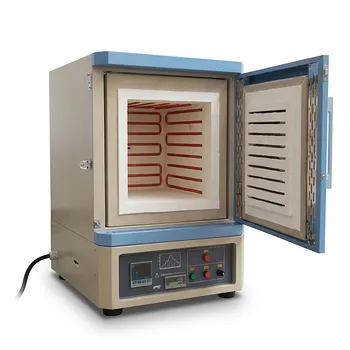
Five Side Heating Muffle Furnace 1200C High Uniformity 64L Chamber 16x16x16 Inch Industrial Heat Treatment
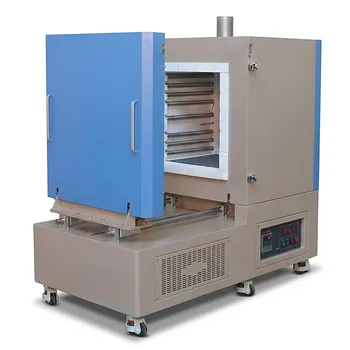
1200C Five Side Heating Muffle Furnace with Sliding Door 125L Volume High Temperature Heat Treatment System for Large Scale Sintering and Annealing
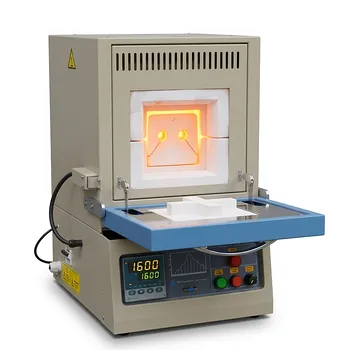
High Temperature Compact Muffle Furnace 1700 C with 30 Segment Programmable Controller and 1.7L Cubic Chamber
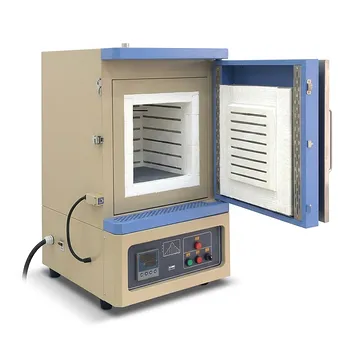
Five Side Heating Muffle Furnace High Purity Alumina Fiber 27L Chamber 1200C High Temperature Thermal Processing System for Sintering Annealing and Materials Research
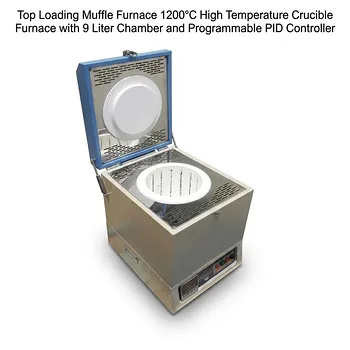
Top Loading Muffle Furnace 1200°C High Temperature Crucible Furnace with 9 Liter Chamber and Programmable PID Controller
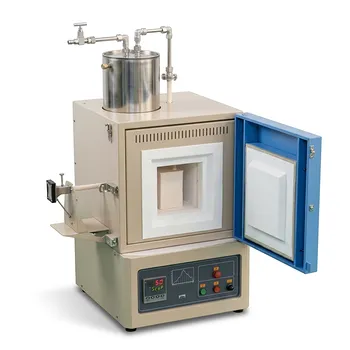
High Temperature Bench Top Muffle Furnace 1700C with Integrated Evaporating Particle Collection and 8x8x8 Alumina Fiber Chamber
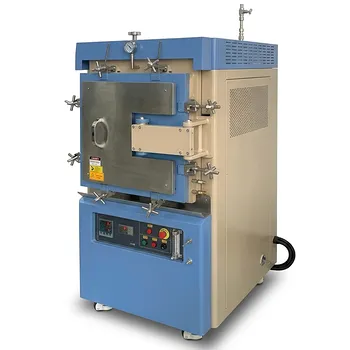
Atmosphere Controlled Muffle Furnace 1700C Maximum Temperature 80L High Capacity Vacuum Inert Gas Box Furnace
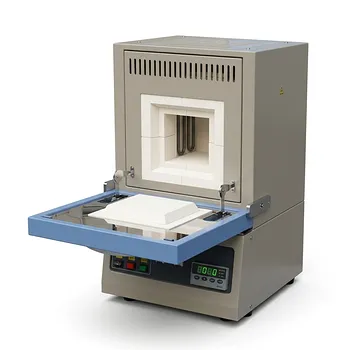
Five Sided Heating Muffle Furnace High Uniformity 1200C Lab Box Furnace 27L Alumina Fiber Chamber
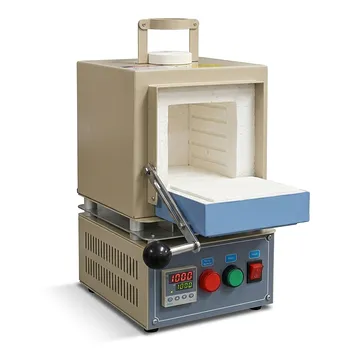
Compact 1000C Muffle Furnace with Programmable Controller and 2 Inch Top Port for Vacuum and Atmosphere Material Research
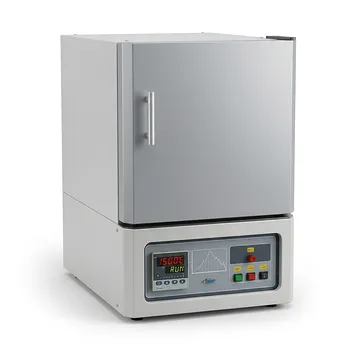
High Temperature 1500C Benchtop Muffle Furnace 3.6L Alumina Fiber Chamber Programmable Controller Sintering Annealing Carbonization Thermal Processing System
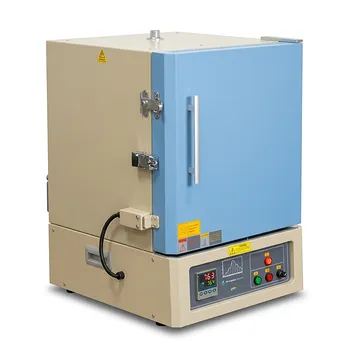
Large Capacity 1200C Muffle Furnace 64 Liter Chamber with Digital PID Controller and Built In Venting Port
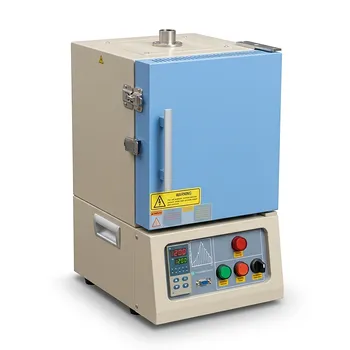
1200°C Small Box Furnace 4.2 Liter Programmable Muffle Furnace with High Purity Alumina Insulation and PID Control
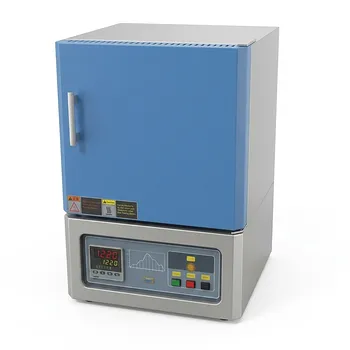
High Temperature Benchtop Muffle Furnace 1700C 10L Chamber Alumina Fiber Insulation MoSi2 Heating Elements