How does a resistance heating system assist in distinguishing between thermal and non-thermal effects in photothermal catalysis?
Updated 3 months ago
Isolating light-driven mechanisms from pure heat is the primary challenge in photothermal catalysis. A resistance heating system solves this by replicating the exact bulk temperature reached under illumination while keeping the catalyst in the dark. By comparing the reaction yields of this "dark-thermal" state against the active "light-thermal" state, researchers can quantify the specific catalytic advantages provided by light beyond simple temperature increases.
The resistance heating system serves as a critical experimental control, allowing researchers to isolate non-thermal enhancements—such as charge carrier excitation—by subtracting the known effects of bulk thermal energy from the total catalytic output.
The Mechanism of Thermal Decoupling
Simulating Bulk Temperature in the Dark
The core function of the resistance heater is to provide a thermal baseline that mimics the conditions created by high-intensity light. By applying controlled electrical resistance to the catalyst bed, the system reaches a specific bulk temperature without any photonic input. This "dark" environment ensures that any observed chemical transformations are purely the result of traditional thermal activation.
Identifying the "Photonic" Gain
Once the bulk temperature is matched to the temperature recorded during light exposure, researchers compare the product yields of both scenarios. If the yield under illumination is significantly higher than the yield under resistance heating, the difference is attributed to light-specific effects. This method is the standard for proving that a catalyst is truly "photothermal" rather than just a traditional catalyst being heated by a lamp.
Uncovering Non-Thermal Synergies
Localized Hot Spots vs. Bulk Heating
While a resistance heater matches the average temperature of the material, it cannot easily replicate localized hot spots at the nano-scale. Light often creates intense heat at specific active sites on the catalyst surface that exceeds the measured bulk temperature. Comparing these results helps researchers understand how light distribution affects local reaction environments differently than uniform electrical heating.
Photo-Electron Driven Processes
The comparison method also reveals non-thermal pathways, such as the generation of energetic "hot" electrons. These electrons, excited by light, can lower activation barriers or change reaction pathways in ways that heat alone cannot. The resistance heating system acts as a filter, allowing these electronic effects to become visible by accounting for the thermal background.
Understanding the Trade-offs and Limitations
The Disparity Between Bulk and Surface Temperature
A primary limitation of this method is the potential for temperature gradients. Resistance heating typically heats from the outside in or through the bulk material, whereas light interacts primarily with the surface. This can lead to minor discrepancies in how the catalyst "feels" the heat, potentially skewing the comparison if the catalyst has low thermal conductivity.
Sensor Precision and Placement
The accuracy of this distinction relies entirely on the precision of temperature measurement. If the thermocouple or infrared sensor is not positioned correctly, the resistance heater may match a "false" bulk temperature. This inaccuracy can lead to overestimating or underestimating the true non-thermal contribution of the light source.
Applying This Methodology to Your Research
Evaluating Results for Specific Goals
To effectively use a resistance heating system in your workflow, consider the specific insights you need to extract from your catalytic data.
- If your primary focus is identifying non-thermal effects: Use the resistance heater to match the peak bulk temperature exactly, then look for shifts in product selectivity that only occur under light.
- If your primary focus is quantifying thermal efficiency: Compare the energy input required by the resistance heater versus the light source to achieve the same reaction rate.
- If your primary focus is mechanistic discovery: Use the comparison to isolate whether the reaction rate follows a linear (photonic) or exponential (thermal) relationship with increasing intensity.
By accurately decoupling these forces, you can transform a simple observation of "light-enhanced chemistry" into a rigorous understanding of synergistic photothermal mechanisms.
Summary Table:
| Feature | Resistance Heating (Dark-Thermal) | Light Exposure (Light-Thermal) |
|---|---|---|
| Energy Source | Electrical Resistance | Photonic (Light) Energy |
| Mechanism | Pure Bulk Thermal Activation | Combined Thermal + Photonic Effects |
| Primary Role | Establishes a Thermal Baseline | Drives Synergistic Reactions |
| Effect Isolated | Bulk Temperature Yield | Non-thermal / Electronic Enhancements |
Precision Thermal Solutions for Material Science Research
Unlock deeper insights into photothermal mechanisms with THERMUNITS. As a leading manufacturer of high-temperature laboratory equipment, we provide the precision heating solutions necessary for rigorous industrial R&D and material science applications.
Our comprehensive thermal processing range includes:
- Advanced Systems: CVD/PECVD systems, Vacuum Induction Melting (VIM), and Hot Press furnaces.
- Specialized Furnaces: Muffle, Vacuum, Atmosphere, Tube, Rotary, and Dental furnaces.
- Industrial Kilns: Electric rotary kilns and high-performance thermal elements.
Whether you are decoupling thermal effects in catalysis or performing complex heat treatments, THERMUNITS delivers the accuracy your research demands. Contact our expert team today to discuss your custom laboratory requirements!
References
- Feysal M. Ali, Hussameldin Ibrahim. Photothermal Reduction of Carbon Dioxide Using Magnetite Photocatalyst. DOI: 10.3390/engproc2024076091
Mentioned Products
- Molybdenum Disilicide MoSi2 Thermal Elements Electric Furnace Heating Element High Temperature Resistance
- Induction Heating System with Temperature Control for High Temperature Vacuum Sintering and Melting
- 15KW 1700C Max Induction Heater 6 Inch Tube with Dose Feeding and Melt Stirring Function
- High Power 25KW Induction Heating System with Precision Timer Control and 80kHz Frequency for Metal Melting and Heat Treatment
- High Frequency Desktop Induction Heater 15 KVA Induction Heating System with Automatic Timer Control for Material Research and Metal Melting
People Also Ask
- What role do MoSi2 heating elements play in high-temperature smelting? Precision for Ferronickel & Slag Research
- Why is the selection of high-performance thermal elements critical for high-temperature testing? Ensure Data Integrity.
- How do electric thermal elements compare to combustion-based heating systems? Maximize Your Lab's Energy Efficiency
- What are the primary functions of an electric resistance furnace? Enhancing Precision in Industrial Thermal Processing
- How do optimized control schemes for electric resistance furnaces ensure accuracy? Enhance Heat Treatment Stability.

Tech Team · ThermUnits
Last updated on Jun 03, 2026
Related Products
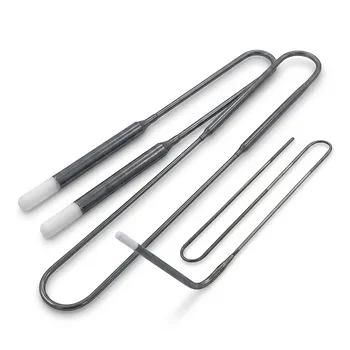
Molybdenum Disilicide MoSi2 Thermal Elements Electric Furnace Heating Element High Temperature Resistance
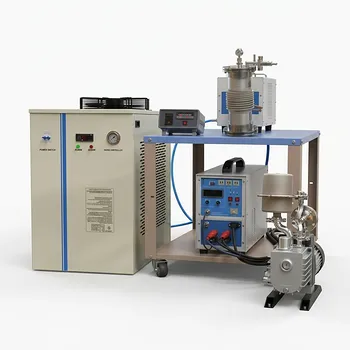
Induction Heating System with Temperature Control for High Temperature Vacuum Sintering and Melting
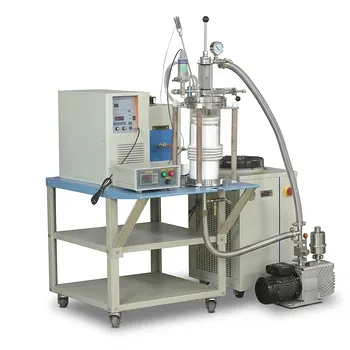
15KW 1700C Max Induction Heater 6 Inch Tube with Dose Feeding and Melt Stirring Function
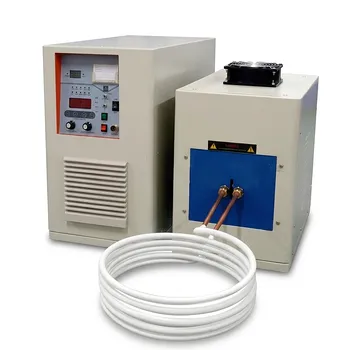
High Power 25KW Induction Heating System with Precision Timer Control and 80kHz Frequency for Metal Melting and Heat Treatment
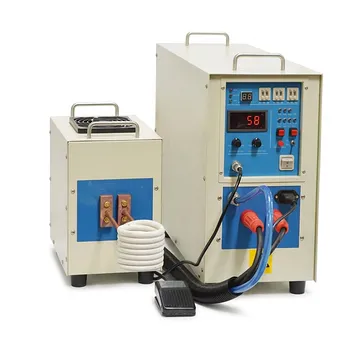
High Frequency Desktop Induction Heater 15 KVA Induction Heating System with Automatic Timer Control for Material Research and Metal Melting
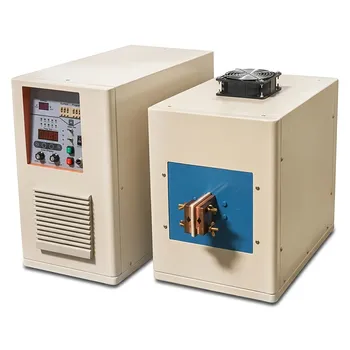
High Frequency Desktop Induction Heater 35KW 30-80 KHz with Precision Timer Control for Industrial Material Research and Metal Processing
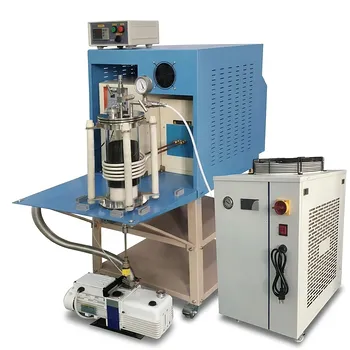
15KW Induction Heating System with 5 Inch Quartz Tube and 2200C Temperature Controller
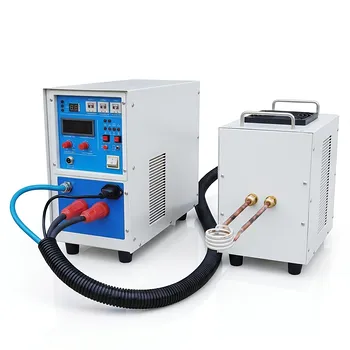
High Frequency Induction Heating System 7 KW Bench Top Heater with Automatic Timer Control and Dual Station Configuration
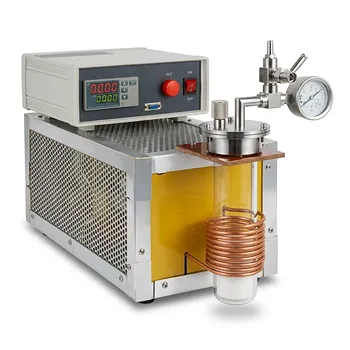
High Temperature Mini Induction Heating Furnace 1600C Laboratory Material Melting System
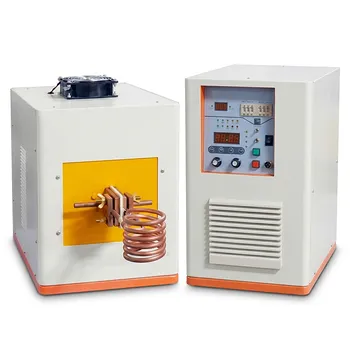
30KW High Frequency Induction Heater for Metal Melting and Industrial Heat Treatment 80-200kHz
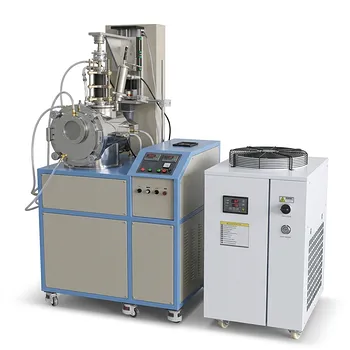
High Temperature Ultrafast Heating Pressing Furnace 2900C Max 100kgf Rapid Thermal Processing System
1200C Five Side Heating Muffle Furnace with Sliding Door 125L Volume High Temperature Heat Treatment System for Large Scale Sintering and Annealing
Five Side Heating Muffle Furnace High Purity Alumina Fiber 27L Chamber 1200C High Temperature Thermal Processing System for Sintering Annealing and Materials Research