How do optimized control schemes for electric resistance furnaces ensure accuracy? Enhance Heat Treatment Stability.
Updated 3 months ago
Optimized control schemes maintain regulation accuracy by integrating low-pass filtering directly into the Proportional-Integral-Derivative (PID) loop. This configuration, often referred to as PID-F, allows the system to distinguish between high-frequency electromagnetic interference and actual thermal fluctuations. By ignoring "noise," the controller ensures that heating adjustments are only made in response to real temperature changes, preserving both precision and equipment health.
The transition from standard PID to optimized PID-F control eliminates the "chatter" caused by measurement noise, resulting in a smoother temperature profile and significantly reduced mechanical wear on furnace components.
The Architecture of Noise Resilience
The Role of the Filter (F) in PID-F
The "F" in PID-F represents a low-pass filter applied to the derivative or the entire feedback signal. This filter is designed to attenuate high-frequency signals—the typical signature of measurement noise—while allowing the slow-moving thermal data to pass through.
By cleaning the signal before it reaches the controller logic, the system prevents the derivative kick that often occurs when noise is amplified. This ensures that the output signal remains stable even in electrically "dirty" industrial environments.
Neutralizing Electromagnetic Interference (EMI)
Electric resistance furnaces operate in environments prone to electromagnetic interference, which manifests as random spikes in temperature readings. Optimized schemes are specifically tuned to recognize these spikes as external interference rather than internal process changes.
This distinction is critical because it prevents the heating elements from reacting to ghost fluctuations. The result is a stable steady-state where the furnace temperature remains locked on the setpoint.
Optimization Through Advanced Tuning
Improving Objective Functions
During the design phase, engineers use improved objective functions to tune the PID-F parameters. These mathematical models prioritize not just the speed of reaching a temperature, but also the "smoothness" of the control effort.
By weighing the cost of control fluctuations against the error in temperature, the optimization process identifies the ideal balance for the specific furnace hardware. This leads to a system that is robust against noise without becoming sluggish.
Distinguishing Signal from Noise
The optimization process allows the controller to define a clear boundary between actual temperature drift and random measurement noise. Through precise parameter tuning, the controller learns the expected thermal inertia of the furnace.
Any signal change that happens faster than the furnace is physically capable of heating or cooling is flagged as noise. This logical gating prevents unnecessary adjustments and maintains a consistent thermal gradient.
Understanding the Trade-offs
Filtering Latency vs. Response Speed
Adding a filter to a control loop inherently introduces a small amount of phase lag or delay. If the filter is too aggressive, the controller may react too slowly to genuine load disturbances, such as opening the furnace door.
Finding the "Goldilocks" zone requires a deep understanding of the furnace's thermal time constant. The goal is to maximize noise rejection while maintaining enough agility to handle real-world process changes.
Complexity in Parameter Tuning
PID-F schemes are more complex to tune than standard PID loops because they introduce additional variables, such as the filter time constant. Incorrect tuning can lead to instability or an "over-damped" response that fails to meet production timelines.
Modern optimization algorithms mitigate this by automating the search for the best parameters. However, it still requires high-quality data during the initial calibration phase to be effective.
How to Apply This to Your Project
When implementing or upgrading a furnace control system, your choice of scheme should align with your specific operational priorities.
- If your primary focus is hardware longevity: Prioritize PID-F schemes with aggressive filtering to minimize the switching frequency of contactors or thyristors.
- If your primary focus is maximum regulation precision: Utilize optimized objective functions that penalize any deviation from the setpoint while maintaining a moderate filter to block EMI.
- If your primary focus is high-speed throughput: Ensure the filter time constant is kept at the minimum level required to suppress noise, preventing lag in the heating cycle.
By filtering noise at the source and optimizing the control response, you ensure a furnace that is both remarkably accurate and significantly more durable.
Summary Table:
| Feature | Standard PID Control | Optimized PID-F Control |
|---|---|---|
| Noise Handling | Amplifies high-frequency noise | Attenuates noise via low-pass filter |
| Process Stability | Prone to "chatter" and spikes | Smooth, stable temperature profile |
| Hardware Impact | High mechanical wear | Significantly reduced wear on elements |
| EMI Resilience | Low; reacts to interference | High; distinguishes signal from noise |
| Tuning Goal | Rapid response speed | Balance of speed, accuracy, and longevity |
Precision Thermal Control for Superior Material Science
At THERMUNITS, we understand that even minor temperature fluctuations can compromise sensitive R&D and industrial processes. As a leading manufacturer of high-temperature laboratory equipment, we integrate advanced control logic into every system to ensure unparalleled regulation accuracy.
From Muffle, Vacuum, and Atmosphere Furnaces to specialized CVD/PECVD systems, Vacuum Induction Melting (VIM) furnaces, and Electric Rotary Kilns, our solutions are engineered to thrive in complex industrial environments. Whether you need a standard Tube Furnace or a custom Hot Press setup, our thermal elements and optimized control schemes provide the stability your materials deserve.
Ready to upgrade your thermal processing capabilities?
Contact THERMUNITS today to consult with our experts and find the perfect high-precision furnace for your research or production needs.
References
- Sarah A. Alzakari, Fatma A. Hashim. A new control scheme for temperature adjustment of electric furnaces using a novel modified electric eel foraging optimizer. DOI: 10.3934/math.2024654
Mentioned Products
- Molybdenum Disilicide MoSi2 Thermal Elements Electric Furnace Heating Element High Temperature Resistance
- High Temperature Horizontal Electrical Assisted Sintering Furnace with 3KW Programmable Power Source for Advanced Ceramic Materials
- Electric Rotary Kiln Continuous Working Small Rotary Furnace Heating Pyrolysis Plant
- 1250 C Compact Vertical Box Furnace for Glovebox Material Research Air Sensitive Samples
- Five Side Heating Muffle Furnace High Purity Alumina Fiber 27L Chamber 1200C High Temperature Thermal Processing System for Sintering Annealing and Materials Research
People Also Ask
- What role do MoSi2 heating elements play in high-temperature smelting? Precision for Ferronickel & Slag Research
- Why is the selection of high-performance thermal elements critical for high-temperature testing? Ensure Data Integrity.
- How do electric thermal elements compare to combustion-based heating systems? Maximize Your Lab's Energy Efficiency
- What role do thermocouples play in furnace closed-loop systems? Essential Feedback for Precision
- How do actuators and heaters in an electric resistance furnace respond to control commands? Optimizing Heat Accuracy

Tech Team · ThermUnits
Last updated on Jun 02, 2026
Related Products
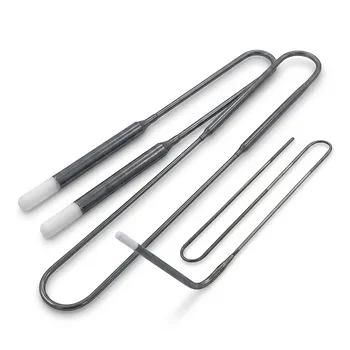
Molybdenum Disilicide MoSi2 Thermal Elements Electric Furnace Heating Element High Temperature Resistance
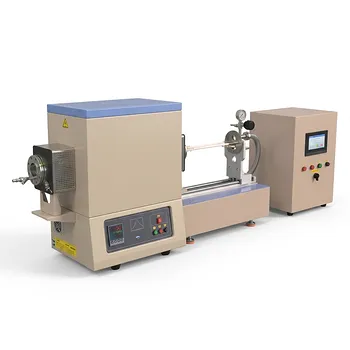
High Temperature Horizontal Electrical Assisted Sintering Furnace with 3KW Programmable Power Source for Advanced Ceramic Materials
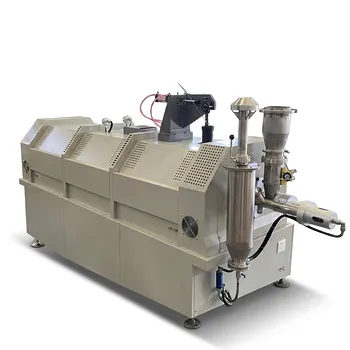
Electric Rotary Kiln Continuous Working Small Rotary Furnace Heating Pyrolysis Plant
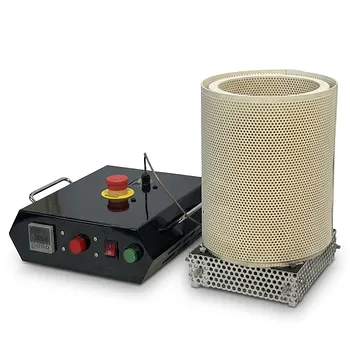
1250 C Compact Vertical Box Furnace for Glovebox Material Research Air Sensitive Samples
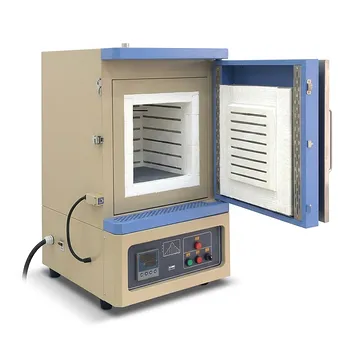
Five Side Heating Muffle Furnace High Purity Alumina Fiber 27L Chamber 1200C High Temperature Thermal Processing System for Sintering Annealing and Materials Research
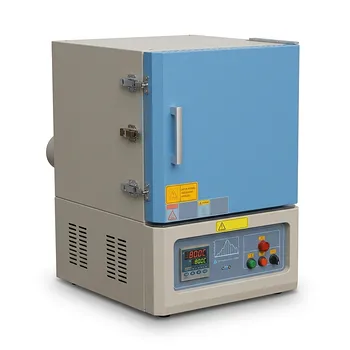
1800C Bench Top Muffle Furnace 18 Liters with Kanthal Super 1900 Heating Elements for High Purity Ceramic Sintering and Material Research
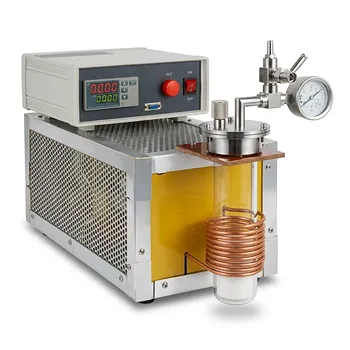
High Temperature Mini Induction Heating Furnace 1600C Laboratory Material Melting System
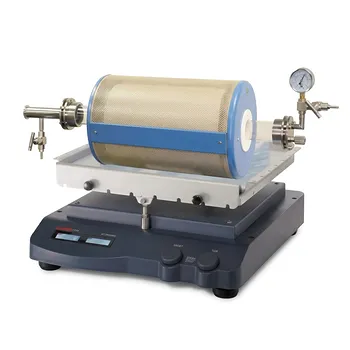
High Temperature Rocking Tube Furnace with Quartz Tube and Vacuum Flange for Materials Synthesis
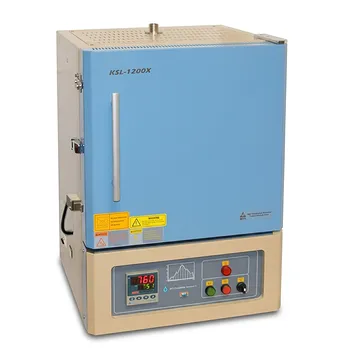
High Temperature 1200C Muffle Furnace 27L Volume 12x12x12 Chamber with Programmable PID Controller for Laboratory Material Science
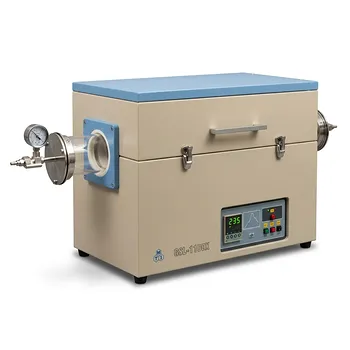
Single Zone Tube Furnace 5 Inch Quartz Tube 36 Inch Heating Zone Vacuum Flanges
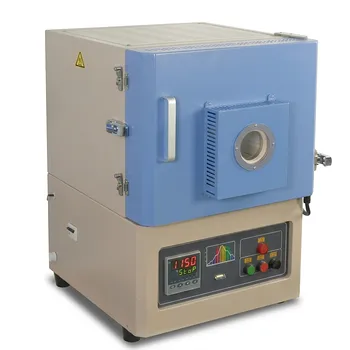
High Temperature Benchtop Muffle Furnace with Quartz Observation Window for Thermal Imaging and Material Analysis
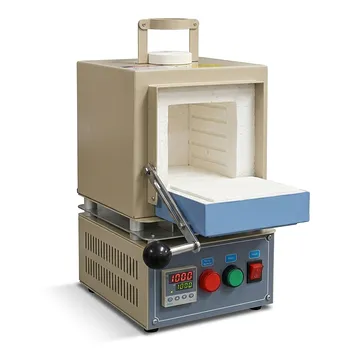
Compact 1000C Muffle Furnace with Programmable Controller and 2 Inch Top Port for Vacuum and Atmosphere Material Research
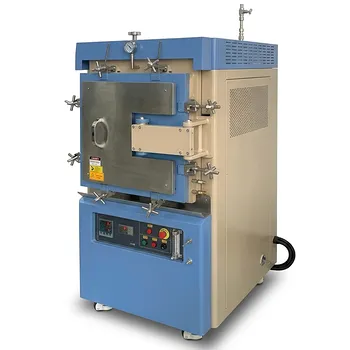
Atmosphere Controlled Muffle Furnace 1700C Maximum Temperature 80L High Capacity Vacuum Inert Gas Box Furnace
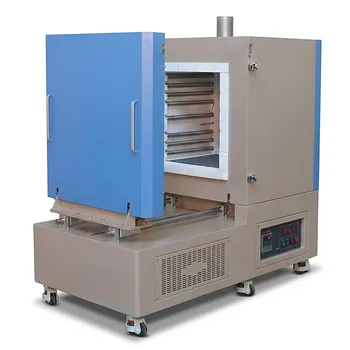
1200C Five Side Heating Muffle Furnace with Sliding Door 125L Volume High Temperature Heat Treatment System for Large Scale Sintering and Annealing
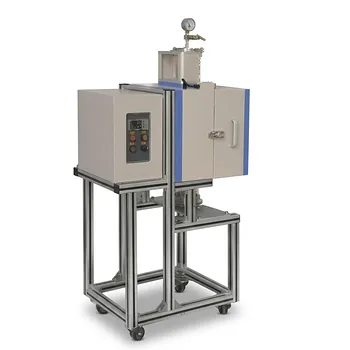
1200°C 5 Inch Vertical Quartz Tube Furnace with Stainless Steel Vacuum Flanges
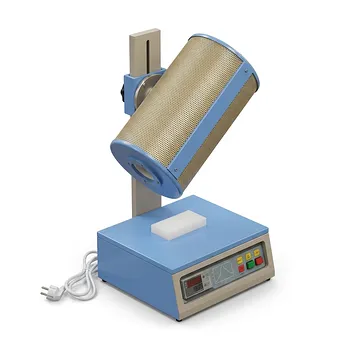
1100°C Vertical Laboratory Furnace for DIY Tubular Reactors with PID Temperature Controller
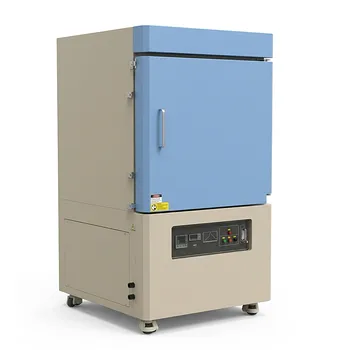
Industrial Large Box Furnace 1700C 216L High Temp Muffle Sintering System
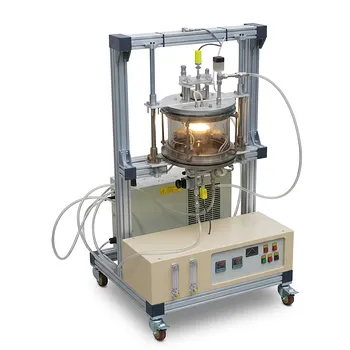
Two Zones CSS Furnace for Rapid Thermal Processing Thin Film Coating 3 Inch Diameter 650C
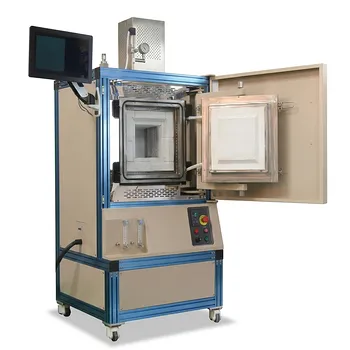
High Temperature Hydrogen Atmosphere Box Furnace 1650C Max Reducing Environment Material Synthesis System 8x8x8 Chamber