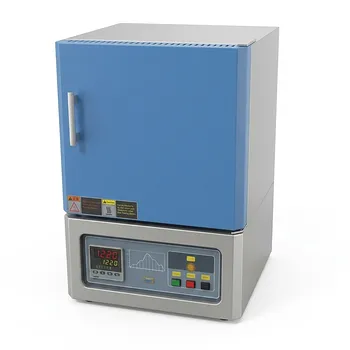
How does high-precision laboratory heat treatment equipment ensure experimental repeatability? Master Thermal Uniformity
Updated 3 months ago
Advanced laboratory heat treatment equipment ensures experimental repeatability by integrating sophisticated control algorithms with specialized hardware to eliminate thermal gradients. These systems utilize multi-zone PID controllers and high-performance heating elements to maintain a constant environment. This precision prevents unintended variations in the microstructure and chemical composition of samples across different experimental runs.
High-precision thermal equipment achieves repeatability by stabilizing reaction kinetics and guaranteeing uniform phase transitions across every batch. By neutralizing temperature fluctuations, the equipment ensures that the physical properties and yield of chemical samples remain consistent.
The Mechanics of Thermal Stability
Advanced PID Control Algorithms
The heart of high-precision equipment is the Proportional-Integral-Derivative (PID) controller. These algorithms continuously calculate the difference between the desired temperature and the actual state, making real-time adjustments to power output.
This constant feedback loop minimizes temperature overshoot and undershoot, providing a steady thermal environment that is essential for delicate chemical syntheses.
Multi-Zone Heating Architecture
Standard furnaces often suffer from "cold spots" near doors or corners. Multi-zone temperature control solves this by using independent heating elements in different areas of the chamber.
By governing these zones separately, the system compensates for heat loss at the edges. This creates a highly uniform thermal field, ensuring that samples located in different parts of the furnace experience identical conditions.
Controlling the Transformation Process
Customizable Heating and Cooling Curves
Consistency in material science depends heavily on the rate of temperature change. Modern furnaces allow users to program precise heating and cooling curves to manage how a sample reaches its target temperature.
Controlled cooling is particularly vital for managing phase transitions and grain growth. If the cooling rate varies between batches, the resulting microstructure and physical properties will differ, even if the peak temperature was the same.
Precision Soaking Times
The "soaking" period—the time a sample stays at a specific temperature—is critical for ensuring a complete chemical reaction. High-precision equipment monitors this duration with extreme accuracy to ensure internal thermal equilibrium.
Consistent soaking times eliminate performance fluctuations between batches. This ensures that reaction kinetics remain stable, leading to predictable yields and high-purity target products.
Preventing Chemical Irregularities
Mitigating Unwanted Side Reactions
In thermochemical synthesis, even minor temperature spikes can provide enough energy to trigger unwanted side reactions. These deviations can lead to impurities that compromise the entire experiment.
By maintaining a rigorous thermal ceiling, high-precision equipment ensures that only the intended chemical pathways are activated. This results in improved consistency and purity of the final chemical sample.
Ensuring Uniform Phase Transformations
Many materials undergo specific structural changes at distinct temperature thresholds. If the furnace chamber is not uniform, one part of a sample might transform while another stays in its original state.
High-precision uniformity ensures that phase transformations occur simultaneously throughout the entire volume of the material. This homogeneity is the foundation of scientific repeatability in material research.
Understanding the Trade-offs
Calibration and Maintenance Demands
The accuracy of high-precision equipment is not permanent. To maintain repeatable results, these systems require frequent professional calibration of sensors and controllers.
Over time, heating elements can degrade at different rates, which may eventually introduce the very thermal gradients the system is designed to prevent.
Complexity and Specialized Operation
Advanced PID systems and programmable curves offer great control but come with a steeper learning curve. Incorrectly programmed parameters can lead to experimental failure just as easily as poor hardware.
Furthermore, the high cost of multi-zone furnaces may not be justifiable for bulk heating tasks where extreme uniformity is not a prerequisite for the desired outcome.
How to Apply This to Your Research
Applying These Principles to Your Project
To achieve the best results, your choice of equipment and settings should align with your specific experimental goals.
- If your primary focus is consistent microstructure: Prioritize equipment that offers customizable cooling curves to manage grain growth precisely.
- If your primary focus is high-yield chemical synthesis: Invest in multi-zone furnaces to ensure every part of the batch remains within the optimal reaction temperature range.
- If your primary focus is studying reaction kinetics: Utilize high-speed PID controllers that can react instantly to the exothermic or endothermic nature of your samples.
By mastering the thermal environment through precision hardware and intelligent control, you transform heat treatment from a variable into a reliable constant in your research.
Summary Table:
| Key Feature | Functional Mechanism | Impact on Repeatability |
|---|---|---|
| PID Control | Real-time feedback loops | Eliminates temperature overshoot and fluctuations. |
| Multi-Zone Heating | Independent zone regulation | Neutralizes cold spots for a uniform thermal field. |
| Programmable Curves | Controlled ramp & soak rates | Ensures identical phase transitions across batches. |
| Thermal Stability | Internal equilibrium maintenance | Prevents unwanted side reactions and impurities. |
Elevate Your Research Precision with THERMUNITS
Struggling with inconsistent experimental results? THERMUNITS is a leading manufacturer of high-temperature laboratory equipment dedicated to material science and industrial R&D. We provide the extreme thermal uniformity required for sensitive chemical synthesis and advanced material characterization.
Whether you need Muffle, Vacuum, Atmosphere, Tube, Rotary, or Hot Press furnaces, or sophisticated CVD/PECVD and Vacuum Induction Melting (VIM) systems, our solutions are engineered to transform heat treatment from a variable into a reliable constant.
Ready to ensure 100% repeatability in your lab? Contact our technical experts today to find the perfect thermal processing solution for your specific research needs.
References
- Penggang Jiao, Ning Hu. Atomically Dispersed Ni on Nitrogen‐Doped Carbon Substrate Enhances Basic HER Performance of Ru Clusters**. DOI: 10.1002/slct.202400490
Mentioned Products
- 1750C Bench Top Muffle Furnace 3.6L High Grade Molybdenum Disilicide Heating Elements Laboratory Heat Treatment Equipment
- High Temperature Bottom Loading Vertical Furnace 1700C Dual Stage Sample Processing System 18L Large Capacity Thermal Treatment Equipment
- 500C Vacuum Vertical Tube Furnace 84mm OD Sample Rotation Lifting System
- Laboratory Tilting Rotary Tubular Furnaces for Material Science and Industrial Heat Treatment
- 1650C High Temperature Atmosphere Controlled Box Furnace with 65L Chamber for Advanced Material Sintering and Industrial Heat Treatment
People Also Ask
- Why is a benchtop muffle furnace essential for U3O8 micromaterials? Achieve precision stoichiometry and purity.
- What materials are typically used for heating elements in muffle furnaces? A Guide to Performance & Temperature Limits
- What role does a laboratory high-temperature muffle furnace play in the ash analysis phase of biomass co-firing research? [Guide]
- What role does a high-temperature muffle furnace play in evaluating the mineral composition of rock samples? LOI & XRF Guide
- What is the function of a muffle furnace in aluminoborosilicate glass prep? Stabilize Raw Materials for Superior Purity

Tech Team · ThermUnits
Last updated on Jun 02, 2026
Related Products
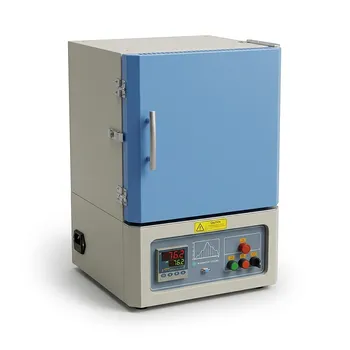
1750C Bench Top Muffle Furnace 3.6L High Grade Molybdenum Disilicide Heating Elements Laboratory Heat Treatment Equipment
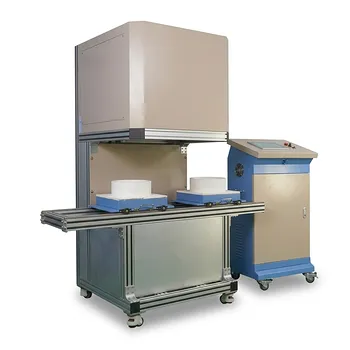
High Temperature Bottom Loading Vertical Furnace 1700C Dual Stage Sample Processing System 18L Large Capacity Thermal Treatment Equipment
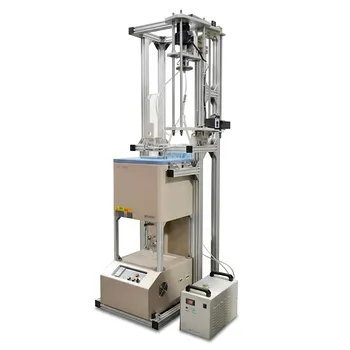
500C Vacuum Vertical Tube Furnace 84mm OD Sample Rotation Lifting System
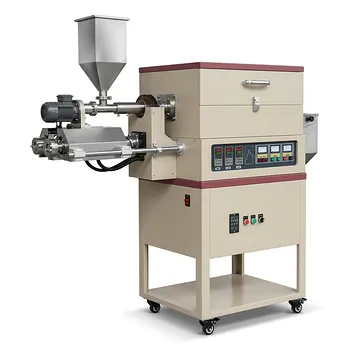
Laboratory Tilting Rotary Tubular Furnaces for Material Science and Industrial Heat Treatment
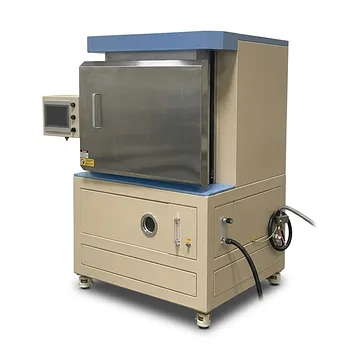
1650C High Temperature Atmosphere Controlled Box Furnace with 65L Chamber for Advanced Material Sintering and Industrial Heat Treatment
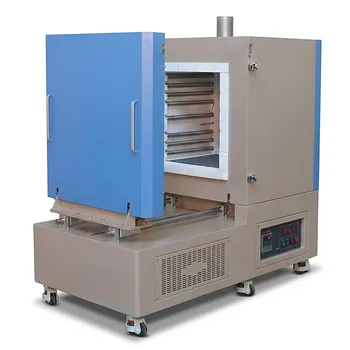
1200C Five Side Heating Muffle Furnace with Sliding Door 125L Volume High Temperature Heat Treatment System for Large Scale Sintering and Annealing
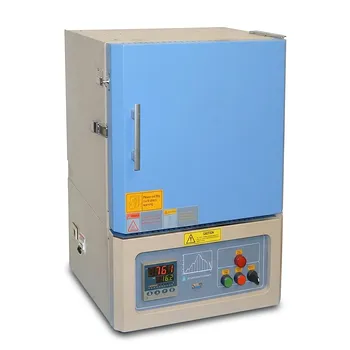
High Temperature 1700C Bench Top Muffle Furnace with Alumina Fiber Insulation and 3.6L Chamber Capacity for Precision Sintering and Heat Treatment
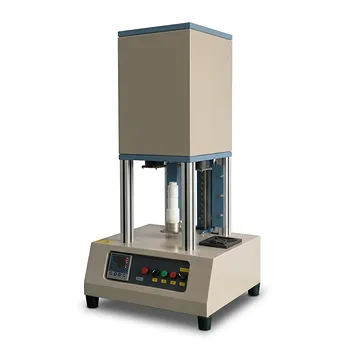
Compact High Temperature Bottom Loading Furnace 1700C Rapid Heating Cooling System Small Sample Thermal Cycling Equipment
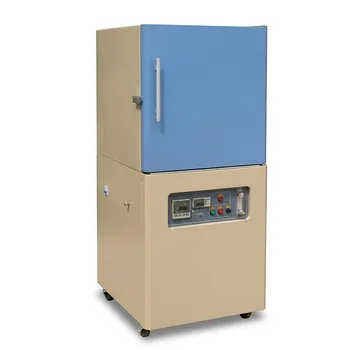
High Temperature Muffle Furnace with Dual Controllers and 36L Large Chamber 1700C Max
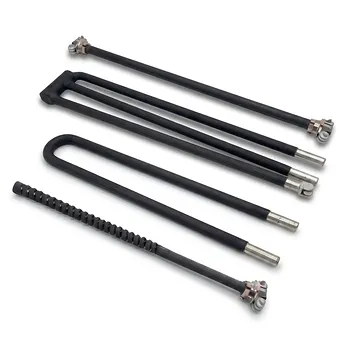
Silicon Carbide SiC Thermal Heating Elements for Industrial Electric Furnaces
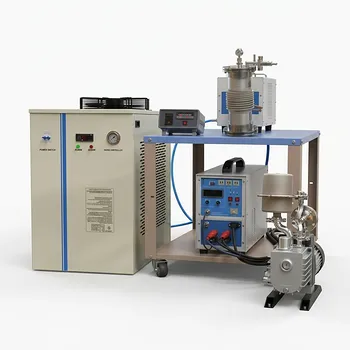
Induction Heating System with Temperature Control for High Temperature Vacuum Sintering and Melting
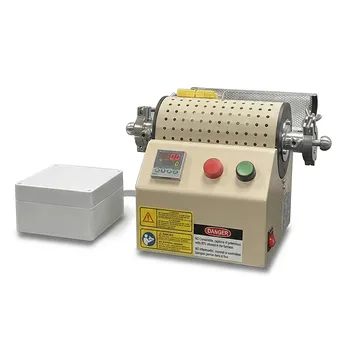
1000C Mini Tube Furnace with 20mm Quartz Tube and Vacuum Flanges for Material Science Research and Controlled Atmosphere Small Sample Processing
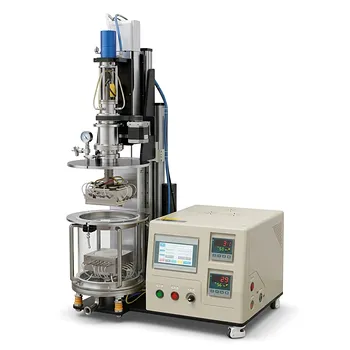
High Temperature 800C Rapid Thermal Processing Furnace with Rotating Sample Holder for Close Spaced Sublimation and Thin Film Solar Cell Research