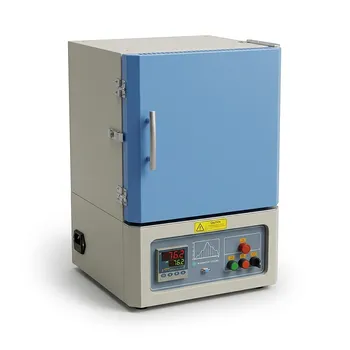
What role does a high-temperature muffle furnace play in evaluating the mineral composition of rock samples? LOI & XRF Guide
Updated 3 months ago
The high-temperature muffle furnace is the primary tool for determining Loss on Ignition (LOI) in rock samples. By heating powdered samples to approximately 1000°C, the furnace facilitates the complete removal of organic matter, structural water, and volatile gases from carbonate decomposition. This process provides a stable, anhydrous chemical baseline that is essential for calculating accurate mineral component models and performing precise X-ray fluorescence (XRF) analysis.
A muffle furnace serves as a thermal purification system that isolates the inorganic oxide content of a mineral sample. By removing all volatile components, it allows geoscientists to establish the "clean" chemical baseline required for quantitative mineralogical and structural assessments.
Establishing a Precise Chemical Baseline
The Role of Loss on Ignition (LOI)
To evaluate mineral composition accurately, researchers must first account for mass lost during heating. The muffle furnace achieves this by maintaining a stable environment at 1000°C to 1050°C, typically for one hour. This step ensures that components like structural water in gypsum or CO2 in calcite are fully expelled before chemical analysis begins.
Optimizing XRF and XRD Accuracy
The data gained from the LOI process acts as a foundational parameter for X-ray fluorescence (XRF) analysis. By removing volatile interference, the furnace ensures that the resulting measurements of major elements (such as Silicon or Aluminum) are accurate. Additionally, it provides the chemical reference baseline necessary for quantitative X-ray diffraction (XRD) analysis.
Real-Time Dielectric Evolution
Advanced furnace setups integrated with microwave measurement systems allow for the study of dielectric evolution. By executing precise heating curves up to 1100°C, researchers can observe how a rock's electrical properties change during sintering. This provides insight into the material's internal transformation as it transitions between different mineral phases.
Analyzing Thermal Stability and Phase Transitions
Inducing Mineral Phase Changes
High-temperature treatment drives solid-state reactions and lattice reorganization within the rock's mineral structure. The muffle furnace provides the controlled thermal field required to study crystal growth kinetics and crystallinity. This is vital for understanding how minerals transform under the extreme heat found in industrial or volcanic environments.
Simulating Deep Geological Engineering
In geological studies, muffle furnaces simulate the extreme temperature environments found in deep earth engineering. Through long-duration isothermal heating (ranging from 30°C to 400°C), the furnace induces thermal stress accumulation. This allows experts to quantify the growth of thermally induced micro-cracks and their impact on the stability of rock masses.
Evaluating Residual Mechanical Strength
For materials like concrete or alkali-activated slag, the furnace simulates extreme fire conditions. By heating specimens to specific increments (e.g., 250°C, 500°C, 750°C), researchers can measure residual compressive strength. This helps in evaluating the microstructural evolution and surface crack patterns that occur after thermal exposure.
Understanding the Trade-offs
The Destructive Nature of Calcination
The primary trade-off of using a muffle furnace for mineral evaluation is that the process is inherently destructive. While it provides essential chemical data, the original crystalline structure and physical integrity of the rock sample are often permanently altered or lost.
Time and Energy Requirements
Achieving a true steady-state temperature for accurate LOI requires significant time and energy. Samples must often dwell at peak temperatures for several hours, followed by a controlled cooling period to prevent moisture re-absorption. This limits the throughput of sample testing in a high-volume laboratory environment.
Potential for Over-Calcination
If temperatures are not strictly controlled, some minerals may undergo unexpected melting or vitrification. This can fuse the sample into a glass-like state, making it difficult to prepare for certain types of downstream geochemical analysis.
How to Apply This to Your Research
The use of a muffle furnace should be tailored to the specific data required for your mineralogical model. Choosing the correct temperature range and dwell time is critical for valid results.
- If your primary focus is elemental accuracy (XRF): Perform a full LOI calcination at 1000°C to 1050°C to ensure all volatiles are removed from the baseline.
- If your primary focus is structural stability: Use lower, incremental heating stages (100°C to 800°C) to measure micro-crack evolution and mass loss without destroying the mineral matrix.
- If your primary focus is phase transition kinetics: Utilize programmed heating curves with specific rates (e.g., 5°C/min or 10°C/min) to observe exactly when mineral lattices reorganize.
By mastering the thermal environment of the muffle furnace, you transform a simple heating tool into a precision instrument for geological discovery.
Summary Table:
| Application | Process/Temperature | Primary Benefit |
|---|---|---|
| Loss on Ignition (LOI) | 1000°C - 1050°C | Removes volatiles (CO2, H2O) to establish chemical baselines. |
| XRF & XRD Prep | Thermal Purification | Eliminates interference; ensures high-precision elemental analysis. |
| Phase Transitions | Programmed Heating | Studies crystal growth kinetics and lattice reorganization. |
| Geological Simulation | Isothermal Heating | Quantifies thermal stress and micro-crack evolution in deep-earth R&D. |
Elevate Your Geological Research with Precision Thermal Solutions
Precision in Loss on Ignition (LOI) and mineralogical modeling starts with high-performance equipment. THERMUNITS is a leading manufacturer of high-temperature laboratory equipment specifically designed for material science and industrial R&D.
We offer a comprehensive range of thermal processing solutions tailored to your analysis needs, including:
- Muffle, Vacuum, and Atmosphere Furnaces for precise calcination and LOI.
- Tube and Rotary Furnaces for specialized material synthesis.
- CVD/PECVD Systems & Hot Press Furnaces for advanced material engineering.
- Vacuum Induction Melting (VIM) and Thermal Elements for extreme heat applications.
Whether you are analyzing rock mass stability or performing high-throughput mineral testing, our equipment delivers the stability and accuracy required for valid scientific results.
Ready to upgrade your lab's capabilities? Contact us today to discuss your specific research requirements and find the ideal furnace for your project!
References
- G. G. Savostin, Мikhail А. Proskurnin. Effect of Temperature on Kerogen Transformation and Hydrocarbon Generation in Bazhenov Formation (Western Siberia, Russia) Rocks During Hydrous Pyrolysis. DOI: 10.3390/en18010023
Mentioned Products
- High Temperature 1700C Bench Top Muffle Furnace with Alumina Fiber Insulation and 3.6L Chamber Capacity for Precision Sintering and Heat Treatment
- 1200°C High Temperature Muffle Furnace 19L Chamber with 50 Segment Programmable Controller
- High Temperature 1500C Benchtop Muffle Furnace 3.6L Alumina Fiber Chamber Programmable Controller Sintering Annealing Carbonization Thermal Processing System
- Large Bench Top 1700C High Temperature Muffle Furnace with 19L Chamber for Advanced Material Sintering and Annealing
- High Temperature Muffle Furnace with Dual Controllers and 36L Large Chamber 1700C Max
People Also Ask
- What is the function of a high-temperature muffle furnace in phosphorus-modified zeolite catalyst preparation?
- What is the function of a high-temp muffle furnace in Ni-V oxide synthesis? Optimize your material's performance.
- What is the purpose of using muffle or tube furnaces in glass synthesis? Achieve Precise Melt-Quenching & Homogeneity
- What is the function of a muffle furnace in aluminoborosilicate glass prep? Stabilize Raw Materials for Superior Purity
- What role does a high-temperature muffle furnace play in the synthesis of Melem precursors? Precision Polymerization.

Tech Team · ThermUnits
Last updated on Jun 02, 2026
Related Products
High Temperature 1700C Bench Top Muffle Furnace with Alumina Fiber Insulation and 3.6L Chamber Capacity for Precision Sintering and Heat Treatment
1200°C High Temperature Muffle Furnace 19L Chamber with 50 Segment Programmable Controller
High Temperature 1500C Benchtop Muffle Furnace 3.6L Alumina Fiber Chamber Programmable Controller Sintering Annealing Carbonization Thermal Processing System
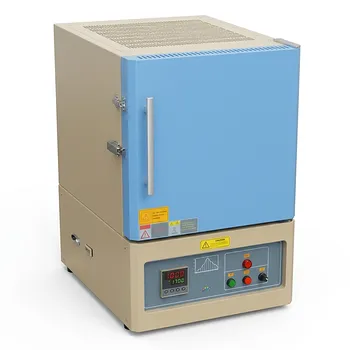
Large Bench Top 1700C High Temperature Muffle Furnace with 19L Chamber for Advanced Material Sintering and Annealing
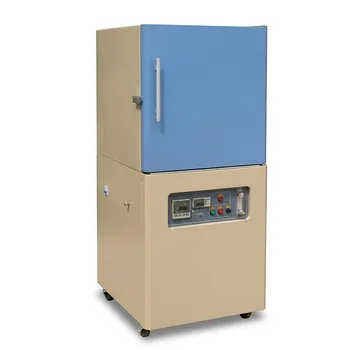
High Temperature Muffle Furnace with Dual Controllers and 36L Large Chamber 1700C Max
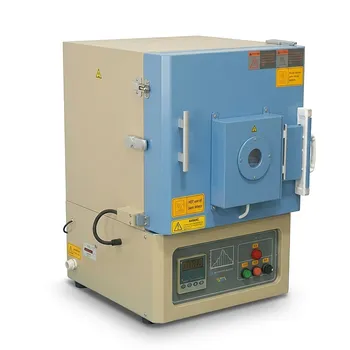
High Temperature Benchtop Muffle Furnace 1500C with 3.6L Chamber and Quartz Observation Window
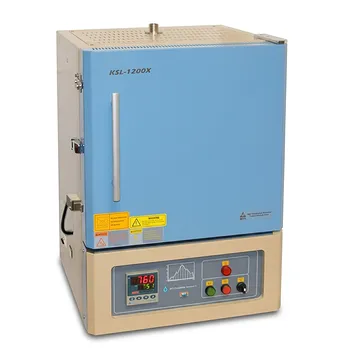
High Temperature 1200C Muffle Furnace 27L Volume 12x12x12 Chamber with Programmable PID Controller for Laboratory Material Science
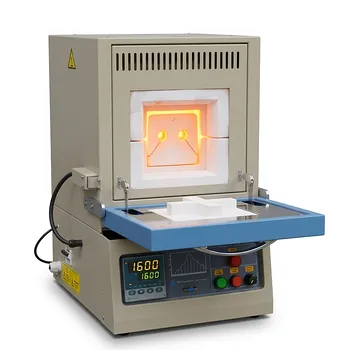
High Temperature Compact Muffle Furnace 1700 C with 30 Segment Programmable Controller and 1.7L Cubic Chamber
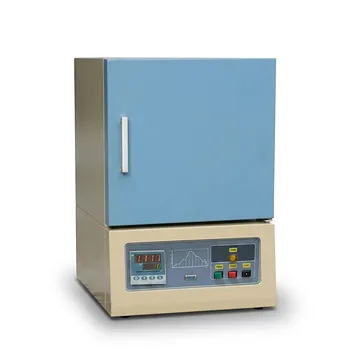
Ultra High Temperature Bench Top Muffle Furnace 1750C Sintering System with Kanthal Super Heating Elements and Precision Digital Control
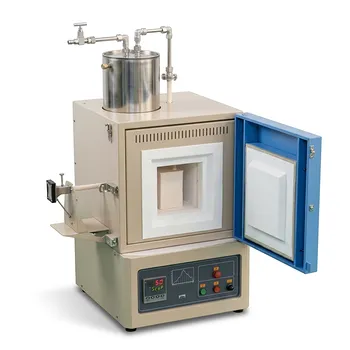
High Temperature Bench Top Muffle Furnace 1700C with Integrated Evaporating Particle Collection and 8x8x8 Alumina Fiber Chamber
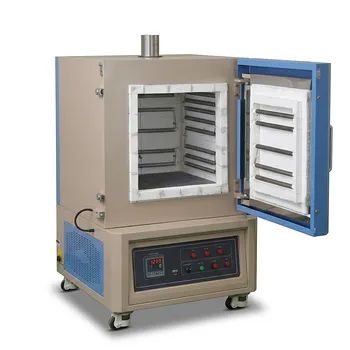
1200C High Temperature 125L Muffle Furnace 5 Side Heating for Large Batch Sintering with Optional Alloy Debinding Chamber
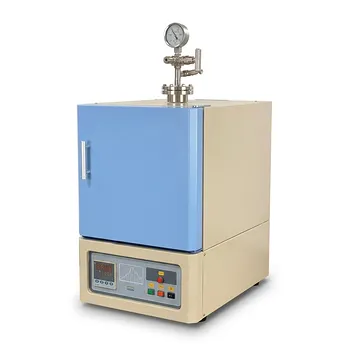
Hybrid High Temperature Muffle and Tube Furnace with 1500C Capability and Vacuum Flange Assembly
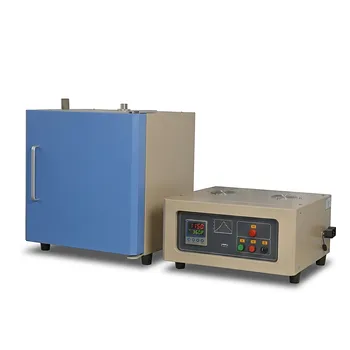
High Temperature Muffle Furnace with Alloy Chamber for Debinding and Sintering Applications
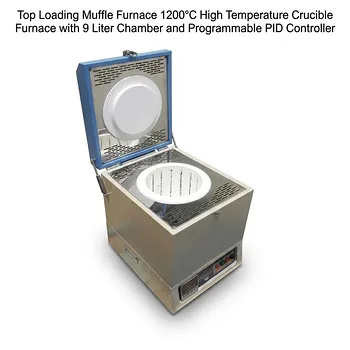
Top Loading Muffle Furnace 1200°C High Temperature Crucible Furnace with 9 Liter Chamber and Programmable PID Controller
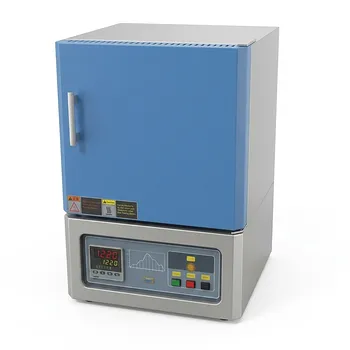
High Temperature Benchtop Muffle Furnace 1700C 10L Chamber Alumina Fiber Insulation MoSi2 Heating Elements
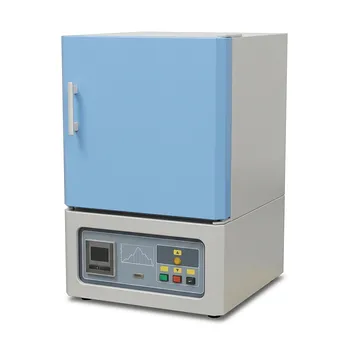
1800C Bench Top Muffle Furnace with Kanthal Super 1900 Heating Elements and 3.6L Alumina Fiber Chamber
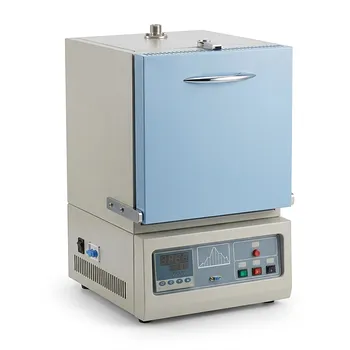
1750C Compact Muffle Furnace 1.7L Ultra High Temperature Laboratory Sintering System for Advanced Ceramics and Material Science Research
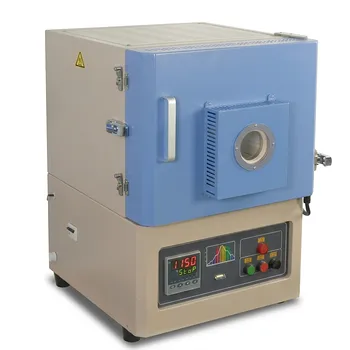
High Temperature Benchtop Muffle Furnace with Quartz Observation Window for Thermal Imaging and Material Analysis
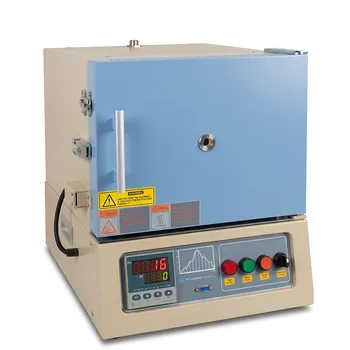
1200C Muffle Furnace 12x8x5 7.2L Heating Chamber with Quartz Observation Window and Vent Port