How does the rotary kiln function within the cement and lime production process? Optimizing Thermal Processing
Updated 5 months ago
The rotary kiln is the thermal heart of industrial mineral processing. It serves as the primary pyroprocessing unit where raw materials—typically limestone and clay—undergo a series of intense chemical and physical transformations. By combining high-temperature exposure with constant mechanical rotation, the kiln converts raw feed into clinker (for cement) or quicklime through a continuous, precisely controlled journey.
The rotary kiln functions as a dynamic chemical reactor that leverages gravity and rotation to ensure every particle of raw material is uniformly heated. This process facilitates the critical transition from raw minerals to reactive industrial products by managing distinct thermal zones for drying, calcination, and sintering.
The Mechanics of Material Flow and Transformation
Gravity-Driven Movement and Rotation
The kiln consists of a long, cylindrical steel tube lined with heat-resistant refractory bricks, set at a slight downward incline. As the kiln rotates, the material is lifted and then tumbles back down, creating a "cascading" effect that moves the feed slowly toward the lower, hotter end.
The Stages of Thermal Transformation
As the material travels, it passes through three critical stages defined by increasing temperatures. It first undergoes drying to remove moisture, followed by calcination at approximately 800°C to 900°C, where carbon dioxide is driven off from the limestone.
The Clinkering Process
The final stage occurs at the hottest part of the kiln, reaching temperatures near 1450°C. In this "clinkering" or sintering zone, the minerals partially melt and fuse together into hard, marble-sized nodules.
Optimizing Quality Through Thermal Uniformity
Preventing Local Overheating
The continuous tumbling of the material is essential for uniformity in contact between the solids and the thermal atmosphere. This movement prevents "dead zones" or local overheating, which can lead to uneven sintering and a degraded final product.
Gas-Solid Contact Efficiency
The internal environment of the kiln allows for intimate contact between the hot gases (produced by burners or electricity) and the tumbling solids. This gas-solid contact is vital for the efficient oxidation and reduction reactions required in both mineral and metallurgical processing.
Feedstock Versatility
Rotary kilns are designed to handle a wide variety of feedstock chemistries and particle sizes. Most systems are optimized for materials smaller than 20 mm, ensuring that the heat can penetrate the center of each particle during its residence time in the kiln.
Modern Innovations in Kiln Design
Electric Kilns and Carbon Capture
Emerging electric rotary kilns offer a significant advantage for Carbon Capture, Utilization, and Storage (CCUS). Because there is no fossil fuel combustion on-site, the CO2 generated during calcination is not diluted by combustion gases, resulting in a high-purity CO2 stream that is much easier to capture.
Waste Heat Integration
Advanced systems now utilize waste heat gas from other parts of the plant to preheat the incoming furnace charge. Preheating the material to roughly 900°C before it enters the main kiln significantly reduces overall fuel consumption and maintains a stable energy balance.
Understanding the Trade-offs
Energy Intensity vs. Scale
While rotary kilns are highly efficient for large-scale continuous production, they are inherently energy-intensive. Maintaining the extreme temperatures required for clinkering demands a massive, consistent energy input, making the kiln the most expensive part of the plant to operate.
Refractory Wear and Maintenance
The combination of high heat and the abrasive tumbling of materials causes significant wear on the internal refractory lining. Regular maintenance shutdowns are a necessity to replace bricks, as a lining failure can lead to the structural deformation of the steel shell.
Environmental Regulatory Pressure
Traditional fuel-fired kilns emit significant amounts of CO2 and nitrogen oxides (NOx). Operators must often invest in expensive gas scrubbing and filtration systems to meet environmental standards, driving up the complexity of the kiln’s secondary support systems.
Making the Right Choice for Your Goal
How to Apply This to Your Project
- If your primary focus is consistent product quality: Prioritize a kiln with advanced rotation speed controls and optimized internal lifters to ensure maximum material tumbling and uniform heat distribution.
- If your primary focus is decarbonization and CCUS: Investigate electric rotary kiln technology, which provides a concentrated CO2 output and eliminates the need for managing complex combustion gas mixtures.
- If your primary focus is operational cost reduction: Implement a preheating system that utilizes waste heat from the melting reactor or cooler to raise the feed temperature before it enters the kiln.
By mastering the balance between mechanical rotation and thermal zones, operators can transform raw minerals into high-performance industrial materials with maximum efficiency and precision.
Summary Table:
| Stage/Feature | Temperature Range | Primary Function/Result |
|---|---|---|
| Drying | < 800°C | Removal of moisture from raw feedstock |
| Calcination | 800°C - 900°C | Chemical decomposition; CO2 removal from limestone |
| Clinkering | ~1450°C | Sintering and mineral fusion into nodules |
| Rotation | Mechanical | Ensures uniform heat distribution and material flow |
| Modern Electric | Variable | High-purity CO2 capture and zero combustion gas dilution |
Elevate Your Material Research with THERMUNITS
As a leading manufacturer of high-temperature laboratory equipment, THERMUNITS provides precision-engineered thermal solutions for material science and industrial R&D. Whether you are scaling up cement production or developing new mineral processes, our comprehensive range of equipment—including Electric Rotary Kilns, Muffle Furnaces, CVD/PECVD systems, and Vacuum Induction Melting (VIM) furnaces—is designed for maximum uniformity, efficiency, and scalability.
Ready to optimize your heat treatment process with cutting-edge technology?
Contact our experts today to find the perfect thermal processing solution for your laboratory or industrial facility.
Mentioned Products
- Electric Rotary Kiln Continuous Working Small Rotary Furnace Heating Pyrolysis Plant
- Electric Rotary Kiln Small Rotary Furnace for Activated Carbon Regeneration
- Electric Rotary Kiln Small Rotary Furnace Biomass Pyrolysis Plant
- 900°C Max Rotary Tube Furnace with 8 Inch 310S Alloy Tube and Optional Multi Zone Heating for Industrial Material Calcination
- Three Zone Rotary Tube Furnace for High Temperature Powder Processing and Material Research
People Also Ask
- How does the electric rotary kiln support environmental compliance and sustainability? Achieve Zero-Emission Production
- What are the maintenance and service life advantages of an electric rotary kiln? 25+ Year Longevity & Low Maintenance
- What thermal efficiency can be expected from an electric rotary kiln compared to fuel-fired alternatives? Gain 95% efficiency.
- How does the use of an electric rotary kiln facilitate CO2 capture in cement and lime production? Achieve High-Purity CCUS
- Which minerals and specialty chemicals are commonly processed using electric rotary kilns? Precision Thermal Processing Guide

Tech Team · ThermUnits
Last updated on Apr 14, 2026
Related Products
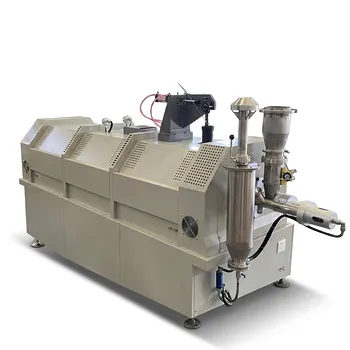
Electric Rotary Kiln Continuous Working Small Rotary Furnace Heating Pyrolysis Plant
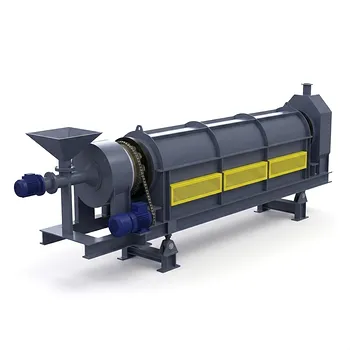
Electric Rotary Kiln Small Rotary Furnace for Activated Carbon Regeneration
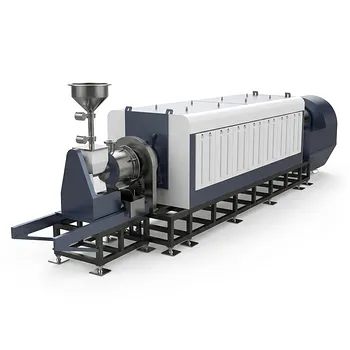
Electric Rotary Kiln Small Rotary Furnace Biomass Pyrolysis Plant
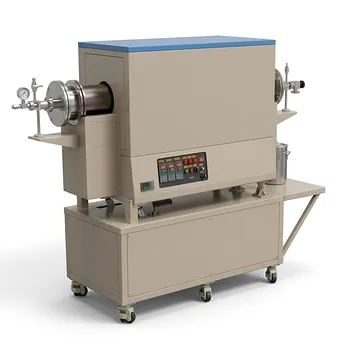
900°C Max Rotary Tube Furnace with 8 Inch 310S Alloy Tube and Optional Multi Zone Heating for Industrial Material Calcination
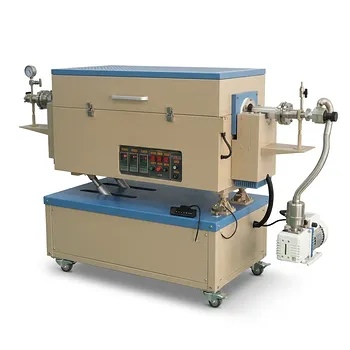
Three Zone Rotary Tube Furnace for High Temperature Powder Processing and Material Research
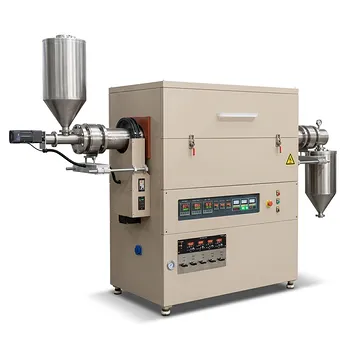
High Temperature Tilting Rotary Tube Furnace with Integrated Mass Flow Control and Multi Zone Heating
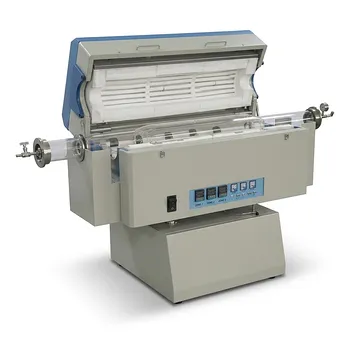
Large Three Temperature Zone Rotating Tube Furnace for High Uniformity Material Sintering
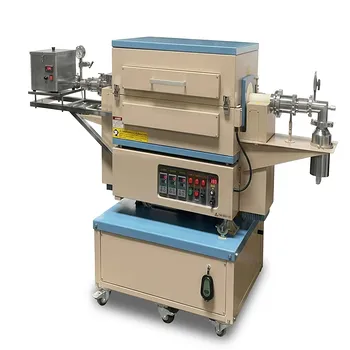
1500C 3-Zone Rotary Tube Furnace 60mm with Automatic Powder Feeding and Receiving System for Continuous Material Synthesis
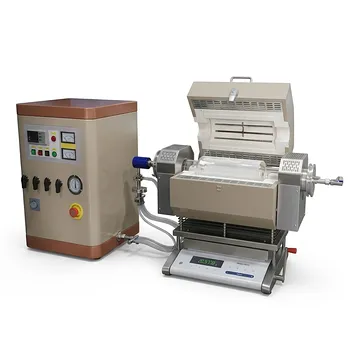
Mini Rotary Tubular Furnaces for Precision Powder Heat Treatment and Thermogravimetric Analysis
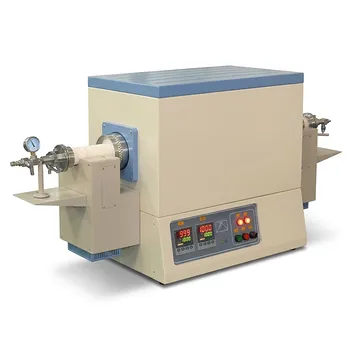
High Temperature 1700C Dual Zone Rotary Tube Furnace with 60mm Alumina Tube and Precision Rotation Control
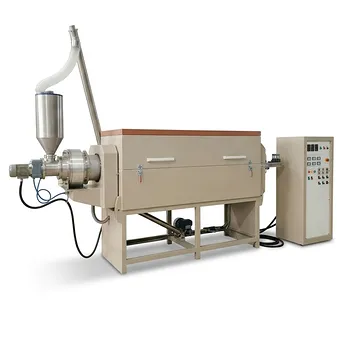
Continuous Feeding Rotary Tube Furnace for Industrial Powder Heat Treatment and Material Research
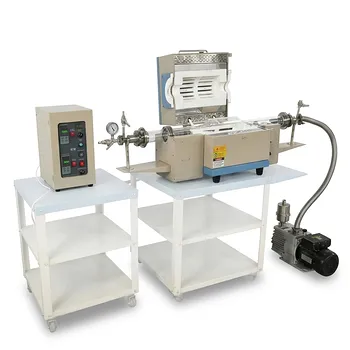
Two Zone Rotary Tube Furnace for Powder CVD Coating and Core Shell Material Synthesis 1100C
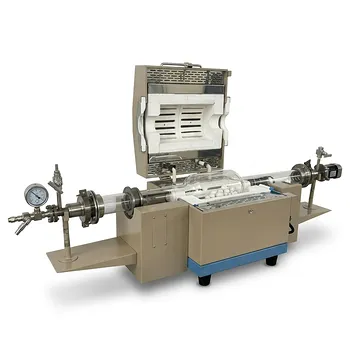
High Temperature Rotary Tube Furnace with Integrated Ball Milling and Gas Flow Function for Powder Nitriding
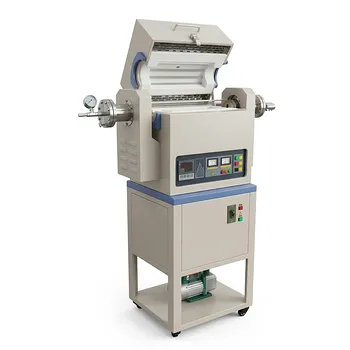
High Temperature Rotary Tilt Tubular Furnaces for Advanced Powder Sintering and Material Processing
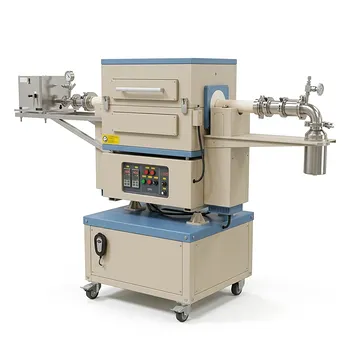
1500C Max Dual Zone Rotary Tube Furnace with 60 mm OD Alumina Tube for High Temperature Material Synthesis
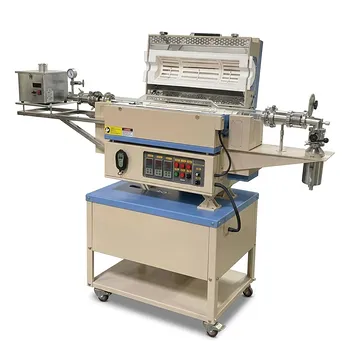
5 Inch Rotary Tube Furnace with Automatic Feeding and Receiving System 1200C Three Zone CVD Powder Processing
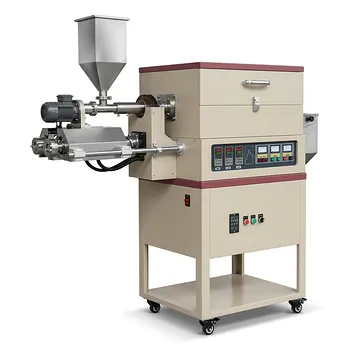
Laboratory Tilting Rotary Tubular Furnaces for Material Science and Industrial Heat Treatment
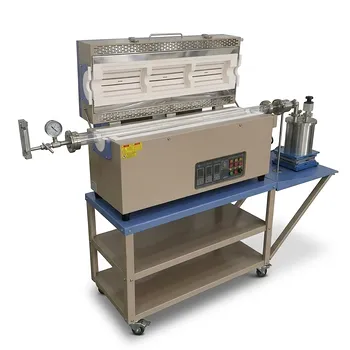
5 Inch Two Zone Rotary Tube Furnace 1100C for Powder CVD and Material Synthesis
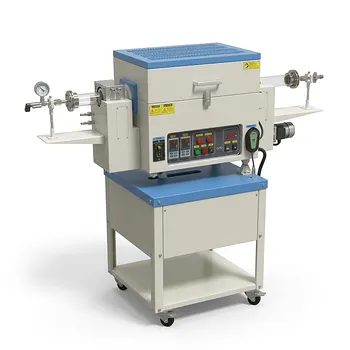
4 Inch Two Zone Rotary CVD Tube Furnace for High Temperature Battery Material Synthesis and Advanced Material Calcination