What are the advantages of using a conical quartz crucible for smelting leaching residues? Optimize Phase Separation
Updated 3 months ago
The use of a conical quartz crucible is a strategic choice that leverages both geometric design and high-purity material properties to ensure precise phase separation and chemical integrity. During the reduction smelting of leaching residues at temperatures near 1350 °C, the tapered bottom of the crucible forces high-density metal or matte droplets to aggregate into a single, easily identifiable mass at the base. Simultaneously, the ultra-high purity of fused quartz (exceeding 99.998%) prevents the introduction of unwanted metallic impurities, which is critical for measuring the accurate distribution of trace elements.
Core Takeaway: A conical quartz crucible optimizes smelting by physically concentrating dense metallic phases at its tapered base while chemically safeguarding the melt from contamination, thereby streamlining post-experiment sampling and analytical accuracy.
Optimizing Phase Separation Through Geometry
Gravity-Driven Aggregation at the Tapered Base
The primary advantage of the conical shape is its ability to facilitate the settling of phases with varying densities. As leaching residues melt, high-density metal matte or alloy droplets sink through the low-density silicate slag.
The tapered bottom acts as a collection point, forcing these droplets to aggregate into a consolidated mass. This prevents the formation of dispersed metallic "beads" that would be difficult to recover or analyze separately.
Streamlining Post-Smelting Analysis
Once the smelting process is complete and the specimen has cooled, the geometric design simplifies the physical separation of the layers. The distinct boundary between the bottom metal button and the top slag layer is clearly defined by the crucible’s shape.
This clear demarcation is essential for researchers performing phase analysis. It allows for precise sampling of each layer without cross-contamination, ensuring that the chemical profile of the alloy accurately reflects the smelting conditions.
Material Integrity and Chemical Precision
Maintaining Trace Element Accuracy
Fused quartz is selected for its exceptional chemical purity, typically surpassing 99.998%. This high level of purity is vital when the research objective involves measuring the distribution coefficients of trace elements.
Because the crucible contains virtually no metallic impurities, researchers can be certain that any elements detected in the final alloy originated from the leaching residues. This eliminates "background noise" and equipment-induced errors in sensitive measurements.
Temperature Stability and Slag Interaction
Quartz crucibles offer high-temperature stability, remaining structurally sound during operations around 1250 °C to 1350 °C. While a negligible amount of silica ($SiO_2$) may dissolve into the slag, this is often acceptable in silicate-based smelting.
Because silica is a common component of smelting slag, its minimal dissolution does not introduce foreign elements. This maintains a controlled environment where the only variable introduced by the crucible is a minor, predictable shift in slag acidity.
Understanding the Trade-offs
Temperature and Durability Limits
While quartz is excellent for purity, it has lower structural strength at extreme temperatures compared to materials like alumina. If the smelting process exceeds 1400 °C, a quartz crucible may soften or deform, whereas high-purity alumina can withstand these higher thermal loads.
Chemical Erosion Risks
Quartz is susceptible to erosion by highly alkaline slags, such as sodium-based fluxes used in certain leaching processes. In environments with high alkalinity, the silica in the quartz may react too aggressively, leading to crucible degradation and potential leakage.
Making the Right Choice for Your Goal
To maximize the effectiveness of your smelting process, consider the specific requirements of your experimental design.
- If your primary focus is trace element precision: Use a fused quartz crucible to ensure that no foreign metallic impurities contaminate your samples.
- If your primary focus is ease of phase recovery: Choose the conical geometry to concentrate dense metallic phases at the bottom for effortless sampling after cooling.
- If your primary focus is high-alkalinity or ultra-high temperature ($>1400 °C$) smelting: Consider switching to a high-purity alumina crucible to benefit from superior chemical resistance and structural strength.
By aligning crucible geometry and material purity with your analytical objectives, you ensure a clean, efficient, and highly accurate smelting operation.
Summary Table:
| Feature | Advantage | Scientific Benefit |
|---|---|---|
| Conical Geometry | Tapered bottom aggregates dense metal droplets | Simplifies phase separation and post-smelting sampling |
| Ultra-High Purity | > 99.998% Fused Quartz | Prevents metallic contamination in trace element analysis |
| Thermal Stability | Resists deformation up to 1350 °C | Maintains structural integrity during high-temp reduction |
| Chemical Profile | Minimal silica dissolution | Controlled slag environment without introducing foreign elements |
Elevate Your Material Research with THERMUNITS
Precision in smelting requires both the right vessel and the perfect thermal environment. THERMUNITS is a leading manufacturer of high-performance laboratory equipment for material science and industrial R&D. We offer a comprehensive suite of thermal processing solutions, including Muffle, Vacuum, Atmosphere, Tube, and Rotary Furnaces, as well as specialized Vacuum Induction Melting (VIM) and CVD/PECVD systems.
Whether you are refining leaching residues or developing advanced alloys, our equipment ensures the temperature accuracy and stability your experiments demand.
Ready to optimize your heat treatment workflow?
Contact our technical experts today to find the ideal furnace and crucible solution for your laboratory.
References
- Lassi Klemettinen, Ari Jokilaakso. Roasting-Water Leaching-Slag Cleaning Process for Recovery of Valuable Metals from Li-ion Battery Scrap. DOI: 10.1007/s40831-024-00988-y
Mentioned Products
- 1100C High Temperature Vacuum Crucible Furnace with Quartz Chamber for Thermal Processing and Sintering
- Vertical Crucible Furnace 1000C High Temperature Laboratory Equipment 4.7 Inch Diameter Chamber SS316 Anti Corrosive Enclosure
- Compact Crucible Melting Furnace 1100C Programmable Temperature Controller Metal Sintering Equipment
- High Temperature Vertical Crucible Furnace with 22L Heating Chamber and 1200C Maximum Temperature
- 1100C Crucible Melting Furnace with Stirring Function for Glovebox and Air Sensitive Alloy Research
People Also Ask
- How does the temperature control precision of a high-temperature sintering furnace affect Na1+xLa1-xZr2O6-δ ceramics?
- How does a high-temperature sintering furnace environment enhance NdFeB magnets? Achieve 98%+ density with precision.
- Why is a high-temperature sintering furnace required for the preparation of Li(Nb,Ta)O3 precursors? Essential Insights
- How does a high-temperature sintering furnace contribute to the interfacial strengthening of SS316L and zirconia?
- What is the function of high-vacuum furnaces in (Mo2/3V1/3)n+1AlCn MAX phase synthesis? Ensure Purity & Diffusion.

Tech Team · ThermUnits
Last updated on Jun 02, 2026
Related Products
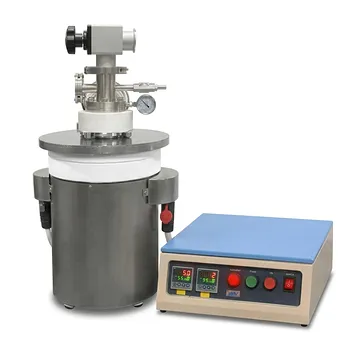
1100C High Temperature Vacuum Crucible Furnace with Quartz Chamber for Thermal Processing and Sintering
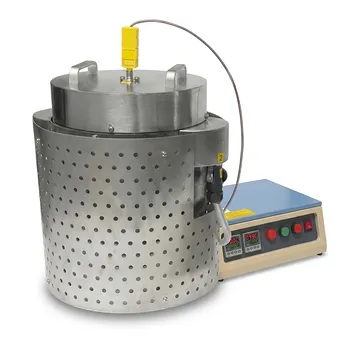
Vertical Crucible Furnace 1000C High Temperature Laboratory Equipment 4.7 Inch Diameter Chamber SS316 Anti Corrosive Enclosure
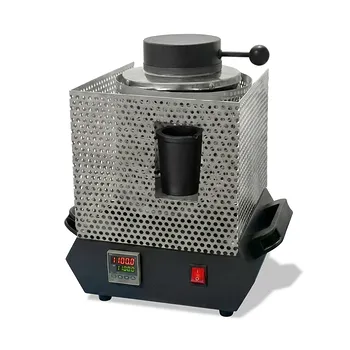
Compact Crucible Melting Furnace 1100C Programmable Temperature Controller Metal Sintering Equipment
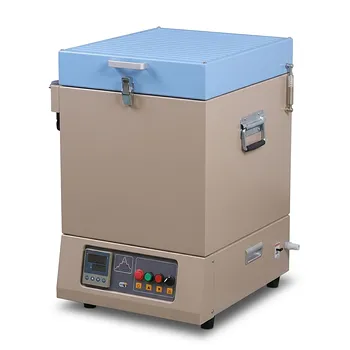
High Temperature Vertical Crucible Furnace with 22L Heating Chamber and 1200C Maximum Temperature
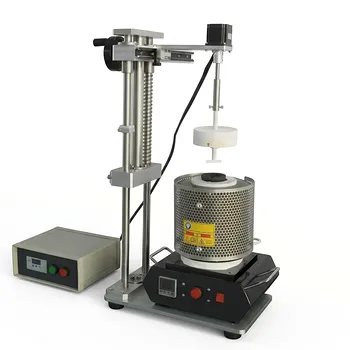
1100C Crucible Melting Furnace with Stirring Function for Glovebox and Air Sensitive Alloy Research
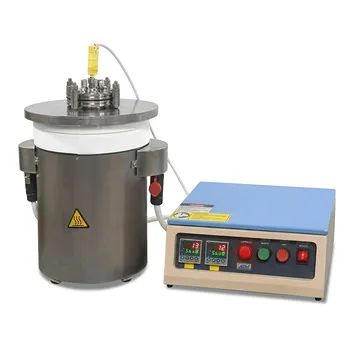
600°C Vertical Crucible Furnace with SS316 Alloy Reactor and 6 Port Vacuum Flange
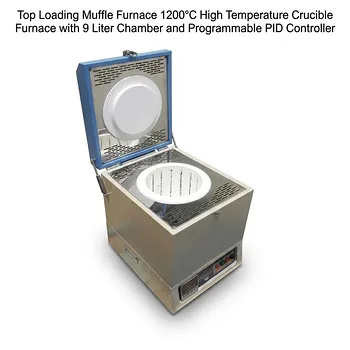
Top Loading Muffle Furnace 1200°C High Temperature Crucible Furnace with 9 Liter Chamber and Programmable PID Controller
