How does a high-temperature sintering furnace contribute to the interfacial strengthening of SS316L and zirconia?
Updated 3 months ago
The high-temperature sintering furnace facilitates interfacial strengthening by providing a precise 1350 °C environment that triggers atomic-level inter-diffusion between SS316L and zirconia. This thermal energy enables elements like iron, chromium, nickel, and zirconium to migrate across the boundary, creating a dense, crack-free metallurgical bond. By controlling the sintering atmosphere and heating rates, the furnace transforms two distinct materials into a unified micro-part with significantly enhanced mechanical strength.
The core contribution of a high-temperature sintering furnace lies in its ability to drive elemental diffusion and densification simultaneously. It bridges the gap between metal and ceramic by managing thermal energy to eliminate interface gaps and internal porosity without inducing structural failure.
The Mechanism of Interfacial Diffusion
Elemental Migration at 1350 °C
The furnace maintains a stable thermal field that provides the necessary activation energy for atomic diffusion. At the interface, atoms of iron, chromium, and nickel from the SS316L stainless steel move into the zirconia lattice, while zirconium atoms migrate toward the metal.
This exchange creates a gradient transition zone rather than a sharp boundary. This zone is critical for reducing stress concentrations and ensuring the two materials adhere as a single, cohesive unit.
Activated Sintering of SS316L Nanoparticles
High-temperature environments take advantage of the high specific surface energy found in SS316L nanoparticles. This energy drives the particles to fuse more readily at the 1350 °C threshold.
The furnace facilitates the formation of sintered necks between these powder particles. These necks are the foundation of the material's final compressive strength and Young’s modulus, effectively "locking" the metal structure against the ceramic zirconia base.
Precision Thermal Management and Structural Integrity
Controlled Heating Rates and Debinding
Before final densification, the furnace must manage the thermal debinding phase. Using extremely low heating rates—sometimes as slow as 0.1 °C per minute—the furnace allows residual binders to decompose and escape.
This precision prevents internal gas pressure from building up at the interface. Without this controlled release, the pressure would create micro-cracks that compromise the interfacial bond before it even forms.
Elimination of Porosity and Grain Growth
As the furnace reaches peak sintering temperatures, it eliminates internal pores through grain boundary migration. The reduction of porosity is essential for achieving the material’s theoretical density.
The furnace ensures that the zirconia reaches its fully densified state, which is required for maximum hardness and chemical stability. This process also accounts for material shrinkage, ensuring the final part meets precise clinical or engineering dimensions.
Understanding the Trade-offs
Thermal Stress vs. Densification
While higher temperatures promote better diffusion, they also increase the risk of thermal stress. If the cooling rate is not strictly controlled by the furnace, the different thermal expansion coefficients of SS316L and zirconia can cause the interface to delaminate.
Atmosphere Control and Oxidation
Sintering SS316L requires an inert gas atmosphere, typically Argon, to prevent oxidation. If the furnace fails to maintain a pure environment, oxide layers can form at the interface, acting as a barrier to diffusion and weakening the final bond.
Shrinkage and Dimensional Accuracy
Achieving a strong bond often requires significant linear shrinkage of the components. The furnace must provide highly uniform heat distribution to ensure this shrinkage occurs predictably across the entire micro-part to avoid warping.
How to Apply This to Your Project
Making the Right Choice for Your Goal
- If your primary focus is maximum interfacial bond strength: Prioritize a furnace with high vacuum or inert gas capabilities and precise isothermal control at 1350 °C to maximize elemental inter-diffusion.
- If your primary focus is preventing structural micro-cracks: Select a furnace capable of ultra-slow heating rates (0.1 °C/min) during the debinding phase to safely remove binders.
- If your primary focus is dimensional precision: Ensure the furnace provides a uniform thermal field with minimal temperature gradients to manage material shrinkage consistently.
The high-temperature sintering furnace is the definitive tool for transforming loose powder interfaces into high-performance, integrated metallurgical bonds.
Summary Table:
| Sintering Phase | Key Mechanism | Resulting Benefit |
|---|---|---|
| Debinding | Ultra-slow heating (0.1 °C/min) | Prevents internal gas pressure and micro-cracks |
| Isothermal Hold | Atomic inter-diffusion at 1350 °C | Creates a gradient transition zone for bond strength |
| Densification | Grain boundary migration | Eliminates porosity and achieves theoretical density |
| Atmosphere Control | Inert gas (Argon) environment | Prevents oxidation for a pure metallurgical interface |
Elevate Your Material Research with THERMUNITS Precision Furnaces
Achieving the perfect metallurgical bond between SS316L and zirconia requires absolute thermal precision. THERMUNITS is a leading manufacturer of high-temperature laboratory equipment, providing the advanced solutions needed for material science and industrial R&D.
Our comprehensive range includes Vacuum, Atmosphere, Tube, and Muffle furnaces, specifically designed to handle the complex debinding and sintering cycles of metal-ceramic hybrids. Whether your project involves CVD/PECVD, Hot Pressing, or Vacuum Induction Melting (VIM), we provide the uniform thermal fields and inert environments necessary for high-performance interfacial strengthening.
Ready to optimize your heat treatment process?
Contact our technical experts today to find the ideal furnace solution for your application.
References
- Al Basir, Kambiz Rashidi. Influence of SS316L Nanoparticles on the Sintered Properties of Two-Component Micro-Powder Injection Moulded Bimodal SS316L/Zirconia Bi-Materials. DOI: 10.3390/ma17225536
Mentioned Products
- High Temperature Horizontal Electrical Assisted Sintering Furnace with 3KW Programmable Power Source for Advanced Ceramic Materials
- Ultra High Temperature Bench Top Muffle Furnace 1750C Sintering System with Kanthal Super Heating Elements and Precision Digital Control
- High Temperature 1700C Vertical Tube Furnace for Powder Spherification and Material Sintering
- 1200C High Temperature Muffle Furnace with Motorized Door and Automated PC Control for Industrial Sintering and Material Processing 27 Liter
- 1100C High Temperature Vacuum Crucible Furnace with Quartz Chamber for Thermal Processing and Sintering
People Also Ask
- How does the temperature control precision of a high-temperature sintering furnace affect Na1+xLa1-xZr2O6-δ ceramics?
- How does a high-temperature sintering furnace environment enhance NdFeB magnets? Achieve 98%+ density with precision.
- Why is a high-temperature sintering furnace required for the preparation of Li(Nb,Ta)O3 precursors? Essential Insights
- What role does a sintering furnace play with silver paste? Essential Thermal Management for Power Device Packaging
- Why is a sintering furnace or Rapid Thermal Processing (RTP) equipment necessary for the formation of electrodes? Master Solar Ohmic Contacts.

Tech Team · ThermUnits
Last updated on Jun 02, 2026
Related Products
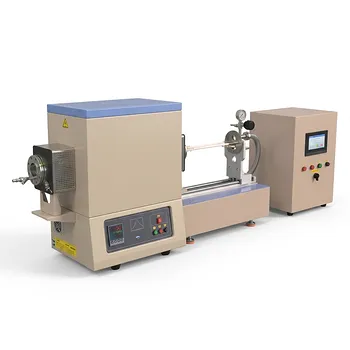
High Temperature Horizontal Electrical Assisted Sintering Furnace with 3KW Programmable Power Source for Advanced Ceramic Materials
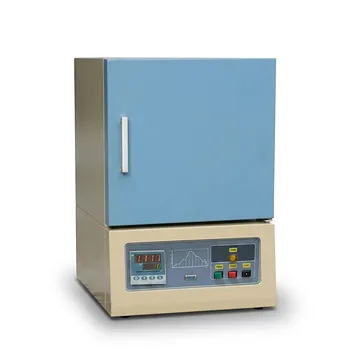
Ultra High Temperature Bench Top Muffle Furnace 1750C Sintering System with Kanthal Super Heating Elements and Precision Digital Control

High Temperature 1700C Vertical Tube Furnace for Powder Spherification and Material Sintering
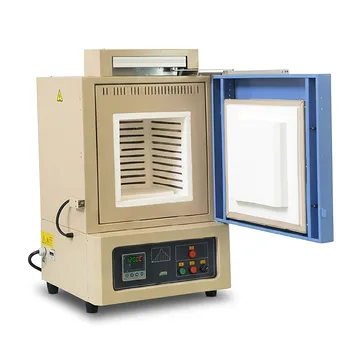
1200C High Temperature Muffle Furnace with Motorized Door and Automated PC Control for Industrial Sintering and Material Processing 27 Liter
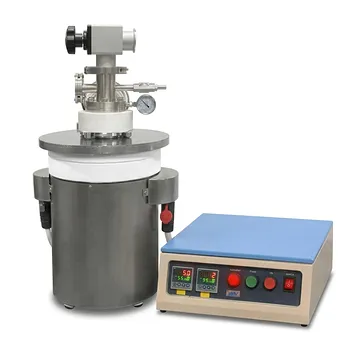
1100C High Temperature Vacuum Crucible Furnace with Quartz Chamber for Thermal Processing and Sintering
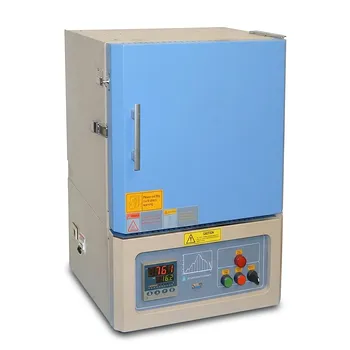
High Temperature 1700C Bench Top Muffle Furnace with Alumina Fiber Insulation and 3.6L Chamber Capacity for Precision Sintering and Heat Treatment

Compact High Temperature 1600C Tube Furnace with 50mm Alumina Tube and Vacuum Flanges for Material Sintering
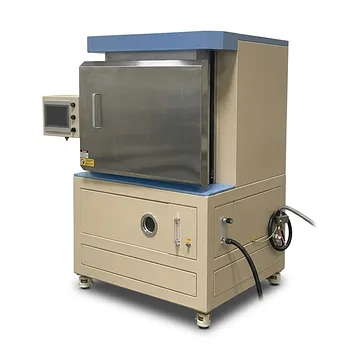
1650C High Temperature Atmosphere Controlled Box Furnace with 65L Chamber for Advanced Material Sintering and Industrial Heat Treatment
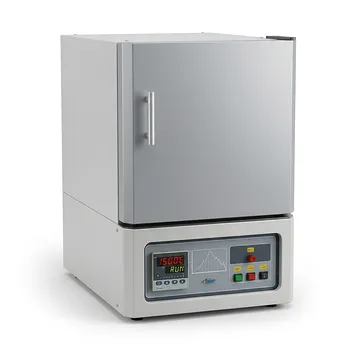
High Temperature 1500C Benchtop Muffle Furnace 3.6L Alumina Fiber Chamber Programmable Controller Sintering Annealing Carbonization Thermal Processing System
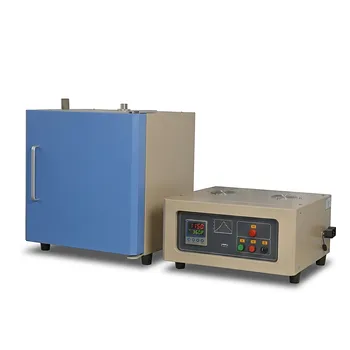
High Temperature Muffle Furnace with Alloy Chamber for Debinding and Sintering Applications
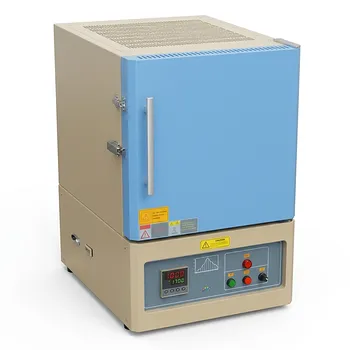
Large Bench Top 1700C High Temperature Muffle Furnace with 19L Chamber for Advanced Material Sintering and Annealing
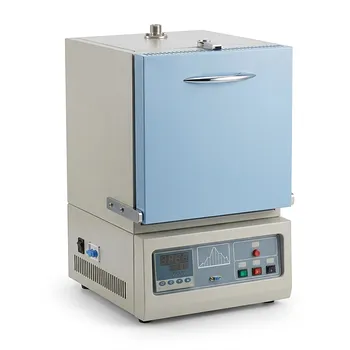
1750C Compact Muffle Furnace 1.7L Ultra High Temperature Laboratory Sintering System for Advanced Ceramics and Material Science Research
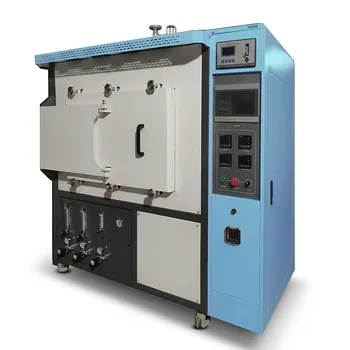
Roller Table Atmosphere Furnace 1500C High Temperature Battery Material Sintering System 112L Capacity
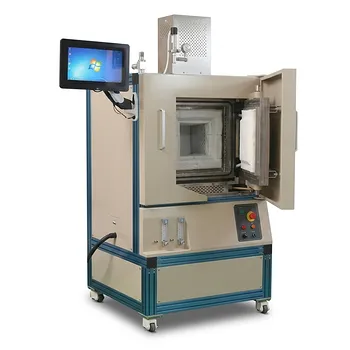
High Temperature Oxygen and Inert Atmosphere Controlled Furnace 8 Liter 1700C Sintering System for Advanced Materials RD
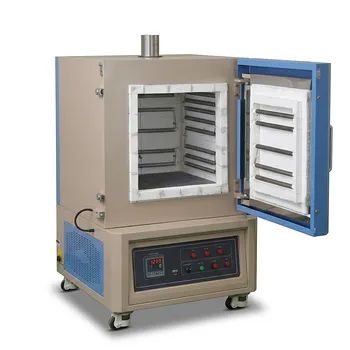
1200C High Temperature 125L Muffle Furnace 5 Side Heating for Large Batch Sintering with Optional Alloy Debinding Chamber
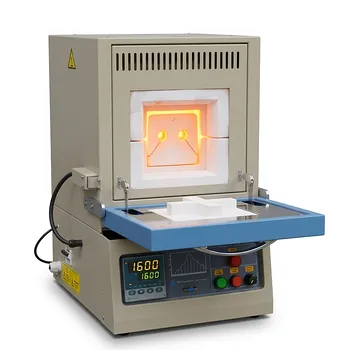
High Temperature Compact Muffle Furnace 1700 C with 30 Segment Programmable Controller and 1.7L Cubic Chamber
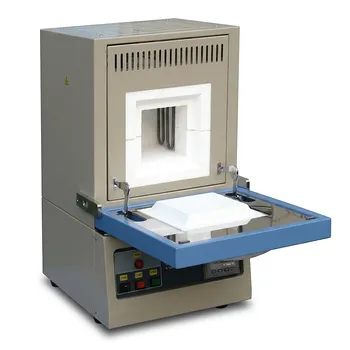
High Temperature 1800C Compact Muffle Furnace with Kanthal Super 1900 Heating Elements and 1.7L Alumina Chamber
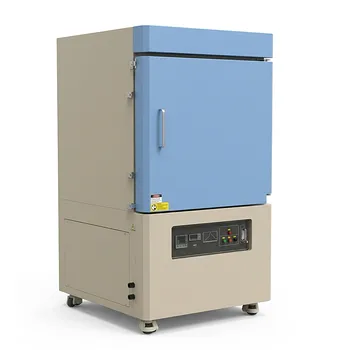
Industrial Large Box Furnace 1700C 216L High Temp Muffle Sintering System
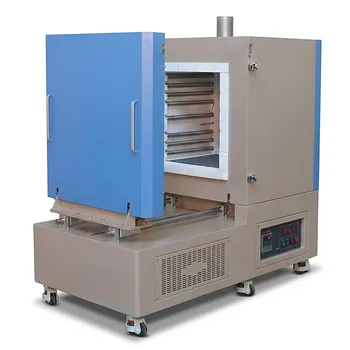
1200C Five Side Heating Muffle Furnace with Sliding Door 125L Volume High Temperature Heat Treatment System for Large Scale Sintering and Annealing