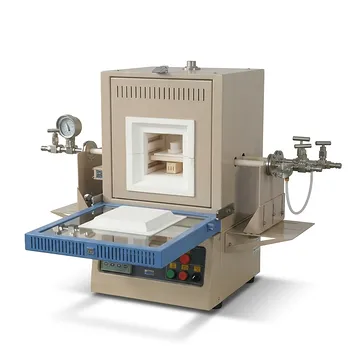
How does a high-temperature sintering furnace environment enhance NdFeB magnets? Achieve 98%+ density with precision.
Updated 3 months ago
The environment of a high-temperature sintering furnace is the fundamental catalyst for achieving the full densification and magnetic potential of NdFeB magnets. By providing a high-purity argon atmosphere and precise thermal regulation up to 1100 °C, the furnace prevents the degradation of reactive rare-earth components while facilitating a liquid phase sintering mechanism. This process allows the material to reach over 98% of its theoretical density, which is essential for maximizing remanence and the energy product.
Core Takeaway: A sintering furnace creates a protective, high-thermal-energy environment that transforms the neodymium-rich grain boundary phase into a liquid. This liquid phase eliminates porosity through capillary action and grain rearrangement, turning a porous compact into a high-performance, fully dense magnet.
Protecting the Sensitive Grain Boundary Phase
The Necessity of High-Purity Argon
Neodymium is highly reactive and will readily oxidize if exposed to oxygen at elevated temperatures. The furnace maintains a high-purity argon atmosphere to shield the neodymium-rich phase, ensuring it remains metallic rather than converting into an oxide.
Preventing Degradation of Magnetic Properties
If the furnace atmosphere is compromised, the formation of oxides would prevent the liquid phase from wetting the grains properly. This would result in poor densification and a significant loss in the magnet's final energy product.
Driving the Liquid Phase Mechanism
Formation of the Neodymium-Rich Liquid
As the furnace reaches approximately 1100 °C, the low-melting-point neodymium-rich phase transitions into a liquid state. This liquid acts as a transport medium that surrounds the hard magnetic $Nd_2Fe_{14}B$ grains.
Capillary Action and Densification
The liquid phase is drawn into micropores via capillary action, exerting a massive compressive force on the grains. This force drives grain rearrangement and the elimination of internal voids, allowing the magnet to surpass 98% of its theoretical density.
Thermal Field Uniformity and Grain Migration
The furnace provides a consistent thermal field that facilitates particle diffusion and grain boundary movement. Precise control of the heating rate and "soak" time ensures that these kinetic processes occur uniformly throughout the entire volume of the magnet.
Understanding the Trade-offs and Pitfalls
Grain Growth vs. Densification
While high temperatures promote the liquid phase and densification, excessive heat or prolonged exposure can trigger uncontrolled grain growth. Larger grains generally lead to a decrease in coercivity, meaning the furnace must balance temperature to achieve density without sacrificing magnetic stability.
The Risk of Improper Atmosphere Control
Using an oxidizing atmosphere, such as air, completely shifts the furnace's function from sintering to extraction. In such environments, the metallic components are converted into oxides (MRDO), which is useful for recycling rare earth elements but catastrophic for magnet manufacturing.
Cooling Rate Sensitivities
Just as the heating rate is critical, the cooling process determines the final microstructure. Rapid or poorly controlled cooling can lead to internal stresses or the formation of undesirable secondary phases at the grain boundaries.
How to Apply This to Your Production Goals
Recommendations Based on Technical Objectives
- If your primary focus is maximizing Remanence ($B_r$): Ensure the furnace is calibrated to reach the highest possible density (>98%) through precise liquid phase control.
- If your primary focus is high Coercivity ($H_{cj}$): Prioritize a tight temperature control curve to prevent grain growth while maintaining a clean, oxygen-free argon environment.
- If your primary focus is process consistency: Implement automated atmospheric sensors to detect trace oxygen levels that could prematurely oxidize the Nd-rich grain boundaries.
By masterfully controlling the interaction between the thermal field and the inert atmosphere, you transform a fragile green compact into a definitive industrial power component.
Summary Table:
| Furnace Feature | Technical Function | Impact on NdFeB Properties |
|---|---|---|
| High-Purity Argon | Prevents oxidation of Nd-rich phases | Maintains metallic integrity and energy product |
| Precise 1100°C Thermal Field | Facilitates neodymium-rich liquid phase | Drives capillary action to eliminate porosity |
| Uniform Heat Distribution | Promotes grain rearrangement | Achieves >98% theoretical density and remanence |
| Controlled Cooling | Manages grain boundary microstructure | Optimizes coercivity and minimizes internal stress |
Elevate Your Magnet Production with THERMUNITS
Achieving peak magnetic performance requires a flawless thermal environment. At THERMUNITS, a leading manufacturer of high-temperature laboratory equipment, we provide the precision technology needed for advanced material science. Our range of Atmosphere, Vacuum, Tube, and Hot Press furnaces is engineered to provide the high-purity argon shielding and thermal uniformity essential for superior NdFeB sintering.
Why choose THERMUNITS for your R&D?
- Maximum Densification: Reach over 98% theoretical density with expert thermal regulation.
- Oxidation Prevention: Reliable atmospheric control to protect sensitive rare-earth components.
- Comprehensive Solutions: From CVD/PECVD systems to Vacuum Induction Melting (VIM) and Rotary Kilns.
Optimize your heat treatment processes and secure your material properties today. Contact THERMUNITS experts now!
References
- Stefan Rathfelder, Carlo Burkhardt. Production of Permanent Magnets from Recycled NdFeB Powder with Powder Extrusion Moulding. DOI: 10.3390/jmmp8020081
Mentioned Products
- High Temperature Horizontal Electrical Assisted Sintering Furnace with 3KW Programmable Power Source for Advanced Ceramic Materials
- High Temperature 1000C Vacuum Furnace with 8 Inch ID Chamber for Material Sintering and Research Annealing
- High Temperature 1700C Vertical Tube Furnace for Powder Spherification and Material Sintering
- Ultra High Temperature Bench Top Muffle Furnace 1750C Sintering System with Kanthal Super Heating Elements and Precision Digital Control
- High Temperature Muffle Furnace with Alloy Chamber for Debinding and Sintering Applications
People Also Ask
- How does the temperature control precision of a high-temperature sintering furnace affect Na1+xLa1-xZr2O6-δ ceramics?
- Why is a high-temperature sintering furnace required for the preparation of Li(Nb,Ta)O3 precursors? Essential Insights
- How does a high-temperature sintering furnace contribute to the interfacial strengthening of SS316L and zirconia?
- What role does a sintering furnace play with silver paste? Essential Thermal Management for Power Device Packaging
- Why is a sintering furnace or Rapid Thermal Processing (RTP) equipment necessary for the formation of electrodes? Master Solar Ohmic Contacts.

Tech Team · ThermUnits
Last updated on Jun 02, 2026
Related Products
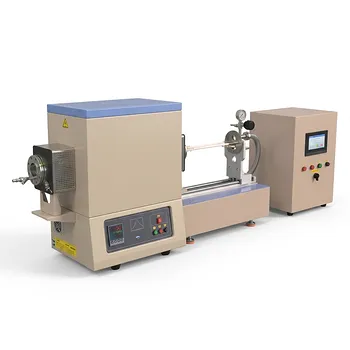
High Temperature Horizontal Electrical Assisted Sintering Furnace with 3KW Programmable Power Source for Advanced Ceramic Materials
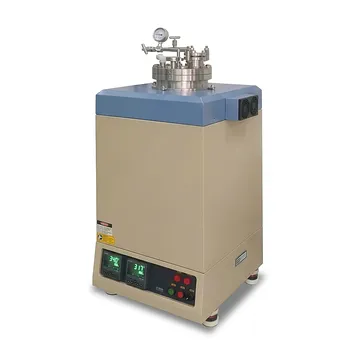
High Temperature 1000C Vacuum Furnace with 8 Inch ID Chamber for Material Sintering and Research Annealing

High Temperature 1700C Vertical Tube Furnace for Powder Spherification and Material Sintering
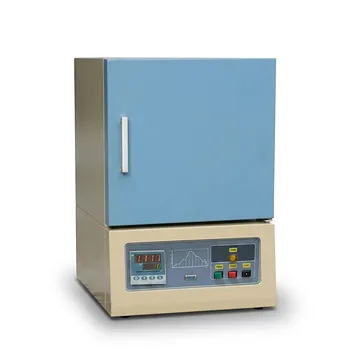
Ultra High Temperature Bench Top Muffle Furnace 1750C Sintering System with Kanthal Super Heating Elements and Precision Digital Control
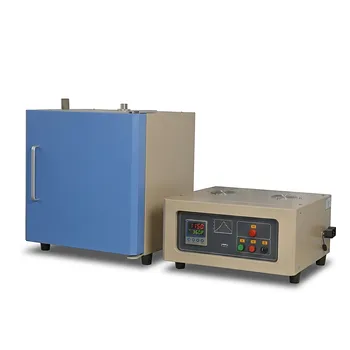
High Temperature Muffle Furnace with Alloy Chamber for Debinding and Sintering Applications
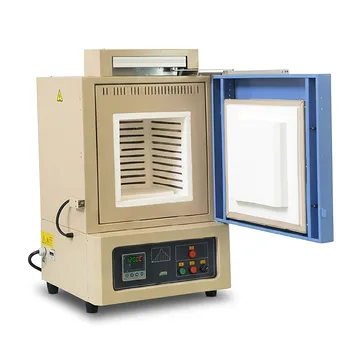
1200C High Temperature Muffle Furnace with Motorized Door and Automated PC Control for Industrial Sintering and Material Processing 27 Liter
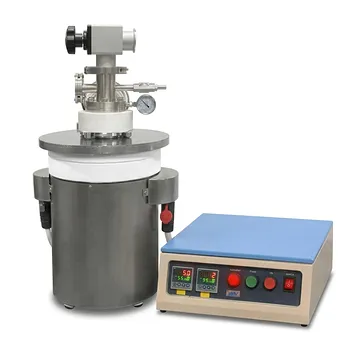
1100C High Temperature Vacuum Crucible Furnace with Quartz Chamber for Thermal Processing and Sintering
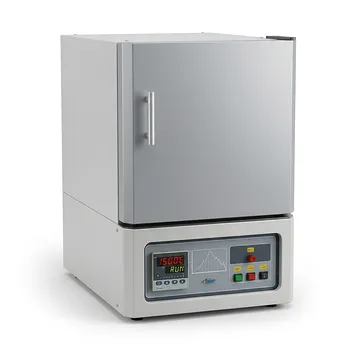
High Temperature 1500C Benchtop Muffle Furnace 3.6L Alumina Fiber Chamber Programmable Controller Sintering Annealing Carbonization Thermal Processing System

Compact High Temperature 1600C Tube Furnace with 50mm Alumina Tube and Vacuum Flanges for Material Sintering
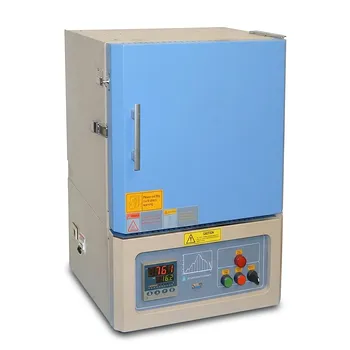
High Temperature 1700C Bench Top Muffle Furnace with Alumina Fiber Insulation and 3.6L Chamber Capacity for Precision Sintering and Heat Treatment
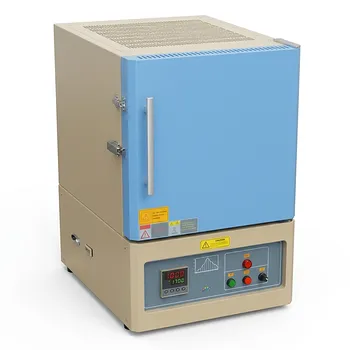
Large Bench Top 1700C High Temperature Muffle Furnace with 19L Chamber for Advanced Material Sintering and Annealing
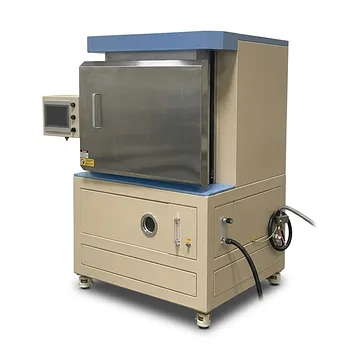
1650C High Temperature Atmosphere Controlled Box Furnace with 65L Chamber for Advanced Material Sintering and Industrial Heat Treatment
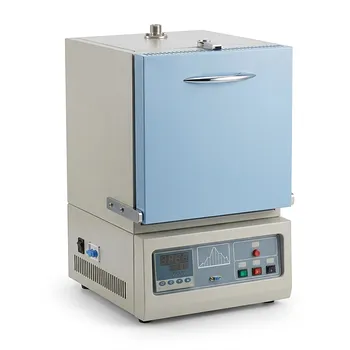
1750C Compact Muffle Furnace 1.7L Ultra High Temperature Laboratory Sintering System for Advanced Ceramics and Material Science Research
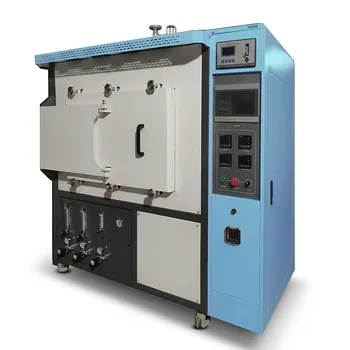
Roller Table Atmosphere Furnace 1500C High Temperature Battery Material Sintering System 112L Capacity
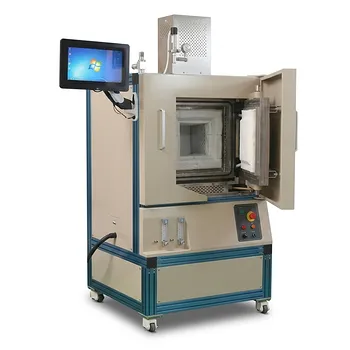
High Temperature Oxygen and Inert Atmosphere Controlled Furnace 8 Liter 1700C Sintering System for Advanced Materials RD
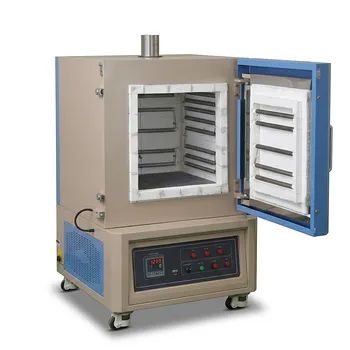
1200C High Temperature 125L Muffle Furnace 5 Side Heating for Large Batch Sintering with Optional Alloy Debinding Chamber
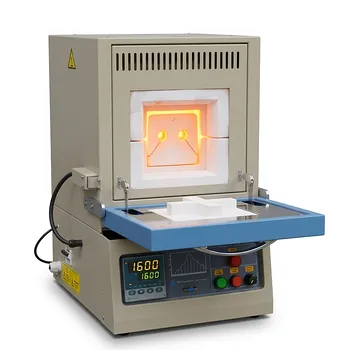
High Temperature Compact Muffle Furnace 1700 C with 30 Segment Programmable Controller and 1.7L Cubic Chamber
High Temperature 1800C Compact Muffle Furnace with Kanthal Super 1900 Heating Elements and 1.7L Alumina Chamber
Industrial Large Box Furnace 1700C 216L High Temp Muffle Sintering System