How does the temperature control precision of a high-temperature sintering furnace affect Na1+xLa1-xZr2O6-δ ceramics?
Updated 3 months ago
Precision temperature control is the deciding factor in whether $Na_{1+x}La_{1-x}Zr_2O_{6-\delta}$ ceramics function as high-performance proton conductors or fail as decomposed oxides. In these materials, a deviation of just 100°C—specifically moving from the ideal 1200°C to 1300°C—triggers catastrophic sodium volatilization, fundamentally shifting the atomic structure from a conductive double perovskite to an inactive pyrochlore.
Core Takeaway: For $Na_{1+x}La_{1-x}Zr_2O_{6-\delta}$ ceramics, temperature precision is not merely about quality; it is a requirement for phase existence. Strict thermal regulation at 1200°C preserves the sodium stoichiometry and perovskite lattice necessary for proton conductivity.
Phase Purity and Structural Integrity
Preserving the Perovskite Lattice
The primary role of precise temperature control is to solidify the A-site double perovskite phase.
At exactly 1200°C, the thermal energy is sufficient to drive the formation of the desired crystal structure without overstepping the material's chemical stability limits.
Preventing Phase Transformation
If the furnace lacks precision and allows temperatures to climb toward 1300°C, the material undergoes a radical transformation.
Significant sodium volatilization occurs at these higher temperatures, causing the material to collapse into a pyrochlore structure, which lacks the necessary conductivity mechanisms.
Microstructural Evolution and Densification
Managing Grain Growth Kinetics
High-precision furnaces allow for specific heating and cooling rates, typically around 4°C/min to 5°C/min.
These controlled rates are essential for managing grain growth, ensuring that particles rearrange and bond without creating the abnormal grain sizes that can embrittle the ceramic.
Eliminating Porosity
A stable isothermal environment provides the necessary driving force for material migration and the fusion of grain boundaries.
By maintaining a precise hold at the sintering temperature, the furnace effectively eliminates microscopic pores, leading to high densification and improved mechanical stability.
Preventing Thermal Stress
Precision control during the cooling phase is just as critical as the heating phase.
Gradual, programmed cooling prevents the formation of micro-cracks caused by thermal stress, ensuring the final ceramic body remains structurally sound for testing and application.
Understanding the Trade-offs: The Sintering Window
Density vs. Stoichiometry
There is a narrow "thermal window" for $Na_{1+x}La_{1-x}Zr_2O_{6-\delta}$ where densification and chemical stability overlap.
While higher temperatures generally promote higher densification and lower porosity, they simultaneously increase the risk of decomposition and loss of volatile elements like sodium.
The Risk of Overshooting
In less precise equipment, "temperature overshoot" during the initial ramp-up can be lethal to the sample.
Even a temporary spike above the set point can initiate surface de-sodiumization, creating a non-uniform material with a resistive outer shell and a conductive core.
How to Optimize Your Sintering Process
Selecting the right furnace parameters depends on your specific priority for the ceramic's final application.
- If your primary focus is Maximum Proton Conductivity: Maintain a strict 1200°C set point with a high-precision controller to prevent any sodium loss and preserve the perovskite phase.
- If your primary focus is Mechanical Strength and Density: Utilize a multi-stage programming profile with a slow ramp rate (4°C/min) and a long isothermal hold to maximize grain boundary fusion while staying below the 1300°C decomposition threshold.
- If your primary focus is Microstructural Uniformity: Prioritize a furnace with high spatial temperature uniformity to ensure the entire ceramic body reaches the same degree of densification simultaneously.
Achieving the ideal properties in $Na_{1+x}La_{1-x}Zr_2O_{6-\delta}$ requires a furnace that treats temperature not as a target range, but as a fixed chemical boundary.
Summary Table:
| Feature | Ideal (1200°C) | Deviation (>1300°C) | Impact on Quality |
|---|---|---|---|
| Crystal Structure | Stable Double Perovskite | Inactive Pyrochlore | Determines proton conductivity |
| Sodium Content | Stoichiometric Stability | Severe Volatilization | Affects chemical composition |
| Microstructure | High Density/Low Porosity | Abnormal Grain Growth | Influences mechanical strength |
| Thermal Stress | Controlled (4-5°C/min) | Rapid Fluctuations | Leads to micro-cracking |
Achieve Scientific Precision with THERMUNITS
For advanced materials like $Na_{1+x}La_{1-x}Zr_2O_{6-\delta}$, temperature isn't just a setting—it's a chemical boundary. THERMUNITS is a leading manufacturer of high-temperature laboratory equipment specifically designed for material science and industrial R&D.
We provide the extreme thermal stability and precision required to prevent phase decomposition and ensure material integrity. Our comprehensive range includes:
- Muffle, Vacuum, and Atmosphere Furnaces for precise stoichiometry control.
- Tube & Rotary Furnaces for uniform heat treatment.
- Hot Press & CVD/PECVD Systems for advanced thin-film and composite research.
- VIM (Vacuum Induction Melting) & Dental Furnaces for specialized applications.
Don't let temperature overshoot compromise your research. Contact THERMUNITS today to find the perfect thermal processing solution for your laboratory.
References
- Wenlong Huang, Wei Zhang. Mixed Conduction in A-Site Double-Perovskite Na1+xLa1-xZr2O6-δ Proton Conductors. DOI: 10.3390/ma17215211
Mentioned Products
- High Temperature Horizontal Electrical Assisted Sintering Furnace with 3KW Programmable Power Source for Advanced Ceramic Materials
- High Temperature 1000C Vacuum Furnace with 8 Inch ID Chamber for Material Sintering and Research Annealing
- High Temperature 1700C Vertical Tube Furnace for Powder Spherification and Material Sintering
- Ultra High Temperature Bench Top Muffle Furnace 1750C Sintering System with Kanthal Super Heating Elements and Precision Digital Control
- High Temperature Muffle Furnace with Alloy Chamber for Debinding and Sintering Applications
People Also Ask
- How does a high-temperature sintering furnace environment enhance NdFeB magnets? Achieve 98%+ density with precision.
- Why is a high-temperature sintering furnace required for the preparation of Li(Nb,Ta)O3 precursors? Essential Insights
- How does a high-temperature sintering furnace contribute to the interfacial strengthening of SS316L and zirconia?
- What role does a sintering furnace play with silver paste? Essential Thermal Management for Power Device Packaging
- Why is a sintering furnace or Rapid Thermal Processing (RTP) equipment necessary for the formation of electrodes? Master Solar Ohmic Contacts.

Tech Team · ThermUnits
Last updated on Jun 03, 2026
Related Products
High Temperature Horizontal Electrical Assisted Sintering Furnace with 3KW Programmable Power Source for Advanced Ceramic Materials
High Temperature 1000C Vacuum Furnace with 8 Inch ID Chamber for Material Sintering and Research Annealing

High Temperature 1700C Vertical Tube Furnace for Powder Spherification and Material Sintering
Ultra High Temperature Bench Top Muffle Furnace 1750C Sintering System with Kanthal Super Heating Elements and Precision Digital Control
High Temperature Muffle Furnace with Alloy Chamber for Debinding and Sintering Applications
1200C High Temperature Muffle Furnace with Motorized Door and Automated PC Control for Industrial Sintering and Material Processing 27 Liter
1100C High Temperature Vacuum Crucible Furnace with Quartz Chamber for Thermal Processing and Sintering
High Temperature 1500C Benchtop Muffle Furnace 3.6L Alumina Fiber Chamber Programmable Controller Sintering Annealing Carbonization Thermal Processing System

Compact High Temperature 1600C Tube Furnace with 50mm Alumina Tube and Vacuum Flanges for Material Sintering
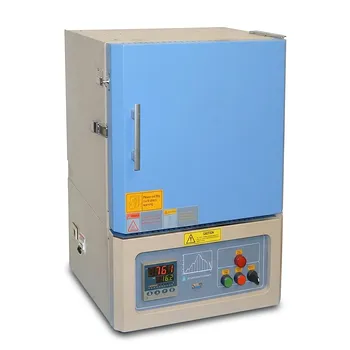
High Temperature 1700C Bench Top Muffle Furnace with Alumina Fiber Insulation and 3.6L Chamber Capacity for Precision Sintering and Heat Treatment
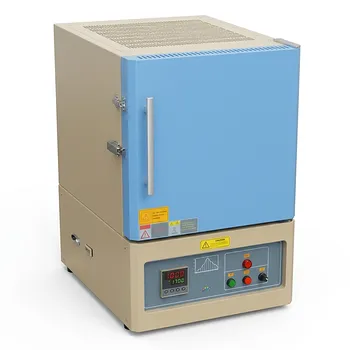
Large Bench Top 1700C High Temperature Muffle Furnace with 19L Chamber for Advanced Material Sintering and Annealing
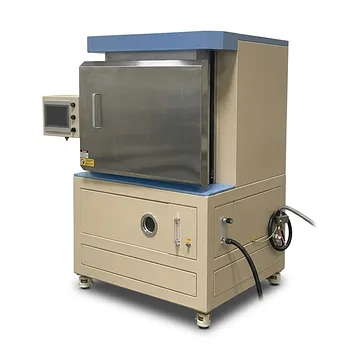
1650C High Temperature Atmosphere Controlled Box Furnace with 65L Chamber for Advanced Material Sintering and Industrial Heat Treatment
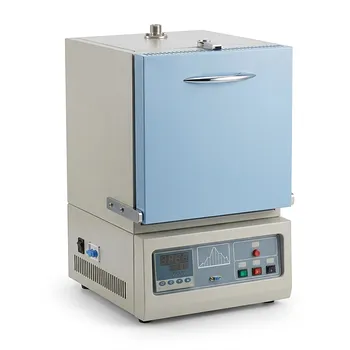
1750C Compact Muffle Furnace 1.7L Ultra High Temperature Laboratory Sintering System for Advanced Ceramics and Material Science Research
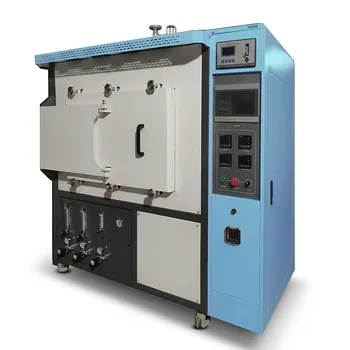
Roller Table Atmosphere Furnace 1500C High Temperature Battery Material Sintering System 112L Capacity
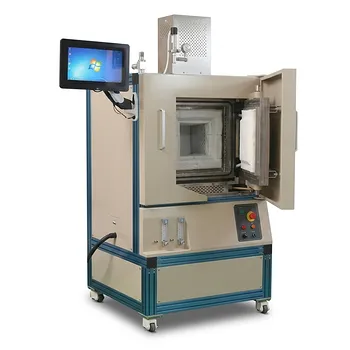
High Temperature Oxygen and Inert Atmosphere Controlled Furnace 8 Liter 1700C Sintering System for Advanced Materials RD
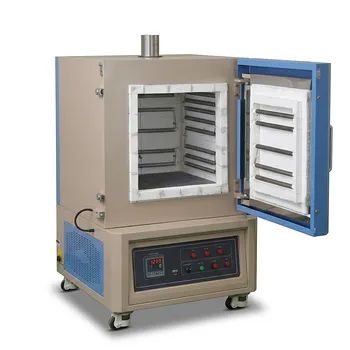
1200C High Temperature 125L Muffle Furnace 5 Side Heating for Large Batch Sintering with Optional Alloy Debinding Chamber
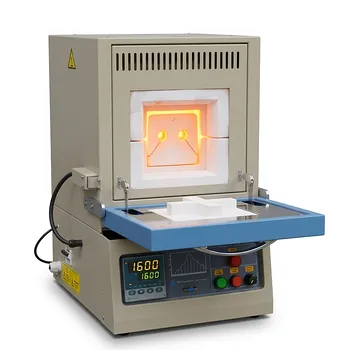
High Temperature Compact Muffle Furnace 1700 C with 30 Segment Programmable Controller and 1.7L Cubic Chamber
High Temperature 1800C Compact Muffle Furnace with Kanthal Super 1900 Heating Elements and 1.7L Alumina Chamber
Industrial Large Box Furnace 1700C 216L High Temp Muffle Sintering System