What are the advantages of Alumina Boats for MOF Pyrolysis? Ensure High Purity & Structural Integrity
Updated 3 months ago
High-purity alumina ceramic boats provide a chemically inert and thermally resilient environment essential for the precise transformation of titanium-based MOFs into advanced functional materials. At pyrolysis temperatures typically reaching 900°C or higher, these carriers ensure that the resulting titanium dioxide ($TiO_2$) remains free from container-derived contaminants that could compromise its structural or electronic integrity.
Core Takeaway: High-purity alumina is the preferred carrier for MOF pyrolysis because its exceptional chemical neutrality prevents interference with $TiO_2$ phase transitions and oxygen vacancy distributions, ensuring the derived material meets exact performance specifications.
Maintaining Chemical and Structural Purity
Prevention of Elemental Contamination
At the extreme temperatures required for Metal-Organic Framework (MOF) pyrolysis, many container materials become reactive or leach impurities. High-purity alumina remains non-reactive with both the MOF precursors and the resulting titanium dioxide, guaranteeing that no metallic or non-metallic foreign elements enter the sample.
Stability of the Titanium Dioxide Phase
The functional properties of $TiO_2$ are heavily dependent on its crystalline phase (such as anatase or rutile). Because alumina does not introduce external ions into the reaction, it prevents accidental catalysis or inhibition of these critical phase transitions during the heating cycle.
Preservation of Oxygen Vacancies
The concentration and distribution of oxygen vacancies are vital for the catalytic and electronic performance of titanium-based materials. Using high-purity alumina ensures that the container does not interfere with the chemical environment, allowing for the precise, intentional control of these vacancies during carbonization.
Optimization of Reaction Dynamics
Efficient Gas Exchange and Equilibrium
The open-boat geometry of alumina carriers allows for the efficient removal of small gas molecules generated during the pyrolysis of organic linkers. This constant removal by the carrier gas helps maintain reaction equilibrium and prevents the accumulation of unwanted gaseous byproducts within the sample bed.
High-Temperature Structural Integrity
Alumina exhibits superior refractoriness and structural strength at temperatures exceeding 1000°C. This prevents the boat from warping, cracking, or adhering to the sample, which is critical for maintaining experimental safety and ensuring the accurate collection of the final product.
Total Material Recovery
Because alumina does not react or bond with the titanium-based products, researchers can achieve near-total recovery of the synthesized material. This chemical "non-stick" property is essential for precise weighing and consistent yield analysis across multiple experimental runs.
Understanding the Trade-offs
Sensitivity to Thermal Shock
While high-purity alumina is thermally stable, it is susceptible to cracking if subjected to rapid temperature fluctuations. Users must implement controlled heating and cooling rates to avoid structural failure of the boat, which can jeopardize the sample and the furnace heating elements.
The Importance of "High-Purity" Grades
Standard ceramic boats may contain trace amounts of silica or iron, which can become mobile at temperatures above 800°C. To ensure the benefits described, researchers must specifically source high-purity (typically >99%) alumina to prevent these trace elements from migrating into the titanium-based MOF derivatives.
How to Apply This to Your Project
Selecting the Right Carrier for Your Goal
- If your primary focus is photocatalytic activity: Use high-purity alumina to ensure that the oxygen vacancy distribution and phase purity of your $TiO_2$ are not compromised by container impurities.
- If your primary focus is maximum yield and recovery: Prioritize alumina boats with a high-polish finish to prevent the adhesion of carbonized MOF products to the container walls.
- If your primary focus is high-throughput screening: Ensure your furnace ramp rates are calibrated to the thermal shock limitations of alumina to prevent frequent carrier replacement.
By choosing high-purity alumina carriers, you secure the chemical environment necessary to translate the complex architecture of titanium MOFs into high-performance functional oxides without interference.
Summary Table:
| Key Feature | Benefit for MOF Pyrolysis | Resulting Material Impact |
|---|---|---|
| Chemical Inertness | Prevents leaching of metallic impurities | High-purity electronic/catalytic properties |
| Phase Stability | No interference with TiO2 transitions | Accurate anatase or rutile crystal structures |
| High Refractoriness | Resists warping at temperatures >1000°C | Consistent heating and experimental safety |
| Non-stick Surface | Minimal adhesion to carbonized products | Near-total recovery and accurate yield analysis |
Maximize Your Material Research Precision with THERMUNITS
Achieving consistent results in MOF pyrolysis requires the highest standard of thermal control and material purity. THERMUNITS is a leading manufacturer of high-temperature laboratory equipment specifically designed for material science and industrial R&D. We provide the robust thermal environments necessary to translate complex chemical frameworks into high-performance functional materials.
Our Thermal Processing Solutions Include:
- Advanced Furnaces: Muffle, Vacuum, Atmosphere, Tube, Rotary, and Hot Press furnaces.
- Thin Film & Specialized Systems: CVD/PECVD systems, Dental Furnaces, and Vacuum Induction Melting (VIM).
- High-Purity Components: Thermal Elements and specialized laboratory heat treatment equipment designed for zero-contamination workflows.
Ready to enhance your lab's efficiency and material purity? Contact THERMUNITS today to discuss your specific high-temperature processing needs!
References
- Yueying Ma, Liancheng Zhao. Optimizing Photoelectrochemical UV Imaging Photodetection: Construction of Anatase/Rutile Heterophase Homojunctions and Oxygen Vacancies Engineering in MOF-Derived TiO2. DOI: 10.3390/molecules29133096
Mentioned Products
- 1800C Bench Top Muffle Furnace 18 Liters with Kanthal Super 1900 Heating Elements for High Purity Ceramic Sintering and Material Research
- High Temperature Compact Vacuum Tube Furnace 1750C Max 60mm OD Alumina Tube
- High Temperature 1700C 4 Channel Tube Furnace 1 Inch Alumina Tube for Hi-Throughput Annealing
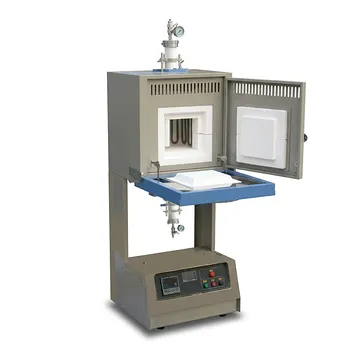
- Vertical Hybrid High Temperature Furnace 1500C Alumina Tube SOFC Fuel Cell Testing Laboratory Heat Treatment Research Equipment
People Also Ask
- Why is a benchtop muffle furnace essential for U3O8 micromaterials? Achieve precision stoichiometry and purity.
- What materials are typically used for heating elements in muffle furnaces? A Guide to Performance & Temperature Limits
- What role does a laboratory high-temperature muffle furnace play in the ash analysis phase of biomass co-firing research? [Guide]
- Why is a sintering furnace or Rapid Thermal Processing (RTP) equipment necessary for the formation of electrodes? Master Solar Ohmic Contacts.
- What function does argon serve in MOF melt-quenching? Prevent oxidation and ensure chemical integrity.

Tech Team · ThermUnits
Last updated on Jun 02, 2026
Related Products
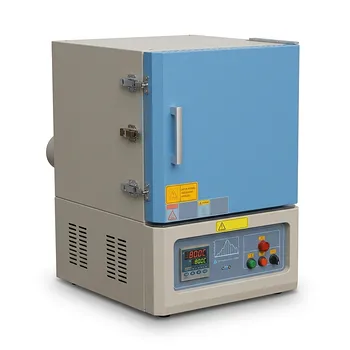
1800C Bench Top Muffle Furnace 18 Liters with Kanthal Super 1900 Heating Elements for High Purity Ceramic Sintering and Material Research
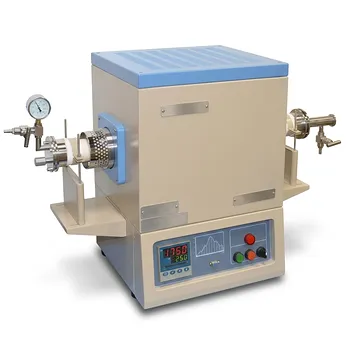
High Temperature Compact Vacuum Tube Furnace 1750C Max 60mm OD Alumina Tube
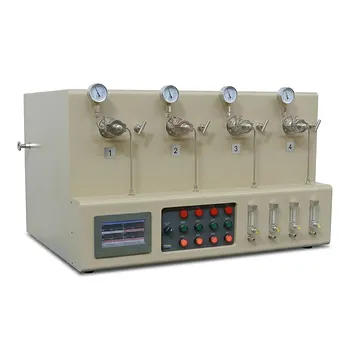
High Temperature 1700C 4 Channel Tube Furnace 1 Inch Alumina Tube for Hi-Throughput Annealing