What are the advantages of gold sheets in bismuth oxide calcination? Protect Sample Purity & Prevent Reactions.
Updated 3 months ago
The primary advantage of using high-purity gold sheets is their exceptional chemical inertness, which prevents reactive bismuth-based oxides from bonding with or leaching contaminants from furnace refractories. By acting as a stable barrier, gold ensures that the sample's chemical composition and stoichiometric integrity remain perfectly preserved throughout intensive thermal processing.
Core Takeaway: High-purity gold sheets serve as the ideal non-reactive interface for bismuth-oxide calcination, effectively eliminating the risk of cross-contamination from standard crucibles during high-temperature, long-duration cycles.
Addressing the High Reactivity of Bismuth
The Risk of Crucible Interaction
At elevated temperatures, bismuth-based oxides become highly aggressive and tend to react chemically with standard ceramic crucibles or furnace linings. Without a protective spacer, these reactions can lead to the sample fusing with the refractory material, making recovery difficult.
Maintaining Chemical Purity
If a sample reacts with its container, foreign elements like aluminum or silicon can migrate into the oxide lattice. Using high-purity gold prevents this migration, ensuring the final material reflects the exact intended chemical proportions without unwanted impurities.
Performance Under Extreme Conditions
Stability During Prolonged Heating
The protective benefits of gold are most critical during extended calcination periods, such as processes lasting longer than five hours. While other materials might degrade or react over time, gold maintains its physical and chemical boundaries.
Integrity at High Temperatures
Gold remains remarkably stable at temperatures around 770°C, a common range for synthesizing complex bismuth-based oxides. This stability allows researchers to achieve the necessary phase transitions without worrying about sample-substrate interference.
Understanding the Trade-offs
Thermal and Financial Constraints
While gold is chemically ideal, its use is limited by a melting point of approximately 1064°C, meaning it cannot be used for ultra-high temperature applications. Furthermore, the high material cost of gold requires researchers to manage and reuse these sheets carefully compared to inexpensive, disposable ceramic alternatives.
Physical Handling Requirements
Gold is a soft metal, meaning the sheets must be handled with precision to avoid tearing or folding. Ensuring the sheets remain flat and clean is essential to providing a consistent support surface for the powdered or pelletized oxide samples.
How to Apply This to Your Process
If you are weighing the use of specialized support materials for your synthesis, consider the following technical goals:
- If your primary focus is absolute sample purity: Use high-purity gold sheets to eliminate the risk of ceramic contamination during the heating cycle.
- If your primary focus is extended calcination (5+ hours): Gold is the necessary choice to prevent the sample from "eating" into the crucible surface over long durations.
- If your primary focus is cost-efficiency at low temperatures: Determine if the reactivity of your specific bismuth compound allows for cheaper alternatives, though gold remains the safest benchmark for high-quality results.
By leveraging gold as a passive spacer, you ensure that the physical properties you measure post-calcination are a result of your synthesis, not environmental contamination.
Summary Table:
| Feature | Benefit | Technical Detail |
|---|---|---|
| Chemical Inertness | Prevents Sample Bonding | Eliminates reactions between bismuth and ceramic crucibles. |
| Purity Protection | Zero Migration | Prevents aluminum or silicon impurities from entering the sample. |
| Thermal Stability | Reliable at 770°C | Maintains integrity during common oxide synthesis temperatures. |
| Time Efficiency | Long-Cycle Support | Ideal for extended calcination processes exceeding 5 hours. |
| Temperature Limit | Thermal Constraint | Maximum operating temperature limited by 1064°C melting point. |
Elevate Your Material Research with THERMUNITS
Achieving precise results in bismuth-oxide synthesis requires more than just the right support material—it requires world-class thermal equipment. THERMUNITS is a leading manufacturer of high-performance laboratory equipment for material science and industrial R&D.
We offer a comprehensive range of thermal processing solutions, including:
- Muffle, Vacuum, and Atmosphere Furnaces
- Tube, Rotary, and Hot Press Furnaces
- CVD/PECVD Systems & Dental Furnaces
- Vacuum Induction Melting (VIM) & Electric Rotary Kilns
Whether you are performing long-duration calcination or complex heat treatments, our equipment provides the stability and control your research demands. Contact our experts today to find the perfect thermal processing solution for your laboratory!
References
- Srečo D. Škapin, Danilo Suvorov. Phase relations in the Bi <sub>2</sub> O <sub>3</sub> –Mn <sub>2</sub> O <sub>3</sub> –M <sub>2</sub> O <sub>3</sub> (MFe, Al, and Ga) pseudoternary systems. DOI: 10.1111/jace.20323
Mentioned Products
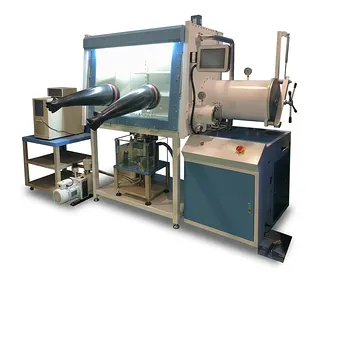
- High Temperature Induction Melting System with Integrated Ultra High Purity Glove Box for Metallic Alloy Processing
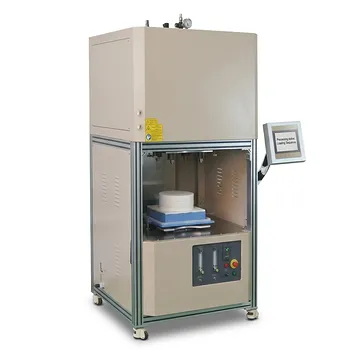
- High Temperature Vertical Atmosphere Controlled Furnace with Automatic Bottom Loading and 1700°C Capacity for Advanced Material Research
People Also Ask
- What are the key structural components that make up a Vacuum Induction Melting (VIM) furnace system? Full Guide
- How does the skin effect influence VIM frequency selection? Optimize Heat Penetration & Stirring Efficiency
- What technical advantages does Vacuum Induction Melting offer regarding alloy homogeneity and purity? Enhance Performance
- Why is a VIM furnace utilized for high-performance metals? Achieve Superior Material Purity and Integrity
- Explain the physical principle behind heat generation in a Vacuum Induction Melting (VIM) furnace: A Technical Guide

Tech Team · ThermUnits
Last updated on Jun 03, 2026