What technical advantages does Vacuum Induction Melting offer regarding alloy homogeneity and purity? Enhance Performance
Updated 5 months ago
Vacuum Induction Melting (VIM) provides unparalleled purity and homogeneity by combining atmospheric isolation with active electromagnetic mixing. It eliminates dissolved gases and volatile impurities while ensuring that alloying elements are distributed uniformly at an atomic level. This results in high-performance materials with superior mechanical properties, such as enhanced fracture toughness and fatigue resistance.
The core advantage of VIM lies in its ability to simultaneously strip away contaminants and force a perfectly uniform chemical distribution. By melting in a high-vacuum environment, the process prevents oxidation and degasses the melt, while induction-driven stirring ensures the final alloy is chemically consistent throughout.
Achieving Extreme Purity Through Atmospheric Control
Deep Degassing and Volatile Removal
VIM operates in a high-vacuum environment, often reaching pressures as low as $10^{-4}$ torr, which facilitates the "deep degassing" of the melt. This process effectively removes dissolved gases such as oxygen, nitrogen, and hydrogen, which are known to cause porosity and brittle inclusions. Additionally, the vacuum allows low-boiling-point volatile impurities to evaporate, further refining the metal's chemistry.
Prevention of Oxidation in Reactive Elements
Because the melting occurs in a vacuum, there is no atmospheric oxygen to react with the molten metal. This is critical when working with reactive alloying elements like titanium, aluminum, or chromium, which would otherwise oxidize instantly in air. Protecting these elements ensures the final alloy matches its intended chemical specification without the loss of expensive or critical components.
Reduction of Inclusions and Contaminants
By eliminating atmospheric reactions, VIM significantly reduces the formation of oxide and nitride inclusions. These microscopic "dirt" particles are often the starting points for structural failure. Removing them leads to cleaner materials with drastically improved ductility, fracture toughness, and fatigue life compared to traditional air-melted alternatives.
Ensuring Absolute Chemical Homogeneity
The Role of Electromagnetic Stirring
The same induction currents used to heat the metal generate powerful electromagnetic eddy currents within the melt. These forces create an automatic, vigorous stirring action that physically moves the molten metal in a continuous loop. This "induction stirring" is the primary mechanism that prevents the settling of heavier elements or the clumping of lighter ones.
Atomic-Level Compositional Control
The agitation caused by electromagnetic stirring ensures that multi-component elements achieve atomic-level uniform mixing. This is especially vital for complex superalloys used in aerospace and nuclear energy, where even a slight variation in chemistry can compromise the material's integrity. The result is a master alloy characterized by a precise and predictable chemical composition.
Fluidity and Temperature Management
VIM allows for precise control over superheat levels, which is the temperature of the melt above its melting point. Combined with constant stirring, this ensures the melt remains fluid and uniform in temperature. This thermal consistency is essential for high-quality subsequent processes, such as casting or ingot solidification, preventing "cold shuts" or uneven grain growth.
Understanding the Trade-offs
Crucible Interaction Risks
While VIM uses "non-contact" induction heating, the molten metal is still contained within a refractory crucible. At high temperatures and vacuum, the melt can react with the crucible lining, potentially introducing ceramic impurities. Choosing the correct refractory material is a critical and often expensive requirement to maintain the purity benefits of the vacuum.
Loss of Desired Volatile Elements
The same vacuum that removes impurities can also cause the evaporation of intended alloying elements with high vapor pressures, such as manganese or magnesium. This requires precise process timing and occasionally backfilling the chamber with inert gas (like Argon) to "clamp" the vapor pressure and prevent the loss of critical alloy components.
Operational Complexity and Cost
VIM is significantly more expensive than air-induction melting due to the capital cost of vacuum systems and the longer cycle times required for evacuation and cooling. It is generally reserved for high-value materials where the performance requirements—such as those in aerospace turbine blades—justify the additional investment.
Making the Right Choice for Your Goal
How to Apply This to Your Project
- If your primary focus is fatigue resistance in aerospace parts: Utilize VIM to eliminate the gas-induced porosity and oxide inclusions that typically serve as crack initiation sites.
- If your primary focus is reactive alloy development (e.g., TiAl or Fe-Al): Use VIM's vacuum environment specifically to prevent the rapid oxidation of aluminum and titanium during the melting phase.
- If your primary focus is chemical precision in master alloys: Rely on the electromagnetic stirring of VIM to ensure that alloying elements are distributed with atomic-level uniformity before casting.
Vacuum Induction Melting is the definitive solution for any application where the presence of atmospheric gases or chemical stratification would compromise the safety and performance of the final component.
Summary Table:
| Feature | Technical Mechanism | Benefit to Final Alloy |
|---|---|---|
| High-Vacuum Processing | Reaches pressures down to $10^{-4}$ torr | Deep degassing of $O_2$, $N_2$, and $H_2$; low porosity. |
| Induction Stirring | Electromagnetic eddy currents | Atomic-level chemical homogeneity & uniform distribution. |
| Atmospheric Isolation | Melting in oxygen-free environment | Prevents oxidation of reactive elements like Ti, Al, and Cr. |
| Superheat Control | Precise fluid temperature management | Thermal consistency for superior grain growth and casting. |
| Inclusion Reduction | Elimination of atmospheric reactions | Reduced oxides/nitrides for higher fatigue resistance. |
Unlock High-Performance Material Potential with THERMUNITS
Are you looking to eliminate material impurities and achieve perfect chemical uniformity for your aerospace or industrial R&D projects? THERMUNITS is a leading manufacturer of high-temperature laboratory equipment specifically designed for advanced material science.
From high-performance Vacuum Induction Melting (VIM) furnaces to Atmosphere, Tube, and Rotary furnaces, we provide the precision thermal processing solutions required for the most demanding applications. Our product line also includes:
- Laboratory Furnaces: Muffle, Vacuum, and Dental Furnaces.
- Advanced Systems: CVD/PECVD systems and Electric Rotary Kilns.
- Specialized Equipment: Hot Press furnaces and high-quality Thermal Elements.
Ready to upgrade your heat treatment capabilities? Contact our technical experts today to learn how THERMUNITS can provide the reliability and precision your research demands.
Mentioned Products
- 1900C Maximum High Temperature 7KW Vacuum Induction Melting System with 60mm Quartz Tube and Manual Temperature Control for Metallic Alloy Research
- Induction Melting Casting Furnace 1750C Vacuum High Frequency Metal Processing Unit
- High Temperature Induction Melting System with Integrated Ultra High Purity Glove Box for Metallic Alloy Processing
- Atmosphere Controlled Induction Melting Granulating Casting Furnace 1500C 5kg Capacity
- Atmosphere Controlled Induction Melting Casting System 1600C 10L Capacity
People Also Ask
- What is the primary role of a Vacuum Induction Melting furnace in the smelting of Fe-Cr-N alloys? Ensuring High Purity
- How does a Vacuum Induction Melting furnace heat materials while preventing atmospheric contamination? Achieve High Purity
- What are the key structural components that make up a Vacuum Induction Melting (VIM) furnace system? Full Guide
- How does the skin effect influence VIM frequency selection? Optimize Heat Penetration & Stirring Efficiency
- Explain the physical principle behind heat generation in a Vacuum Induction Melting (VIM) furnace: A Technical Guide

Tech Team · ThermUnits
Last updated on Apr 14, 2026
Related Products
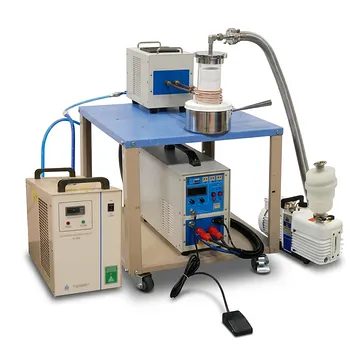
1900C Maximum High Temperature 7KW Vacuum Induction Melting System with 60mm Quartz Tube and Manual Temperature Control for Metallic Alloy Research
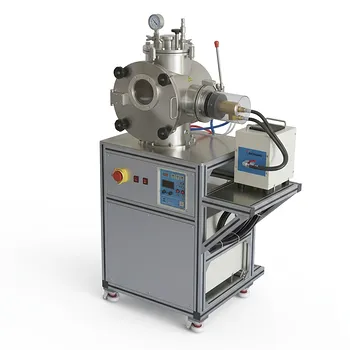
Induction Melting Casting Furnace 1750C Vacuum High Frequency Metal Processing Unit
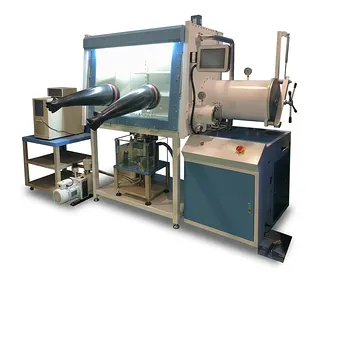
High Temperature Induction Melting System with Integrated Ultra High Purity Glove Box for Metallic Alloy Processing
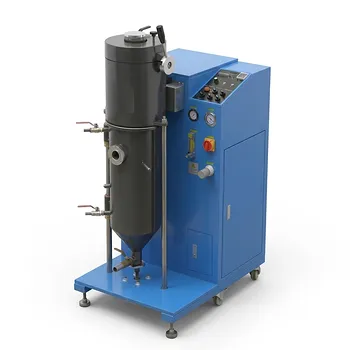
Atmosphere Controlled Induction Melting Granulating Casting Furnace 1500C 5kg Capacity
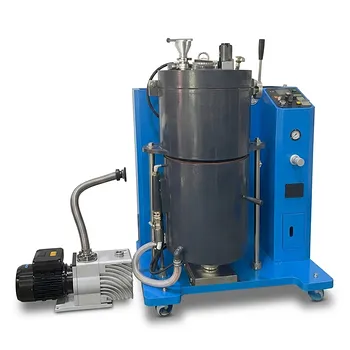
Atmosphere Controlled Induction Melting Casting System 1600C 10L Capacity
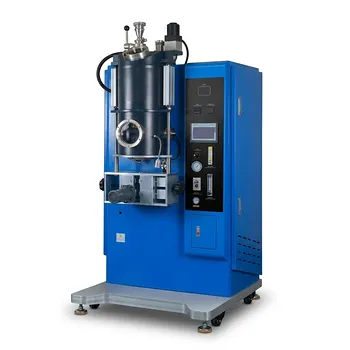
Atmosphere Controlled Continuous Casting Furnace with Secondary Charge Function for Induction Melting and Metal Alloy Wire Production
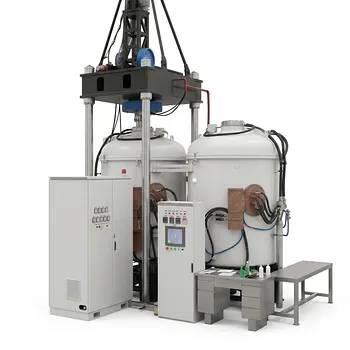
High Pressure 600T Vacuum Induction Hot Press Furnace for Advanced Material Heat Treatment and Sintering
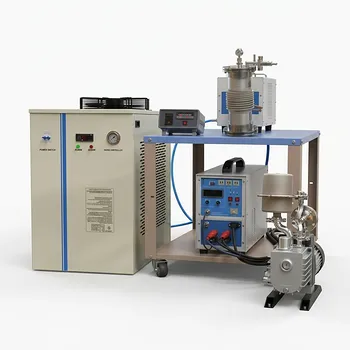
Induction Heating System with Temperature Control for High Temperature Vacuum Sintering and Melting
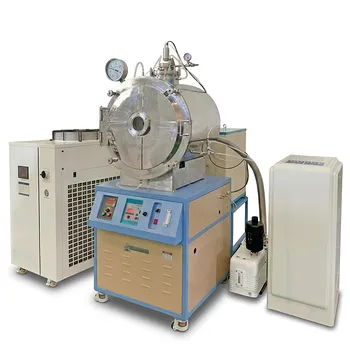
Ultra High Temperature Induction Heated Vacuum Furnace with Molten Salt Electrolysis Capability and 3000 Degree Precision Control
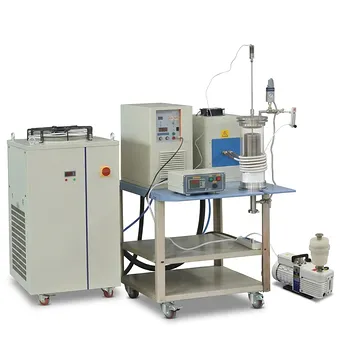
High Temperature Induction Melting System with Multi Cavity Crucible and 15KW Precision Digital Temperature Control
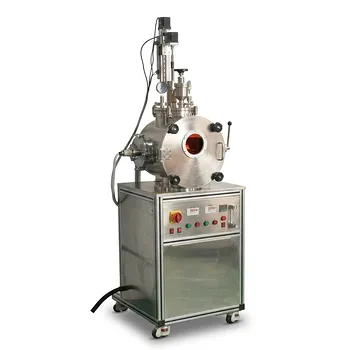
High Vacuum Melting Casting Furnace with Mechanical Stirring and Secondary Charge for Metallic Alloy Research
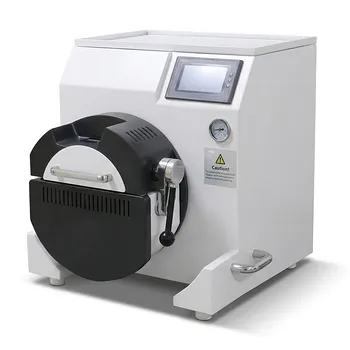
Desktop Induction Melting Furnace with Automatic Rotary Casting Function up to 1700C for Advanced Metal Alloy Research
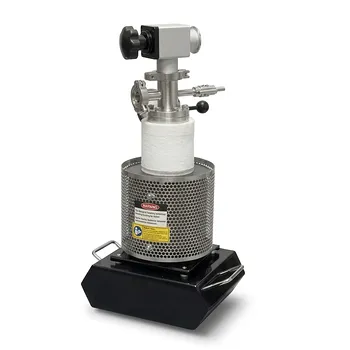
High Temperature 1100C Compact Top Loading Vertical Vacuum Tube Furnace for High Vacuum Noble Metal Melting and Material Research
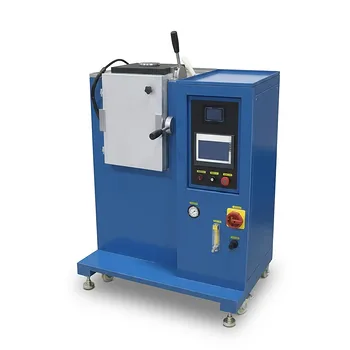
High Throughput Induction Melting and Casting Furnace for Superalloy Research 1700C Atmosphere Controlled Multi Sample System
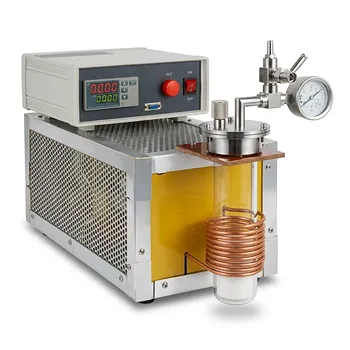
High Temperature Mini Induction Heating Furnace 1600C Laboratory Material Melting System
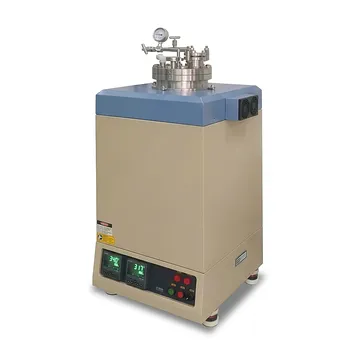
High Temperature 1000C Vacuum Furnace with 8 Inch ID Chamber for Material Sintering and Research Annealing
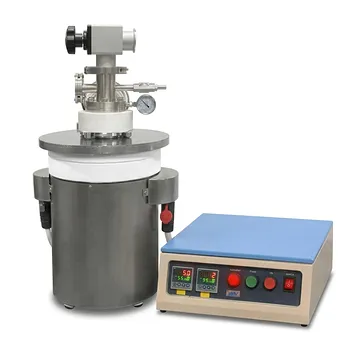
1100C High Temperature Vacuum Crucible Furnace with Quartz Chamber for Thermal Processing and Sintering
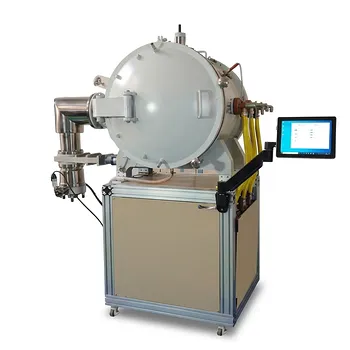
High Temperature Cold Wall Vacuum Furnace for Advanced Material Sintering and Annealing 1600C Heating Area 200x200x300mm
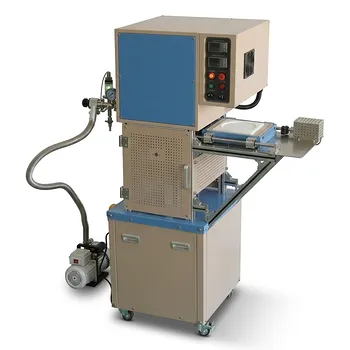
1200°C Bottom Loading Vacuum Furnace with Rapid Gas Cooling and 8.6 Inch Diameter Quartz Chamber
