What are the advantages of high-purity graphite crucibles for arsenic vacuum sublimation? Maximize Purity and Yield
Updated 3 months ago
High-purity graphite crucibles provide a critical combination of chemical neutrality and thermal precision during the arsenic vacuum sublimation process. These crucibles ensure that arsenic vapor does not react with the container, preserving the absolute purity of the raw material. Furthermore, their high thermal conductivity allows for uniform heating, which creates a stable sublimation rate and predictable process control.
The Core Takeaway: High-purity graphite crucibles serve as the ideal vessel for arsenic sublimation because they eliminate chemical contamination while offering the thermal consistency required for high-yield, high-purity results in vacuum environments.
Maintaining Absolute Material Purity
Chemical Inertness at Elevated Temperatures
High-purity graphite is exceptionally stable and does not react with arsenic vapor even at the extreme temperatures required for sublimation. This ensures that the final product remains free from metallic or carbonaceous impurities that might otherwise leach from lower-quality containers.
Resistance to Material Adhesion
Unlike standard ceramic vessels, graphite resists chemical interference and adhesion with the reactants. This prevents the crude arsenic from sticking to the crucible walls, ensuring a complete transition to the vapor phase and simplifying the cleaning process.
Integrity in Reducing Atmospheres
High-purity graphite maintains its chemical stability in both vacuum and reducing atmospheres above 1200°C. This makes it far more reliable than alternative materials that might degrade or outgas when subjected to the intense conditions of a vacuum furnace.
Enhancing Thermal Efficiency and Control
Superior Thermal Conductivity
The high thermal conductivity of graphite ensures that heat is distributed uniformly throughout the crude arsenic sample. This eliminates localized "hot spots" that could lead to uneven sublimation or unpredictable pressure spikes within the vacuum chamber.
Stabilizing the Sublimation Rate
Because the crucible heats the raw material evenly, the rate of sublimation remains constant throughout the cycle. This stability allows technicians to maintain tighter control over the entire thermal treatment process, leading to more consistent results.
Precision in Vacuum Environments
In vacuum or inert environments, high-purity graphite can maintain stable operations at temperatures as high as 2500°C. This thermal overhead provides a significant safety margin and allows for stepped heating controls that minimize material loss.
Understanding the Trade-offs
Sensitivity to Oxygen
While graphite is nearly indestructible in a vacuum, it is highly susceptible to oxidation if exposed to oxygen at high temperatures. Any leak in the vacuum system can result in the rapid degradation of the crucible.
Mechanical Fragility
Graphite crucibles are brittle and can be prone to thermal shock or mechanical cracking if handled roughly or cooled too rapidly. Professionals must use precise temperature ramping to ensure the longevity of the vessel.
Porosity and Outgassing
While high-purity grades are dense, some graphite can be porous, potentially trapping minute amounts of gasses. It is often necessary to "bake out" new crucibles under vacuum before the first production run to ensure no residual contaminants affect the arsenic.
Applying This to Your Process
Choosing the right grade of graphite is essential for optimizing your sublimation yields and maintaining equipment health.
- If your primary focus is Maximum Purity: Prioritize high-purity graphite with the lowest ash content to ensure zero chemical interaction with the arsenic vapor.
- If your primary focus is Process Scalability: Utilize the superior thermal conductivity of graphite to implement induction heating, which allows for faster cycle times and more uniform results.
- If your primary focus is Equipment Longevity: Implement stepped heating and cooling controls and maintain a strict vacuum to prevent oxidation and thermal stress on the crucible.
By leveraging the unique chemical and thermal properties of high-purity graphite, you can transform a volatile sublimation process into a stable, high-yield industrial operation.
Summary Table:
| Key Feature | Advantage for Arsenic Sublimation | Industrial Impact |
|---|---|---|
| Chemical Inertness | Prevents reactions with arsenic vapor | Ensures absolute material purity |
| High Thermal Conductivity | Distributes heat uniformly across sample | Stable and predictable sublimation rates |
| Non-Adhesion Surface | Prevents reactants from sticking to walls | Simplified cleaning and higher yield |
| High-Temp Stability | Stable up to 2500°C in vacuum/inert gas | Safety margin for intense thermal cycles |
| Resistance to Vacuum | Low outgassing in high-vacuum environments | Maintains integrity of the vacuum seal |
Elevate Your R&D with THERMUNITS Thermal Solutions
Precise arsenic sublimation requires more than just high-quality crucibles; it demands high-performance thermal environments. THERMUNITS is a premier manufacturer of high-temperature laboratory equipment specifically designed for material science and industrial R&D.
We offer a comprehensive selection of thermal processing systems, including:
- Vacuum & Atmosphere Furnaces for controlled sublimation environments.
- Vacuum Induction Melting (VIM) & CVD/PECVD Systems for advanced material synthesis.
- Tube, Rotary, and Hot Press Furnaces tailored to specialized heat treatments.
- High-Purity Thermal Elements and Laboratory Furnaces built for extreme durability.
Whether you are refining high-purity metals or developing new semiconductor precursors, our engineering expertise ensures your success.
Ready to optimize your heat treatment process?
Contact our technical experts today to find the perfect furnace solution for your application!
References
- Zibin Zuo, Baoqiang Xu. Removal of Antimony from Industrial Crude Arsenic by Vacuum Sublimation: Combination of Thermodynamics and Ab Initio Molecular Dynamics. DOI: 10.3390/met14050490
Mentioned Products
- 600°C Vertical Crucible Furnace with SS316 Alloy Reactor and 6 Port Vacuum Flange
- High Temperature Vertical Crucible Furnace with 22L Heating Chamber and 1200C Maximum Temperature
- Vertical Crucible Furnace 1000C High Temperature Laboratory Equipment 4.7 Inch Diameter Chamber SS316 Anti Corrosive Enclosure
- 1100C Crucible Melting Furnace with Stirring Function for Glovebox and Air Sensitive Alloy Research
- 1100C High Temperature Vacuum Crucible Furnace with Quartz Chamber for Thermal Processing and Sintering
People Also Ask
- How does a high vacuum sintering furnace at 600 Celsius affect the microstructure of Al-TiC composites? Expert Analysis
- How should the choice between a Quartz crucible and an Alumina crucible be made for La2O2S? Optimize Material Purity
- Why use ceramic crucibles for coal nano-hybrid heat treatment? Ensure Purity and Thermal Stability.
- What role does a vacuum tube furnace play in palladium membrane treatment? Achieve 600°C Stability & Prevent Brittle Phases
- Why is a high-temperature furnace with precise temperature control necessary for Ag8SiS6 alloy synthesis? Ensure Safety.

Tech Team · ThermUnits
Last updated on Jun 03, 2026
Related Products
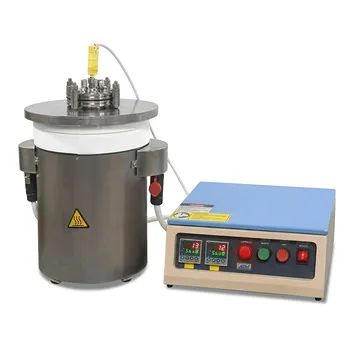
600°C Vertical Crucible Furnace with SS316 Alloy Reactor and 6 Port Vacuum Flange
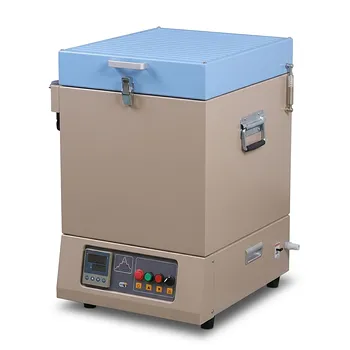
High Temperature Vertical Crucible Furnace with 22L Heating Chamber and 1200C Maximum Temperature
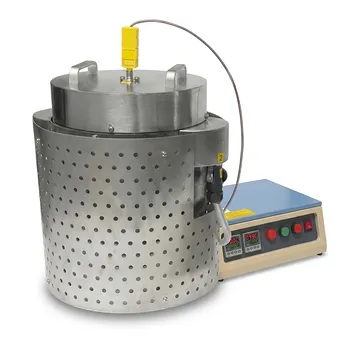
Vertical Crucible Furnace 1000C High Temperature Laboratory Equipment 4.7 Inch Diameter Chamber SS316 Anti Corrosive Enclosure
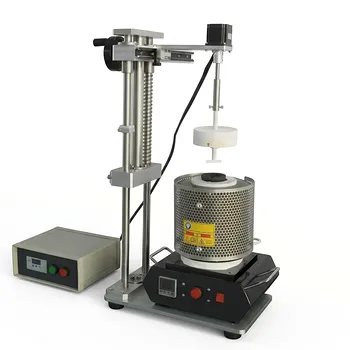
1100C Crucible Melting Furnace with Stirring Function for Glovebox and Air Sensitive Alloy Research
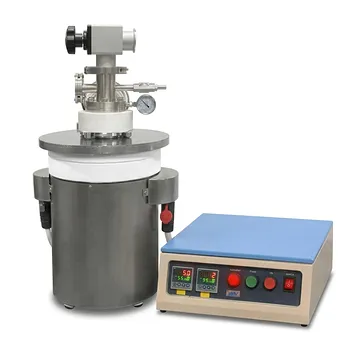
1100C High Temperature Vacuum Crucible Furnace with Quartz Chamber for Thermal Processing and Sintering
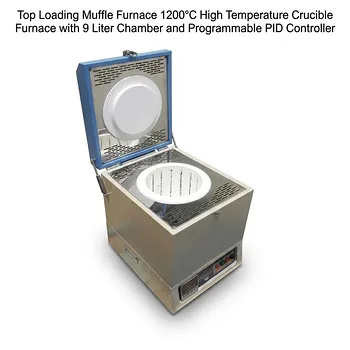
Top Loading Muffle Furnace 1200°C High Temperature Crucible Furnace with 9 Liter Chamber and Programmable PID Controller
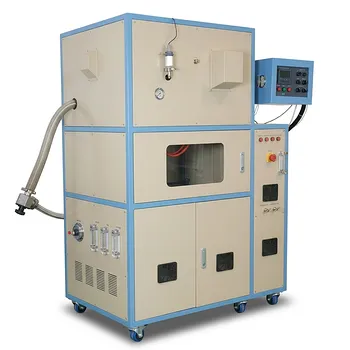
High Temperature Vacuum Graphitization Chamber Furnace 2800C Graphite Heating Elements Bottom Loading
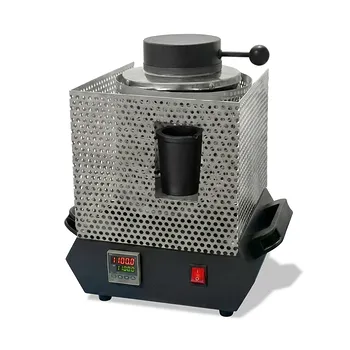
Compact Crucible Melting Furnace 1100C Programmable Temperature Controller Metal Sintering Equipment