What are the material advantages of ceramic crucibles or porcelain boats when processing sludge samples? Ensure Purity
Updated 3 months ago
Ceramic crucibles and porcelain boats are the industry standard for sludge processing because they maintain absolute structural integrity and chemical neutrality at temperatures reaching 800°C. These materials prevent sample contamination and ensure that every milligram of recovered biochar or calcined catalyst is a true reflection of the original sample rather than a byproduct of container degradation.
Core Takeaway: Ceramic containers provide the essential combination of chemical inertness and high thermal conductivity required to ensure experimental purity and precise yield calculations during high-temperature sludge pyrolysis and calcination.
Thermal Integrity and Chemical Neutrality
Resistance to High-Temperature Reactions
At temperatures as high as 800°C, standard containers might oxidize or leach trace elements into a sample. Ceramic materials remain chemically inert, meaning they do not react with complex sludge components or catalysts during the heating process.
Preservation of Sample Purity
Because these vessels do not introduce impurities, the chemical profile of the final product remains untainted. This is particularly critical during catalyst calcination at 550°C or higher, where even minute contamination could alter the catalyst's effectiveness.
Consistent Internal Heating
Ceramic materials possess high thermal conductivity, which is vital for processing dense sludge samples. This property ensures that heat is distributed evenly throughout the vessel, allowing the sample interior to reach the target temperature at the same rate as the exterior.
Operational Precision and Data Reliability
Accuracy in Yield Calculations
One of the primary goals of sludge pyrolysis is the collection of biochar and the calculation of its mass yield. Since ceramic boats do not lose mass or react with the atmosphere, the post-process weight measurements are highly accurate, facilitating precise yield calculations.
Stability Across Diverse Atmospheres
Ceramic crucibles maintain their properties whether the process occurs in an air atmosphere or under the specific conditions required for pyrolysis. This versatility makes them a reliable tool for a wide range of thermal decomposition and calcination experiments.
Facilitation of Material Collection
The smooth, non-reactive surface of porcelain boats makes it significantly easier to recover the entire sample after processing. This minimizes loss during the collection of biochar, ensuring that the data reflects the total volume of converted material.
Understanding the Trade-offs
Thermal Shock Sensitivity
While ceramics are stable at high temperatures, they are susceptible to thermal shock if heated or cooled too rapidly. Sudden temperature fluctuations can lead to micro-cracking or structural failure, potentially compromising the experiment.
Mechanical Fragility
Unlike metal alloys, porcelain and ceramic are brittle and can chip or break if mishandled during the loading or cleaning phases. Users must balance their superior chemical resistance with a more careful handling protocol compared to robust but reactive metal containers.
How to Apply This to Your Project
Selecting the Right Vessel for Your Goal
To maximize the success of your sludge processing or calcination experiments, choose your container based on your specific analytical requirements.
- If your primary focus is biochar yield accuracy: Utilize ceramic boats to ensure no mass is lost or added through container-sample interactions during high-heat pyrolysis.
- If your primary focus is catalyst purity: Opt for porcelain vessels to prevent the introduction of metallic impurities that could poison the catalyst during calcination.
- If your primary focus is heating uniformity: Leverage the high thermal conductivity of ceramics to ensure dense sludge samples are processed consistently from the surface to the core.
By prioritizing the chemical inertness of ceramic materials, you guarantee that your experimental results are a product of your science, not your equipment.
Summary Table:
| Feature | Advantage | Key Outcome |
|---|---|---|
| Chemical Inertness | Non-reactive at 800°C+ | Prevents sample contamination and catalyst poisoning |
| Thermal Conductivity | Uniform heat distribution | Ensures consistent processing of dense sludge interiors |
| Mass Stability | No weight loss during heating | Facilitates high-precision biochar yield calculations |
| Surface Texture | Smooth, non-stick finish | Allows for full recovery of processed material samples |
Elevate Your Research with THERMUNITS Thermal Solutions
To achieve flawless results in sludge processing, catalyst calcination, and material synthesis, you need equipment that matches your scientific precision. THERMUNITS is a leading manufacturer of high-temperature laboratory equipment, providing the reliability required for advanced material science and industrial R&D.
Our comprehensive product line includes:
- Furnaces: Muffle, Vacuum, Atmosphere, Tube, Rotary, and Hot Press furnaces.
- Advanced Systems: CVD/PECVD systems, Dental Furnaces, and Vacuum Induction Melting (VIM) furnaces.
- Specialized Equipment: Electric rotary kilns, Thermal Elements, and custom laboratory heat treatment solutions.
Whether you are scaling up biochar production or refining high-purity catalysts, our expert team is ready to provide the thermal processing solution tailored to your needs.
Contact our technical experts today to optimize your lab's performance!
References
- Yujian Li, Zhengfang Ye. Modulatory Role of Biochar Properties and Environmental Risk of Heavy Metals by Co-Pyrolysis of Fenton Sludge and Biochemical Sludge. DOI: 10.3390/toxics12010057
Mentioned Products
- 1100C High Temperature Vacuum Crucible Furnace with Quartz Chamber for Thermal Processing and Sintering
- 600°C Vertical Crucible Furnace with SS316 Alloy Reactor and 6 Port Vacuum Flange
- High Temperature Vertical Crucible Furnace with 22L Heating Chamber and 1200C Maximum Temperature
- Vertical Crucible Furnace 1000C High Temperature Laboratory Equipment 4.7 Inch Diameter Chamber SS316 Anti Corrosive Enclosure
- 1100C Crucible Melting Furnace with Stirring Function for Glovebox and Air Sensitive Alloy Research
People Also Ask
- How does the temperature control precision of a high-temperature sintering furnace affect Na1+xLa1-xZr2O6-δ ceramics?
- How does a high-temperature sintering furnace environment enhance NdFeB magnets? Achieve 98%+ density with precision.
- Why is a high-temperature sintering furnace required for the preparation of Li(Nb,Ta)O3 precursors? Essential Insights
- How does a high-temperature sintering furnace contribute to the interfacial strengthening of SS316L and zirconia?
- What is the function of high-vacuum furnaces in (Mo2/3V1/3)n+1AlCn MAX phase synthesis? Ensure Purity & Diffusion.

Tech Team · ThermUnits
Last updated on Jun 02, 2026
Related Products
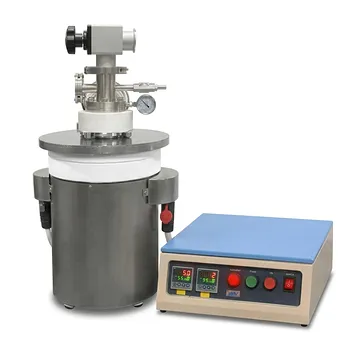
1100C High Temperature Vacuum Crucible Furnace with Quartz Chamber for Thermal Processing and Sintering
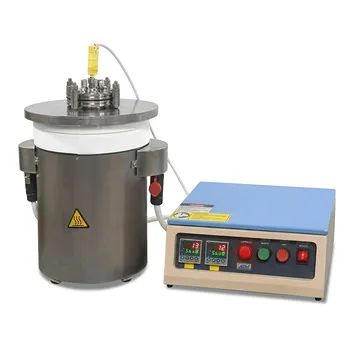
600°C Vertical Crucible Furnace with SS316 Alloy Reactor and 6 Port Vacuum Flange
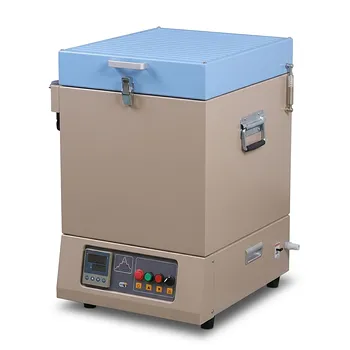
High Temperature Vertical Crucible Furnace with 22L Heating Chamber and 1200C Maximum Temperature
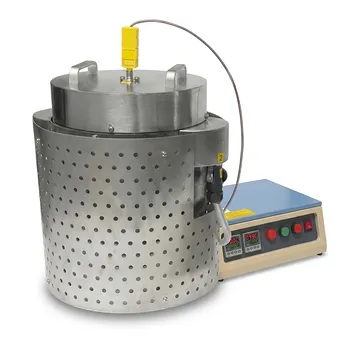
Vertical Crucible Furnace 1000C High Temperature Laboratory Equipment 4.7 Inch Diameter Chamber SS316 Anti Corrosive Enclosure
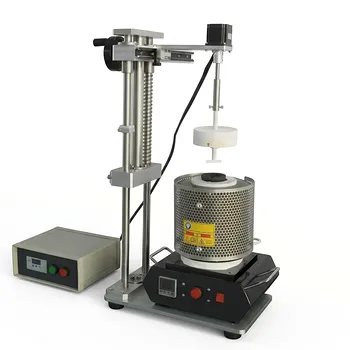
1100C Crucible Melting Furnace with Stirring Function for Glovebox and Air Sensitive Alloy Research
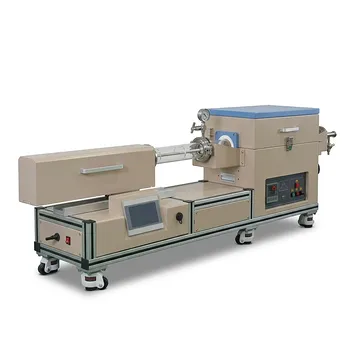
1200C Sliding Internal Crucible Tube Furnace for Controlled Atmosphere Thin Film Deposition and Material Sublimation Research
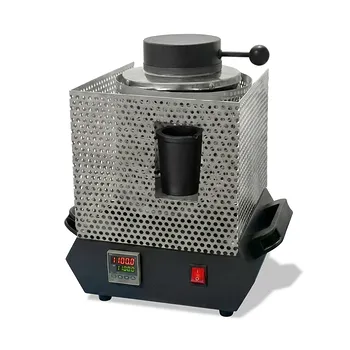
Compact Crucible Melting Furnace 1100C Programmable Temperature Controller Metal Sintering Equipment