What are graphite crucible functions in W-Cu infiltration? Key to Superior Material Purity
Updated 3 months ago
High-purity graphite crucibles are the essential vessels for tungsten-copper infiltration. They act as a high-temperature refractory container capable of withstanding environments up to 1400°C, providing the necessary thermal conductivity and chemical stability to ensure the metal melt remains pure. Crucially, they offer a precise, flat support surface that allows liquid copper to migrate into the tungsten skeleton via a combination of gravity and capillary action.
The high-purity graphite crucible serves as both a physical stabilizer and a chemical barrier, ensuring that the tungsten-copper composite achieves its intended density and purity without reacting with its environment at extreme temperatures.
High-Temperature Containment and Thermal Management
Structural Integrity at 1400°C
The infiltration of tungsten-copper composites requires temperatures that far exceed the melting point of copper. High-purity graphite remains structurally sound at 1400°C, acting as a reliable housing for the dense tungsten skeleton and the copper material.
Superior Thermal Conductivity
Graphite's excellent thermal conductivity allows for rapid and uniform heat distribution throughout the melt. This ensures that the copper reaches a consistent liquid state quickly, preventing localized cooling that could lead to incomplete infiltration or structural voids.
Thermal Shock Resistance
The process involves significant temperature shifts that can cause brittle materials to crack. High-purity graphite is selected for its ability to withstand these thermal cycles without fracturing, protecting the integrity of the composite during the heating and cooling phases.
Ensuring Chemical Purity and Composite Integrity
Prevention of Metal Contamination
At elevated temperatures, many container materials react with molten metals, leaching impurities into the final product. High-purity graphite is chemically stable and does not contaminate the copper melt, which is vital for maintaining the electrical and thermal properties of the W-Cu composite.
High Chemical Inertness
The "high-purity" designation is critical because it minimizes the presence of trace elements within the graphite itself. Because the material is chemically inert, it prevents unwanted chemical reactions that could alter the precisely engineered ratio of the metal matrix.
Non-Wetting Characteristics
Graphite typically exhibits non-wetting properties with various metal melts. This characteristic ensures that the molten copper flows into the tungsten skeleton rather than adhering to the crucible walls, maximizing material yield and simplifying the removal of the finished part.
Supporting the Infiltration Dynamics
Flat Support for Process Stability
The geometry of the crucible's interior is a functional component of the manufacturing process. A perfectly flat support surface is required to ensure the tungsten skeleton remains stationary as the infiltration begins.
Facilitating Gravity and Capillary Flow
Infiltration relies on the controlled movement of liquid copper. The graphite crucible provides the stable environment necessary for gravity to pull the liquid downward while capillary forces draw the copper into the microscopic pores of the tungsten skeleton.
Precision in Final Geometry
By providing a stable and heat-resistant mold, the crucible helps the W-Cu composite maintain its near-net shape. This reduces the need for extensive post-process machining, which is difficult due to the hardness of tungsten.
Understanding the Trade-offs
Sensitivity to Oxidation
While graphite is highly resistant to heat, it is susceptible to oxidation if exposed to oxygen at high temperatures. To prevent the crucible from degrading or "burning off," the infiltration process must typically be conducted in a vacuum or a controlled inert gas atmosphere.
Porosity and Life Cycles
Even high-purity graphite has a degree of inherent porosity. Over multiple uses, trace amounts of metal may eventually penetrate the surface, potentially leading to gradual degradation of the crucible or minor cross-contamination if used for different alloy grades.
Carbon Pickup Risks
Although generally stable for W-Cu processes, in certain extreme induction heating scenarios, a very small amount of carbon may migrate into the melt. While this can sometimes be used to enhance material properties (like forming fine carbides), it must be strictly monitored to avoid embrittlement of the copper phase.
Applying This to Your Infiltration Process
How to Apply This to Your Project
- If your primary focus is material purity: Prioritize high-purity graphite with low ash content to eliminate the risk of trace element leaching into the copper.
- If your primary focus is process consistency: Use crucibles with precision-machined flat bases to ensure uniform capillary action across the entire tungsten skeleton.
- If your primary focus is crucible longevity: Perform all high-temperature stages in a strict vacuum or hydrogen-reduced atmosphere to prevent graphite oxidation.
By serving as both a stable thermal environment and a chemically neutral vessel, the high-purity graphite crucible ensures the successful fusion of tungsten and copper into a high-performance composite.
Summary Table:
| Core Function | Technical Benefit | Impact on Quality |
|---|---|---|
| Thermal Stability | Resists temperatures up to 1400°C | Ensures structural integrity of the metal skeleton |
| Chemical Purity | High inertness & low ash content | Prevents contamination of the copper melt matrix |
| Surface Dynamics | Non-wetting properties | Facilitates smooth metal flow and easy part removal |
| Fluid Management | Flat support & capillary action | Guarantees uniform infiltration and density |
| Geometric Precision | Near-net shape containment | Minimizes difficult post-process machining |
Elevate Your Material Research with THERMUNITS
Precision in tungsten-copper infiltration requires not just the right crucible, but a perfectly controlled thermal environment. As a leading manufacturer of high-temperature laboratory equipment, THERMUNITS provides the advanced technology needed for high-performance material science and industrial R&D.
Whether you need Vacuum or Atmosphere Furnaces to prevent graphite oxidation, or Tube and Muffle Furnaces for precise heat treatment, our solutions are engineered for excellence. We also offer Hot Press Furnaces, CVD/PECVD systems, Rotary Kilns, and Vacuum Induction Melting (VIM) equipment to meet your most demanding thermal processing requirements.
Ready to optimize your lab's efficiency and material purity? Contact our technical experts today to find the ideal furnace solution for your infiltration and heat treatment needs.
References
- Aljaž Ivekovič, Jef Vleugels. Liquid-copper infiltration and characterization of additively manufactured W-lattice structures. DOI: 10.1016/j.jallcom.2024.178411
Mentioned Products
- 600°C Vertical Crucible Furnace with SS316 Alloy Reactor and 6 Port Vacuum Flange
- High Temperature Vertical Crucible Furnace with 22L Heating Chamber and 1200C Maximum Temperature
- Vertical Crucible Furnace 1000C High Temperature Laboratory Equipment 4.7 Inch Diameter Chamber SS316 Anti Corrosive Enclosure
- 1100C Crucible Melting Furnace with Stirring Function for Glovebox and Air Sensitive Alloy Research
- 1100C High Temperature Vacuum Crucible Furnace with Quartz Chamber for Thermal Processing and Sintering
People Also Ask
- How does a high vacuum sintering furnace at 600 Celsius affect the microstructure of Al-TiC composites? Expert Analysis
- How should the choice between a Quartz crucible and an Alumina crucible be made for La2O2S? Optimize Material Purity
- Why use ceramic crucibles for coal nano-hybrid heat treatment? Ensure Purity and Thermal Stability.
- What role does a vacuum tube furnace play in palladium membrane treatment? Achieve 600°C Stability & Prevent Brittle Phases
- Why is a high-temperature furnace with precise temperature control necessary for Ag8SiS6 alloy synthesis? Ensure Safety.

Tech Team · ThermUnits
Last updated on Jun 02, 2026
Related Products
600°C Vertical Crucible Furnace with SS316 Alloy Reactor and 6 Port Vacuum Flange
High Temperature Vertical Crucible Furnace with 22L Heating Chamber and 1200C Maximum Temperature
Vertical Crucible Furnace 1000C High Temperature Laboratory Equipment 4.7 Inch Diameter Chamber SS316 Anti Corrosive Enclosure
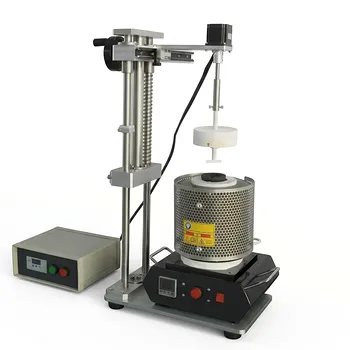
1100C Crucible Melting Furnace with Stirring Function for Glovebox and Air Sensitive Alloy Research
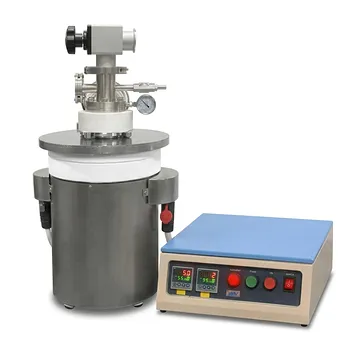
1100C High Temperature Vacuum Crucible Furnace with Quartz Chamber for Thermal Processing and Sintering
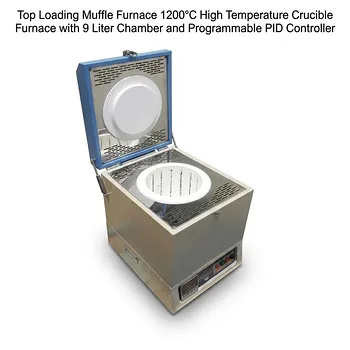
Top Loading Muffle Furnace 1200°C High Temperature Crucible Furnace with 9 Liter Chamber and Programmable PID Controller
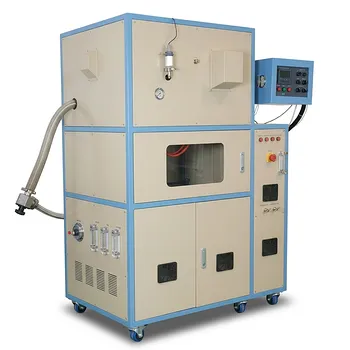
High Temperature Vacuum Graphitization Chamber Furnace 2800C Graphite Heating Elements Bottom Loading
Compact Crucible Melting Furnace 1100C Programmable Temperature Controller Metal Sintering Equipment