What are the primary modes of heat transfer inside a muffle furnace chamber? Optimize Thermal Efficiency
Updated 5 months ago
Heat transfer inside a muffle furnace chamber is driven primarily by radiation and convection. At temperatures exceeding 600°C, thermal radiation becomes the dominant mechanism, as the heated muffle walls emit intense infrared energy directly onto the workpiece. Convection provides a supporting role by circulating gas molecules to distribute heat, while conduction is limited to the physical contact points between the sample and its supporting structure.
To achieve precise thermal processing, a muffle furnace relies on isolating the sample from heating elements to ensure a clean environment. The efficiency of this process depends on the transition from convective heating at lower temperatures to radiation-dominant heating at high temperatures.
The Mechanics of Heat Generation and Migration
Joule Heating and Energy Source
The process begins with Joule heating, where alternating current passes through resistive heating elements. These elements generate the initial thermal energy required to raise the chamber's internal temperature to industrial or laboratory specifications.
Conduction Through Refractory Walls
Before heat reaches the chamber, it must travel through the furnace's refractory materials. This occurs via conduction, moving the thermal energy from the embedded heating elements through the solid walls of the muffle.
The Role of the Muffle Barrier
The "muffle" acts as a critical barrier that prevents the sample from coming into direct contact with the heating source. This isolation ensures that the atmosphere remains controlled and free from combustion byproducts, soot, or electrical interference.
Primary Transfer Modes within the Chamber
The Dominance of Radiation at High Temperatures
Radiation is the most significant transfer mode in a muffle furnace once temperatures exceed 600°C. The inner walls of the muffle act as a blackbody, emitting electromagnetic waves that transfer energy directly to the sample surface without requiring a medium.
Convection as the Distributive Force
Within the enclosed chamber, air or specialized gas molecules carry heat as they circulate. This convection helps to bridge thermal gaps and ensures that energy is distributed into the recessed areas of complex workpieces that might be shielded from direct radiation.
The Secondary Role of Conduction
Inside the chamber, conduction is the least significant mode of transfer. It is restricted to the contact points where the sample or crucible touches the internal shelves or floor of the muffle.
Understanding the Trade-offs and Limitations
Thermal Lag and Response Time
Because the muffle furnace relies on heating a secondary wall before the energy reaches the sample, there is a distinct thermal lag. This means the chamber temperature may take longer to stabilize compared to direct-heat methods, requiring patience during the "soak" phase of a cycle.
Temperature Gradient Risks
While muffle furnaces are designed for uniformity, the lack of forced-air circulation in many models can lead to cold spots. If a sample is too large or placed too close to the door, the convective and radiative balance may be disrupted, leading to uneven processing.
Atmosphere Sensitivity
Since the chamber is isolated, gas exchange is often limited. While this prevents contamination, it also means that any off-gassing from the sample itself can build up within the muffle, potentially affecting the material properties if not properly vented.
How to Apply This to Your Project
Making the Right Choice for Your Goal
- If your primary focus is High-Temperature Uniformity: Ensure the furnace is allowed to "soak" at the target temperature for several minutes to allow radiation to saturate the sample from all directions.
- If your primary focus is Contamination Prevention: Utilize the muffle's isolation properties to process sensitive materials that would otherwise react with heating element alloys or combustion gases.
- If your primary focus is Rapid Heating Cycles: Be aware that the refractory walls create thermal inertia; you should account for the time it takes for heat to conduct through the muffle walls before the chamber reaches its set point.
By mastering the balance between radiation and convection, you can ensure consistent, high-quality results in even the most sensitive thermal applications.
Summary Table:
| Heat Transfer Mode | Mechanism | Temperature Significance |
|---|---|---|
| Radiation | Infrared energy emitted from muffle walls | Dominant mechanism above 600°C |
| Convection | Circulation of gas/air molecules | Primary for heat distribution at lower temps |
| Conduction | Physical contact between sample and floor | Minimal; occurs only at contact points |
| Joule Heating | Electrical resistance in heating elements | The initial source of thermal energy |
Elevate Your Research with Precision Thermal Solutions
Achieving perfect temperature uniformity requires more than just heat—it requires mastering the balance of radiation and convection. THERMUNITS is a leading manufacturer of high-temperature laboratory equipment, providing the precision and reliability needed for advanced material science and industrial R&D.
Our comprehensive range of thermal processing solutions includes:
- Muffle, Vacuum, and Atmosphere Furnaces
- Tube and Rotary Furnaces
- Hot Press Furnaces and CVD/PECVD Systems
- Dental Furnaces and Electric Rotary Kilns
- Vacuum Induction Melting Furnaces (VIM) and Thermal Elements
Ensure consistent, high-quality results for your most sensitive heat treatment applications. Contact THERMUNITS today to discuss your specific requirements with our technical experts!
Mentioned Products
- 1200C Muffle Furnace 12x8x5 7.2L Heating Chamber with Quartz Observation Window and Vent Port
- High Temperature 1200C Muffle Furnace 27L Volume 12x12x12 Chamber with Programmable PID Controller for Laboratory Material Science
- 1750C Compact Muffle Furnace 1.7L Ultra High Temperature Laboratory Sintering System for Advanced Ceramics and Material Science Research
- 1200C High Temperature 125L Muffle Furnace 5 Side Heating for Large Batch Sintering with Optional Alloy Debinding Chamber
- Ultra High Temperature Bench Top Muffle Furnace 1750C Sintering System with Kanthal Super Heating Elements and Precision Digital Control
People Also Ask
- What is the function of an experimental muffle furnace in the conversion of FeOOH to α-Fe2O3? Optimize Phase Transition
- Why is a muffle furnace required for MoO2@HCNF pre-oxidation? Crucial Steps for High-Performance Composites
- What is the function of a high-temperature Muffle furnace in removing residual solvents? Essential Bismuth Synthesis
- What is the function of Muffle furnace calcination? Essential steps for Pr-doped SrFeMoO6 Perovskite synthesis.
- What are the primary functions of a Muffle furnace in oxide calcination? Achieve high purity and phase control.

Tech Team · ThermUnits
Last updated on Apr 14, 2026
Related Products
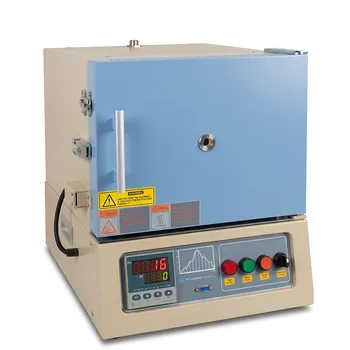
1200C Muffle Furnace 12x8x5 7.2L Heating Chamber with Quartz Observation Window and Vent Port
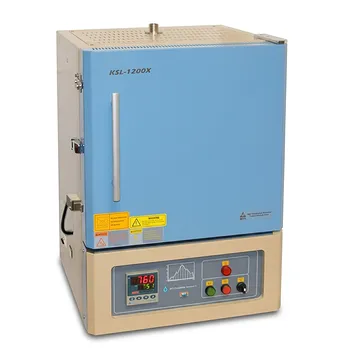
High Temperature 1200C Muffle Furnace 27L Volume 12x12x12 Chamber with Programmable PID Controller for Laboratory Material Science
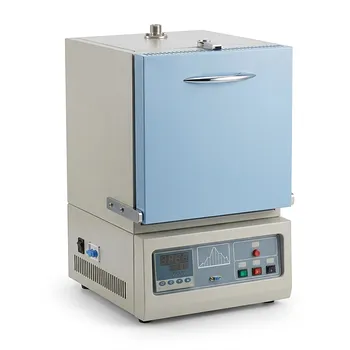
1750C Compact Muffle Furnace 1.7L Ultra High Temperature Laboratory Sintering System for Advanced Ceramics and Material Science Research
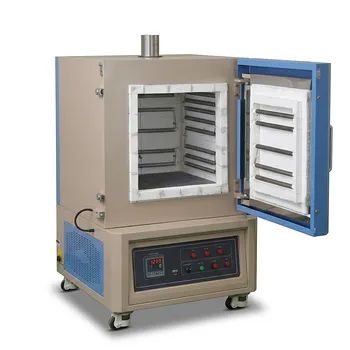
1200C High Temperature 125L Muffle Furnace 5 Side Heating for Large Batch Sintering with Optional Alloy Debinding Chamber
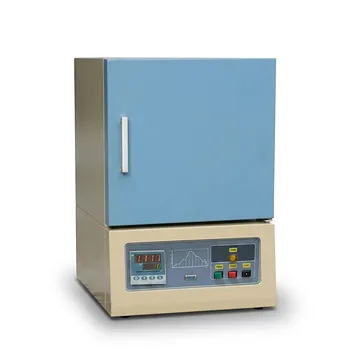
Ultra High Temperature Bench Top Muffle Furnace 1750C Sintering System with Kanthal Super Heating Elements and Precision Digital Control
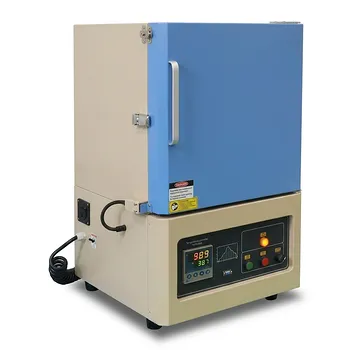
1200°C High Temperature Muffle Furnace 19L Chamber with 50 Segment Programmable Controller
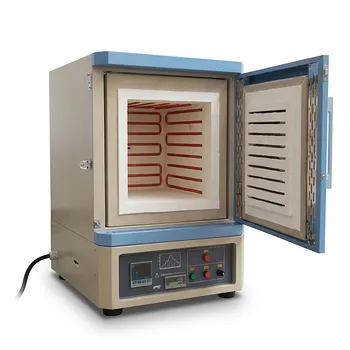
Five Side Heating Muffle Furnace 1200C High Uniformity 64L Chamber 16x16x16 Inch Industrial Heat Treatment
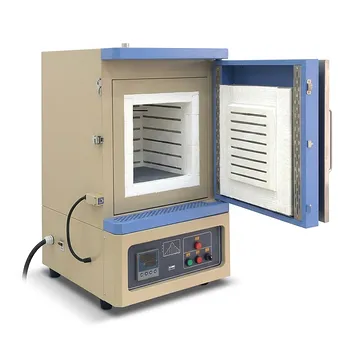
Five Side Heating Muffle Furnace High Purity Alumina Fiber 27L Chamber 1200C High Temperature Thermal Processing System for Sintering Annealing and Materials Research
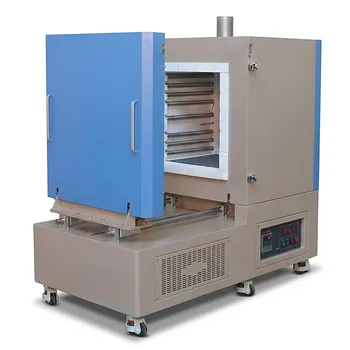
1200C Five Side Heating Muffle Furnace with Sliding Door 125L Volume High Temperature Heat Treatment System for Large Scale Sintering and Annealing
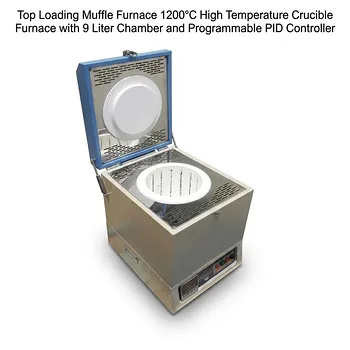
Top Loading Muffle Furnace 1200°C High Temperature Crucible Furnace with 9 Liter Chamber and Programmable PID Controller
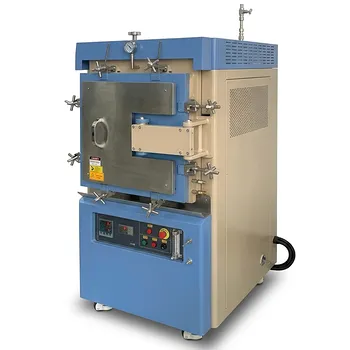
Atmosphere Controlled Muffle Furnace 1700C Maximum Temperature 80L High Capacity Vacuum Inert Gas Box Furnace
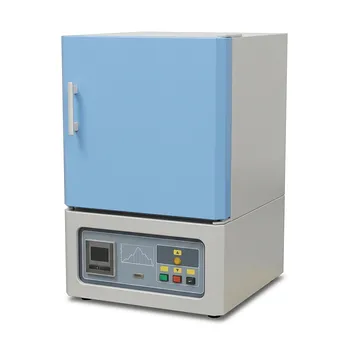
1800C Bench Top Muffle Furnace with Kanthal Super 1900 Heating Elements and 3.6L Alumina Fiber Chamber
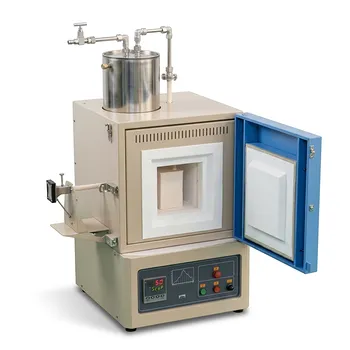
High Temperature Bench Top Muffle Furnace 1700C with Integrated Evaporating Particle Collection and 8x8x8 Alumina Fiber Chamber
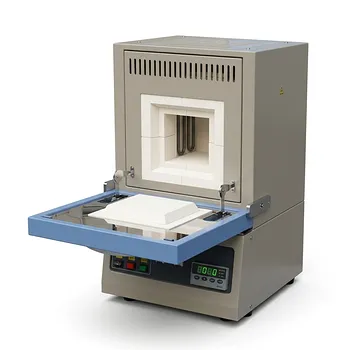
Five Sided Heating Muffle Furnace High Uniformity 1200C Lab Box Furnace 27L Alumina Fiber Chamber
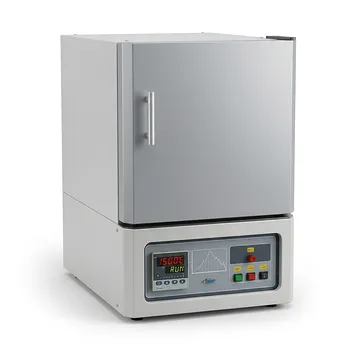
High Temperature 1500C Benchtop Muffle Furnace 3.6L Alumina Fiber Chamber Programmable Controller Sintering Annealing Carbonization Thermal Processing System
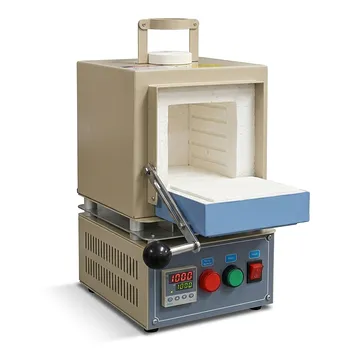
Compact 1000C Muffle Furnace with Programmable Controller and 2 Inch Top Port for Vacuum and Atmosphere Material Research
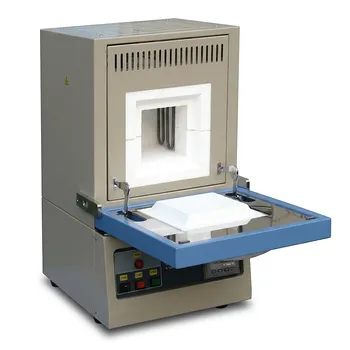
High Temperature 1800C Compact Muffle Furnace with Kanthal Super 1900 Heating Elements and 1.7L Alumina Chamber
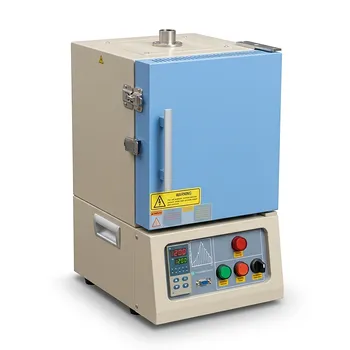
1200°C Small Box Furnace 4.2 Liter Programmable Muffle Furnace with High Purity Alumina Insulation and PID Control
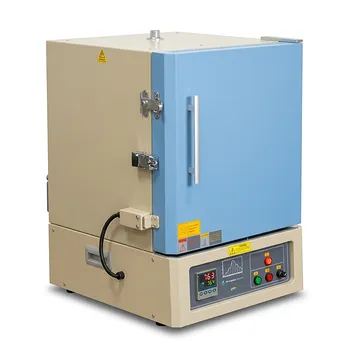
Large Capacity 1200C Muffle Furnace 64 Liter Chamber with Digital PID Controller and Built In Venting Port