What are the roles of atomic hydrogen and methyl radicals in MPCVD diamond growth? Master High-Quality Synthesis
Updated 5 months ago
The synthesis of high-quality diamond via MPCVD relies on a delicate chemical balance between etching and deposition. Atomic hydrogen acts as the primary sculptor and stabilizer, selectively removing non-diamond carbon and maintaining the surface structure. Simultaneously, methyl radicals ($CH_3$) serve as the fundamental building blocks, providing the carbon source necessary to extend the diamond lattice.
To achieve high-quality diamond growth, the process must maintain a high concentration of atomic hydrogen to favor $sp^3$ (diamond) bonding over $sp^2$ (graphite) bonding. While methyl radicals provide the material for growth, atomic hydrogen ensures that only the intended crystalline structure survives.
The Multi-Faceted Role of Atomic Hydrogen
Selective Etching of Graphitic Carbon
In the high-energy environment of a microwave plasma, carbon can deposit in various forms, including graphite ($sp^2$) and diamond ($sp^3$). Atomic hydrogen is highly reactive and selectively etches graphitic carbon at a significantly faster rate than diamond. This continuous cleaning process ensures that any non-diamond impurities are removed before they can be buried in the growing crystal.
Surface Stabilization and Bond Capping
Diamond surfaces are naturally unstable due to "dangling bonds" that would normally cause the surface to collapse into a graphitic layer. Atomic hydrogen terminates these dangling bonds, effectively "capping" the surface and preserving the $sp^3$ tetrahedral structure. This stabilization allows the diamond to remain crystalline even as new layers are added.
Creation of Active Growth Sites
For growth to occur, a hydrogen atom must be removed from the diamond surface to create an open site. Through a process called hydrogen abstraction, an atomic hydrogen radical in the gas phase pulls a hydrogen atom off the surface. This creates a surface radical site, a localized vacancy where a carbon-bearing precursor can finally attach.
The Methyl Radical as the Structural Precursor
Gas-Phase Formation via Abstraction
The growth process typically begins with a small percentage of methane ($CH_4$) in a hydrogen-rich plasma. Atomic hydrogen reacts with the methane, abstracting a hydrogen atom to form the methyl radical ($CH_3$). This radical is the primary chemical species responsible for transporting carbon from the gas phase to the diamond surface.
Adsorption and Carbon Incorporation
Once a surface radical site is created by atomic hydrogen, the methyl radical adsorbs onto that vacancy. Because the surface is already stabilized in an $sp^3$ configuration, the methyl radical aligns with the existing lattice. Over time, further hydrogen abstraction and chemical rearrangements incorporate the carbon atom fully into the diamond framework.
Maintaining High Crystallinity
The interplay between methyl radicals and atomic hydrogen results in high crystallinity even at moderate growth rates. Because the $CH_3$ radicals are only able to bond effectively to sites that have been "prepared" and "cleaned" by hydrogen, the resulting material exhibits superior purity. This allows for the deposition of diamond films that are several micrometers thick per hour while maintaining structural integrity.
Understanding the Trade-offs
The Growth Rate vs. Quality Paradox
Increasing the concentration of methane generally increases the density of methyl radicals, which can lead to faster growth rates. However, if the concentration of atomic hydrogen is insufficient to etch the accompanying $sp^2$ carbon, the film quality will degrade. Finding the "sweet spot" between precursor delivery and surface cleaning is the primary challenge in MPCVD.
Thermal Management Constraints
The production of high concentrations of atomic hydrogen requires significant microwave power, which generates intense heat. If the substrate temperature is not precisely controlled, the balance between etching and deposition shifts. Excessive heat can lead to thermal graphitization, where the diamond lattice reverts to graphite despite the presence of hydrogen.
Optimizing the Growth Environment for Your Objectives
To achieve the best results in MPCVD diamond synthesis, you must tailor the ratio of atomic hydrogen to methyl radicals based on your specific application.
- If your primary focus is Optical Clarity or Quantum Grade Purity: Maintain a high hydrogen-to-methane ratio (typically 1% methane or less) to ensure maximum etching of defects, even if it results in slower growth.
- If your primary focus is Rapid Tool Coating or Heat Sinks: Slightly increase the methane concentration to boost the methyl radical flux, accepting a potential increase in micro-inclusions for the sake of thickness.
- If your primary focus is Large-Area Uniformity: Prioritize plasma stability and substrate temperature uniformity to ensure that the hydrogen abstraction rate remains constant across the entire growth surface.
The synergy between the selective etching of atomic hydrogen and the precise deposition of methyl radicals is what transforms a simple gas mixture into the hardest known bulk material.
Summary Table:
| Species | Primary Function | Key Mechanism | Impact on Growth |
|---|---|---|---|
| Atomic Hydrogen | Sculptor & Stabilizer | Selectively etches $sp^2$ carbon; caps dangling bonds | Ensures high purity and $sp^3$ structure |
| Methyl Radical | Structural Building Block | Adsorbs onto active sites to extend the lattice | Provides the carbon source for deposition |
| Hydrogen Abstraction | Site Activation | Removes surface H atoms to create vacancies | Enables methyl radical attachment |
Elevate Your Advanced Material Research with THERMUNITS
As a leading manufacturer of high-temperature laboratory equipment for material science and industrial R&D, THERMUNITS understands the precision required for high-quality CVD diamond synthesis and heat treatment.
We offer a comprehensive range of thermal processing solutions, including:
- Advanced CVD/PECVD Systems designed for precise gas-phase control.
- Muffle, Vacuum, Atmosphere, and Tube Furnaces for diverse research needs.
- Specialized Equipment like Hot Press furnaces, Dental Furnaces, and Vacuum Induction Melting (VIM) systems.
Whether you are scaling up industrial production or conducting fundamental research, our equipment provides the thermal stability and reliability you need to succeed.
Contact our experts today to optimize your lab setup!
Mentioned Products
- Cylindrical Resonator MPCVD Machine System for Microwave Plasma Chemical Vapor Deposition and Lab Diamond Growth
- 915MHz MPCVD Diamond Machine Microwave Plasma Chemical Vapor Deposition System Reactor
- High Temperature 1200C Automatic Sliding Dual Zone Tube Furnace for 2D Transition Metal Dichalcogenides Growth and Material Sublimation Research
- 1200C Sliding Tube Furnace for Rapid Thermal Processing and CVD Graphene Growth with 100mm OD Capacity
- High Temperature 1700C Vertical Split Tube Furnace for Material Quenching and Single Crystal Growth
People Also Ask
- How does the high concentration of atomic hydrogen in MPCVD benefit diamond growth? The Key to Gem-Grade Quality.
- What are the typical operating pressure ranges and vacuum requirements for MPCVD systems? Optimize Your Material Growth
- What technical parameters are critical for optimizing the growth of single-crystal diamonds in MPCVD systems? Expert Guide
- What are the technical advantages of the electrodeless plasma design in MPCVD systems? Purity & Precision in Synthesis
- How does the versatility of gas compatibility in MPCVD systems compare to filament-based CVD methods? Purity & Doping.

Tech Team · ThermUnits
Last updated on Apr 14, 2026
Related Products
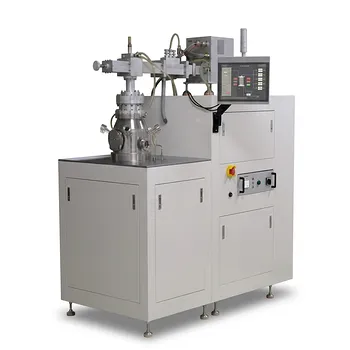
Cylindrical Resonator MPCVD Machine System for Microwave Plasma Chemical Vapor Deposition and Lab Diamond Growth
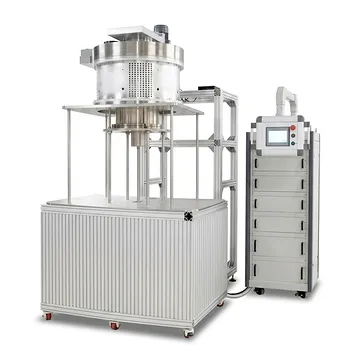
915MHz MPCVD Diamond Machine Microwave Plasma Chemical Vapor Deposition System Reactor
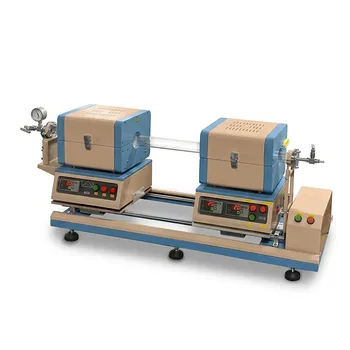
High Temperature 1200C Automatic Sliding Dual Zone Tube Furnace for 2D Transition Metal Dichalcogenides Growth and Material Sublimation Research
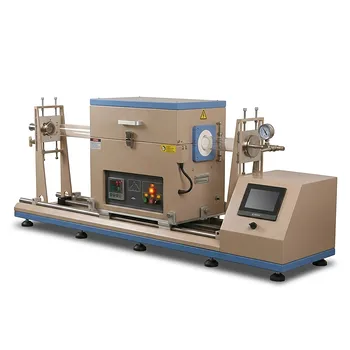
1200C Sliding Tube Furnace for Rapid Thermal Processing and CVD Graphene Growth with 100mm OD Capacity
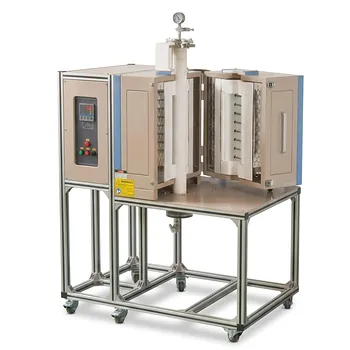
High Temperature 1700C Vertical Split Tube Furnace for Material Quenching and Single Crystal Growth
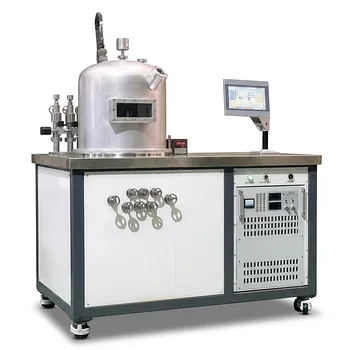
HFCVD Machine System for Nano Diamond Coating on Drawing Dies and Industrial Tools