What is the standard operating sequence for an MPCVD machine? Master the 5-Stage Cycle for High-Density Plasma
Updated 5 months ago
The standard MPCVD operating sequence is a structured, five-stage process designed to create a stable, high-density plasma environment for precise material synthesis. It begins with chamber preparation and gas stabilization, transitions into microwave-driven plasma ignition and impedance tuning, and concludes with a controlled thermal ramp-down to protect the integrity of the deposited film.
Core Takeaway: Successful MPCVD operation centers on the precise balance of microwave energy and gas chemistry to sustain an electrodeless plasma ball. This stability is critical for ensuring that reactive carbon species deposit uniformly without causing thermal stress to the substrate.
Phase 1: Atmospheric Control and Gas Stabilization
Achieving Base Pressure
The cycle begins by evacuating the chamber to its base pressure to remove atmospheric contaminants like nitrogen and oxygen. This ensures that the subsequent chemical reactions are not compromised by impurities that could degrade the quality of the diamond or crystal film.
Introducing Process Precursors
Once the vacuum is established, process gases—typically a mix of methane (CH4) and hydrogen (H2)—are introduced via mass-flow controllers. The system is held at this stage until the chamber reaches the target operating pressure, which generally ranges between 1 and 27 kPa.
Substrate Thermal Conditioning
In many configurations, the substrate is pre-heated to a stable process temperature before the plasma is ignited. This initial heating helps minimize the thermal gradient the material will experience once the high-energy plasma ball is formed.
Phase 2: Plasma Ignition and Energy Tuning
Microwave Power Application
High-frequency microwave energy, usually at 2.45 GHz, is applied to the chamber to energize the gas mixture. This energy dissociates the precursor gases into a high-density, electrodeless plasma, creating a reactive "sun" of atomic hydrogen and carbon radicals.
Impedance Matching
Immediately following ignition, operators must perform impedance matching to align the microwave source with the plasma load. This step is critical to minimize reflected power, which protects the magnetron from damage and ensures maximum energy efficiency within the plasma ball.
Plasma Ball Stabilization
The plasma must be physically stabilized and positioned directly above the substrate. A stable, centered plasma ball ensures uniform heat and radical distribution, which is essential for consistent layer-by-layer growth across the entire surface.
Phase 3: The Deposition Cycle
Radical Dissociation
Within the plasma, hydrogen molecules are broken down into atomic hydrogen, which plays a dual role: it stabilizes the growing surface and etches away non-diamond carbon. Simultaneously, carbon-containing radicals are freed to bond with the substrate template.
Sustained Film Growth
The deposition phase proceeds as these reactive species form a film at rates typically ranging from 1 to 100 nm/min. Throughout this phase, pressure and microwave power must remain constant to prevent fluctuations in the film's morphology or purity.
Phase 4: Termination and Controlled Cooling
Plasma Extinguishment
Once the target thickness is achieved, the microwave power is ramped down to extinguish the plasma. This is often accompanied by a purge of inert gas to clear the chamber of any remaining reactive or hazardous residuals.
Preventing Thermal Shock
The system undergoes a strictly controlled cool-down phase rather than an immediate return to room temperature. Slowing the cooling rate is vital to prevent thermal shock, which can cause the synthesized material to crack or delaminate from the substrate.
Understanding the Trade-offs and Pitfalls
Growth Rate vs. Material Purity
Increasing the methane concentration can accelerate the growth rate, but often at the cost of crystal quality. Higher concentrations can lead to the inclusion of non-diamond (graphitic) carbon, which degrades the electrical and optical properties of the film.
Reflected Power Risks
Failure to maintain a perfect impedance match leads to high reflected power, which generates excessive heat in the microwave delivery system. This not only wastes energy but can cause hardware failure or unintentional plasma fluctuations that ruin the deposition batch.
Pressure Sensitivity
Operating at the higher end of the pressure spectrum (near 27 kPa) increases the plasma density and growth rate but makes the plasma ball more volatile. If the pressure is not balanced with cooling capacity, the substrate may overheat, leading to structural defects.
How to Optimize the MPCVD Sequence for Your Goals
Applying This to Your Project
- If your primary focus is high-purity single crystals: Prioritize a lower methane-to-hydrogen ratio and extended vacuum evacuation times to minimize impurities.
- If your primary focus is rapid thin-film coating: Focus on operating at the higher end of the pressure range (20–27 kPa) while ensuring the impedance matching is automated for rapid stabilization.
- If your primary focus is preventing film delamination: Extend the post-deposition cool-down phase and implement a multi-stage power ramp-down to manage thermal stress.
Precise control over the transition from plasma stability to thermal recovery is the most critical factor in achieving repeatable, high-quality material synthesis in an MPCVD system.
Summary Table:
| Operating Phase | Key Technical Actions | Primary Objective |
|---|---|---|
| Atmospheric Control | Vacuum evacuation & gas (CH4/H2) stabilization | Remove contaminants & establish pressure (1-27 kPa) |
| Plasma Ignition | Apply 2.45 GHz microwave & impedance matching | Ignite electrodeless plasma & minimize reflected power |
| Deposition Cycle | Radical dissociation & layer-by-layer growth | Achieve uniform film synthesis at 1-100 nm/min |
| Termination | Microwave power ramp-down & inert gas purge | Extinguish plasma & clear hazardous residuals |
| Controlled Cooling | Gradual thermal reduction | Prevent thermal shock, cracking, and delamination |
Elevate Your Material Synthesis with THERMUNITS
Precision in the MPCVD operating sequence is the difference between experimental success and hardware failure. THERMUNITS is a leading manufacturer of high-temperature laboratory equipment for material science and industrial R&D. We empower your research with cutting-edge thermal processing solutions, including:
- Advanced CVD/PECVD Systems for precise film deposition.
- High-Performance Furnaces: Muffle, Vacuum, Atmosphere, Tube, and Rotary options.
- Specialized Equipment: Vacuum Induction Melting (VIM), Hot Press, and Dental Furnaces.
- Expert Components: Reliable Thermal Elements and laboratory heat treatment accessories.
Whether you are focusing on high-purity single crystals or rapid thin-film coatings, our equipment provides the stability and control your lab demands.
Ready to optimize your heat treatment process? Contact our engineering team today to find the perfect solution for your R&D goals!
Mentioned Products
- Cylindrical Resonator MPCVD Machine System for Microwave Plasma Chemical Vapor Deposition and Lab Diamond Growth
- 915MHz MPCVD Diamond Machine Microwave Plasma Chemical Vapor Deposition System Reactor
- Chemical Vapor Deposition CVD System Slide PECVD Tube Furnace with Liquid Gasifier PECVD Machine
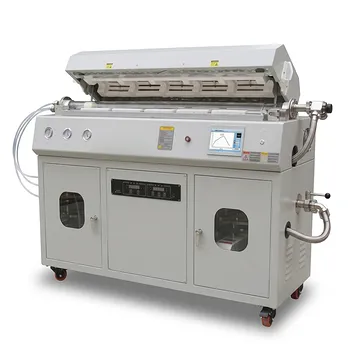
- Multi Heating Zones CVD Tube Furnace System for Precision Chemical Vapor Deposition and Advanced Material Synthesis
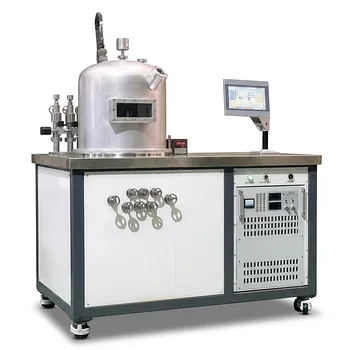
- HFCVD Machine System for Nano Diamond Coating on Drawing Dies and Industrial Tools
People Also Ask
- How does the high concentration of atomic hydrogen in MPCVD benefit diamond growth? The Key to Gem-Grade Quality.
- What are the typical operating pressure ranges and vacuum requirements for MPCVD systems? Optimize Your Material Growth
- What technical parameters are critical for optimizing the growth of single-crystal diamonds in MPCVD systems? Expert Guide
- What are the technical advantages of the electrodeless plasma design in MPCVD systems? Purity & Precision in Synthesis
- How does the versatility of gas compatibility in MPCVD systems compare to filament-based CVD methods? Purity & Doping.

Tech Team · ThermUnits
Last updated on Apr 14, 2026
Related Products
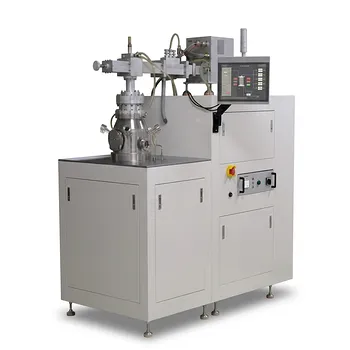
Cylindrical Resonator MPCVD Machine System for Microwave Plasma Chemical Vapor Deposition and Lab Diamond Growth
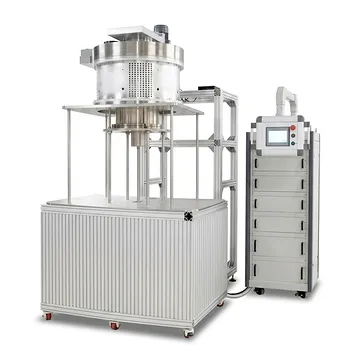
915MHz MPCVD Diamond Machine Microwave Plasma Chemical Vapor Deposition System Reactor
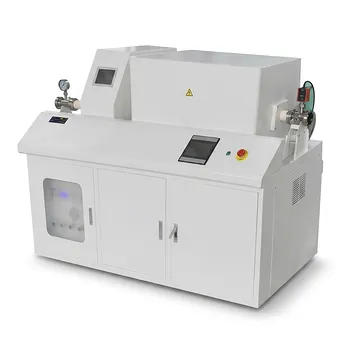
Chemical Vapor Deposition CVD System Slide PECVD Tube Furnace with Liquid Gasifier PECVD Machine
Multi Heating Zones CVD Tube Furnace System for Precision Chemical Vapor Deposition and Advanced Material Synthesis
HFCVD Machine System for Nano Diamond Coating on Drawing Dies and Industrial Tools
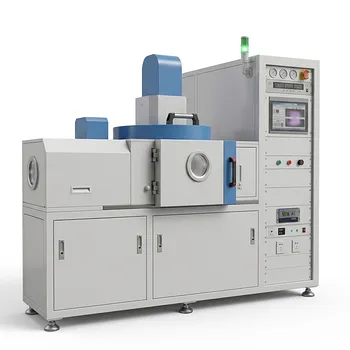
Radio Frequency Plasma Enhanced Chemical Vapor Deposition RF PECVD System for Laboratory and Industrial Thin Film Growth
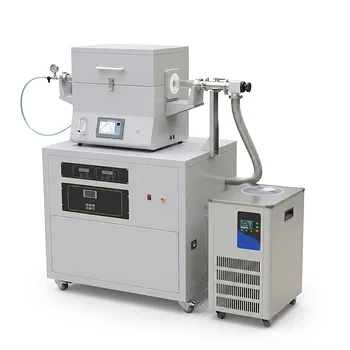
Split Chamber CVD Tube Furnace with Vacuum Station Chemical Vapor Deposition System Machine
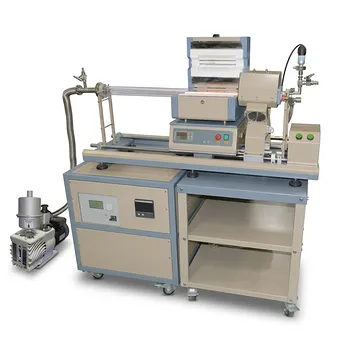
1200C Max Compact Auto-Sliding PECVD Furnace with 2 Inch Tube and Vacuum Pump
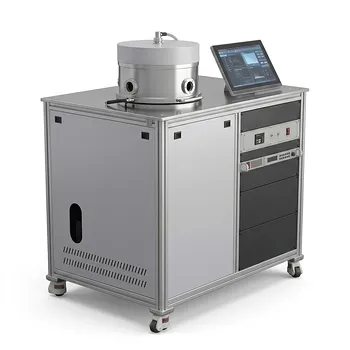
Inclined Rotary Plasma Enhanced Chemical Vapor Deposition PECVD System for Thin Film Deposition and Nanomaterial Synthesis
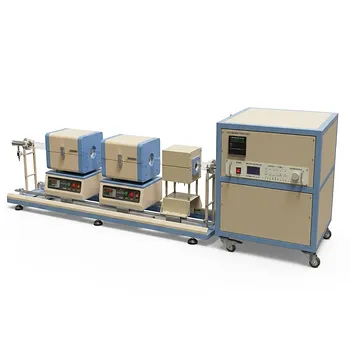
1200C Dual Sliding Tube Furnace with Dual Tubes and Flanges for PECVD Processes
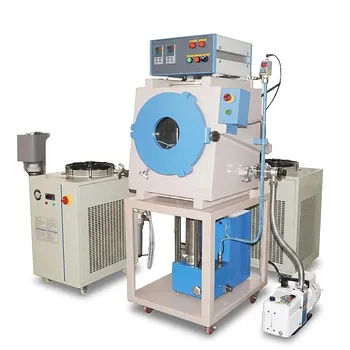
High Temperature Vacuum Lamination Hot Press Furnace Machine for Semiconductor Wafer Bonding and Advanced Composite Thermal Processing
1000C Mini Tube Furnace with 20mm Quartz Tube and Vacuum Flanges for Material Science Research and Controlled Atmosphere Small Sample Processing

High Temperature 1700C Tube Furnace with High Vacuum Turbomolecular Pump System and Multi Channel Mass Flow Controller Gas Mixer
5 Inch Rotary Tube Furnace with Automatic Feeding and Receiving System 1200C Three Zone CVD Powder Processing
Two Zone Rotary CVD Furnace with Automatic Feeding and Receiving System for Powder Processing

Vertical Openable Tube Furnace 0-1700c High Temperature Laboratory System for CVD and Vacuum Heat Treatment