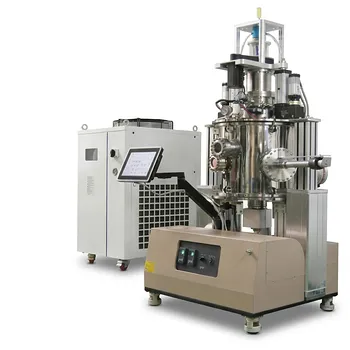
What are the technical advantages of laboratory-grade microwave pyrolysis equipment? Boost Yield & Reaction Efficiency
Updated 3 months ago
Laboratory-grade microwave pyrolysis equipment offers superior efficiency over traditional electric heating by utilizing volumetric heating, which enables simultaneous internal and external thermal transfer. This mechanism drastically reduces reaction times, lowers the activation energy required for thermochemical conversion, and improves the yield and quality of bio-oils and syngas.
Core Takeaway: Unlike traditional conduction-based heating, microwave pyrolysis uses electromagnetic induction to heat the entire material volume instantly. This results in significantly faster processing, lower energy consumption, and higher-quality chemical yields.
The Shift from Surface to Volumetric Heating
Direct Electromagnetic Induction
Traditional electric heating relies on conduction, where heat moves layer-by-layer from the surface to the core. This is often slow and creates thermal gradients that can lead to uneven processing.
Microwave pyrolysis bypasses this limitation through electromagnetic induction. It interacts directly with the material's molecules, creating heat throughout the entire volume of the sample simultaneously.
Increased Heat Transfer Efficiency
Because the heating is volumetric, the system achieves high heating rates that are difficult to replicate with resistive elements. This efficiency significantly shortens the overall reaction time required for complete pyrolysis.
In the co-pyrolysis of biomass and polymers, such as peanut shells and LDPE, this rapid heat transfer ensures a more thorough conversion of the feedstock into valuable products.
Enhanced Chemical Kinetics and Yields
Lowering Activation Energy
One of the most significant technical advantages is the reduction of activation energy. In specific studies involving waste printed circuit boards, microwave heating lowered the activation energy from 147.75 kJ/mol to 81.05 kJ/mol.
This reduction means that the chemical bonds within the material break more easily. Consequently, the reaction proceeds faster and requires less total energy input to achieve the same result.
Selective Heating and Product Quality
Microwave systems exhibit high selectivity, targeting specific components within a mixture. This leads to higher bio-oil yields and a higher internal reaction activity, even when the ambient temperature of the system remains relatively low.
The resulting products often show improved characteristics, such as lower tar content in syngas and higher-quality bio-char. This is a direct result of the precise energy delivery inherent in microwave systems.
Understanding the Trade-offs
The Uniformity Challenge
While microwave heating is volumetric, it is not always perfectly uniform across all material types. Traditional tube furnaces often provide superior heat distribution uniformity and more precise control over the heating rate.
Precision in Nanomaterial Synthesis
For specialized applications like synthesizing magnetite (Fe3O4) nanoparticles, traditional electric heating is often preferred. The stable thermal environment of a tube furnace prevents sintering and agglomeration, ensuring particles stay within the 30-50 nm range.
Material Compatibility
Microwave efficiency is highly dependent on the dielectric properties of the material. Materials that do not absorb microwave energy well may require the addition of "susceptors" (like carbon) to facilitate the heating process, adding complexity to the experiment.
Making the Right Choice for Your Goal
How to Apply This to Your Project
Selecting between microwave and traditional electric heating depends on your specific research objectives and the materials involved.
- If your primary focus is high-throughput and energy efficiency: Microwave pyrolysis is the ideal choice due to its rapid heating rates and significantly lower activation energy requirements.
- If your primary focus is maximizing bio-oil or syngas quality: Utilize microwave equipment to take advantage of its selective heating and ability to produce outputs with lower tar content.
- If your primary focus is the synthesis of uniform nanoparticles: A traditional tube furnace is recommended to maintain the precise thermal stability needed to prevent particle sintering.
- If your primary focus is processing complex biomass-polymer blends: Microwave-grade equipment provides the "volumetric" advantage needed for thorough thermochemical conversion.
By matching the heating mechanism to your specific chemical or material requirements, you can significantly optimize both your energy consumption and the quality of your research outcomes.
Summary Table:
| Feature | Microwave Pyrolysis | Traditional Electric Heating |
|---|---|---|
| Heating Mechanism | Volumetric (Electromagnetic Induction) | Surface Conduction (Layer-by-layer) |
| Processing Speed | Rapid / Instantaneous | Slower / Time-intensive |
| Activation Energy | Significantly Lower (e.g., ~81 kJ/mol) | Higher (e.g., ~147 kJ/mol) |
| Yield Quality | High selectivity; lower tar content | Higher risk of uneven processing |
| Best Application | High-throughput biomass/polymer conversion | Precise nanoparticle synthesis (e.g., Fe3O4) |
| Thermal Control | Dependent on dielectric properties | High stability and uniformity |
Maximize Your Lab's R&D Potential with THERMUNITS
Choosing the right thermal processing technology is critical for achieving superior yields and energy efficiency. THERMUNITS is a leading manufacturer of high-temperature laboratory equipment for material science and industrial R&D. Whether you are scaling up microwave pyrolysis for bio-oil production or require the precise thermal stability of a Tube, Muffle, or Vacuum furnace, we provide the expertise and hardware to drive your innovation.
Our comprehensive range includes:
- Advanced Systems: CVD/PECVD, Vacuum Induction Melting (VIM), and Rotary Kilns.
- Specialized Solutions: Dental Furnaces, Hot Press units, and high-quality Thermal Elements.
Ready to enhance your heat treatment precision? Contact our technical team today to find the ideal solution for your specific application!
References
- Zheng Dong, Quan Bu. Hydrocarbon-Rich Bio-Oil Production from Ex Situ Catalytic Microwave Co-Pyrolysis of Peanut Shells and Low-Density Polyethylene over Zn-Modified Hierarchical Zeolite. DOI: 10.3390/catal14010088
Mentioned Products
- 1500C Three Zone Vertical Pyrolysis Furnace for Nanoparticle Synthesis and Advanced Oxide Coating
- Electric Rotary Kiln Continuous Working Small Rotary Furnace Heating Pyrolysis Plant
- Electric Rotary Kiln Small Rotary Furnace Biomass Pyrolysis Plant
- Induction Heating System with Temperature Control for High Temperature Vacuum Sintering and Melting
- High Temperature 1500C Benchtop Muffle Furnace 3.6L Alumina Fiber Chamber Programmable Controller Sintering Annealing Carbonization Thermal Processing System
People Also Ask
- Why is high-precision temperature control essential in a pyrolysis furnace? Master Pd NPs/NO-C Catalyst Synthesis
- What is the technical necessity of multiple high-temperature thermocouples in a pyrolysis furnace? Precision Control
- Why is it necessary to maintain a strict nitrogen (N2) atmosphere during the operation of a pyrolysis furnace? (Pro Tips)
- Why is Nitrogen (N2) required for 3D carbon electrodes? Ensure material purity and structural integrity.
- Why are precise nitrogen supply systems and flow meters necessary in the pyrolysis process? Optimize Purity & Yield.

Tech Team · ThermUnits
Last updated on Jun 02, 2026
Related Products
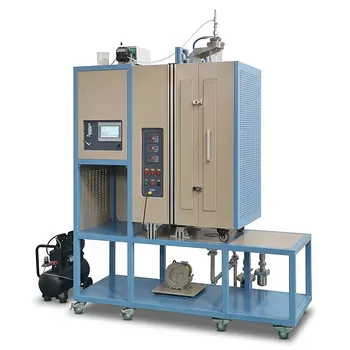
1500C Three Zone Vertical Pyrolysis Furnace for Nanoparticle Synthesis and Advanced Oxide Coating
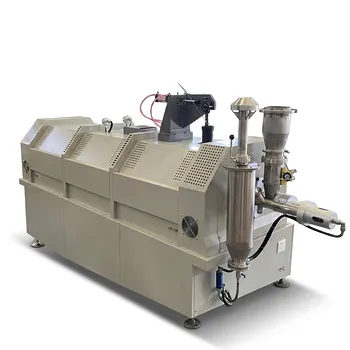
Electric Rotary Kiln Continuous Working Small Rotary Furnace Heating Pyrolysis Plant
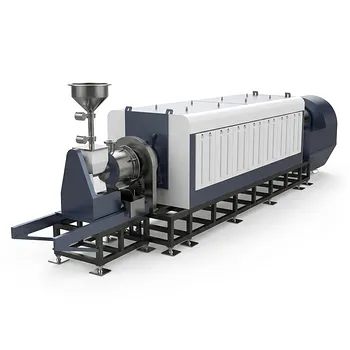
Electric Rotary Kiln Small Rotary Furnace Biomass Pyrolysis Plant
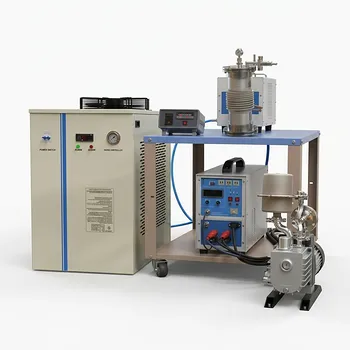
Induction Heating System with Temperature Control for High Temperature Vacuum Sintering and Melting

High Temperature 1500C Benchtop Muffle Furnace 3.6L Alumina Fiber Chamber Programmable Controller Sintering Annealing Carbonization Thermal Processing System

High Temperature 1700C Vertical Tube Furnace for Powder Spherification and Material Sintering
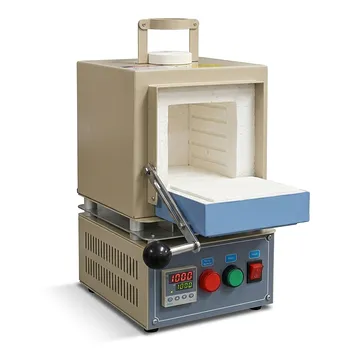
Compact 1000C Muffle Furnace with Programmable Controller and 2 Inch Top Port for Vacuum and Atmosphere Material Research

Compact Vertical Split Quartz Tube Furnace with Stainless Steel Vacuum Flanges for Rapid Thermal Quenching and Controlled Atmosphere Material Processing