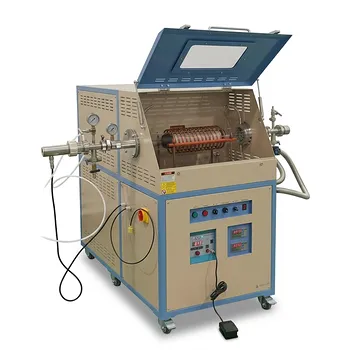
What are the technical advantages of using high-purity graphite crucibles during the lignin carbonization process?
Updated 3 months ago
High-purity graphite crucibles are the preferred choice for lignin carbonization because they combine exceptional thermal conductivity with total chemical inertness at temperatures exceeding 1200°C. This environment ensures that the lignin transforms into hard carbon without reacting with the vessel or introducing external impurities. By providing a stable, uniform thermal field, these crucibles allow for the precise development of the carbon’s microcrystalline structure.
The technical advantage of high-purity graphite lies in its ability to facilitate uniform heating while remaining chemically neutral in reducing or inert atmospheres. This dual-functionality is critical for maintaining the purity and structural consistency of lignin-derived carbon materials.
Maintaining Chemical Purity and Integrity
Chemical Inertness at Extreme Temperatures
High-purity graphite does not react with lignin or its various carbonization byproducts when processed in inert or reducing atmospheres. This stability is maintained even at extreme ranges between 1400°C and 1600°C, where other materials might begin to break down.
Prevention of Impurity Infiltration
These crucibles act as a high-performance barrier that prevents external impurities, such as metal ions, from migrating into the sample. This is essential for researchers who need to ensure that the final carbon material accurately reflects the properties of the original lignin precursor.
Resistance to Reactant Adhesion
Unlike standard ceramic or porcelain vessels, high-purity graphite resists chemical interference and adhesion with the reactants. This prevents the sample from "sticking" to the crucible walls, ensuring total material recovery and preventing secondary contamination during the cooling phase.
Optimizing the Microcrystalline Evolution
Superior Thermal Conductivity for Uniformity
The high thermal conductivity of graphite ensures that heat is distributed evenly and rapidly throughout the entire lignin sample. This uniform thermal gradient is the single most important factor in maintaining a consistent microcrystalline structure across the entire batch of hard carbon.
Structural Stability in Vacuum and Inert Environments
Graphite maintains its structural integrity and chemical stability even under a vacuum (e.g., 10 Pa) or in high-temperature nitrogen atmospheres. This flexibility allows researchers to experiment with different atmospheric conditions to study complex phase transitions without the vessel failing.
Protection of Microscopic Evolution
By providing a non-reactive environment, high-purity graphite allows for the uninterrupted study of the evolution of microscopic structures. This is particularly important for lignin-derived carbons, where the final performance of the material depends heavily on how the molecules arrange themselves during carbonization.
Understanding the Trade-offs
Atmospheric Requirements
The primary limitation of graphite crucibles is their sensitivity to oxygen. If used in an aerobic environment at high temperatures, the crucible will oxidize and degrade rapidly, meaning they must be used exclusively in vacuum or inert gas settings.
Material Cost and Fragility
High-purity graphite is significantly more expensive than standard porcelain or alumina alternatives. Additionally, while they handle thermal stress well, they can be susceptible to mechanical damage if handled roughly or subjected to extreme mechanical stirring.
Making the Right Choice for Your Goal
When selecting a containment vessel for your carbonization process, your choice should align with your specific temperature and purity requirements:
- If your primary focus is precise microcrystalline structure: Use high-purity graphite to ensure the thermal uniformity required for consistent hard carbon development.
- If your primary focus is preventing metal ion contamination: High-purity graphite is the superior choice for blocking the infiltration of external elements into the lignin-derived carbon.
- If your primary focus is low-temperature biochar (under 450°C): Porcelain crucibles may be more cost-effective while still providing adequate resistance to corrosive activation reagents like phosphoric acid.
- If your primary focus is maximum chemical resistance at 1000°C: High-purity alumina crucibles offer excellent mechanical strength and inertness for general thermogravimetric analysis.
Choosing the correct crucible material ensures that your final carbon product maintains the exact chemical and structural properties required for high-performance applications.
Summary Table:
| Feature | High-Purity Graphite Crucible | Impact on Carbonization |
|---|---|---|
| Chemical Inertness | Total stability up to 1600°C (Inert) | Prevents impurity infiltration and sample adhesion. |
| Thermal Conductivity | Exceptionally High | Ensures uniform heating for consistent microcrystalline growth. |
| Atmospheric Stability | Stable in Vacuum/Reducing gases | Allows precise control of phase transitions without vessel failure. |
| Material Recovery | Resists reactant adhesion | Ensures total recovery of hard carbon samples. |
Optimize Your Material Synthesis with THERMUNITS
Achieving precise microcrystalline structures in lignin-derived carbon requires more than just the right crucible—it requires a perfectly controlled thermal environment. THERMUNITS is a leading manufacturer of high-temperature laboratory equipment dedicated to supporting material science and industrial R&D.
We offer a comprehensive range of thermal processing solutions designed to work seamlessly with high-purity graphite and other advanced materials, including:
- Vacuum & Atmosphere Furnaces for oxygen-free carbonization.
- Tube & Muffle Furnaces for precise temperature control.
- CVD/PECVD Systems and Hot Press Furnaces for advanced material development.
- Rotary Kilns and Vacuum Induction Melting (VIM) Furnaces.
Whether you are producing high-performance hard carbon or researching complex biochars, our equipment provides the stability and uniformity your work demands.
Ready to elevate your lab's capabilities? Contact our engineering team today to find the ideal heat treatment solution for your research.
References
- Siyu Long, Qi-Shi Du. Study on the lignin-derived sp2–sp3 hybrid hard carbon materials and the feasibility for industrial production. DOI: 10.1038/s41598-024-54190-x
Mentioned Products
- 600°C Vertical Crucible Furnace with SS316 Alloy Reactor and 6 Port Vacuum Flange
- High Temperature Vertical Crucible Furnace with 22L Heating Chamber and 1200C Maximum Temperature
- Vertical Crucible Furnace 1000C High Temperature Laboratory Equipment 4.7 Inch Diameter Chamber SS316 Anti Corrosive Enclosure
- 1100C Crucible Melting Furnace with Stirring Function for Glovebox and Air Sensitive Alloy Research
- 1100C High Temperature Vacuum Crucible Furnace with Quartz Chamber for Thermal Processing and Sintering
People Also Ask
- How does a high vacuum sintering furnace at 600 Celsius affect the microstructure of Al-TiC composites? Expert Analysis
- How should the choice between a Quartz crucible and an Alumina crucible be made for La2O2S? Optimize Material Purity
- Why use ceramic crucibles for coal nano-hybrid heat treatment? Ensure Purity and Thermal Stability.
- What role does a vacuum tube furnace play in palladium membrane treatment? Achieve 600°C Stability & Prevent Brittle Phases
- Why is a high-temperature furnace with precise temperature control necessary for Ag8SiS6 alloy synthesis? Ensure Safety.

Tech Team · ThermUnits
Last updated on Jun 03, 2026
Related Products
600°C Vertical Crucible Furnace with SS316 Alloy Reactor and 6 Port Vacuum Flange
High Temperature Vertical Crucible Furnace with 22L Heating Chamber and 1200C Maximum Temperature
Vertical Crucible Furnace 1000C High Temperature Laboratory Equipment 4.7 Inch Diameter Chamber SS316 Anti Corrosive Enclosure
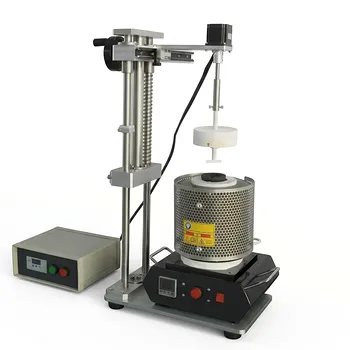
1100C Crucible Melting Furnace with Stirring Function for Glovebox and Air Sensitive Alloy Research
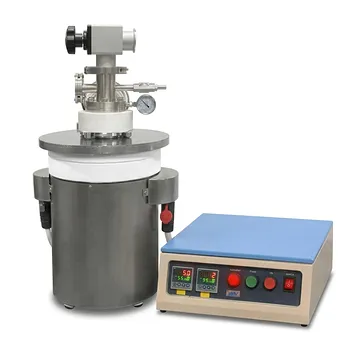
1100C High Temperature Vacuum Crucible Furnace with Quartz Chamber for Thermal Processing and Sintering
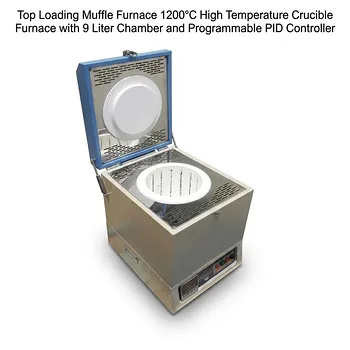
Top Loading Muffle Furnace 1200°C High Temperature Crucible Furnace with 9 Liter Chamber and Programmable PID Controller
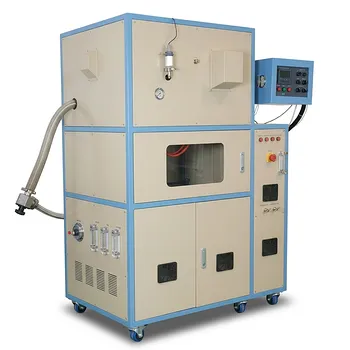
High Temperature Vacuum Graphitization Chamber Furnace 2800C Graphite Heating Elements Bottom Loading
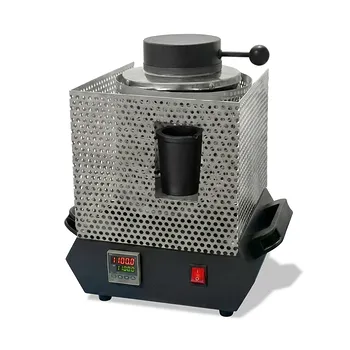
Compact Crucible Melting Furnace 1100C Programmable Temperature Controller Metal Sintering Equipment