What are the considerations for using alumina boats in catalyst calcination? Ensure Material Purity & Performance.
Updated 3 months ago
High-purity alumina ceramic boats are the definitive choice for high-temperature calcination due to their extreme chemical inertness and superior thermal stability. When synthesizing advanced catalysts like Co4N@Fe/N–C at 700°C, these vessels prevent the leaching of impurity metal ions and resist aggressive reducing atmospheres such as ammonia ($NH_3$) and nitrogen ($N_2$). This ensures the catalyst's active sites remain uncontaminated, directly guaranteeing the reproducibility of electrocatalytic performance.
High-purity alumina boats act as a critical, non-reactive barrier that preserves the chemical integrity of precursors during thermal transformation. By eliminating container-sample interactions, they provide a stable and predictable environment necessary for precise material synthesis and accurate data collection.
Maintaining Chemical Purity and Active Site Integrity
Prevention of Metallic Contamination
During the synthesis of Co4N@Fe/N–C, maintaining a precise ratio of cobalt and iron is vital for catalytic activity. High-purity alumina ensures that no exogenous metal ions migrate from the boat into the sample, even at temperatures reaching 700°C. This level of purity is essential for preventing the unintended doping of the carbon matrix.
Resistance to Reducing Atmospheres
Calcination often occurs in harsh chemical environments, such as flowing ammonia ($NH_3$). Alumina remains chemically indifferent to these reducing gases, preventing the vessel from degrading or reacting with the nitrogen-containing precursors. This stability allows for the consistent formation of the desired metal nitride phases.
Protecting Phase Transitions
In materials science, even minor impurities can interfere with phase transitions or the concentration of oxygen vacancies. Using a high-purity vessel ensures that the transition of the precursor into the final catalyst phase—such as the formation of the Co4N lattice—is driven solely by the experimental parameters rather than container interference.
Thermal Performance and Structural Stability
High Refractoriness and Heat Resistance
Alumina ceramic boats possess exceptional refractoriness, allowing them to maintain structural integrity at temperatures exceeding 1000°C. This exceeds the typical requirements for catalyst pyrolysis, providing a significant safety margin for high-temperature processes. It ensures the boat does not soften or deform during the long-dwell times required for carbonization.
Resilience to Thermal Cycling
Advanced ceramic formulations allow these boats to withstand rapid heating and cooling cycles without cracking. This thermal shock resistance is critical in lab settings where samples may need to be moved quickly to or from the constant temperature zone of a tube furnace.
Platform Stability in the Furnace
The geometry and weight of the ceramic boat provide a stable platform within the tube furnace. This stability ensures that the precursor powder remains within the furnace’s "sweet spot" (the constant temperature zone), which is necessary for achieving uniform heat distribution across the entire sample batch.
Optimizing Reaction Kinetics and Recovery
Facilitating Gas-Phase Equilibrium
The open-top structure of the alumina boat is designed to allow small gas molecules generated during pyrolysis to be efficiently removed by the carrier gas. This efficient removal of volatile by-products helps maintain the reaction equilibrium, ensuring the pyrolysis of precursors like lignin or MOFs proceeds to completion.
Non-Adhesion and Material Recovery
High-purity alumina prevents chemical adhesion between the boat surface and the synthesized material. This is particularly important for biochar or nitrogen-doped carbon outputs, as it allows for the complete recovery of the sample post-calcination. Total recovery is essential for calculating accurate yields and maintaining the consistency of the final product.
Understanding the Technical Trade-offs
Sensitivity to Specific Fluxes
While alumina is broadly inert, it can react with certain strongly alkaline materials or specific fluxes at extremely high temperatures. If your process involves high concentrations of alkali metals, the vessel may experience surface etching over time. This degradation can eventually lead to structural failure or the very contamination the boat was chosen to prevent.
Thermal Shock Limitations
Despite their resilience, no ceramic is immune to thermal shock. Subjecting a cold alumina boat to a furnace pre-heated to 1000°C, or quenching it in liquid, can lead to micro-fractures. To extend the life of these consumables, gradual heating and cooling ramps are always recommended.
How to Apply This to Your Project
To maximize the effectiveness of high-purity alumina boats in your calcination workflow, consider the following recommendations based on your specific research goals:
- If your primary focus is elemental purity: Always use alumina with a purity of 99% or higher to ensure that no trace iron, silica, or sodium migrates into your catalyst during 700°C+ runs.
- If your primary focus is material recovery: Select a boat with a polished internal surface to minimize mechanical interlocking between the vessel and the synthesized carbon powders.
- If your primary focus is reaction uniformity: Ensure the sample is spread in a thin, even layer within the boat to maximize the surface area exposed to the carrier gas and heat.
By treating the choice of containment as a critical experimental variable, you ensure that the resulting catalyst is a true reflection of your precursor design rather than a product of container contamination.
Summary Table:
| Feature | Advantage in Catalyst Calcination |
|---|---|
| Chemical Inertness | Prevents metallic contamination and leaching of impurity ions. |
| Thermal Stability | Resists structural deformation at temperatures exceeding 1000°C. |
| Atmosphere Resistance | Withstands aggressive reducing gases like $NH_3$ and $N_2$. |
| Non-Adhesion | Facilitates complete recovery of synthesized powders and biochars. |
| Thermal Shock Resilience | High resistance to cracking during rapid heating and cooling cycles. |
Optimize Your Thermal Processing with THERMUNITS
Precise material synthesis requires uncompromising equipment quality. THERMUNITS is a leading manufacturer of high-temperature laboratory equipment for material science and industrial R&D. We offer a comprehensive range of thermal processing solutions, including Muffle, Vacuum, Atmosphere, Tube, Rotary, and Hot Press furnaces, as well as CVD/PECVD systems and high-purity thermal elements.
Our advanced heat treatment equipment, including specialized dental furnaces and vacuum induction melting furnaces (VIM), is designed to provide the stable, predictable environments necessary for accurate data collection and superior catalyst performance.
Ready to enhance your lab's efficiency and ensure the chemical integrity of your samples?
Contact our experts at THERMUNITS today to discuss your specific research needs!
References
- Hyung Wook Choi, Ho Seok Park. Trifunctional robust electrocatalysts based on 3D Fe/N‐doped carbon nanocubes encapsulating Co<sub>4</sub>N nanoparticles for efficient battery‐powered water electrolyzers. DOI: 10.1002/cey2.505
Mentioned Products
- 1800C Bench Top Muffle Furnace 18 Liters with Kanthal Super 1900 Heating Elements for High Purity Ceramic Sintering and Material Research
- Vertical Hybrid High Temperature Furnace 1500C Alumina Tube SOFC Fuel Cell Testing Laboratory Heat Treatment Research Equipment
- High Temperature Vertical Hybrid Furnace with Alumina Tube and SiC Heating for SOFC Coin Cell Testing and Atmosphere Processing
- Compact High Temperature 1600C Tube Furnace with 50mm Alumina Tube and Vacuum Flanges for Material Sintering
People Also Ask
- Why is a benchtop muffle furnace essential for U3O8 micromaterials? Achieve precision stoichiometry and purity.
- What materials are typically used for heating elements in muffle furnaces? A Guide to Performance & Temperature Limits
- What role does a laboratory high-temperature muffle furnace play in the ash analysis phase of biomass co-firing research? [Guide]
- Why is a sintering furnace or Rapid Thermal Processing (RTP) equipment necessary for the formation of electrodes? Master Solar Ohmic Contacts.
- What function does argon serve in MOF melt-quenching? Prevent oxidation and ensure chemical integrity.

Tech Team · ThermUnits
Last updated on Jun 03, 2026
Related Products
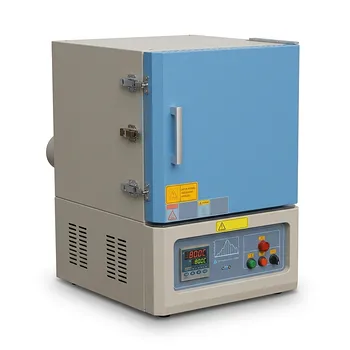
1800C Bench Top Muffle Furnace 18 Liters with Kanthal Super 1900 Heating Elements for High Purity Ceramic Sintering and Material Research
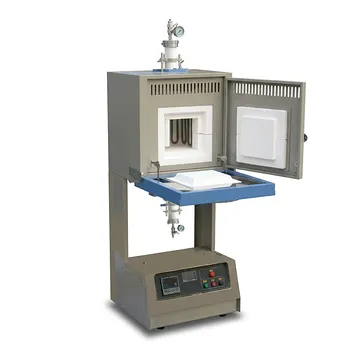
Vertical Hybrid High Temperature Furnace 1500C Alumina Tube SOFC Fuel Cell Testing Laboratory Heat Treatment Research Equipment
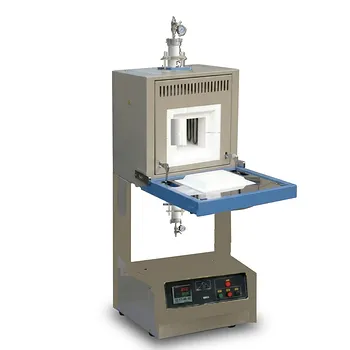
High Temperature Vertical Hybrid Furnace with Alumina Tube and SiC Heating for SOFC Coin Cell Testing and Atmosphere Processing
