What function does a ceramic boat serve during the thermal treatment of trimetallic phosphide catalysts? Expert Analysis
Updated 3 months ago
A ceramic boat serves as a high-purity containment vessel and process-control tool during the multi-step thermal treatment of trimetallic phosphide catalysts. Its primary role is to provide a chemically inert environment that withstands temperatures of 350 °C and higher, ensuring that neither the vessel nor corrosive reaction gases (like phosphorus vapor) contaminate the catalyst or alter its intended physicochemical properties.
Core Takeaway: The ceramic boat is more than a simple container; it is a critical interface that manages the uniform delivery of phosphine gas while protecting the catalyst’s purity from high-temperature side reactions and post-treatment spontaneous ignition.
Ensuring Chemical Purity and Thermal Stability
Resistance to Corrosive Environments
Trimetallic phosphide synthesis often involves "phosphidation," a process where phosphorus sources like sodium hypophosphite release volatile phosphorus vapors. The ceramic boat is chosen for its exceptional chemical stability, which allows it to resist erosion from these vapors and corrosive reaction gases that would degrade lesser materials.
Maintaining Sample Integrity at High Temperatures
During oxidation and phosphidation stages, temperatures frequently reach or exceed 350 °C. The ceramic boat’s high-temperature resistance ensures it remains structurally sound and non-reactive, preventing the introduction of impurities into the trimetallic precursor during these sensitive thermal phases.
Prevention of Container-Reactant Interaction
Because the boat is chemically inert, it ensures that no side reactions occur between the vessel itself and the catalyst powders or nickel-foam precursors. This preservation of chemical purity is vital for the integrity and catalytic performance of the final trimetallic phosphide product.
Regulating Gas Dynamics and Reaction Uniformity
Control of Gas Flow and Diffusion
The boat's geometry and its positioning within the furnace tube directly influence how carrier gases (like Argon) flow over the reactants. By controlling the opening area and spatial orientation, the ceramic boat helps manage the local partial pressure of phosphorus vapor, which is essential for uniform film growth and consistent phosphidation.
Stable Phosphine Gas Generation
In many setups, the ceramic boat acts as a carrier for the phosphorus source, separating it from the metal precursor. This physical separation allows the phosphorus source to volatilize predictably, ensuring a stable delivery of phosphine gas to the precursor surface for an effective chemical transformation.
Facilitating Uniform Heat Transfer
The material properties of the ceramic boat allow for uniform heating of the powders or foams contained within. This ensures that the entire material layer undergoes carbonization or thermal atomization at the same rate, preventing "cold spots" that could lead to incomplete catalyst formation.
Protection and Post-Process Safety
Shielding Against Spontaneous Ignition
Some trimetallic phosphide catalysts become highly active or pyrophoric after annealing. A covered ceramic boat provides a physical shield that prevents these materials from coming into contact with air prematurely, which could lead to spontaneous ignition or accidental oxidation.
Prevention of Cross-Contamination
In multi-step processes, the ceramic boat prevents contact between the sample and the furnace's quartz tube. This isolates the reaction, ensuring that neither the furnace nor the sample is contaminated by residue from previous experiments or the furnace wall itself.
Understanding the Trade-offs
While ceramic boats are indispensable, they are not without limitations. Their brittleness makes them susceptible to cracking if subjected to rapid temperature changes (thermal shock), requiring controlled heating and cooling rates.
Furthermore, the fixed geometry of a boat can create "dead zones" in gas flow if the sample is packed too densely or if the boat is too deep. This requires careful consideration of sample volume relative to the boat's depth to ensure that the flowing gas maintains full contact with the entire powder layer.
How to Optimize Your Use of Ceramic Boats
Successful synthesis depends on how you deploy the boat within the furnace environment.
- If your primary focus is phase purity: Use a high-alumina ceramic boat to ensure zero leaching of impurities into your trimetallic catalyst during the 350 °C+ phosphidation stage.
- If your primary focus is reaction uniformity: Ensure the precursor powder is spread in a thin, even layer and orient the boat's opening to maximize contact with the carrier gas flow.
- If your primary focus is safety and stability: Always use a lid for the boat during the cooling phase to prevent the highly active catalyst from oxidizing or igniting upon exposure to the atmosphere.
By masterfully controlling the environment within the ceramic boat, researchers can ensure the precise, repeatable synthesis of high-performance trimetallic phosphide catalysts.
Summary Table:
| Key Function | Primary Benefit | Technical Feature |
|---|---|---|
| Chemical Containment | Prevents contamination & side reactions | High-purity, inert alumina material |
| Thermal Stability | Withstands 350°C+ corrosive environments | High-temperature erosion resistance |
| Gas Regulation | Ensures uniform phosphidation & gas flow | Optimized geometry & positioning |
| Safety Shielding | Prevents spontaneous ignition of catalysts | Protective lid & physical isolation |
| Process Integrity | Prevents furnace cross-contamination | Barrier between sample & quartz tube |
Elevate Your Material Research with THERMUNITS
Precision in thermal processing is the backbone of high-performance catalyst synthesis. THERMUNITS is a leading manufacturer of high-temperature laboratory equipment, providing the material science and industrial R&D sectors with the tools needed for repeatable excellence.
From high-purity ceramic boats to advanced Tube, Atmosphere, Vacuum, and CVD/PECVD systems, our solutions are engineered to handle sensitive reactions like phosphidation and carbonization with ease. Whether you require Muffle furnaces, Rotary kilns, or Vacuum Induction Melting (VIM) systems, we offer the expertise to optimize your heat treatment workflow.
Ready to enhance your lab’s efficiency and product purity? Contact our technical experts today to find the perfect thermal processing solution for your specific application.
References
- Gouda K. Helal, Pingping Zhao. Electrochemical water splitting enhancement by introducing mesoporous NiCoFe-trimetallic phosphide nanosheets as catalysts for the oxygen evolution reaction. DOI: 10.1039/d4ra02344g
Mentioned Products
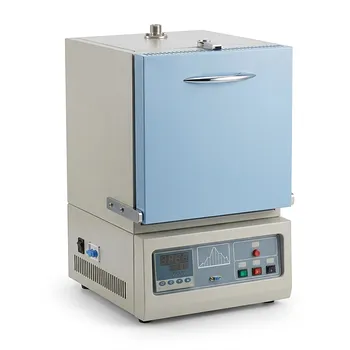
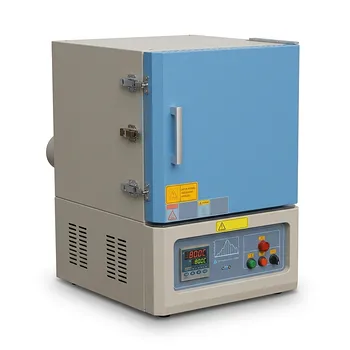
- 1750C Compact Muffle Furnace 1.7L Ultra High Temperature Laboratory Sintering System for Advanced Ceramics and Material Science Research
- 1800C Bench Top Muffle Furnace 18 Liters with Kanthal Super 1900 Heating Elements for High Purity Ceramic Sintering and Material Research
People Also Ask
- What role does a laboratory high-temperature muffle furnace play in the ash analysis phase of biomass co-firing research? [Guide]
- What is the function of a high-temp muffle furnace in Ni-V oxide synthesis? Optimize your material's performance.
- What role does a high-temperature muffle furnace play in the synthesis of Melem precursors? Precision Polymerization.
- What is the function of a high-temperature muffle furnace in phosphorus-modified zeolite catalyst preparation?
- What is the function of a muffle furnace in aluminoborosilicate glass prep? Stabilize Raw Materials for Superior Purity

Tech Team · ThermUnits
Last updated on Jun 02, 2026