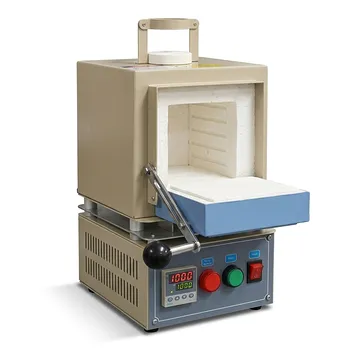
What function does a laboratory muffle furnace serve in rice husk ash catalyst prep? Enhance Purity and Activity
Updated 6 months ago
A laboratory muffle furnace acts as the primary thermal reactor for converting raw agricultural waste into a high-activity inorganic catalyst. It provides the controlled, high-temperature environment necessary to incinerate organic matter and restructure the remaining silica into a chemically reactive form.
The muffle furnace facilitates the precise calcination of rice husks, removing volatile organic compounds to produce ash rich in amorphous silica and alkali metals. This transformation is critical for activating the material's catalytic properties while preventing the loss of surface area through over-heating.
The Mechanism of Thermal Transformation
A muffle furnace serves two distinct chemical roles: the removal of "noise" (organics) and the concentration of "signals" (inorganic catalysts).
Complete Combustion of Organic Volatiles
The furnace subjects rice husk powder to temperatures typically ranging from 600°C to 800°C (up to 1073 K). This heat facilitates the total oxidation and removal of cellulose, hemicellulose, and lignin. By purging these organic components, the furnace isolates the inorganic residue required for catalytic applications.
Concentration of Active Inorganic Species
The thermal treatment enriches the resulting ash with alkali and alkaline earth metal compounds. These metals, along with a high concentration of silica (often 90-98%), constitute the active sites of the catalyst. This concentration process is essential for preparing the ash for tasks like in-situ catalytic pyrolysis.
Precision Control and Material Integrity
The "deep need" for a muffle furnace, rather than a standard oven or open flame, lies in its ability to manage phase transitions.
Preserving the Amorphous Silica Structure
The reactivity of rice husk ash is largely dependent on the silica remaining in an amorphous state. Precise temperature regulation within the furnace prevents the silica from transitioning into a crystalline state (like quartz or cristobalite). Crystalline silica is significantly less reactive, which would drastically reduce the catalyst's efficiency.
Ensuring Uniform Heat Distribution
The static, enclosed environment of a muffle furnace ensures that the entire sample reaches a uniform temperature. This prevents "hot spots" that could lead to localized sintering or incomplete combustion in "cold spots." Uniformity is vital for producing a catalyst with consistent chemical activity across the entire batch.
Understanding the Trade-offs
While the muffle furnace is indispensable, it requires a careful balance of time and temperature to avoid degrading the catalyst.
The Risk of Sintering
Operating at the higher end of the temperature spectrum (e.g., above 800°C) can lead to sintering. Sintering causes the silica particles to fuse, reducing the pore volume and surface area available for chemical reactions. This physical degradation can render a high-purity ash effectively useless as a catalyst.
Energy and Throughput Constraints
Muffle furnaces provide a static environment, which is excellent for precision but limits throughput compared to continuous processes. The long residence times required—often 4 to 6 hours—result in high energy consumption per gram of catalyst produced. Additionally, the lack of mechanical agitation means the sample must be spread thin to ensure complete oxygen penetration during combustion.
How to Optimize Your Catalyst Preparation
To achieve the best results, you must calibrate the furnace settings based on the intended application of your rice husk ash.
- If your primary focus is Maximum Catalytic Activity: Maintain temperatures between 600°C and 700°C to ensure the silica remains entirely amorphous while fully removing organics.
- If your primary focus is Producing Silica Precursors: Utilize a stable 600°C for 4 hours to preserve the chemical structure for subsequent water glass or chemical extraction processes.
- If your primary focus is Biomass Carbonization: Set the furnace to a lower threshold, such as 400°C, to facilitate pyrolysis without full combustion, preserving the carbon structure for activated carbon.
The laboratory muffle furnace is the bridge between raw agricultural waste and high-performance chemical catalysts, provided its thermal precision is used to protect the material's internal architecture.
Summary Table:
| Process Parameter | Target Range/Condition | Impact on Catalyst Quality |
|---|---|---|
| Calcination Temp | 600°C - 800°C | Ensures complete combustion of organics (lignin/cellulose). |
| Silica Phase | Amorphous Structure | Maintains high chemical reactivity and active site density. |
| Heating Environment | Uniform Static Heat | Prevents localized sintering and ensures batch consistency. |
| Processing Time | 4 - 6 Hours | Optimizes pore volume and surface area for catalysis. |
Elevate Your Material Research with THERMUNITS Precision Furnaces
As a leading manufacturer of high-temperature laboratory equipment, THERMUNITS provides the advanced thermal processing solutions essential for material science and industrial R&D. Our high-precision muffle furnaces are engineered to maintain the delicate amorphous structure of rice husk ash, ensuring your catalysts achieve peak performance.
Whether you require Muffle, Vacuum, Atmosphere, Tube, Rotary, or Hot Press furnaces, or specialized CVD/PECVD and VIM systems, we deliver the reliability and temperature uniformity your lab demands.
Ready to optimize your heat treatment process? Contact our technical experts today to find the ideal thermal solution for your specific application!
References
- Wusana Agung Wibowo, Arief Budiman. Modified Koufopanos' Mechanism in the Kinetics of in-situ Catalytic Pyrolysis of Co-pelletized Rice Husks and Ash. DOI: 10.3311/ppch.36920
Mentioned Products
- 1750C Compact Muffle Furnace 1.7L Ultra High Temperature Laboratory Sintering System for Advanced Ceramics and Material Science Research
- 1200C Muffle Furnace 12x8x5 7.2L Heating Chamber with Quartz Observation Window and Vent Port
- High Temperature 1200C Muffle Furnace 27L Volume 12x12x12 Chamber with Programmable PID Controller for Laboratory Material Science
- 1750C Bench Top Muffle Furnace 3.6L High Grade Molybdenum Disilicide Heating Elements Laboratory Heat Treatment Equipment
- 1200°C High Temperature Muffle Furnace 19L Chamber with 50 Segment Programmable Controller
People Also Ask
- What role does a laboratory high-temperature muffle furnace play in the ash analysis phase of biomass co-firing research? [Guide]
- What is the function of a Muffle Furnace in coal and biomass proximate analysis? Key Insights for R&D.
- What is the function of a high-temp muffle furnace in Ni-V oxide synthesis? Optimize your material's performance.
- What is the function of a muffle furnace in aluminoborosilicate glass prep? Stabilize Raw Materials for Superior Purity
- What role does a high-temperature muffle furnace play in the synthesis of Melem precursors? Precision Polymerization.

Tech Team · ThermUnits
Last updated on Apr 14, 2026
Related Products
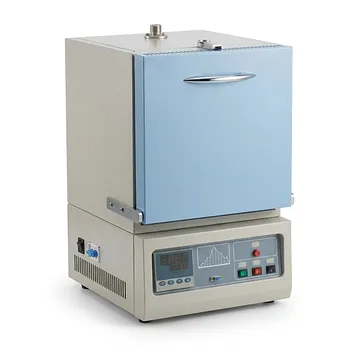
1750C Compact Muffle Furnace 1.7L Ultra High Temperature Laboratory Sintering System for Advanced Ceramics and Material Science Research
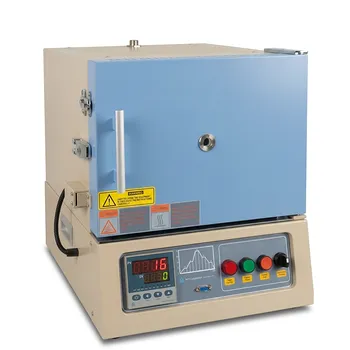
1200C Muffle Furnace 12x8x5 7.2L Heating Chamber with Quartz Observation Window and Vent Port
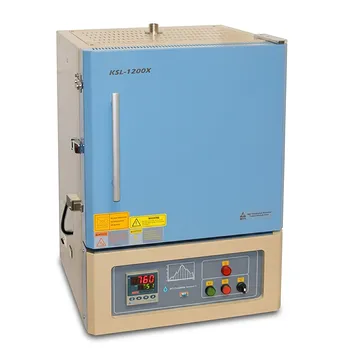
High Temperature 1200C Muffle Furnace 27L Volume 12x12x12 Chamber with Programmable PID Controller for Laboratory Material Science
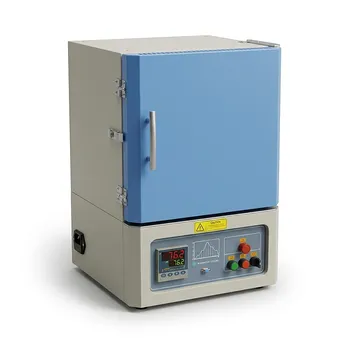
1750C Bench Top Muffle Furnace 3.6L High Grade Molybdenum Disilicide Heating Elements Laboratory Heat Treatment Equipment
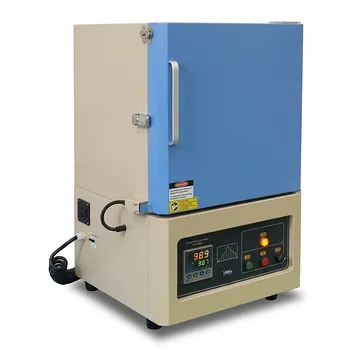
1200°C High Temperature Muffle Furnace 19L Chamber with 50 Segment Programmable Controller
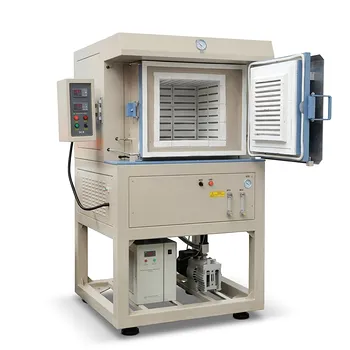
1200°C Five Side Heating Atmosphere Controlled Muffle Furnace 64 Liter High Uniformity Box Furnace for Material Synthesis
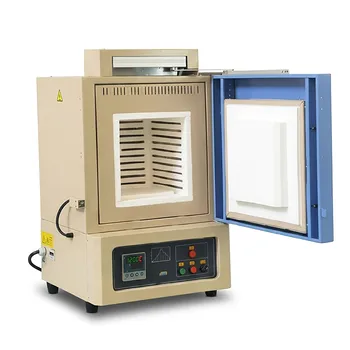
1200C High Temperature Muffle Furnace with Motorized Door and Automated PC Control for Industrial Sintering and Material Processing 27 Liter
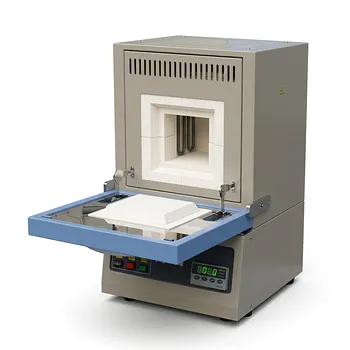
Five Sided Heating Muffle Furnace High Uniformity 1200C Lab Box Furnace 27L Alumina Fiber Chamber
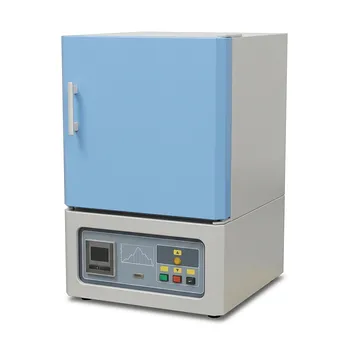
1800C Bench Top Muffle Furnace with Kanthal Super 1900 Heating Elements and 3.6L Alumina Fiber Chamber
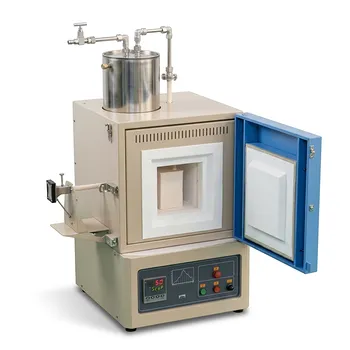
High Temperature Bench Top Muffle Furnace 1700C with Integrated Evaporating Particle Collection and 8x8x8 Alumina Fiber Chamber
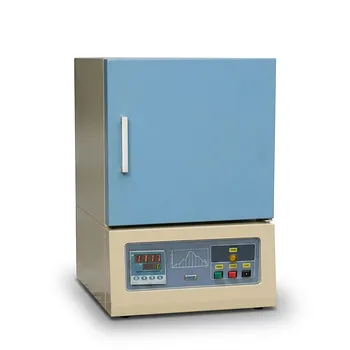
Ultra High Temperature Bench Top Muffle Furnace 1750C Sintering System with Kanthal Super Heating Elements and Precision Digital Control
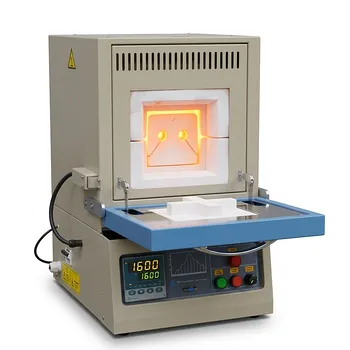
High Temperature Compact Muffle Furnace 1700 C with 30 Segment Programmable Controller and 1.7L Cubic Chamber
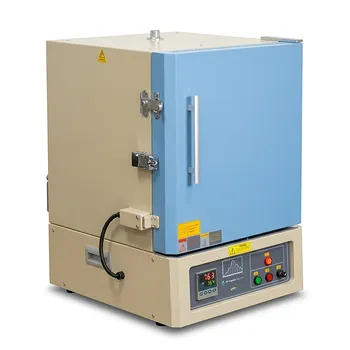
Large Capacity 1200C Muffle Furnace 64 Liter Chamber with Digital PID Controller and Built In Venting Port
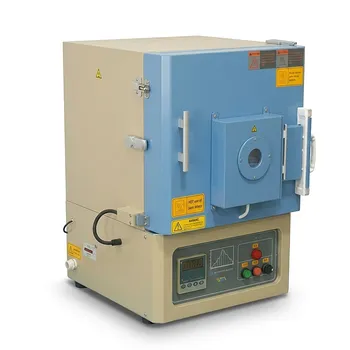
High Temperature Benchtop Muffle Furnace 1500C with 3.6L Chamber and Quartz Observation Window
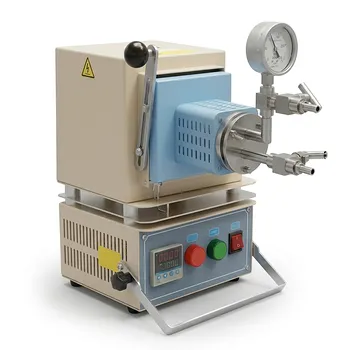
Compact Hybrid Muffle and Tube Furnace for 1000C Controlled Atmosphere Laboratory Material Sintering
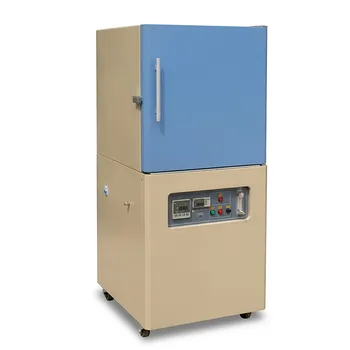
High Temperature Muffle Furnace with Dual Controllers and 36L Large Chamber 1700C Max
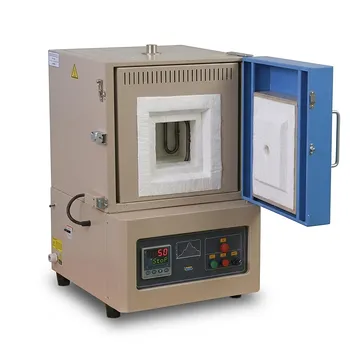
1800°C Bench Top Ultra High Temperature Muffle Furnace with Sapphire Observation Window and Top Feeding Port for Materials Research and Thermal Processing
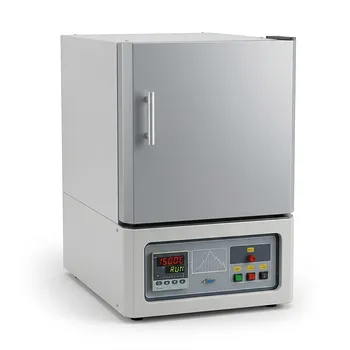
High Temperature 1500C Benchtop Muffle Furnace 3.6L Alumina Fiber Chamber Programmable Controller Sintering Annealing Carbonization Thermal Processing System
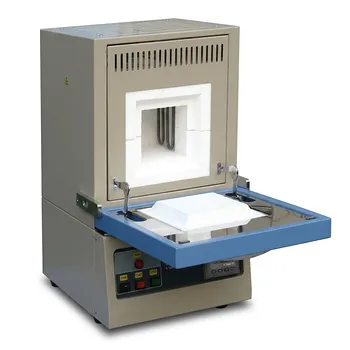
High Temperature 1800C Compact Muffle Furnace with Kanthal Super 1900 Heating Elements and 1.7L Alumina Chamber