What functions do high-purity quartz ampoules serve in bulk glass synthesis? Ensure Purity and Thermal Stability
Updated 3 months ago
In bulk glass synthesis, high-purity quartz ampoules serve as the critical interface between extreme thermal energy and material purity. These specialized containers act as inert reaction vessels that protect the melt from atmospheric contamination while withstanding temperatures up to 850 °C. Their unique mechanical properties allow them to endure the violent transition of water-quenching without structural failure.
Quartz ampoules provide a chemically stable, pressure-resistant environment that is essential for high-temperature glass melting. Their primary value lies in their ability to maintain sample integrity during both the prolonged heating phase and the rapid thermal shock of the quenching process.
The Role of the Ampoule in Material Integrity
Chemical Inertness and Purity Control
High-purity quartz is selected because it is chemically inert and does not react with most glass-forming melts. This ensures that the final bulk glass maintains its intended stoichiometric composition without leaching impurities from the container walls.
Maintaining a Hermetic Seal
The ampoule must maintain a strict seal even under significant pressure differentials. This barrier is vital for preventing atmospheric gases, such as oxygen or moisture, from entering the melt and causing unwanted oxidation or bubbles.
Thermal and Mechanical Performance
Sustained High-Temperature Stability
Synthesis via the melt-quenching method requires the vessel to remain structurally sound at temperatures reaching 850 °C. High-purity quartz maintains its rigidity at these levels, allowing for the complete homogenization of the melt over extended periods.
Resistance to Thermal Shock
The transition from a furnace to a water bath creates immense internal stress within a material. Quartz possesses excellent thermal shock resistance, which prevents the ampoule from cracking or exploding when it is rapidly cooled to room temperature.
Understanding the Trade-offs
Temperature Ceilings and Devitrification
While quartz is robust up to 850 °C, exceeding this limit can lead to softening or devitrification. If the quartz begins to crystallize, it loses its strength and transparency, which can compromise the synthesis process.
The Cost of Consumable Hardware
These ampoules are typically treated as essential consumables because they are often destroyed to retrieve the solidified glass. This creates a recurring cost and a need for consistent high-quality sourcing to ensure experimental reproducibility.
How to Apply This to Your Project
When selecting quartz ampoules for your synthesis, consider how the container's specifications align with your specific experimental goals:
- If your primary focus is extreme material purity: Prioritize the highest grade of synthetic quartz to eliminate the possibility of trace metal contamination during long heating cycles.
- If your primary focus is maximum quenching speed: Use thin-walled ampoules to facilitate faster heat transfer while relying on the material's inherent resistance to thermal shock.
- If your primary focus is volatile melt components: Ensure the sealing process is rigorous enough to withstand the internal vapor pressure generated at the 850 °C threshold.
The proper use of high-purity quartz ampoules is a fundamental requirement for achieving the structural and optical consistency necessary for high-quality bulk glass production.
Summary Table:
| Key Function | Benefit to Synthesis | Material Property |
|---|---|---|
| Chemical Inertness | Prevents melt contamination and maintains stoichiometry | High-purity SiO2 composition |
| Hermetic Sealing | Blocks oxidation and moisture; contains volatile components | Pressure-resistant structure |
| Thermal Stability | Maintains rigidity during prolonged heating up to 850°C | High softening point |
| Shock Resistance | Survives rapid water-quenching without structural failure | Low thermal expansion coefficient |
Elevate Your Material Research with THERMUNITS
Precision in glass synthesis and material science requires more than just high-quality consumables; it demands a reliable thermal environment. THERMUNITS is a leading manufacturer of high-temperature laboratory equipment, providing the advanced solutions necessary for industrial R&D and academic excellence.
Whether your workflow involves the melt-quenching method, thin-film deposition, or complex metallurgy, we offer a comprehensive range of thermal processing solutions, including:
- Furnaces: Muffle, Vacuum, Atmosphere, Tube, Rotary, and Hot Press furnaces.
- Advanced Systems: CVD/PECVD systems, Vacuum Induction Melting (VIM) furnaces, and Electric Rotary Kilns.
- Specialized Equipment: Dental Furnaces, Thermal Elements, and custom heat treatment tools.
Don’t let equipment limitations compromise your material integrity. Contact THERMUNITS today to discover how our high-performance furnaces can enhance your lab's efficiency and experimental reproducibility.
References
- Jiri Jemelka, Miroslav Vlček. Optical and chemical properties of As–Se and As–S–Se solution processed thin films prepared <i>via</i> As<sub>50</sub>Se<sub>50</sub> source solution modification. DOI: 10.1039/d3ma00614j
Mentioned Products
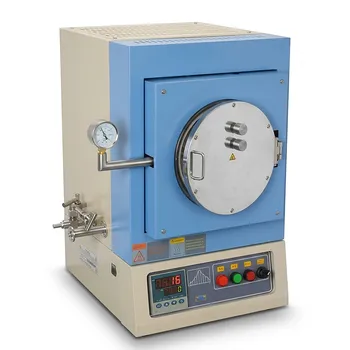
- 1100°C High Temperature Quartz Chamber Furnace 8 Inch OD with 7.6 Liter Capacity and Vacuum Atmosphere Capability
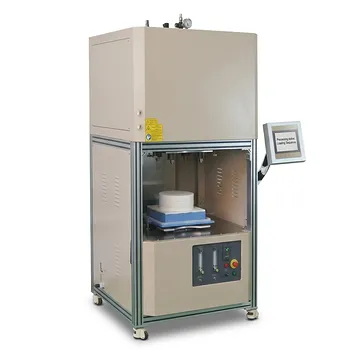
- High Temperature Vertical Atmosphere Controlled Furnace with Automatic Bottom Loading and 1700°C Capacity for Advanced Material Research
People Also Ask
- Why is a quartz tube furnace necessary for phosphorus-doped MoS2/GO preparation? Ensure Purity & Precise Synthesis
- Benefits of high-vacuum quartz tube furnaces with N2 for Co3O4 nanosheets: Purity and Structural Integrity.
- What conditions does a quartz tube furnace provide for AlxCoCrFeNi steam corrosion tests? Achieve Precise R&D Control.
- Why is high-temperature annealing in a quartz tube furnace done after HfO2 deposition? Unlock peak film performance.
- How does a quartz tube furnace prepare boron-diffused SE? Precision Thermal Control for High-Efficiency Solar Cells

Tech Team · ThermUnits
Last updated on Jun 03, 2026