What conditions does a quartz tube furnace provide for AlxCoCrFeNi steam corrosion tests? Achieve Precise R&D Control.
Updated 3 months ago
A quartz tube furnace provides a strictly controlled, air-free thermal environment essential for isolating the effects of steam on alloy degradation. It enables the complete displacement of oxygen with argon before introducing steam, allowing researchers to ensure that corrosion is driven exclusively by water vapor. This equipment facilitates precise temperature ramping and stable isothermal holding, typically at temperatures like 900°C, while protecting the laboratory from high-temperature gas leaks.
Core Takeaway: The quartz tube furnace acts as a hermetically sealed reactor that eliminates atmospheric interference, allowing for the precise isolation of steam-metal interactions under uniform high-temperature conditions. This environmental purity is critical for studying the transition of high-entropy alloys from metallic states to specific oxide scales.
Precise Atmospheric Control and Isolation
Total Displacement of Ambient Oxygen
To study steam corrosion without the interference of atmospheric oxygen, the furnace utilizes superior sealing properties to create a closed system. Before heating begins, the tube is purged with argon, ensuring a chemically inert starting point. This prevents "pre-oxidation" and ensures that any resulting oxide scales are a direct consequence of the steam exposure.
Stable Introduction of Steam
Once the air is displaced, the furnace maintains a stable chemical atmosphere by allowing for the controlled injection of water vapor. Because the quartz tube is non-reactive with most gases, it provides a "clean" path for steam to interact with the AlxCoCrFeNi samples. This isolation is vital for observing how steam specifically influences the formation of $Al_2O_3$ and $Cr_2O_3$ oxide scales.
Micro-Positive Pressure Maintenance
By maintaining a micro-positive pressure of the process gas, the furnace prevents back-flow of external air into the reaction zone. This pressure control is a core requirement for experiments involving hazardous or high-temperature gases. It protects the integrity of the sample surface throughout the entire duration of the test.
Thermal Environment and Uniformity
Precise Temperature Ramping
Quartz tube furnaces are equipped with high-precision control systems that allow for specific heating rates, such as 5°C/min. This prevents thermal shock to the alloy samples and ensures that researchers can observe phase transformations during the heat-up phase. For $Al_xCoCrFeNi$ alloys, this controlled rise is essential for managing the transition between phases like $BCC$ and $\alpha$.
Long-Term Isothermal Stability
Corrosion experiments often require extended holding times, ranging from 5 hours to over 300 hours, depending on the study's depth. The furnace provides a controlled and constant thermal environment, ensuring that the temperature remains fixed (e.g., at 900°C or 1000°C). This stability allows for the systematic observation of how oxide layers evolve and thicken over time.
Temperature Field Uniformity
High-precision tube furnaces are designed to provide a uniform temperature field across the central zone of the tube. This ensures that multiple samples—or different regions of a single alloy coating—experience identical conditions. This uniformity is critical for identifying the formation mechanisms of complex multi-principal element oxides.
Understanding the Trade-offs and Limitations
Material Limitations of Quartz
While quartz provides excellent sealing and visibility, it has a maximum operating temperature (typically around 1100°C–1200°C for sustained use). Beyond these temperatures, quartz may begin to soften or undergo devitrification, especially when exposed to certain alkaline vapors. For ultra-high-temperature experiments exceeding 1250°C, alternative materials like alumina (ceramic) tubes may be required, though they are often less gas-tight.
Maintenance of Gas Flow Equilibrium
Achieving the correct steam-to-argon ratio requires precise gas flow control systems. Inaccurate flow rates can lead to fluctuations in the corrosion rate that do not reflect the alloy's true performance. Additionally, condensed water at the tube ends can cause thermal gradients or hardware damage if the furnace is not equipped with a proper drainage or reheating system at the outlet.
How to Apply This to Your Research Project
To achieve the most reliable results in high-temperature steam corrosion testing, consider your specific experimental goals when configuring the furnace.
- If your primary focus is Isolating Steam Mechanisms: Prioritize a furnace with high-vacuum sealing capabilities to ensure the $O_2$ concentration is near zero before the steam is introduced.
- If your primary focus is Evaluating Long-Term Durability: Choose a furnace with an integrated precision temperature control system capable of maintaining stability within ±1°C for 100+ hours.
- If your primary focus is Microstructural Evolution: Use a furnace with a programmable multi-stage heating curve to precisely control the rates of atomic diffusion and phase transformation.
By leveraging the precise sealing and thermal stability of a quartz tube furnace, researchers can confidently attribute alloy performance to specific environmental variables.
Summary Table:
| Feature | Process Condition | Research Benefit |
|---|---|---|
| Atmosphere | Argon purge + Controlled Steam | Ensures corrosion is driven solely by water vapor |
| Pressure | Micro-positive Pressure | Prevents ambient air back-flow and contamination |
| Thermal Control | Precise Ramping (e.g., 5°C/min) | Manages phase transformations (BCC to Alpha) |
| Stability | Long-term Isothermal Holding | Allows systematic observation of oxide scale growth |
| Uniformity | Central Zone Temperature Field | Ensures identical conditions for multiple alloy samples |
Optimize Your Alloy Research with THERMUNITS
Precision is non-negotiable in material science. THERMUNITS is a leading manufacturer of high-temperature laboratory equipment designed specifically for industrial R&D and advanced material studies. Whether you are researching high-entropy alloys or advanced ceramics, our equipment provides the hermetic sealing and thermal accuracy your project demands.
Our Comprehensive Thermal Solutions Include:
- Tube & Atmosphere Furnaces: Perfect for steam corrosion and precise gas control.
- Vacuum & Muffle Furnaces: High-purity environments for heat treatment.
- CVD/PECVD Systems: Advanced thin-film and coating capabilities.
- Specialized Equipment: Rotary kilns, Hot Press furnaces, and Vacuum Induction Melting (VIM).
Don't let atmospheric interference compromise your data. Contact THERMUNITS today to find the perfect thermal processing solution for your laboratory!
References
- Jingyu Zhang, Wei Feng. Mechanical properties and water vapour corrosion behaviour of Al <sub> <i>x</i> </sub> CoCrFeNi high-entropy alloys. DOI: 10.1039/d4ra03892d
Mentioned Products
- Dual Zone Quartz Tube Furnace with 80mm Diameter 1200C Max Temperature 3 Channel Gas Mixer and Vacuum Pump System
- 1100°C High Temperature Quartz Chamber Furnace 8 Inch OD with 7.6 Liter Capacity and Vacuum Atmosphere Capability
- Compact Vertical Split Quartz Tube Furnace with Stainless Steel Vacuum Flanges for Rapid Thermal Quenching and Controlled Atmosphere Material Processing
- 1100°C Large Diameter Quartz Tube Furnace with 24 Inch Heating Zone and Water Cooled Flanges
- 1200°C 5 Inch Vertical Quartz Tube Furnace with Stainless Steel Vacuum Flanges
People Also Ask
- How do dual-zone quartz tube furnaces achieve controllable material preparation? Optimize Perovskite VD Processes
- What are the technical advantages of using a dual-zone tube furnace for growing large PdCoO2 crystals via CVT? Expert Tips
- Purpose of the reverse gradient step in CVT growth? Master Crystal Purity with Dual-Zone Furnaces
- Why is it necessary to place MoS2 devices in a dual-zone tube furnace for annealing? Optimize Lattice Repair & Doping
- Why is a dual-zone tube furnace necessary for ReO3-doped Cu2Te CVD? Essential for precise precursor synchronization.

Tech Team · ThermUnits
Last updated on Jun 03, 2026
Related Products
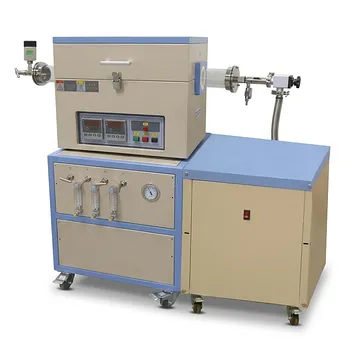
Dual Zone Quartz Tube Furnace with 80mm Diameter 1200C Max Temperature 3 Channel Gas Mixer and Vacuum Pump System
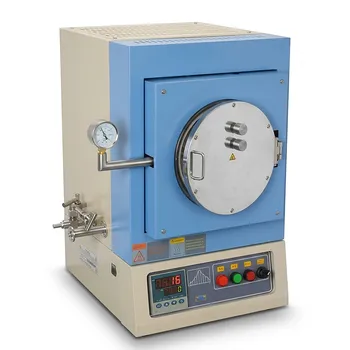
1100°C High Temperature Quartz Chamber Furnace 8 Inch OD with 7.6 Liter Capacity and Vacuum Atmosphere Capability

Compact Vertical Split Quartz Tube Furnace with Stainless Steel Vacuum Flanges for Rapid Thermal Quenching and Controlled Atmosphere Material Processing
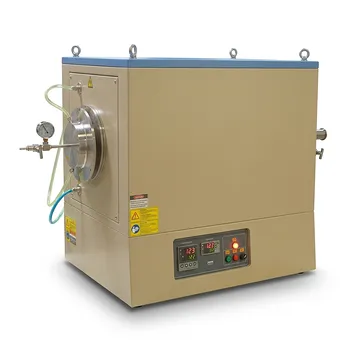
1100°C Large Diameter Quartz Tube Furnace with 24 Inch Heating Zone and Water Cooled Flanges

1200°C 5 Inch Vertical Quartz Tube Furnace with Stainless Steel Vacuum Flanges
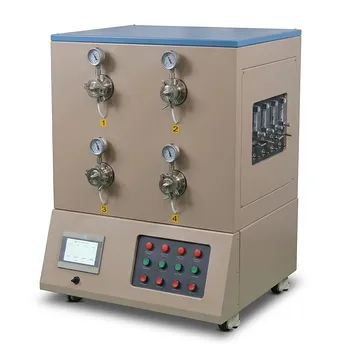
High Throughput 1200C Four Channel Tube Furnace with 3 Inch Quartz Tubes for Multi Zone Annealing and Material Research
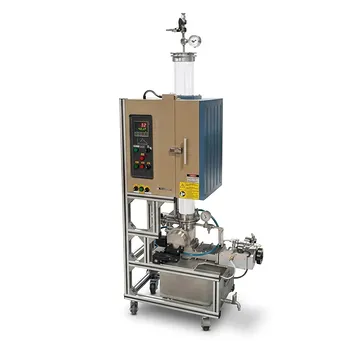
1200C High Temperature Atmosphere Controlled Vertical Quenching Tube Furnace with 4 Inch Quartz Tube
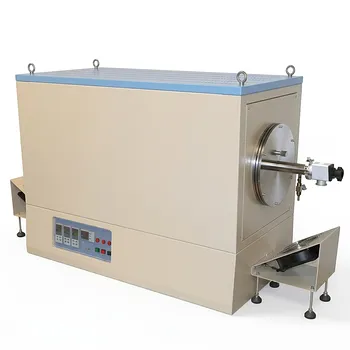
1100°C Three Zone Tube Furnace with 8.5 to 11 Inch OD Quartz Tube and Vacuum Flanges for Large Wafer Processing
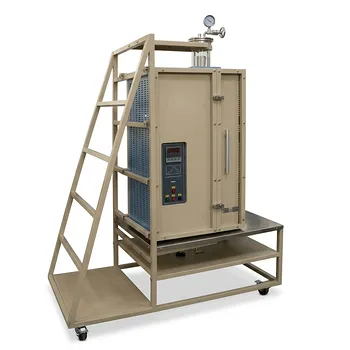
Split Vertical Tube Furnace with 1200C Quartz Tube and Stainless Steel Vacuum Flanges for Rapid Thermal Processing
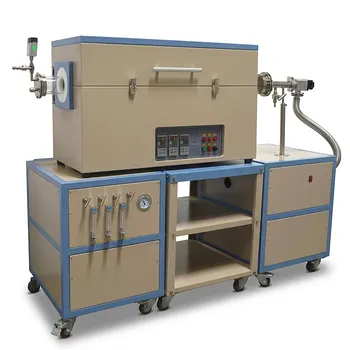
Three Zone Quartz Tube Furnace with 3 Channel Gas Mixer Vacuum Pump and Anti Corrosive Vacuum Gauge
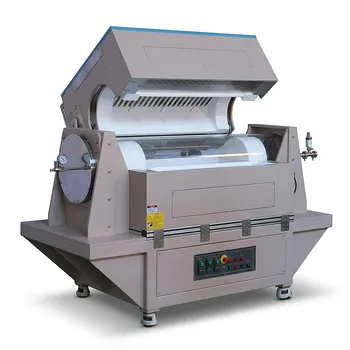
Three Zone Tube Furnace with 11 Inch or 15 Inch Quartz Tube and Hinged Flanges for Vacuum Atmosphere Heat Treatment
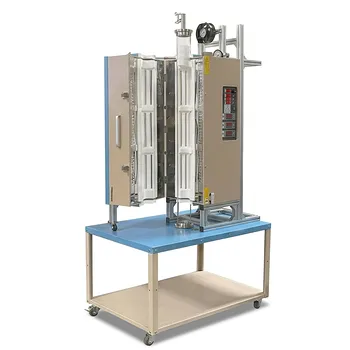
1200C Three Zone Split Vertical Tube Furnace 4 Inch Quartz Tube Stainless Steel Vacuum Flanges
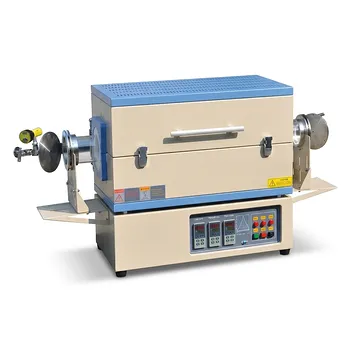
Three Zone Tube Furnace with 24 Inch Heating Length and Hinged Flange Quartz Tube System
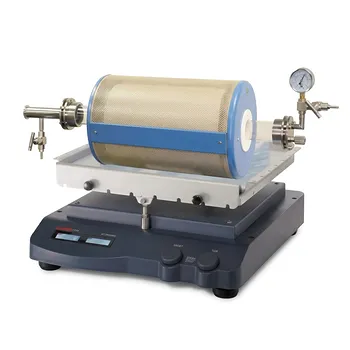
High Temperature Rocking Tube Furnace with Quartz Tube and Vacuum Flange for Materials Synthesis
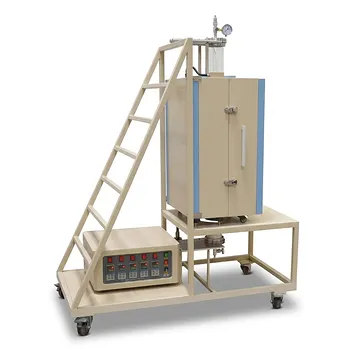
Five Zone Split Vertical Tube Furnace 1200C Max with 4 Inch Quartz Tube and Stainless Steel Vacuum Flanges
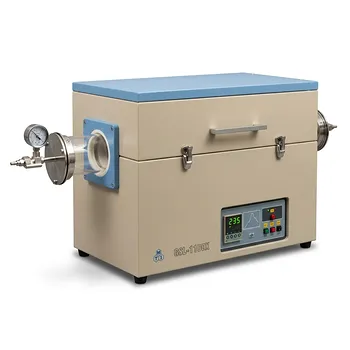
Single Zone Tube Furnace 5 Inch Quartz Tube 36 Inch Heating Zone Vacuum Flanges
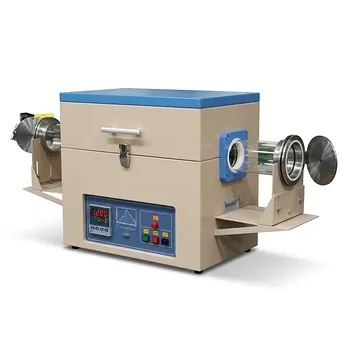
High Temperature 1200C Split Tube Furnace with Hinged Vacuum Flanges and 4 Inch Quartz Tube for Laboratory Research
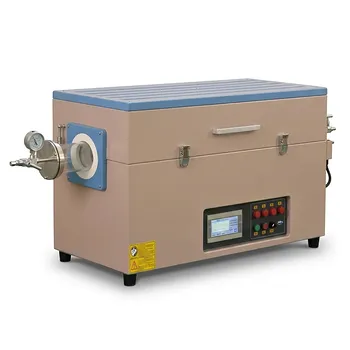
1200C Four Zone Split Tube Furnace with Touch Screen Control and High Purity Quartz Tube and Vacuum Sealing Flanges

High Temperature Automated 5 Inch Tube Furnace for Autonomous Material Research and Advanced Laboratory R&D