What is the function of a gas-tight tube furnace in biochar preparation? Engineering High-Performance 3D Concrete
Updated 3 months ago
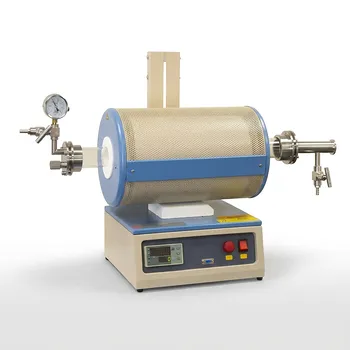
The gas-tight tube furnace is the critical reactor used to transform wood waste into functional biochar through high-temperature, anaerobic pyrolysis. In the context of 3D printed concrete, the furnace operates at 700°C for two hours to engineer a specific pore structure and surface chemistry that allows the biochar to function as both a moisture regulator and a nucleation site for cement hydration.
Core Takeaway: The gas-tight tube furnace provides the precise thermal and atmospheric control necessary to convert raw biomass into a high-performance concrete additive, ensuring the biochar possesses the microstructural properties required to enhance the printability and strength of 3D printed structures.
Creating a Controlled Pyrolysis Environment
Maintaining Anaerobic Conditions
The "gas-tight" nature of the furnace is its most vital feature, as it allows for the complete exclusion of oxygen. By continuously injecting inert gases like nitrogen (N2), the furnace prevents the biomass from combusting, ensuring it undergoes thermal degradation rather than burning.
Precise Thermal Regulation
A tube furnace allows for the exact setting of heating rates and residence times, which are crucial for consistent quality. For 3D printed concrete applications, maintaining a temperature of 700°C for a specific duration ensures the thorough breakdown of hemicellulose and lignin into a stable carbon skeleton.
Facilitating Thermochemical Degradation
The furnace provides a uniform thermal field that facilitates the dehydration, degassing, and carbonization of the wood waste. This controlled energy input is what transitions the raw material into a carbon-rich substrate with defined physical and chemical properties.
Engineering Biochar for Concrete Performance
Development of Porous Microstructures
The high-temperature environment of the furnace creates a rich pore structure within the biochar. In 3D printed concrete, these pores act as internal reservoirs, providing moisture regulation that prevents the concrete from drying too quickly during the printing process.
Modification of Surface Functional Groups
The furnace environment influences the density of surface functional groups, such as hydroxyl and carboxyl groups. These groups serve as a nucleation substrate, providing sites where hydration products can form, which ultimately strengthens the cement matrix.
Customization via Gas Circulation
Advanced tube furnaces can introduce specific gases like carbon dioxide (CO2) to induce physical activation. This process increases the biochar's water-holding capacity and polar functional groups, allowing for a more tailored additive depending on the specific concrete mix design.
Understanding the Trade-offs
Temperature vs. Yield
Higher pyrolysis temperatures, such as 700°C, produce biochar with higher porosity and fixed carbon but result in a lower overall solid yield. Engineers must balance the need for high-performance properties with the volume of biochar produced from the raw wood waste.
Heating Rate and Structural Integrity
Rapid heating rates can lead to "flash pyrolysis," which might compromise the mechanical strength of the biochar particles. For concrete additives, a slower, controlled heating rate is often preferred to ensure the resulting carbon skeleton is robust enough to withstand the mixing process.
Energy Consumption and Scaling
While laboratory-grade tube furnaces offer unmatched precision, they are energy-intensive. Scaling this process for large-scale 3D construction projects requires a careful analysis of energy costs versus the performance gains seen in the final printed structure.
Applying This to Your Project
To maximize the benefits of biochar in 3D printed concrete, your approach to furnace operation should align with your specific material requirements.
- If your primary focus is internal curing and moisture control: Prioritize a furnace setup that allows for CO2 activation or higher temperatures (700°C+) to maximize pore volume and connectivity.
- If your primary focus is rapid setting and early strength: Use the furnace to optimize surface functional groups by maintaining specific residence times that favor the development of nucleation sites.
- If your primary focus is carbon sequestration: Operate at lower temperatures (around 400-500°C) to maximize the solid biochar yield while maintaining sufficient carbon stability.
By mastering the furnace environment, you transform a waste product into a sophisticated tool for advancing 3D printed construction.
Summary Table:
| Furnace Function | Impact on Biochar | 3D Printed Concrete Benefit |
|---|---|---|
| Anaerobic Pyrolysis | Prevents combustion; ensures carbonization | Stable carbon-rich additive |
| Precise Thermal Control | Uniform 700°C breakdown of lignin/hemicellulose | Consistent additive quality |
| Pore Engineering | Creates rich internal micro-porosity | Internal curing & moisture regulation |
| Surface Modification | Develops hydroxyl/carboxyl functional groups | Nucleation sites for cement hydration |
| Gas Activation | Increases water-holding capacity via CO2/N2 | Tailored moisture control for printability |
Elevate Your Material Research with THERMUNITS Precision Furnaces
As a leading manufacturer of high-temperature laboratory equipment, THERMUNITS provides the advanced thermal processing solutions essential for material science and industrial R&D. Our gas-tight tube furnaces offer the precise atmospheric and temperature control required for sophisticated applications like biochar pyrolysis and 3D printing additives.
From Muffle, Vacuum, and Atmosphere furnaces to specialized Tube, Rotary, and Hot Press systems, we deliver the reliability and performance your lab demands. Our comprehensive range also includes CVD/PECVD systems, Dental Furnaces, and Vacuum Induction Melting (VIM) furnaces designed to push the boundaries of heat treatment.
Ready to optimize your research outcomes? Contact us today to discover how THERMUNITS can provide the perfect thermal solution for your specific project requirements.
References
- Lei Wang, Daniel C.W. Tsang. Biochar-augmented climate-positive 3D printable concrete. DOI: 10.1038/s43246-024-00700-3
Mentioned Products
- Gas Pre-Heating Tube Furnace for High Temperature Pyrolysis Reactors and Material Science Research
- Electric Rotary Kiln Small Rotary Furnace Biomass Pyrolysis Plant
- 1500C Three Zone Vertical Pyrolysis Furnace for Nanoparticle Synthesis and Advanced Oxide Coating
- 1700C Hydrogen Gas Tube Furnace with 60mm Alumina Process Tube and Integrated Hydrogen Safety Detector
- 1100C Dual Zone Hydrogen Gas Tube Furnace with Quartz Tube and Integrated H2 Leak Detection System
People Also Ask
- What is the function of a preheated high-temperature tube furnace in the rapid pyrolysis synthesis of carbon nitride films?
- What is the role of a high-temperature tube furnace in coal powder pyrolysis benchmarking? Achieve Precise Baselines.
- Why is high-precision temperature control essential in a pyrolysis furnace? Master Pd NPs/NO-C Catalyst Synthesis
- How does a high-temperature tube furnace facilitate the pyrolysis of PR-ZS hybrid aerogels into carbon aerogels?
- How is a laboratory tube heating furnace applied during the evaluation of denitration catalysts? Essential Guide

Tech Team · ThermUnits
Last updated on Jun 03, 2026
Related Products
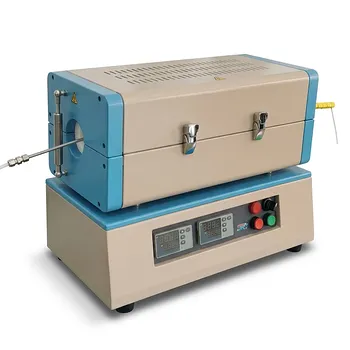
Gas Pre-Heating Tube Furnace for High Temperature Pyrolysis Reactors and Material Science Research
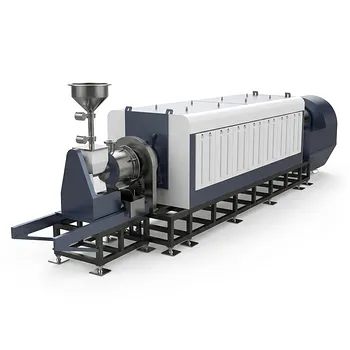
Electric Rotary Kiln Small Rotary Furnace Biomass Pyrolysis Plant
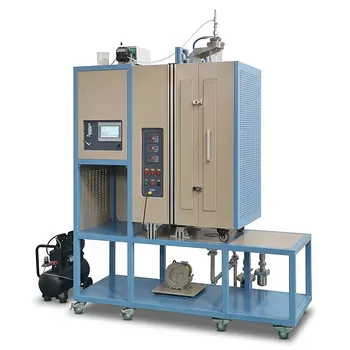
1500C Three Zone Vertical Pyrolysis Furnace for Nanoparticle Synthesis and Advanced Oxide Coating
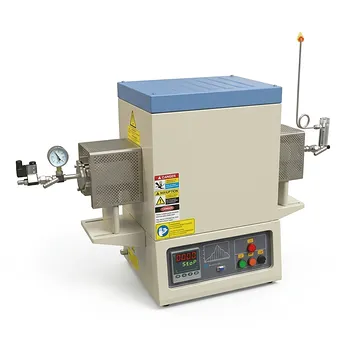
1700C Hydrogen Gas Tube Furnace with 60mm Alumina Process Tube and Integrated Hydrogen Safety Detector
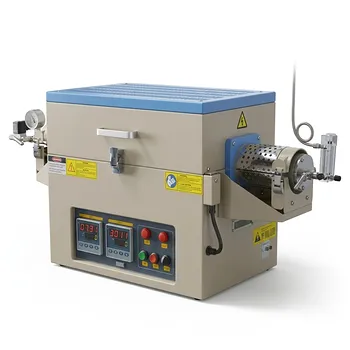
1100C Dual Zone Hydrogen Gas Tube Furnace with Quartz Tube and Integrated H2 Leak Detection System
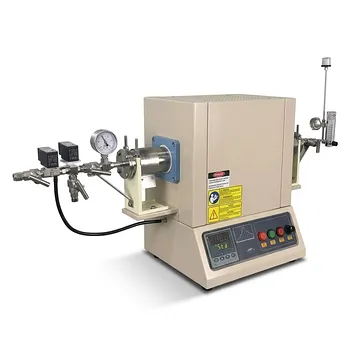
1500C Compact Hydrogen Gas Tube Furnace with 2 Inch Alumina Tube and Hydrogen Detector
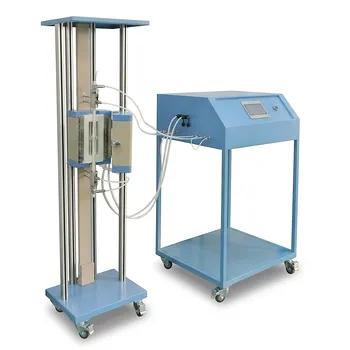
High Temperature Vertical Tube Furnace for Small Solid Oxide Fuel Cell Testing with Four Channel Gas Control

High Temperature 1700C Vertical Tube Furnace for Powder Spherification and Material Sintering
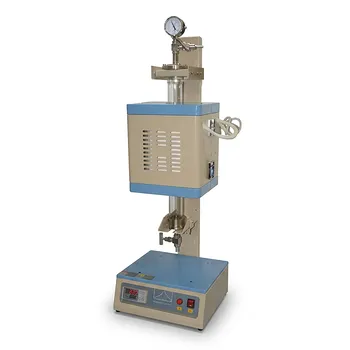
Compact Vertical Split Quartz Tube Furnace with Stainless Steel Vacuum Flanges for Rapid Thermal Quenching and Controlled Atmosphere Material Processing

Compact High Temperature 1600C Tube Furnace with 50mm Alumina Tube and Vacuum Flanges for Material Sintering
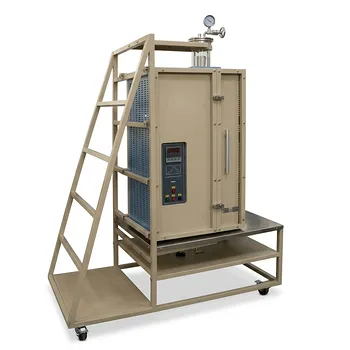
Split Vertical Tube Furnace with 1200C Quartz Tube and Stainless Steel Vacuum Flanges for Rapid Thermal Processing

High Temperature Automated 5 Inch Tube Furnace for Autonomous Material Research and Advanced Laboratory R&D
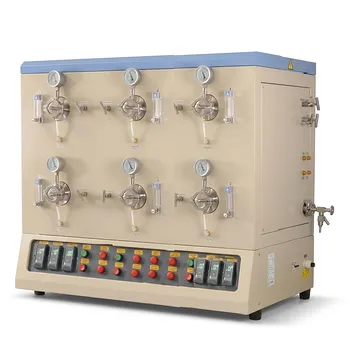
1200C High Throughput Multi Channel Tube Furnace with 50mm Quartz Tubes for Annealing and Material Phase Diagram Research
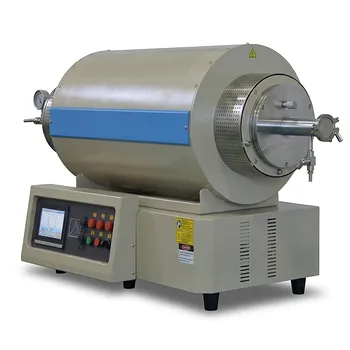
1200C Max Three Zone Tube Furnace 6 Inch OD Max with Tube and Flange
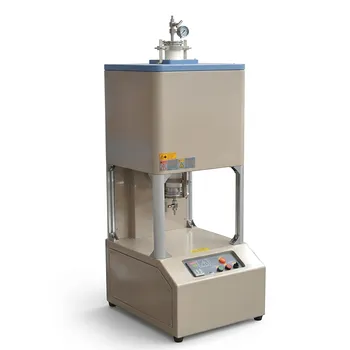
Vertical 1700C Vacuum and Atmosphere Tube Furnace with 80mm Alumina Tube
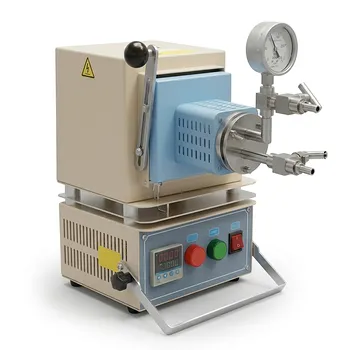
Compact Hybrid Muffle and Tube Furnace for 1000C Controlled Atmosphere Laboratory Material Sintering
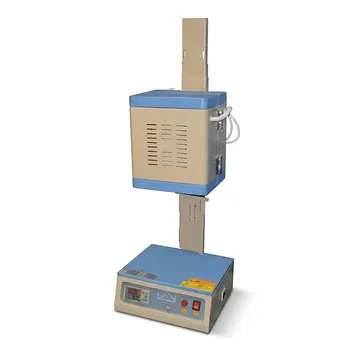
High Temperature Vertical Split Tube Furnace with PID Temperature Controller for 1 and 2 Inch Processing Tubes
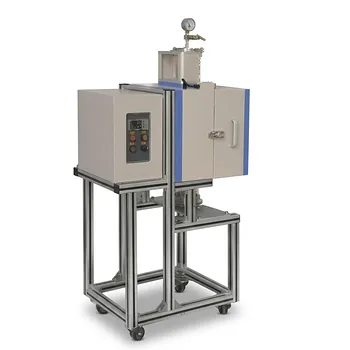
1200°C 5 Inch Vertical Quartz Tube Furnace with Stainless Steel Vacuum Flanges
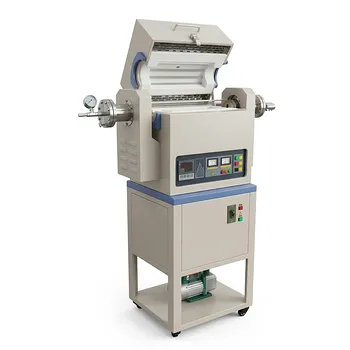
High Temperature Rotary Tilt Tubular Furnaces for Advanced Powder Sintering and Material Processing