How does a high-temperature tube furnace facilitate the pyrolysis of PR-ZS hybrid aerogels into carbon aerogels?
Updated 3 months ago
A high-temperature tube furnace facilitates the pyrolysis of PR-ZS hybrid aerogels by providing a strictly controlled, oxygen-free environment that drives the simultaneous carbonization of organic resins and the conversion of inorganic precursors. At temperatures typically reaching 1100°C, the equipment utilizes an inert gas purge to prevent combustion while allowing for precise molecular reorganization. This process transforms the hybrid aerogel into a stable carbon matrix embedded with amorphous zirconium and silicon oxides, creating the necessary foundation for advanced ceramic growth.
The tube furnace serves as a precision thermochemical reactor that isolates the material from oxygen to prevent degradation while using exact thermal ramping to dictate the final aerogel’s porosity and crystallinity. It is the essential tool for turning a fragile organic-inorganic hybrid into a robust, high-performance carbon-ceramic material.
Precise Atmospheric Control and Oxygen Isolation
Maintaining a Strict Inert Environment
The primary function of the tube furnace is to provide a sealed reaction chamber that effectively isolates the PR-ZS aerogel from atmospheric oxygen. By purging the chamber with Argon or Nitrogen, the furnace ensures that the organic components undergo carbonization—a thermal decomposition into carbon—rather than simple combustion.
Regulating Gas Flow for Chemical Stability
The furnace allows for the strict control of inert gas flow rates, which is vital for removing volatile byproducts released during pyrolysis. This constant flow prevents the accumulation of unwanted vapors that could cause secondary cracking or contaminate the carbonizing structure, thereby ensuring the purity of the final carbon aerogel.
Thermal Dynamics and Molecular Reorganization
Precision Heating and Structural Integrity
High-temperature tube furnaces utilize programmable heating rates (often as precise as $\pm 1^\circ$C) to gradually increase temperatures to the 1100°C threshold. This controlled ramp prevents thermal shock, which could collapse the delicate, highly porous structure of the aerogel during its transition from an organic to an inorganic state.
Facilitating Precursor Transformation
The stable thermal field provided by the furnace drives the conversion of zirconium and silicon precursors into amorphous oxides. This specific temperature range is critical; it is high enough to trigger the necessary chemical shifts but controlled enough to establish a foundation for the subsequent growth of ultra-fine nanocrystalline ceramic particles within the carbon support.
Promoting Graphitization and Porosity
As the furnace maintains high temperatures, it encourages the formation of disordered graphene layers and influences the development of the material's micropore structure. The duration and stability of the "soak time" at peak temperature directly determine the electrical conductivity and surface area of the resulting carbon aerogel.
Understanding the Trade-offs and Limitations
The Risks of Improper Thermal Ramping
If the heating rate is too aggressive, the rapid release of gases from the PR-ZS resin can cause internal pressure to build, leading to the physical fracturing of the aerogel monolith. Conversely, heating that is too slow may lead to excessive shrinkage or the formation of undesirable crystalline phases that reduce the material's surface area.
Atmospheric Contamination and Oxidation
Even minor leaks in the furnace seals or impurities in the inert gas can introduce trace amounts of oxygen. At 1100°C, this leads to partial oxidation of the carbon matrix, which significantly degrades the mechanical strength and thermal stability of the final product.
How to Apply This to Your Research
When utilizing a high-temperature tube furnace for the production of PR-ZS hybrid aerogels, your operational parameters must align with your desired material properties.
- If your primary focus is maximizing surface area: Utilize a slower heating rate and a steady inert gas flow to ensure the delicate pore structure is preserved during the initial stages of carbonization.
- If your primary focus is high-strength ceramic reinforcement: Prioritize a stable, high-temperature "soak" at 1100°C to ensure the complete conversion of Zr/Si precursors into a uniform oxide phase.
- If your primary focus is electrical conductivity: Focus on optimizing the peak temperature and duration to promote a higher degree of graphitization within the carbon matrix.
Success in pyrolysis depends on the synergy between precise temperature regulation and absolute atmospheric purity to transform a hybrid precursor into a high-performance carbon-ceramic aerogel.
Summary Table:
| Process Feature | Function in Pyrolysis | Impact on Final Aerogel |
|---|---|---|
| Atmospheric Control | Oxygen isolation via Argon/Nitrogen purge | Prevents combustion; ensures pure carbonization |
| Precise Heating | Programmable ramping (up to 1100°C) | Maintains structural integrity and pore volume |
| Gas Flow Management | Continuous removal of volatile byproducts | Prevents secondary cracking and contamination |
| Peak Temp Soak | Stable thermal field for molecular shift | Drives Zr/Si oxide conversion and graphitization |
Optimize Your Aerogel Synthesis with THERMUNITS Precision
Elevate your material science research with THERMUNITS, a leading manufacturer of high-temperature laboratory equipment. Our advanced Tube Furnaces, Vacuum systems, and CVD/PECVD solutions provide the absolute atmospheric purity and precise thermal control (up to 1100°C and beyond) required for successful PR-ZS hybrid aerogel pyrolysis.
Whether you are focusing on maximizing surface area or enhancing electrical conductivity, our comprehensive range—including Muffle, Atmosphere, and Rotary furnaces—is engineered for superior R&D results. Contact our experts today to discover how our tailored heat treatment solutions can empower your next breakthrough in high-performance carbon-ceramic materials.
References
- Ding Nie, Boxing Zhang. Preceramic polymer-hybridized phenolic aerogels and the derived ZrC/SiC/C ceramic aerogels with ultrafine nanocrystallines. DOI: 10.1039/d4nr03470h
Mentioned Products
- Gas Pre-Heating Tube Furnace for High Temperature Pyrolysis Reactors and Material Science Research
- High Temperature Tube Furnace 1500C with Sliding Flanges and 50mm OD for Rapid Thermal Processing Fast Heating and Cooling
- High Temperature 1700C Vertical Tube Furnace for Powder Spherification and Material Sintering
- Compact High Temperature 1600C Tube Furnace with 50mm Alumina Tube and Vacuum Flanges for Material Sintering
- High Temperature Three Zone Tube Furnace 1700C with Alumina Tube and Water Cooled Flanges
People Also Ask
- What is the function of a preheated high-temperature tube furnace in the rapid pyrolysis synthesis of carbon nitride films?
- What is the role of a high-temperature tube furnace in coal powder pyrolysis benchmarking? Achieve Precise Baselines.
- Why is high-precision temperature control essential in a pyrolysis furnace? Master Pd NPs/NO-C Catalyst Synthesis
- How is a laboratory tube heating furnace applied during the evaluation of denitration catalysts? Essential Guide
- Why use an inert gas system for biochar pyrolysis? Protect Carbon Structure & Maximize Surface Area

Tech Team · ThermUnits
Last updated on Jun 03, 2026
Related Products
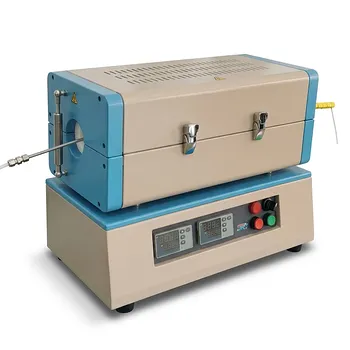
Gas Pre-Heating Tube Furnace for High Temperature Pyrolysis Reactors and Material Science Research

High Temperature Tube Furnace 1500C with Sliding Flanges and 50mm OD for Rapid Thermal Processing Fast Heating and Cooling

High Temperature 1700C Vertical Tube Furnace for Powder Spherification and Material Sintering

Compact High Temperature 1600C Tube Furnace with 50mm Alumina Tube and Vacuum Flanges for Material Sintering
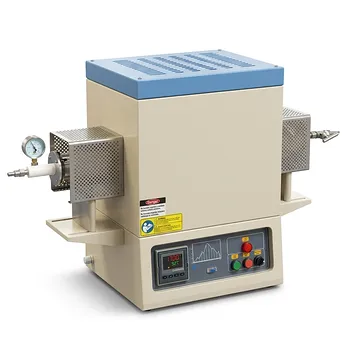
High Temperature Three Zone Tube Furnace 1700C with Alumina Tube and Water Cooled Flanges
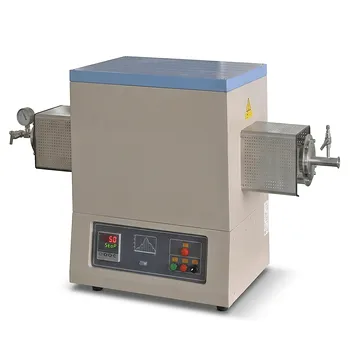
High Temperature 1700C Tube Furnace with 4 Inch OD Alumina Tube and Vacuum Sealing Flanges

High Temperature 1700C Six Zone Split Tube Furnace with Alumina Tube and Water Cooled Flanges
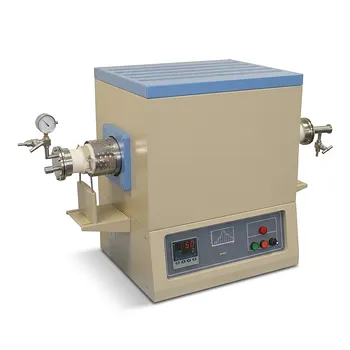
1700C High Temperature Alumina Tube Furnace with 18 Inch Heated Zone and Vacuum Sealing Flanges

High Temperature 1700C Tube Furnace with High Vacuum Turbomolecular Pump System and Multi Channel Mass Flow Controller Gas Mixer

High Temperature 1700C Benchtop Tube Furnace with 5 Inch Heating Zone High Purity Alumina Tube and Vacuum Sealing Flanges

1800C High Temperature Compact Vacuum Tube Furnace with 60mm OD Alumina Tube and Kanthal MoSi2 Heating Elements

1750°C High Temperature Benchtop Vacuum Atmosphere Tube Furnace with Kanthal Super 1800 Heating Elements and 60mm Alumina Processing Tube
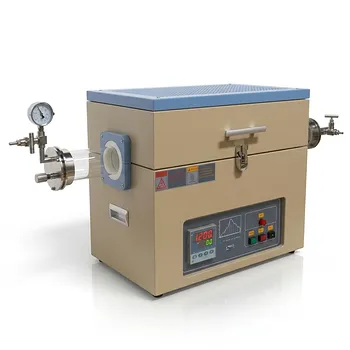
High Temperature 1200C Split Tube Furnace with Optional Quartz Tube Sizes and Vacuum Sealing Flanges for Material Science Research
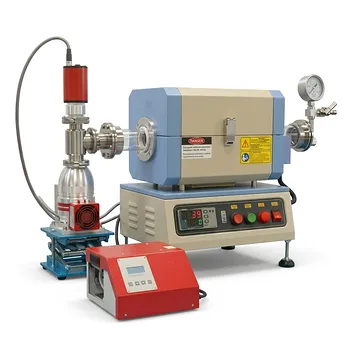
High Vacuum Compact Tube Furnace 1200C with Integrated Turbo Pump System and 8 Inch Heating Zone
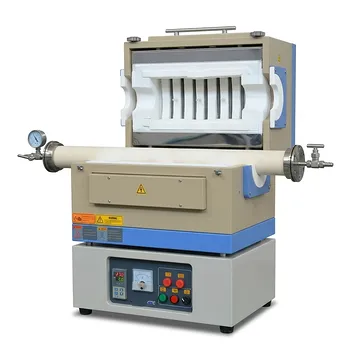
High Temperature 1600C Split Tube Furnace Vacuum Flanges Valves Optional 60mm 80mm Alumina Tube
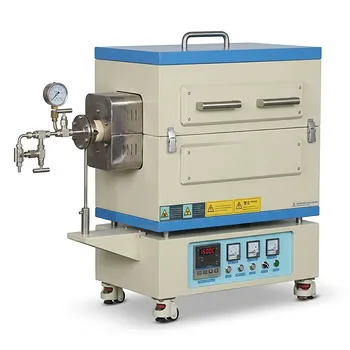
High Temperature Split Tube Furnace 1500C for Material Research Vacuum and Atmosphere Thermal Processing
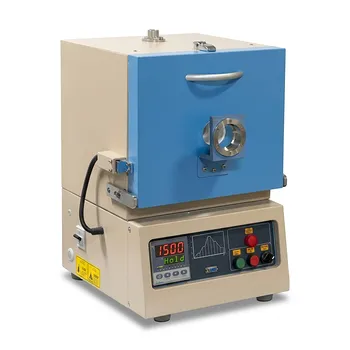
1500C Hybrid Muffle Tube Furnace 1.7L Box with 2 Inch Mullite Tube and Programmable PID Controller
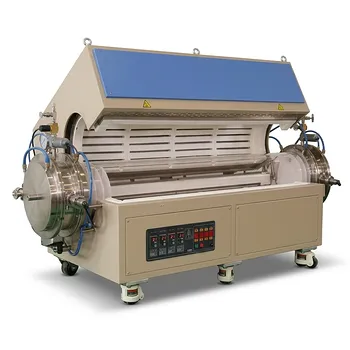
1200C Max Four Zone Split Tube Furnace with Optional Large Diameter Quartz Tubes

1100C Tube Furnace with Vacuum Flange and Programmable Temperature Controller for Material Science and Industrial Heat Treatment
