What is the role of a high-temperature tube furnace in coal powder pyrolysis benchmarking? Achieve Precise Baselines.
Updated 3 months ago
The high-temperature tube furnace serves as the foundational "control" environment in coal powder pyrolysis benchmarking. It provides a precisely regulated, oxygen-free thermal field—typically maintained at temperatures such as 1000°C—to induce the devolatilization of coal molecules through pure heat conduction. By isolating the chemical reactions within a stable and inert atmosphere, the furnace allows researchers to produce tar and char samples that reflect the coal's intrinsic structural characteristics, establishing a definitive baseline for comparative analysis.
The core role of a tube furnace in benchmarking is to eliminate environmental variables by providing a uniform, repeatable thermal profile. This creates a "gold standard" of pure thermal degradation, which is essential for quantifying the efficiency and unique effects of alternative pyrolysis methods or catalysts.
Establishing a Precise Thermal Baseline
Constant-Temperature Thermal Fields
In benchmarking, the furnace provides a stable constant-temperature reaction zone that is critical for reproducibility. High-quality tube furnaces often feature an accuracy of ±1°C, ensuring that the thermal energy delivered to the coal powder is consistent across multiple experimental runs. This precision allows for the exact calculation of kinetic parameters without the interference of temperature fluctuations.
Inducing Devolatilization via Conduction
The furnace uses heat conduction to drive the breakage of chemical bonds within the coal's molecular structure. Unlike microwave or plasma-induced pyrolysis, which may involve complex electromagnetic or ionic interactions, the tube furnace represents a pure thermal environment. This makes it the ideal tool for studying the fundamental structural evolution of coal as it transforms into semi-coke (char) and volatile gases.
Control of Heating Rates
Benchmarking requires strict adherence to specific heating profiles, such as a slow rate of 3°C/min or rapid increases of 20°C/min. The tube furnace's programmable logic controllers allow for these specific ramps, which are vital for understanding how the speed of temperature increase affects the yield and quality of the resulting tar.
Ensuring Atmospheric Integrity
Oxygen Isolation through Inert Purging
To ensure the pyrolysis products reflect the "original" characteristics of the coal, the reaction must be strictly oxygen-free. The sealed tube structure, combined with an inert gas purge (such as Argon or Nitrogen), effectively eliminates oxidation. This creates a reducing atmosphere that prevents the combustion of the produced tar, allowing for the collection of pristine samples.
Suppression of Secondary Reactions
The design of the tube furnace helps researchers study and control secondary tar cracking. By maintaining a stable and predictable environment, the furnace acts as a controllable thermochemical platform to evaluate how different temperatures or gas flow rates can improve tar quality or suppress unwanted side reactions.
Facilitating Atomic-Level Dispersion
Beyond simple coal heating, the stable thermal field of the furnace is used to ensure consistent graphitization of carbon supports. In advanced benchmarking involving doped coal or catalysts, this environment facilitates the atomic-level dispersion of metal atoms, ensuring that the resulting composite materials are uniform and their performance is measurable against a known standard.
Understanding the Trade-offs
Thermal Gradients and Sample Mass
While tube furnaces provide a stable zone, the radial temperature gradient within the tube can be a pitfall if the sample bed is too thick. If the coal powder is not distributed in a thin layer, the core of the sample may lag behind the surface temperature, leading to non-uniform pyrolysis that skews benchmarking data.
Heating Method Limitations
The tube furnace relies on external heating of the tube walls, which is inherently slower than volumetric heating methods like microwave pyrolysis. While this "slow and steady" approach is perfect for establishing a kinetic baseline, it may not capture the non-thermal "extra-kinetic" effects that occur in more modern, high-energy pyrolysis techniques.
Gas Phase Residence Time
The flow rate of the inert gas must be meticulously calibrated; if the flow is too slow, the volatiles remain in the high-temperature zone too long and undergo secondary cracking. Conversely, if it is too fast, it may strip away heat from the sample. Balancing this is critical for a valid benchmark.
How to Apply This to Your Project
Guidelines for Benchmarking Success
To effectively use a high-temperature tube furnace in your pyrolysis research, align your methodology with your specific analytical goals:
- If your primary focus is establishing a kinetic baseline: Use a constant-temperature setting (e.g., 1000°C) with a high-purity Argon purge to ensure your data reflects pure thermal effects without oxidative interference.
- If your primary focus is evaluating new heating technologies: Run a control group in the tube furnace at the same temperature and heating rate as your experimental method (e.g., microwave) to quantitatively isolate "non-thermal" gains.
- If your primary focus is structural evolution of semi-coke: Utilize long-term constant temperature treatment (e.g., 700°C for 2 hours) to ensure complete carbonization and a stable carbon skeleton for post-reaction analysis.
- If your primary focus is tar quality improvement: Experiment with varying the inert gas flow rates within the tube to find the optimal residence time that minimizes secondary cracking.
By treating the high-temperature tube furnace as a high-precision calibration tool rather than just a heater, you ensure your pyrolysis data is both scientifically rigorous and globally comparable.
Summary Table:
| Feature | Function in Benchmarking | Benefit for Researchers |
|---|---|---|
| Precise Temp Control | Maintains accuracy within ±1°C | Ensures high reproducibility of kinetic data |
| Inert Atmosphere | Argon/Nitrogen purging isolates oxygen | Prevents oxidation and preserves tar quality |
| Programmable Ramping | Controlled heating rates (3-20°C/min) | Allows study of thermal degradation speed |
| Sealed Environment | Regulates gas phase residence time | Minimizes secondary cracking for pristine samples |
| Thermal Field Stability | Provides a "gold standard" control | Isolates non-thermal effects of new technologies |
Elevate Your Pyrolysis Research with THERMUNITS
Precise benchmarking requires equipment that eliminates variables. THERMUNITS is a leading manufacturer of high-temperature laboratory equipment specifically designed for material science and industrial R&D.
We offer a comprehensive range of thermal processing solutions, including:
- Tube & Rotary Furnaces (Ideal for coal pyrolysis and benchmarking)
- Vacuum & Atmosphere Furnaces
- Muffle & Hot Press Furnaces
- CVD/PECVD Systems
- Vacuum Induction Melting Furnaces (VIM)
Whether you are establishing a kinetic baseline or scaling up industrial heat treatments, our expert team can help you select the perfect system for your requirements.
Contact THERMUNITS Today to discover how our precision thermal technology can enhance your laboratory's efficiency and data accuracy!
References
- Akshay Gharpure, Randy L. Vander Wal. Structural Characteristics and Graphitizability of Tars from Thermal versus Microwave Plasma Pyrolysis of Coals. DOI: 10.1021/acsomega.3c06666
Mentioned Products
- Gas Pre-Heating Tube Furnace for High Temperature Pyrolysis Reactors and Material Science Research
- 1500C Three Zone Vertical Pyrolysis Furnace for Nanoparticle Synthesis and Advanced Oxide Coating
- High Temperature Tube Furnace 1500C with Sliding Flanges and 50mm OD for Rapid Thermal Processing Fast Heating and Cooling
- Compact High Temperature 1600C Tube Furnace with 50mm Alumina Tube and Vacuum Flanges for Material Sintering
- High Temperature 1700C Vertical Tube Furnace for Powder Spherification and Material Sintering
People Also Ask
- What is the function of a preheated high-temperature tube furnace in the rapid pyrolysis synthesis of carbon nitride films?
- Why is high-precision temperature control essential in a pyrolysis furnace? Master Pd NPs/NO-C Catalyst Synthesis
- How does a high-temperature tube furnace facilitate the pyrolysis of PR-ZS hybrid aerogels into carbon aerogels?
- How is a laboratory tube heating furnace applied during the evaluation of denitration catalysts? Essential Guide
- Why use an inert gas system for biochar pyrolysis? Protect Carbon Structure & Maximize Surface Area

Tech Team · ThermUnits
Last updated on Jun 02, 2026
Related Products
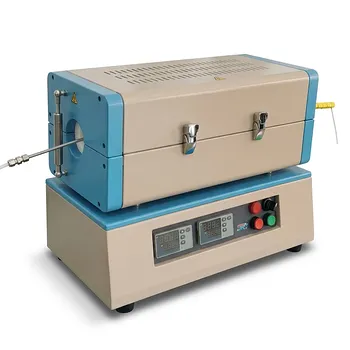
Gas Pre-Heating Tube Furnace for High Temperature Pyrolysis Reactors and Material Science Research
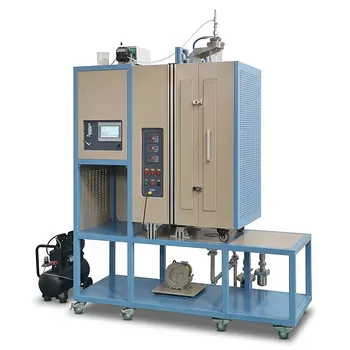
1500C Three Zone Vertical Pyrolysis Furnace for Nanoparticle Synthesis and Advanced Oxide Coating
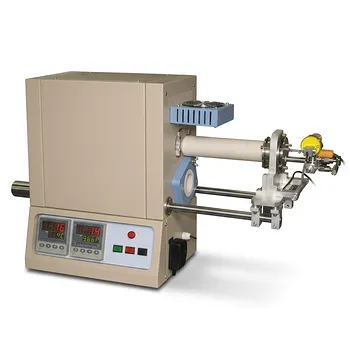
High Temperature Tube Furnace 1500C with Sliding Flanges and 50mm OD for Rapid Thermal Processing Fast Heating and Cooling

Compact High Temperature 1600C Tube Furnace with 50mm Alumina Tube and Vacuum Flanges for Material Sintering

High Temperature 1700C Vertical Tube Furnace for Powder Spherification and Material Sintering
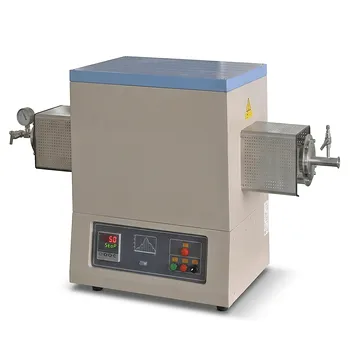
High Temperature 1700C Tube Furnace with 4 Inch OD Alumina Tube and Vacuum Sealing Flanges

High Temperature 1700C Benchtop Tube Furnace with 5 Inch Heating Zone High Purity Alumina Tube and Vacuum Sealing Flanges

High Temperature 1700C Tube Furnace with High Vacuum Turbomolecular Pump System and Multi Channel Mass Flow Controller Gas Mixer

1800C High Temperature Compact Vacuum Tube Furnace with 60mm OD Alumina Tube and Kanthal MoSi2 Heating Elements
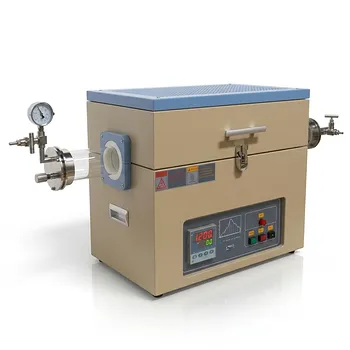
High Temperature 1200C Split Tube Furnace with Optional Quartz Tube Sizes and Vacuum Sealing Flanges for Material Science Research
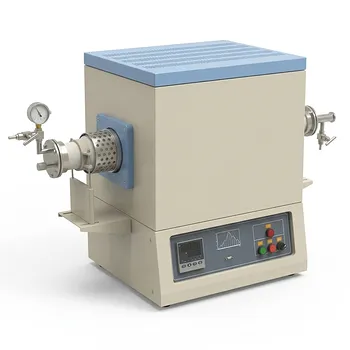
1750°C High Temperature Benchtop Vacuum Atmosphere Tube Furnace with Kanthal Super 1800 Heating Elements and 60mm Alumina Processing Tube
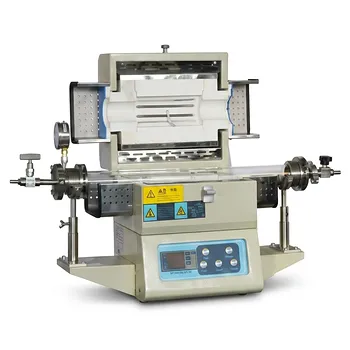
High Temperature 1200C Split Tube Furnace for CVD Research and Vacuum Atmosphere Heat Treatment
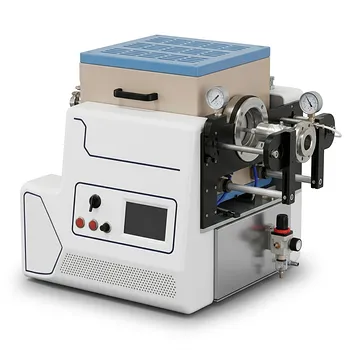
High Temperature Automated 5 Inch Tube Furnace for Autonomous Material Research and Advanced Laboratory R&D
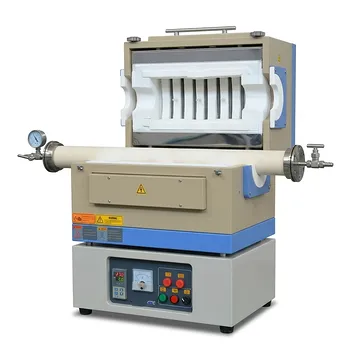
High Temperature 1600C Split Tube Furnace Vacuum Flanges Valves Optional 60mm 80mm Alumina Tube
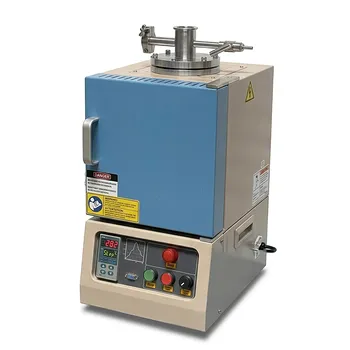
High Temperature Hybrid Muffle and Tube Furnace with Vacuum Capability and PID Control
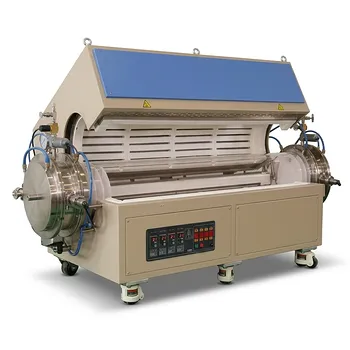
1200C Max Four Zone Split Tube Furnace with Optional Large Diameter Quartz Tubes
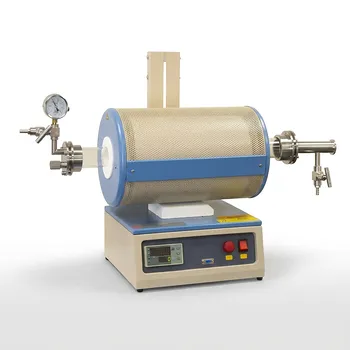
1100C Tube Furnace with Vacuum Flange and Programmable Temperature Controller for Material Science and Industrial Heat Treatment
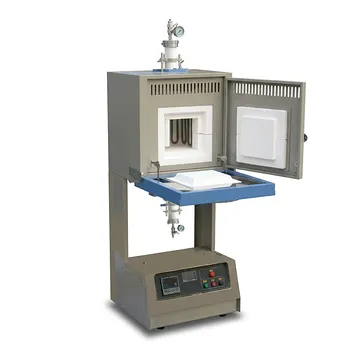
Vertical Hybrid High Temperature Furnace 1500C Alumina Tube SOFC Fuel Cell Testing Laboratory Heat Treatment Research Equipment
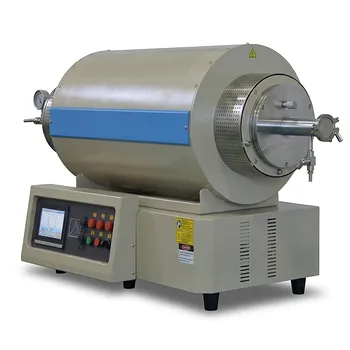
1200C Max Three Zone Tube Furnace 6 Inch OD Max with Tube and Flange