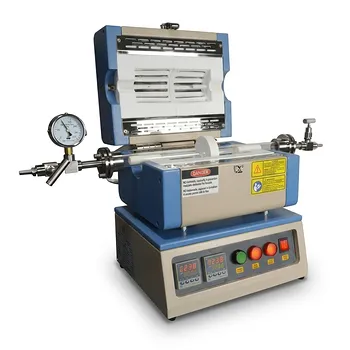
How is a laboratory tube heating furnace applied during the evaluation of denitration catalysts? Essential Guide
Updated 3 months ago
The laboratory tube heating furnace is the primary tool for simulating the thermal and chemical conditions of industrial exhaust systems. It provides the precision temperature control—typically ranging from 180°C to 500°C—required to measure a catalyst's ability to reduce nitrogen oxides (NOx) into harmless nitrogen and water. By housing the catalyst within a chemically inert quartz tube, the furnace allows researchers to accurately quantify denitration efficiency and resistance to chemical contaminants under controlled steady-state conditions.
A laboratory tube furnace acts as a controlled micro-reactor environment that bridges the gap between raw material synthesis and industrial application. It enables the simultaneous evaluation of a catalyst's thermal activity window, its chemical durability against poisoning, and its structural stability over time.
Simulating Industrial Reaction Environments
Precision Temperature Management
The core function of the furnace is to maintain a constant test temperature across the catalyst bed. Because denitration reactions are highly temperature-dependent, the ability to sustain a stable environment between 180°C and 500°C is critical for determining the "active window" where the catalyst performs optimally.
Assessing Poisoning Resistance
Industrial flue gas often contains sulfur dioxide (SO2), which can deactivate catalysts. The tube furnace allows for the introduction of controlled gas mixtures to evaluate SO2 poisoning resistance, helping researchers understand how the catalyst will survive in harsh, real-world coal-fired power plant environments.
Chemical Inertness of the Quartz Reactor
The use of a vertical quartz tube inside the furnace is essential because quartz is chemically inert. This ensures that the reaction data reflects only the catalyst's performance and is not skewed by the reactor walls interfering with the gas-phase chemistry.
Catalyst Activation and Pre-treatment
In-situ Reduction and Atmosphere Control
Before evaluation begins, many catalysts require activation through reduction. The tube furnace provides a controlled atmosphere (such as H2/N2 or H2/Ar) to reduce metal oxides into their active zero-valent states (e.g., Ni0 or metallic silver nanoparticles) at temperatures around 400°C to 420°C.
Inducing Electronic Metal-Support Interaction (EMSI)
Precise heating facilitates the formation of oxygen vacancies and specific electronic interactions between the metal and its support. This pre-treatment stage is the core step for creating the active centers necessary for the catalyst to facilitate the denitration reaction effectively.
Standardized Multi-Stage Programming
Modern furnaces utilize microprocessor-controlled heating to perform multi-stage programmed temperature rises. By using slow heating rates (e.g., 1°C/min), the furnace ensures the oxidative decomposition of organic ligands and the formation of stable spinel structures without damaging the catalyst's delicate surface area.
Durability and Aging Assessments
Simulating Long-Term Thermal Stress
To predict a catalyst's lifespan, researchers use the furnace for accelerated aging experiments. By exposing the catalyst to a constant thermal stress (such as 500°C in an air atmosphere for 170 hours), they can simulate months or years of industrial operation in a matter of days.
Evaluating Sintering Inhibition
High temperatures can cause active metal components to clump together, a process known as sintering, which reduces surface area. The tube furnace is used to verify if the catalyst support can effectively inhibit this sintering and maintain structural flexibility during repeated oxidation-reduction cycles.
Understanding the Trade-offs
Temperature Gradients vs. Uniformity
While tube furnaces offer high precision, they can suffer from axial temperature gradients where the center of the tube is hotter than the ends. If the catalyst bed is too long, the reaction data may become unreliable due to non-uniform thermal distribution.
Wall Effects and Gas Bypass
In small-scale laboratory tubes, the ratio of the tube diameter to the catalyst particle size is critical. If not managed, gas may bypass the catalyst bed by flowing along the smooth walls of the quartz tube, leading to an underestimation of the catalyst's true denitration efficiency.
Scaling Limitations
A tube furnace provides a "snapshot" of performance in a controlled environment, but it cannot fully replicate the complex fluid dynamics or the physical soot loading found in full-scale industrial SCR (Selective Catalytic Reduction) units.
Maximizing the Value of Furnace Testing
How to Apply This to Your Project
- If your primary focus is determining the optimal operating range: Use the furnace to conduct a "temperature sweep" from 150°C to 550°C to map the NOx conversion curve.
- If your primary focus is catalyst longevity: Perform an aging study at 500°C for a minimum of 100 hours to observe changes in the crystal structure and surface active sites.
- If your primary focus is chemical durability: Introduce a simulated flue gas containing SO2 and H2O into the quartz tube to measure the rate of activity decline over time.
By utilizing the precision and atmospheric flexibility of the laboratory tube furnace, researchers can transform theoretical material science into proven, high-performance denitration solutions.
Summary Table:
| Application Area | Key Function | Typical Conditions |
|---|---|---|
| Reaction Simulation | Measuring NOx reduction efficiency | 180°C - 500°C, Steady-state |
| Catalyst Activation | In-situ reduction & EMSI induction | 400°C - 420°C, H2/N2 atmosphere |
| Durability Testing | Accelerated aging & sintering evaluation | 500°C for 100+ hours |
| Poisoning Resistance | Assessing SO2 & H2O chemical durability | Controlled flue gas mixtures |
Elevate Your Catalyst Research with THERMUNITS
Optimize your material evaluation with high-precision thermal solutions from THERMUNITS, a leading manufacturer of high-temperature laboratory equipment for material science and industrial R&D. Whether you are conducting denitration catalyst testing, CVD/PECVD synthesis, or vacuum induction melting, our comprehensive range of Tube, Muffle, Vacuum, and Atmosphere furnaces provides the stability and control your lab demands.
Enhance your research efficiency and ensure repeatable results with our advanced heat treatment systems. Contact our experts today to find the perfect thermal processing solution for your laboratory!
References
- Yang Liu, Chengmin Ge. Promotion of SO<sub>2</sub> resistance of Ce–La/TiO<sub>2</sub> denitrification catalysts by V doping. DOI: 10.1039/d3ra07073e
Mentioned Products
- 1250C Compact Split Tube Furnace with 8 Inch Heating Zone and Programmable Controller
- Laboratory Tilting Rotary Tubular Furnaces for Material Science and Industrial Heat Treatment
- Multi Position Tube Furnace 1100C for Laboratory Material Research and Advanced Industrial Thermal Processing
- 1800C High Temperature Compact Vacuum Tube Furnace with 60mm OD Alumina Tube and Kanthal MoSi2 Heating Elements
- 1700C High Temperature Alumina Tube Furnace with 18 Inch Heated Zone and Vacuum Sealing Flanges
People Also Ask
- What is the primary engineering purpose for using a customized ventilation hood when operating a split tube furnace? RCF Safety
- How does a split tube furnace facilitate debinding of ceramic green bodies? Master Precise Thermal & Atmosphere Control
- What are the advantages of using a split tube furnace for heating a catalytic reactor? Boost Efficiency and Precision
- How does a split tube furnace contribute to the thermal stabilization of Clignin@H-TiO2? Achieve Structural Precision
- What are the specific advantages and use cases for a split tube furnace? Optimize Lab Efficiency & Material Research

Tech Team · ThermUnits
Last updated on Jun 02, 2026
Related Products
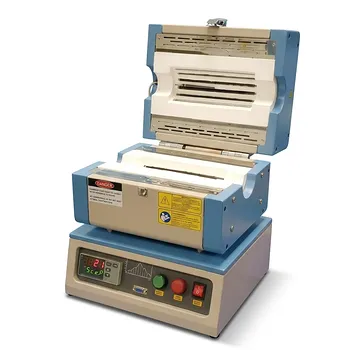
1250C Compact Split Tube Furnace with 8 Inch Heating Zone and Programmable Controller
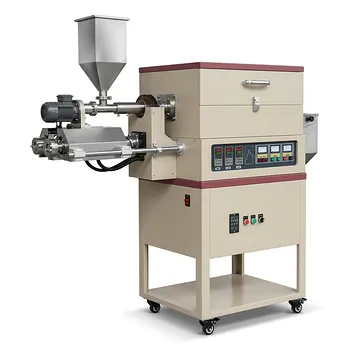
Laboratory Tilting Rotary Tubular Furnaces for Material Science and Industrial Heat Treatment
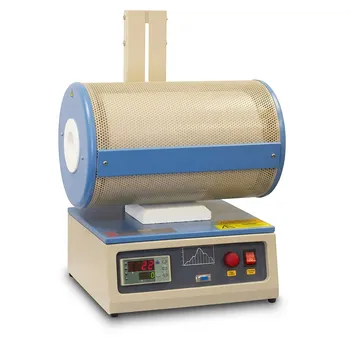
Multi Position Tube Furnace 1100C for Laboratory Material Research and Advanced Industrial Thermal Processing

1800C High Temperature Compact Vacuum Tube Furnace with 60mm OD Alumina Tube and Kanthal MoSi2 Heating Elements

1700C High Temperature Alumina Tube Furnace with 18 Inch Heated Zone and Vacuum Sealing Flanges
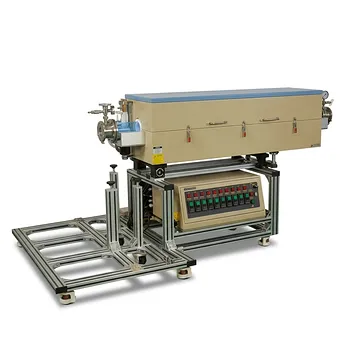
Ten Zone Multi Orientation Laboratory Tube Furnace for 1200C High Temperature Gradient Thermal Processing
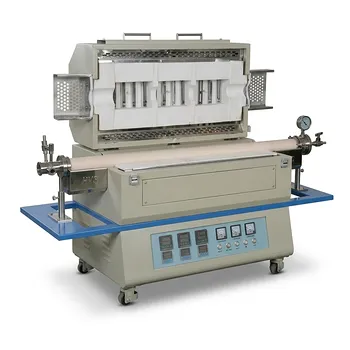
Three Temperature Zone Fast Heating Furnace 1500C Laboratory High Precision Thermal Processing System
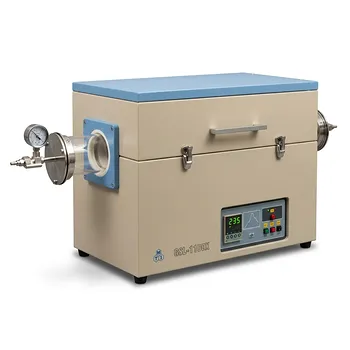
Single Zone Tube Furnace 5 Inch Quartz Tube 36 Inch Heating Zone Vacuum Flanges
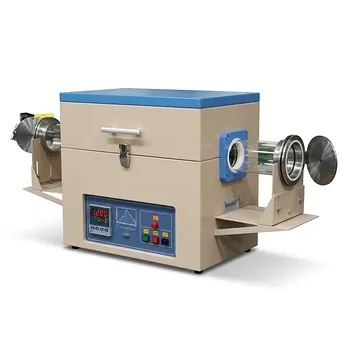
High Temperature 1200C Split Tube Furnace with Hinged Vacuum Flanges and 4 Inch Quartz Tube for Laboratory Research
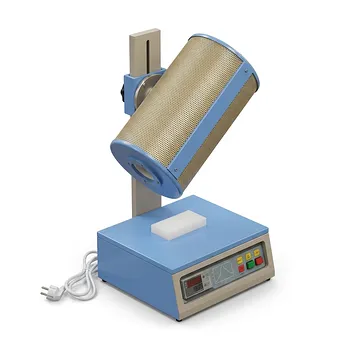
1100°C Vertical Laboratory Furnace for DIY Tubular Reactors with PID Temperature Controller
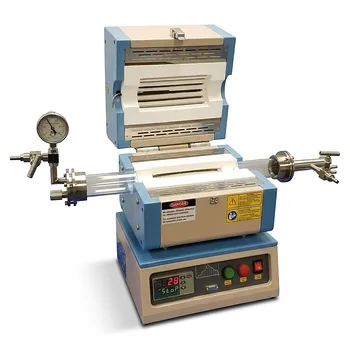
Compact Split Tube Furnace with Integrated Vacuum System and Precision Temperature Calibrator
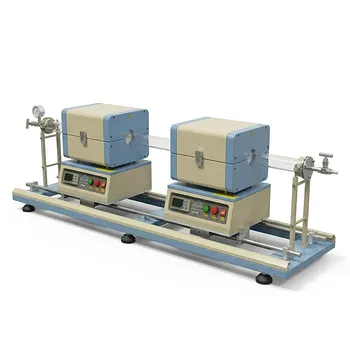
1200C Max Dual Sliding Tube Furnace with 50 mm Tube Flanges for CVD
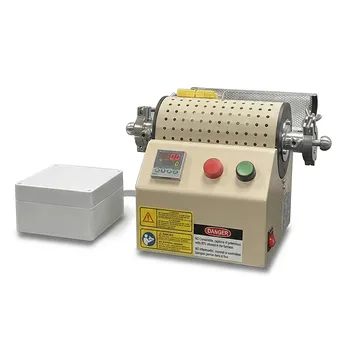
1000C Mini Tube Furnace with 20mm Quartz Tube and Vacuum Flanges for Material Science Research and Controlled Atmosphere Small Sample Processing
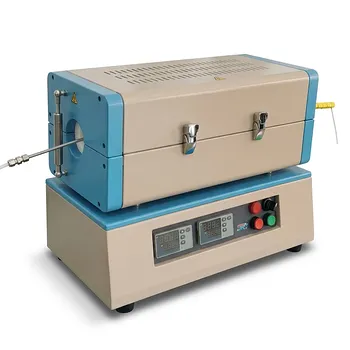
Gas Pre-Heating Tube Furnace for High Temperature Pyrolysis Reactors and Material Science Research
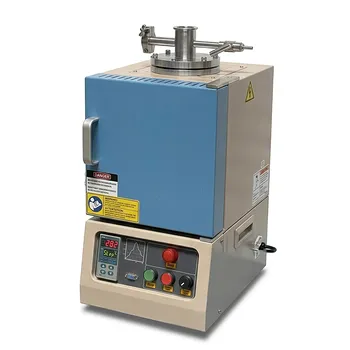
High Temperature Hybrid Muffle and Tube Furnace with Vacuum Capability and PID Control
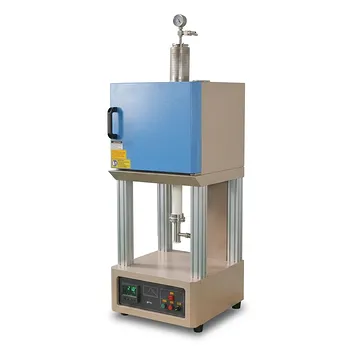
Hybrid High Temperature Tube and Box Furnace 1700C with 2 Inch Alumina Tube for Material Research

High Temperature Tube Furnace 1500C with Sliding Flanges and 50mm OD for Rapid Thermal Processing Fast Heating and Cooling

1100C Tube Furnace with Vacuum Flange and Programmable Temperature Controller for Material Science and Industrial Heat Treatment

High Temperature 1700C Benchtop Tube Furnace with 5 Inch Heating Zone High Purity Alumina Tube and Vacuum Sealing Flanges